Amines
Amines are a set of molecules containing an amino functional group (derived from ammonia). This category includes amines at any level of substitution : primary, secondary, tertiary, and ammonium salts. Amines are fundamental in organic synthesis and are widely used in pharmaceuticals, agrochemicals, and materials science. At CymitQuimica, we provide a comprehensive selection of amines to meet your research and industrial needs. Our range ensures access to various amines for diverse chemical processes and innovative research.
Subcategories of "Amines"
- Nitrosamines(2,603 products)
- Primary Amines(30,805 products)
- Quaternary Ammonium Cations and Salts(1,099 products)
- Secondary Amines(20,809 products)
- Tertiary Amines(17,111 products)
Found 8777 products of "Amines"
Sort by
Purity (%)
0
100
|
0
|
50
|
90
|
95
|
100
4-Aminoacetophenone
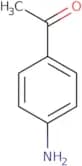
CAS:<p>4-Aminoacetophenone is an inhibitor of the enzyme acetylcholinesterase and it is used as an insecticide. It inhibits the enzyme by forming hydrogen bonding interactions with the active site. The inhibition of this enzyme leads to paralysis and death in insects. 4-Aminoacetophenone has been shown to have anti-cancer effects in vitro, which may be due to its ability to inhibit glycoside hydrolases and amine oxidases that are involved in cancer development. The compound also has a thermal expansion coefficient that is comparable to other polymers used in drug delivery systems.</p>Formula:C8H9NOColor and Shape:Slightly Yellow PowderMolecular weight:135.16 g/molAmmonium isothiocyanate
CAS:<p>Ammonium thiocyanate is a natural compound that is found in the blood of humans and animals. It binds to an antigen-binding molecule and has been shown to be effective against infectious diseases. Ammonium thiocyanate is toxic, so it should only be administered as a last resort for treatment. The toxicity of ammonium thiocyanate can be reduced by complexing with copper chloride or zirconium oxide. Ammonium thiocyanate has also been shown to have high redox potentials, which are indicative of its ability to donate electrons. These properties make ammonium thiocyanate an ideal candidate for use in electrochemical impedance spectroscopy experiments.</p>Formula:CH4N2SPurity:Min. 95%Color and Shape:PowderMolecular weight:76.12 g/molN-Benzoyl-N-phenylhydroxylamine
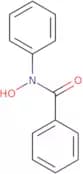
CAS:<p>N-Benzoyl-N-phenylhydroxylamine is a compound that has been shown to be an optimum concentration for the production of molybdenum. It is a model system for the extraction and separation of molybdenum from other metals. The extraction process involves acidification with nitric acid, followed by precipitation with sodium benzoate. N-Benzoyl-N-phenylhydroxylamine is extracted using an electrode and then purified with a metal chelate. This compound has been shown to have synergistic effects when combined with vanadium, which may be due to their similar chemical properties.</p>Formula:C13H11NO2Purity:Min. 95%Molecular weight:213.23 g/mol2-Amino-6-chloropyrimidin-4(3h)-one
CAS:<p>2-Amino-6-chloropyrimidin-4(3H)-one (ACPP) is a betaine that has been shown to exhibit potent activity against clinical isolates of methicillin-resistant Staphylococcus aureus (MRSA). It is a mesomeric molecule, which means that it can exist as two different tautomers. The frequency of the absorption bands in the FTIR spectra for ACPP are characteristic of the carbenes and ethanolamine tautomers. The presence of these tautomers may be due to stabilization from the nucleophilic character of the nitrogen atom in betaines. Betaines are also able to form polymersized chains by reacting with themselves or other molecules, such as ethanolamine.</p>Formula:C4H4ClN3OPurity:Min. 95%Color and Shape:PowderMolecular weight:145.55 g/mol3-(Boc-amino)pyridine
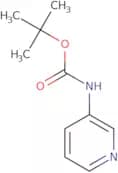
CAS:<p>3-(Boc-amino)pyridine is a glycine derivative with a trigonal, chelate ring. It can be hydrolyzed by acid to form 3-aminopyridine. 3-(Boc-amino)pyridine has been shown to react with trimethyltin chloride to form an intramolecular complex in the presence of alkyllithiums. This reaction proceeds through lithiation and methylation of the carboxyl group of 3-(Boc-amino)pyridine. The interaction between 3-(Boc-amino)pyridine and trimethyltin chloride forms an antiaromatic six membered ring that resembles a benzene molecule.</p>Formula:C10H14N2O2Purity:Min. 95%Molecular weight:194.23 g/molAmmonium Undecafluorohexanoate
CAS:<p>Undecafluorohexanoic acid is a perfluoroalkyl carboxylic acid that has been shown to disrupt steroidogenesis in vitro. It may be able to inhibit the transport of cholesterol, fats, and other lipids in cells, which causes disruption in steroidogenesis. This compound also has anti-cancer properties due to its ability to induce apoptosis and arrest cancer cell proliferation. Undecafluorohexanoic acid may also have developmental effects on animals because it can bind to estrogen receptors and disrupt the normal process of estrogen-mediated signaling pathways.</p>Formula:C6H4F11NO2Purity:Min. 95%Molecular weight:331.08 g/mol4-Amino-6-mercaptopyrazolo[3,4-d]pyrimidine
CAS:<p>Please enquire for more information about 4-Amino-6-mercaptopyrazolo[3,4-d]pyrimidine including the price, delivery time and more detailed product information at the technical inquiry form on this page</p>Formula:C5H5N5SPurity:Min. 95%Molecular weight:167.19 g/molTES
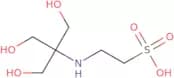
CAS:<p>TES, also known as N-Tris(hydroxymethyl)methyl-2-aminoethanesulfonic acid, is a buffering agent that is used in protein assays and forms complexes with DNA and copper ions. The optimal pH range of this zwitterionic buffer is 6.8-8.2 and its pKa is 7.4.</p>Formula:C6H15NO6SPurity:Min. 95%Color and Shape:PowderMolecular weight:229.25 g/molIsopropyl 2-amino-4-hydroxy-5,8-dihydropyrido[3,4-d]pyrimidine-7(6H)-carboxylate
CAS:<p>Please enquire for more information about Isopropyl 2-amino-4-hydroxy-5,8-dihydropyrido[3,4-d]pyrimidine-7(6H)-carboxylate including the price, delivery time and more detailed product information at the technical inquiry form on this page</p>Formula:C11H16N4O3Purity:Min. 95%Molecular weight:252.27 g/molDextroamphetamine saccharate
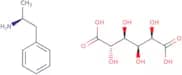
CAS:Controlled Product<p>Dextroamphetamine saccharate is a pharmaceutical drug that belongs to the group of amphetamine derivatives. It is used in the treatment of conditions such as narcolepsy and attention-deficit disorder (ADD). The epidermal growth factor receptor (EGFR) is an important target for the effects of this drug, which has been shown to stimulate growth and proliferation in vitro. Dextroamphetamine saccharate has a complex pharmacokinetic profile and is metabolized by hydrolysis into dextroamphetamine. This drug also binds to voltage-dependent calcium channels, which regulate neurotransmitter release at nerve terminals. The pain relief associated with dextroamphetamine saccharate may be due to its ability to block pro-inflammatory cytokines or inhibit trigeminal nerve activity.</p>Formula:C6H10O8(C9H13N)2Purity:Min. 95%Molecular weight:480.6 g/molTetrapropylammonium perruthenate
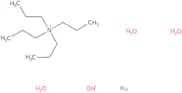
CAS:<p>Tetrapropylammonium perruthenate is a polymeric matrix that contains a chelate ligand and can be used as an oxygen sensor. The polymer is synthesized in the presence of trifluoroacetic acid (TFA) using tetrapropylammonium chloride (TPACl) and perruthenate. Tetrapropylammonium perruthenate forms a polymeric matrix with TPACl, which contains a chelate ligand. The polymer is sensitive to changes in the environment such as pH, temperature, and oxidation-reduction potential. The polymeric matrix can be used for sensing the concentration of oxygen in liquid or gas phase by measuring fluorescence intensity at various wavelengths. These measurements are correlated with the concentration of oxygen in the environment.</p>Formula:C12H28NO4RuPurity:Min. 95%Molecular weight:351.43 g/mol4-Methylaminophenol sulfate
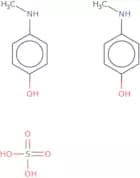
CAS:<p>4-Methylaminophenol sulfate is an enzyme substrate that is used in the analytical method for determining the concentration of potassium dichromate. It is prepared by reacting 4-methylaminophenol with sulfuric acid, and its optimum concentration is 0.2 mM. The linear calibration curve was obtained at a pH range of 2 to 5.4 and a temperature range of 25 to 37°C. The analytical method can be applied to human serum samples and has been shown to be applicable for studies on autoimmune diseases and anthelmintics.</p>Formula:C7H9NO•(H2O4S)0Purity:Min. 95%Color and Shape:White PowderMolecular weight:344.39 g/molEDTA ferric ammonium
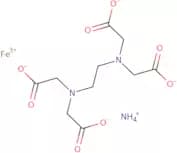
CAS:<p>EDTA ferric ammonium is a metal complex that is used in the manufacture of textile dyes. EDTA ferric ammonium is an oxidizing agent that can be used as a reducing agent by adding an oxidizing agent such as potassium permanganate. The solution form of this compound has a particle size distribution with a median particle size of about 0.5 micrometers and a polydispersity index of about 2. In addition, it has been shown to have surfactant properties, which may be due to its ability to interact with the surface tension of water molecules. EDTA ferric ammonium has also been shown to react with silver ions to form silver ethylene diamine tetraacetic acid (AgEDTA), which can then be used for patterning purposes in textiles.</p>Formula:C10H12FeN2O8•NH4Purity:80%MinColor and Shape:PowderMolecular weight:362.09 g/mol4-[2-[[(1S)-1-(2-Aminophenyl)-3-methylbutyl]amino]-2-oxoethyl]-2-ethoxybenzoic acid
CAS:<p>Bosentan is a potent inhibitor of the uptake of organic anions. It is used in the treatment of pulmonary arterial hypertension and has been shown to be effective against pravastatin-resistant HIV protease inhibitors, such as saquinavir, quinidine, and rosuvastatin. Bosentan inhibits uptake by binding to the transporter protein at a site that does not overlap with the binding site for organic anion substrates. This leads to a change in kinetic parameters for substrates, such as pravastatin and saquinavir. The binding site on bosentan may also be elucidated through monolayer experiments with efflux transporters.</p>Formula:C22H28N2O4Purity:Min. 95%Molecular weight:384.47 g/molN1-(Pivaloyloxy)methyl-N2-(dimethylamino)methylene 9-deazaguanine
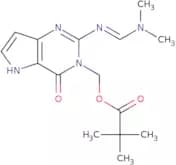
CAS:<p>Please enquire for more information about N1-(Pivaloyloxy)methyl-N2-(dimethylamino)methylene 9-deazaguanine including the price, delivery time and more detailed product information at the technical inquiry form on this page</p>Formula:C15H21N5O3Purity:Min. 95%Molecular weight:319.36 g/molBoc-4-aminopiperidine
CAS:<p>Boc-4-aminopiperidine is a molecule that is used as a substrate in chemical reactions. It reacts with sodium hydroxide solution to form an imine, which is hydrogenated by reducing agents such as NaBH4. This reaction yields the products 4-aminopiperidine and acetaldehyde. Boc-4-aminopiperidine is also utilized as a cholinesterase inhibitor, which inhibits the breakdown of acetylcholine at nerve endings. The inhibitory activity of Boc-4-aminopiperidine can be determined using diagnostic techniques and it can be used to inhibit viruses such as HIV and influenza A virus.</p>Formula:C10H20N2O2Purity:Min. 95%Molecular weight:200.28 g/molEVP4593
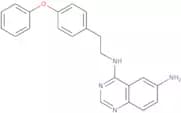
CAS:<p>6-Amino-4-(4-phenoxyphenylethylamino)quinazoline is a potential anticancer drug that has been shown to inhibit the polymerase chain reaction in human osteosarcoma cells. It also inhibits the signaling pathway of nuclear factor-κB (NF-κB), which is involved in cell death and tumorigenesis. 6-Amino-4-(4-phenoxyphenylethylamino)quinazoline has shown significant cytotoxicity against murine hepatoma cells and bowel disease cells, but not against normal tissue. This drug is also an inhibitor of the drug transporter Pgp. 6-Amino-4-(4-phenoxyphenylethylamino)quinazoline has been shown to be effective in experimental models for cancer, AIDS, and other infectious diseases.</p>Formula:C22H20N4OPurity:Min. 95%Color and Shape:PowderMolecular weight:356.42 g/molN-(3-Aminopropyl)-2,2,3,3,4,4,5,5,6,6,7,7,8,8,8-pentadecafluorooctanamide
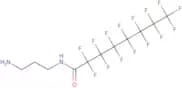
CAS:Controlled Product<p>Please enquire for more information about N-(3-Aminopropyl)-2,2,3,3,4,4,5,5,6,6,7,7,8,8,8-pentadecafluorooctanamide including the price, delivery time and more detailed product information at the technical inquiry form on this page</p>Formula:C11H9F15N2OPurity:Min. 95%Molecular weight:470.18 g/molPropylamine
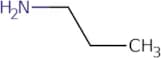
CAS:<p>Propylamine is a colorless, volatile liquid with a boiling point of -26.3°C. It has been shown to have the ability to react with sephadex g-100, which is a chromatographic material that separates proteins according to their size and charge. Propylamine has also been shown to undergo transfer reactions in the presence of hydroxyl groups and disulfide bonds. The chemical properties of propylamine have been studied using analytical methods such as nuclear DNA analysis, as well as biological studies involving the use of trifluoroacetic acid and nitrogen atoms for hydrogen bonding interactions.</p>Formula:C3H9NPurity:Min. 95%Molecular weight:59.11 g/mol4-Aminopyrene
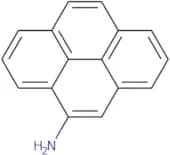
CAS:<p>4-Aminopyrene is an aromatic amine that contains a nitro group. It has been used in biological studies to study the metabolism of amines, and chromatographic and mass spectrometric detection methods have been developed for its determination. 4-Aminopyrene also has the ability to form isomers through substitution on the N atom. The activation energy for this process is 14.3 kcal/mol. 4-Aminopyrene has been shown to be cytotoxic and mutagenic in vitro, and it can inhibit protein synthesis in bacteria by inhibiting RNA synthesis at the ribosome level. It has also been shown to induce changes in cell morphology and stimulate morphological differentiation of human promyelocytic leukemia cells (HL-60).</p>Purity:Min. 95%




![4-Amino-6-mercaptopyrazolo[3,4-d]pyrimidine](/_next/image/?url=https%3A%2Fstatic.cymitquimica.com%2Fproducts%2F3D%2Fthumb-webp%2FFA17663.webp&w=3840&q=75)
![Isopropyl 2-amino-4-hydroxy-5,8-dihydropyrido[3,4-d]pyrimidine-7(6H)-carboxylate](/_next/image/?url=https%3A%2Fstatic.cymitquimica.com%2Fproducts%2F3D%2Fthumb-webp%2FFI135088.webp&w=3840&q=75)
![4-[2-[[(1S)-1-(2-Aminophenyl)-3-methylbutyl]amino]-2-oxoethyl]-2-ethoxybenzoic acid](/_next/image/?url=https%3A%2Fstatic.cymitquimica.com%2Fproducts%2F3D%2Fthumb-webp%2FFD21379.webp&w=3840&q=75)