Amines
Amines are a set of molecules containing an amino functional group (derived from ammonia). This category includes amines at any level of substitution : primary, secondary, tertiary, and ammonium salts. Amines are fundamental in organic synthesis and are widely used in pharmaceuticals, agrochemicals, and materials science. At CymitQuimica, we provide a comprehensive selection of amines to meet your research and industrial needs. Our range ensures access to various amines for diverse chemical processes and innovative research.
Subcategories of "Amines"
- Nitrosamines(2,605 products)
- Primary Amines(30,821 products)
- Quaternary Ammonium Cations and Salts(1,099 products)
- Secondary Amines(20,817 products)
- Tertiary Amines(17,117 products)
Found 8778 products of "Amines"
Sort by
Purity (%)
0
100
|
0
|
50
|
90
|
95
|
100
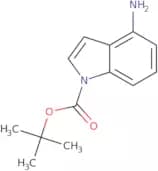
1-Boc-4-aminoindole
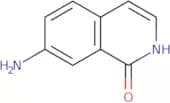
CAS:<p>Please enquire for more information about 1-Boc-4-aminoindole including the price, delivery time and more detailed product information at the technical inquiry form on this page</p>Formula:C13H16N2O2Purity:Min. 95%Molecular weight:232.28 g/mol7-Amino-1(2h)-isoquinolinone
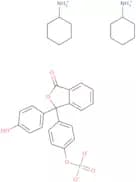
CAS:<p>Please enquire for more information about 7-Amino-1(2h)-isoquinolinone including the price, delivery time and more detailed product information at the technical inquiry form on this page</p>Formula:C9H8N2OPurity:Min. 95%Molecular weight:160.17 g/molPhenolphthalein monophosphate di(cyclohexylammonium)
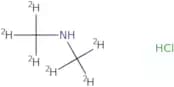
CAS:<p>Phenolphthalein monophosphate di(cyclohexylammonium) is a fine chemical that can be used as a building block in research, reagent, or speciality chemical. It is a versatile building block and reaction component that can be used as an intermediate to make other compounds. Phenolphthalein monophosphate di(cyclohexylammonium) is also used as a scaffold for the synthesis of complex chemicals. This complex compound has CAS number 14815-59-9.</p>Formula:C20H15O7P•2C6H13NPurity:Min. 90%Color and Shape:PowderMolecular weight:596.65 g/molDimethyl-d6-amine HCl
CAS:Controlled Product<p>Dimethyl-d6-amine HCl is a drug that inhibits the growth of cancer cells. It is an inhibitor of epidermal growth factor (EGF), which has been shown to be effective in the treatment of skin cancer. Dimethyl-d6-amine HCl is also effective against some strains of bacteria that are resistant to other antibiotics, such as erythromycin and tetracycline. Dimethyl-d6-amine HCl has been shown to have a suppressive effect on the production of sesquiterpene lactones by dehydrocostus lactone, which may be responsible for its anti-inflammatory properties.</p>Formula:C2H2ClD6NPurity:Min. 95%Color and Shape:White PowderMolecular weight:87.58 g/mol4-Nitrophenethylamine
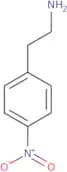
CAS:Controlled Product<p>4-Nitrophenethylamine is a synthetic chemical that is used as an antigen to raise antibodies. It is used in the detection of chemical substances that are associated with the production of histamine and acetylcholine. This chemical has been shown to inhibit the reaction between nitro and acylation, which can lead to the formation of carcinogenic nitrosamines. 4-Nitrophenethylamine also has an inhibitory effect on oxidases and amines, which are enzymes found in cells. This chemical binds to amide groups in proteins and inhibits their activity.</p>Formula:C8H10N2O2Purity:Min. 95%Color and Shape:LiquidMolecular weight:166.18 g/mol7-Diethylamino-4-methylcoumarin
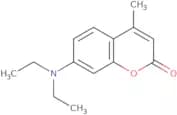
CAS:<p>7-Diethylamino-4-methylcoumarin is a fluorescence probe that can be used in applications such as the study of hydrogen bonding interactions. It is excited by laser light and emits a red-shifted fluorescent light. 7-Diethylamino-4-methylcoumarin is a hydroxyl group analogue of coumarin, which has been shown to have physiological effects on the liver cells. The absorption spectrum of 7-Diethylamino-4-methylcoumarin is sensitive to changes in pH and chemical stability. A decrease in pH increases the intensity of the emission while an increase in pH decreases the intensity of the emission. This compound can also be used to label nucleic acids during polymerase chain reactions (PCR) or for sample preparation before analysis using nuclear magnetic resonance spectroscopy (NMR).</p>Formula:C14H17NO2Purity:Min. 98 Area-%Color and Shape:PowderMolecular weight:231.29 g/molMozavaptan
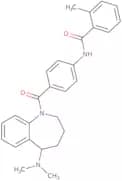
CAS:Controlled Product<p>Mozavaptan is a pharmacological agent that acts as a vasopressin V2 receptor antagonist. It is derived through synthetic chemical processes designed to target specific neurohormonal pathways in the body. Mozavaptan exerts its effects by inhibiting the action of vasopressin, a hormone that promotes water reabsorption in the kidneys. By blocking the vasopressin receptors, it enhances water excretion and corrects imbalances in electrolyte levels, particularly addressing conditions like hyponatremia.</p>Formula:C27H29N3O2Purity:Min. 98 Area-%Color and Shape:PowderMolecular weight:427.54 g/mol3-Nitro-4-[[(tetrahydropyran-4-yl)methyl]amino]benzenesulfonamide
CAS:<p>Please enquire for more information about 3-Nitro-4-[[(tetrahydropyran-4-yl)methyl]amino]benzenesulfonamide including the price, delivery time and more detailed product information at the technical inquiry form on this page</p>Formula:C12H17N3O5SPurity:Min. 95%Molecular weight:315.35 g/mol2-Amino-6-hydroxybenzothiazole
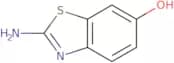
CAS:<p>2-Amino-6-hydroxybenzothiazole is a chemical compound that has been shown to have chemiluminescence properties. It is produced in vivo by the synthetase enzyme from the amino acid L-phenylalanine and hydroxybenzothiazole. The compound is expressed in basophilic leukemia cells, which are cells that stain with basic dyes. 2-Amino-6-hydroxybenzothiazole can be used as a marker of these cells in vitro. A second order rate constant of 1.5 × 10 M−1 s−1 was determined for this reaction, which is consistent with other reactions of this type. 2-Amino-6-hydroxybenzothiazole has also been shown to be effective at treating cancer and inflammatory bowel disease by enhancing growth factor production and inhibiting cell proliferation.</p>Formula:C7H6N2OSPurity:Min. 95%Color and Shape:White To Grey SolidMolecular weight:166.2 g/molPent-4-enylamine
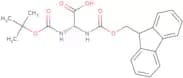
CAS:<p>Pent-4-enylamine is a nitrogen nucleophile that can react with alkenes to form compounds. Pent-4-enylamine reacts quickly with alcohols and ethers in the presence of an acid catalyst to produce an alkene. Pent-4-enylamine has been used in food chemistry as a reactive intermediate for the formation of functional groups, such as amines, hydroxyl groups, and nitriles. It is also a model system for studying aminoalkenes and their reactions with other functional groups. Pent-4-enylamine has been shown to be a reactive heterocycle that forms 5 membered heteroaryl rings using structural analysis and model system studies.</p>Formula:C5H11NPurity:Min. 95%Molecular weight:85.15 g/molFmoc-α-amino-D-Gly(Boc)-OH
CAS:<p>Please enquire for more information about Fmoc-α-amino-D-Gly(Boc)-OH including the price, delivery time and more detailed product information at the technical inquiry form on this page</p>Formula:C22H24N2O6Purity:Min. 95%Molecular weight:412.44 g/mol4-Aminobenzocyclobutene
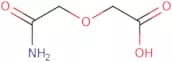
CAS:<p>4-Aminobenzocyclobutene is a monomer that can be used as a crosslinker. It has been shown to have magnetic properties and is soluble in organic solvents such as dioxane and dichloromethane. 4-Aminobenzocyclobutene readily reacts with paraformaldehyde to form the corresponding paraformaldehyde resin, which is insoluble in water and can be used for the preparation of coatings or adhesives. The hydrosilylation reaction between 4-aminobenzocyclobutene and 3-chloropropyl trimethoxysilane leads to the formation of an aminosilane resin, which exhibits a low water absorption rate and high thermal expansion coefficient. This material can also be used for coating or adhesive applications.</p>Formula:C8H7NPurity:Min. 95%Molecular weight:117.15 g/mol(2-Amino-2-oxoethoxy)acetic acid
CAS:<p>2-Amino-2-oxoethoxy)acetic acid is a product that can be used as a transport agent in the process of extracting glycosides. It has been shown to have strong adsorption properties and is able to extract glycosides from plant material. 2-Amino-2-oxoethoxy)acetic acid has a high affinity for calcium, which is an important component in the adsorption mechanism.</p>Formula:C4H7NO4Purity:Min. 95%Molecular weight:133.1 g/molGastrin I (1-14) (human) ammonium salt
CAS:<p>Please enquire for more information about Gastrin I (1-14) (human) ammonium salt including the price, delivery time and more detailed product information at the technical inquiry form on this page</p>Formula:C79H100N16O27Purity:Min. 95%Molecular weight:1,705.73 g/mol5-(H-Gly-Pro-Gly-Pro-amido)-9-[di-(3-sulfonylpropyl)amino]-benzo[a]phenoxazonium perchlorate
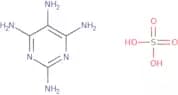
CAS:<p>Please enquire for more information about 5-(H-Gly-Pro-Gly-Pro-amido)-9-[di-(3-sulfonylpropyl)amino]-benzo[a]phenoxazonium perchlorate including the price, delivery time and more detailed product information at the technical inquiry form on this page</p>Formula:C36H42N7O11S2Purity:Min. 95%Molecular weight:812.89 g/mol2,4,5,6-Tetraaminopyrimidine sulphate
CAS:<p>2,4,5,6-Tetraaminopyrimidine sulphate is a chemical compound that is used for the treatment of leukemic mice. It has shown to have anti-inflammatory and anti-cancer properties. This drug binds to the enzyme p-hydroxybenzoic acid that is involved in the synthesis of collagen and elastin. It also suppresses the production of inflammatory cytokines such as TNF-α and IL-1β. 2,4,5,6-Tetraaminopyrimidine sulphate has been used in clinical trials for the treatment of autoimmune diseases and inflammatory diseases such as psoriasis. The drug is currently being researched for use in cancer treatments due to its ability to inhibit cell division and induce apoptosis. 2,4,5,6-Tetraaminopyrimidine sulphate has also been shown to be effective when applied topically on skin as a cosmetic agent or when administered orally as a supplement for</p>Formula:C4H10N6O4SPurity:Min. 95%Color and Shape:Slightly Yellow PowderMolecular weight:238.23 g/molTetraethylammonium bromide
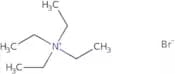
CAS:<p>Tetraethylammonium bromide is an ionic liquid that has a low viscosity and high water solubility. It is used as an antimicrobial agent in the process of producing polymers, such as polyurethane. Tetraethylammonium bromide has been shown to be effective against a broad range of bacteria, including Bacillus subtilis and Escherichia coli. It has also been shown to have a protective effect on neurons by preventing neuronal death in response to oxidative stress. This protection may be due to its ability to increase the concentration of cytosolic Ca2+ ions, which are involved in neuronal survival pathways.</p>Formula:C8H20BrNPurity:Min. 95%Color and Shape:White Off-White PowderMolecular weight:210.16 g/mol(Deamino-Phe19,D-Ala24,D-Pro26-psi(CH2NH)Phe27)-GRP (19-27) (human, porcine, canine) trifluoroacetate salt
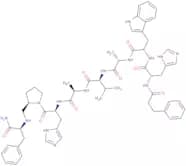
CAS:<p>Please enquire for more information about (Deamino-Phe19,D-Ala24,D-Pro26-psi(CH2NH)Phe27)-GRP (19-27) (human, porcine, canine) trifluoroacetate salt including the price, delivery time and more detailed product information at the technical inquiry form on this page</p>Formula:C57H72N14O8Purity:Min. 95%Molecular weight:1,081.27 g/molDidecylamine
CAS:<p>Didecylamine is an amine that can be used as a cross-linking agent in the production of polyurethane foam. It is synthesized from acetaldehyde, which reacts with hydroxyl groups in the presence of sodium carbonate. The reaction product has a carbonyl group and two hydrochloric acid molecules. Didecylamine has been shown to have transport properties and is used in fatty acid synthesis. This compound also has liver cell toxicity and has been shown to cause cross-linking of human liver cells. Didecylamine binds to cationic surfactants, metal chelates, or multi-walled carbon particles by forming hydrogen bonds with their amines. It also undergoes frequency shifts and can be used as an amine reactant for the production of polyurethane foam due to its high boiling point.</p>Formula:C20H43NPurity:Min. 95%Molecular weight:297.56 g/molZ-L-α-aminobutyric acid
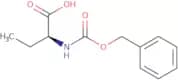
CAS:<p>Z-L-alpha-aminobutyric acid is a homogeneous, optically active, linear phosphinic analogue of alpha-aminobutyric acid. It has been used in the synthesis of phosphinic analogues of cyclosporin and undecapeptides with high yields. The coupling reaction between Z-L-alpha-aminobutyric acid and benzaldehyde was carried out in two steps to produce the desired product. A stepwise condensation between Z-L-alpha-aminobutyric acid and 3,4,5,6 tetrahydropyrimidine was also successful.</p>Formula:C12H15NO4Purity:Min. 98 Area-%Color and Shape:White PowderMolecular weight:237.25 g/mol

![3-Nitro-4-[[(tetrahydropyran-4-yl)methyl]amino]benzenesulfonamide](/_next/image/?url=https%3A%2Fstatic.cymitquimica.com%2Fproducts%2F3D%2Fthumb-webp%2FFN145631.webp&w=3840&q=75)


![5-(H-Gly-Pro-Gly-Pro-amido)-9-[di-(3-sulfonylpropyl)amino]-benzo[a]phenoxazonium perchlorate](/_next/image/?url=https%3A%2Fstatic.cymitquimica.com%2Fproducts%2F3D%2Fthumb-webp%2FFG110995.webp&w=3840&q=75)