Amines
Amines are a set of molecules containing an amino functional group (derived from ammonia). This category includes amines at any level of substitution : primary, secondary, tertiary, and ammonium salts. Amines are fundamental in organic synthesis and are widely used in pharmaceuticals, agrochemicals, and materials science. At CymitQuimica, we provide a comprehensive selection of amines to meet your research and industrial needs. Our range ensures access to various amines for diverse chemical processes and innovative research.
Subcategories of "Amines"
- Nitrosamines(2,606 products)
- Primary Amines(30,798 products)
- Quaternary Ammonium Cations and Salts(1,099 products)
- Secondary Amines(20,785 products)
- Tertiary Amines(17,108 products)
Found 8776 products of "Amines"
Sort by
Purity (%)
0
100
|
0
|
50
|
90
|
95
|
100
(aR)-a-[[[2-(4-Aminophenyl)ethyl]amino]methyl]-benzenemethanol
CAS:<p>Please enquire for more information about (aR)-a-[[[2-(4-Aminophenyl)ethyl]amino]methyl]-benzenemethanol including the price, delivery time and more detailed product information at the technical inquiry form on this page</p>Formula:C16H20N2OPurity:Min. 95%Color and Shape:PowderMolecular weight:256.34 g/mol4-Piperidylformylaminomethyl resin (200-400 mesh)
<p>Please enquire for more information about 4-Piperidylformylaminomethyl resin (200-400 mesh) including the price, delivery time and more detailed product information at the technical inquiry form on this page</p>Purity:Min. 95%Color and Shape:Solid2-chloro-3-fluoropyridin-4-amine
CAS:<p>Please enquire for more information about 2-chloro-3-fluoropyridin-4-amine including the price, delivery time and more detailed product information at the technical inquiry form on this page</p>Formula:C5H4ClFN2Purity:Min. 95%Molecular weight:146.55 g/mol6-Aminopicolinamide
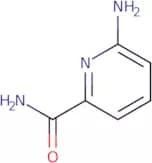
CAS:<p>6-Aminopicolinamide is a metabolite of nicotinamide, which can be found in the urine of humans and animals. 6-Aminopicolinamide has been shown to have anti-leukemic activity against experimental leukemias in animals. The mechanism of action is not well understood but may involve inhibition of nucleotide synthesis or the inhibition of dehydrogenase activity. Clinical trials are underway to determine its efficacy as an anti-tumor agent.</p>Formula:C6H7N3OPurity:Min. 95%Molecular weight:137.14 g/mol(Z-Asp-Glu-Val-Asp)2-Rhodamine 110
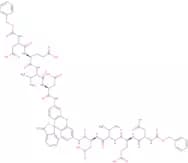
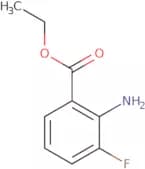
CAS:<p>Fluorogenic dye targeting caspase 3</p>Formula:C72H78N10O27Purity:Min. 95%Molecular weight:1,515.44 g/mol2-Amino-3-fluorobenzoic acid ethyl ester
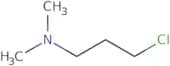
CAS:<p>Please enquire for more information about 2-Amino-3-fluorobenzoic acid ethyl ester including the price, delivery time and more detailed product information at the technical inquiry form on this page</p>Formula:C9H10FNO2Purity:Min. 95%Color and Shape:PowderMolecular weight:183.18 g/mol3-Chloro-N,N-dimethylpropan-1-amine
CAS:<p>3-Chloro-N,N-dimethylpropan-1-amine (3CMP) is a chemical that belongs to the group of organic solvents. It is soluble in water and has a low toxicity for mammals. 3CMP has been shown to have antimicrobial properties against typhimurium and other bacteria. 3CMP binds to the hydroxyl group of biomembranes and interferes with bacterial replication by inhibiting RNA synthesis. The mechanism of this inhibition may be due to the chloride ions that are released from the membrane or may be due to an increase in cell size, which can lead to hypertrophy. 3CMP binds to the chloride ion on bacterial membranes, which inhibits the synthesis of RNA by blocking its ability to bind with the ribosome. This leads to cell death by inhibiting protein synthesis and cell division.</p>Formula:C5H12ClNPurity:Min. 95%Molecular weight:121.61 g/mol(R)-3-[((tert-Butoxy)carbonyl)amino]-4-(2,5-difluorophenyl)butanoic acid
CAS:<p>Please enquire for more information about (R)-3-[((tert-Butoxy)carbonyl)amino]-4-(2,5-difluorophenyl)butanoic acid including the price, delivery time and more detailed product information at the technical inquiry form on this page</p>Formula:C15H19F2NO4Purity:Min. 95%Molecular weight:315.31 g/molN-[2-[(2-Bromo-4,6-dinitrophenyl)azo]-5-(diethylamino)phenyl]acetamide
CAS:<p>N-2-[(2-bromo-4,6-dinitrophenyl)azo]-5-(diethylamino)phenyl]acetamide (NBDPA) is a yellowish solid that is soluble in water. It has a molecular weight of 308.3 and chemical formula C14H21BrN2O4. NBDPA is used as an analytical reagent for the kinetic data of liver cells and in wastewater treatment. This compound has been shown to exhibit carcinogenic potential in rats, causing genetic damage to the DNA of liver cells and kidney tissue. NBDPA has also been shown to be toxic to fish embryos and larvae, with significant effects on the development of larvae at high concentrations.</p>Formula:C18H19BrN6O5Purity:90%MinMolecular weight:479.28 g/molMethyltetrazine amine
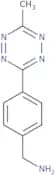
CAS:<p>A building block used for derivatization of carboxylic acids or activated esters with methytetrazine moiety. The stability of Methyltetrazine Amine is substantially improved compared to hydrogen substituted tetrazine-tmine. Superior stability of methyltetrazine-amine allows this reagent to be used in wider range of chemical transformations. Long-term storage of methyltetrazine-amine, especially in aqueous buffer, is also greatly improved compared to Tetrazine Amine.Supplied as the HCl salt</p>Formula:C10H11N5Purity:Min. 95%Color and Shape:PowderMolecular weight:201.23 g/moltrans 4-Dimethylaminocrotonic acid HCl
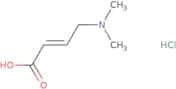
CAS:<p>Intermediate in the synthesis of afatinib</p>Formula:C6H12ClNO2Purity:Min. 95%Color and Shape:White To Off-White SolidMolecular weight:165.62 g/mol4-Amino-6-chloro-1,3-benzenedisulfonamide
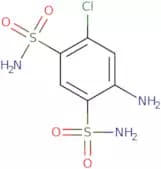
CAS:<p>4-Amino-6-chloro-1,3-benzenedisulfonamide is a natural substance that has been used in Chinese medicine preparations for the treatment of cardiac problems. It belongs to the class of organic compounds called benzenedisulfonamides. 4-Amino-6-chloro-1,3-benzenedisulfonamide is produced by the bacterial enzyme aminase from amino acid and benzoic acid. The adsorption mechanism of 4-Amino-6-chloro-1,3-benzenedisulfonamide is not fully understood, but it is believed that the benzyl groups are key players in this process. The high affinity of 4-Amino-6-chloro1,3 benzenedisulfonamide to proteins may be due to its ability to form hydrogen bonds with protein side chains, such as serine or threonine residues. 4 Amino</p>Formula:C6H8ClN3O4S2Purity:Min. 95%Color and Shape:White To Light Brown SolidMolecular weight:285.73 g/molOM99-2trifluoroacetate salt
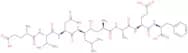
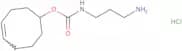
CAS:<p>Please enquire for more information about OM99-2trifluoroacetate salt including the price, delivery time and more detailed product information at the technical inquiry form on this page</p>Formula:C41H64N8O14Purity:Min. 95%Molecular weight:892.99 g/molTCO-amine hydrochloride
CAS:<p>Please enquire for more information about TCO-amine hydrochloride including the price, delivery time and more detailed product information at the technical inquiry form on this page</p>Formula:C12H22N2O2•HClPurity:Min. 95%Color and Shape:PowderMolecular weight:262.78 g/mol3-(Boc-amino)pyridine
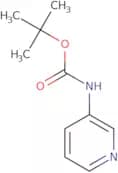
CAS:<p>3-(Boc-amino)pyridine is a glycine derivative with a trigonal, chelate ring. It can be hydrolyzed by acid to form 3-aminopyridine. 3-(Boc-amino)pyridine has been shown to react with trimethyltin chloride to form an intramolecular complex in the presence of alkyllithiums. This reaction proceeds through lithiation and methylation of the carboxyl group of 3-(Boc-amino)pyridine. The interaction between 3-(Boc-amino)pyridine and trimethyltin chloride forms an antiaromatic six membered ring that resembles a benzene molecule.</p>Formula:C10H14N2O2Purity:Min. 95%Molecular weight:194.23 g/molIsoprenaline sulphate dihydrate
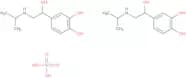
CAS:<p>4-[1-Hydroxy-2-[(1-methylethyl)amino]ethyl]-1,2-benzenediol sulfate dihydrate (benserazide) is a cholinergic agent that has been shown to increase the release of acetylcholine by acting as an agonist at nicotinic receptors. It increases the amount of acetylcholine released in the brain and can be used for the treatment of Alzheimer's disease. Benserazide has also been shown to have a depressant effect on the respiratory system, which can be beneficial for lung diseases. This drug also has anti-inflammatory properties and can inhibit growth factor synthesis.</p>Formula:C22H34N2O6·H2SO4·2H2OPurity:Min. 95%Color and Shape:PowderMolecular weight:520.59 g/mol5-Bromoquinolin-6-amine
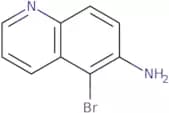
CAS:<p>Please enquire for more information about 5-Bromoquinolin-6-amine including the price, delivery time and more detailed product information at the technical inquiry form on this page</p>Formula:C9H7BrN2Purity:Min. 95%Molecular weight:223.07 g/mol4-Piperidylacetylaminomethyl resin (200-400 mesh)
<p>Please enquire for more information about 4-Piperidylacetylaminomethyl resin (200-400 mesh) including the price, delivery time and more detailed product information at the technical inquiry form on this page</p>Purity:Min. 95%N,N,N',N'-Tetrakis(4-aminophenyl)-1,4-phenylenediamine
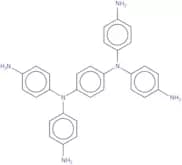
CAS:<p>TPD is a versatile building block and intermediate that is used as a research chemical and speciality chemical. TPD is an important and useful scaffold in organic chemistry, which can be used to produce various compounds. It is also a reagent for the synthesis of low-molecular-weight compounds with a wide range of applications, such as pharmaceuticals, agrochemicals, dyes, fragrances, etc. TPD is soluble in water and can be easily purified by recrystallization or column chromatography. TPD has been shown to have high quality and purity because it does not contain any impurities.</p>Formula:C30H28N6Purity:Min. 95%Color and Shape:Brown PowderMolecular weight:472.59 g/mol4-(2',4'-Dimethoxyphenyl-Fmoc-aminomethyl)-phenoxymethyl-polystyrene resin (200-400 mesh)
<p>Please enquire for more information about 4-(2',4'-Dimethoxyphenyl-Fmoc-aminomethyl)-phenoxymethyl-polystyrene resin (200-400 mesh) including the price, delivery time and more detailed product information at the technical inquiry form on this page</p>Purity:Min. 95%
![(aR)-a-[[[2-(4-Aminophenyl)ethyl]amino]methyl]-benzenemethanol](/_next/image/?url=https%3A%2Fstatic.cymitquimica.com%2Fproducts%2F3D%2Fthumb-webp%2FFA75045.webp&w=3840&q=75)


![(R)-3-[((tert-Butoxy)carbonyl)amino]-4-(2,5-difluorophenyl)butanoic acid](/_next/image/?url=https%3A%2Fstatic.cymitquimica.com%2Fproducts%2F3D%2Fthumb-webp%2FFB103971.webp&w=3840&q=75)
![N-[2-[(2-Bromo-4,6-dinitrophenyl)azo]-5-(diethylamino)phenyl]acetamide](/_next/image/?url=https%3A%2Fstatic.cymitquimica.com%2Fproducts%2F3D%2Fthumb-webp%2FFB151321.webp&w=3840&q=75)