Amines
Amines are a set of molecules containing an amino functional group (derived from ammonia). This category includes amines at any level of substitution : primary, secondary, tertiary, and ammonium salts. Amines are fundamental in organic synthesis and are widely used in pharmaceuticals, agrochemicals, and materials science. At CymitQuimica, we provide a comprehensive selection of amines to meet your research and industrial needs. Our range ensures access to various amines for diverse chemical processes and innovative research.
Subcategories of "Amines"
- Nitrosamines(2,608 products)
- Primary Amines(30,798 products)
- Quaternary Ammonium Cations and Salts(1,099 products)
- Secondary Amines(20,785 products)
- Tertiary Amines(17,108 products)
Found 8776 products of "Amines"
Sort by
Purity (%)
0
100
|
0
|
50
|
90
|
95
|
100
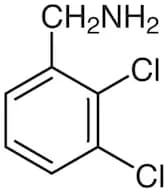
2,3-Dichlorobenzylamine
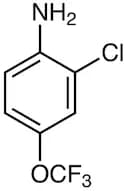
CAS:Formula:C7H7Cl2NPurity:>98.0%(GC)(T)Color and Shape:Colorless to Light orange to Yellow clear liquidMolecular weight:176.042-Chloro-4-(trifluoromethoxy)aniline
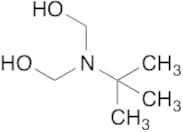
CAS:Formula:C7H5ClF3NOPurity:>97.0%(GC)(T)Color and Shape:Colorless to Light yellow to Light orange clear liquidMolecular weight:211.57N,N-Bis(hydroxymethyl)tert-butylamine
CAS:Controlled ProductFormula:C6H15NO2Color and Shape:NeatMolecular weight:133.189Ethyl 3-(Butanoylamino)-2-oxobutanoate
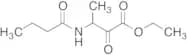
CAS:Controlled Product<p>Applications Ethyl 3-(Butanoylamino)-2-oxobutanoate s a reactant used to prepare Vardenafil (V098001, 2HCl salt) which is a selective phosphodiesterase type 5 (PDE5) inhibitor.<br>References Bischoff, E., et al.: J. Urol., 165, 1316 (2001), Kim, N.N., et al.: Life Sci., 69, 2249 (2001), Kendirci, M., et al.: Expert Opin. Pharmacother., 5, 923 (2004)<br></p>Formula:C10H17NO4Color and Shape:NeatMolecular weight:215.251,3-Dimethyl-5-[(dimethylamino)methylene]2,4,6-(1H,3H,5H)-trioxopryimidine
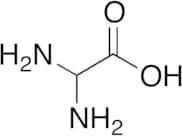
CAS:Controlled ProductFormula:C9H13N3O3Color and Shape:NeatMolecular weight:211.222,2-Diaminoacetic Acid
CAS:Controlled ProductFormula:C2H6N2O2Color and Shape:NeatMolecular weight:90.081Ammonium iron(III) sulfate dodecahydrate
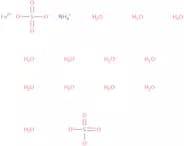
CAS:<p>Ammonium iron(III) sulfate dodecahydrate is a water-soluble inorganic salt that can be used as an oxidizing agent to reduce the color of stains. It has been shown to have good growth kinetics and is easy to use. Ammonium iron(III) sulfate dodecahydrate is an inorganic acid that can be used as a reagent for extractions. It has been found to have good extraction yield and particle size, which makes it ideal for use in polymer films. Ammonium iron(III) sulfate dodecahydrate reacts with hydroxyl groups and forms p-hydroxybenzoic acid, which can be used in clinical pathology tests.</p>Formula:NH4Fe(SO4)2•(H2O)12Purity:Min. 95%Color and Shape:PowderMolecular weight:482.19 g/molRef: 3D-FA40933
Discontinued productAmmonium Hexafluoroniobate
CAS:<p>Ammonium hexafluoroniobate is an organosilicon compound that does not react with water and is used as a solvent for other organics. It can be activated to form a reactive surface by treatment with a metal such as copper or aluminum, which can then be used in the treatment of metals. Ammonium hexafluoroniobate has been used as a diagnostic agent and diagnostic reagent in various reactions at different temperatures. It has also been used as the photoreceptor in electrophotographic printing processes, where it is exposed to light-sensitive material and then developed using organic solvents.</p>Formula:F6H4NNbPurity:Min. 95%Molecular weight:224.94 g/molAmmonium metavanadate
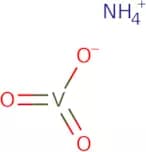
CAS:<p>Ammonium metavanadate is a compound with the chemical formula NH4VO3. It is an oxidizing agent that can be used in wastewater treatment to remove organic and inorganic contaminants from wastewater streams. The product has been shown to be a strong catalyst for the oxidation of ammonium, water vapor, and sulphur dioxide at ambient temperature. Ammonium metavanadate has been studied extensively as a catalyst for the removal of volatile organic substances (VOS) from gas streams, and is considered to be one of the most efficient catalysts currently available. Ammonium metavanadate also increases cytosolic calcium levels in human cells by promoting its release from intracellular stores.</p>Formula:NH4VO3Purity:Min. 98%Molecular weight:116.98 g/molAmmonium hydroxide - 28% NH3 in H2O
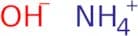
CAS:Controlled Product<p>Ammonium hydroxide is a chemical compound that is used to remove sodium salts from water in the treatment of wastewater. Ammonium hydroxide is also an analytical reagent for the determination of ammonium ions by titration, and is used as a polymerization catalyst. It can be used to produce glycol ethers, which are solvents with low toxicity and high boiling points. The reaction mechanism involves the conversion of hydrogen fluoride (HF) to hydrofluoric acid (HF), which reacts with ammonia to form ammonium fluoride (NH4F). This reaction produces heat and gives off water vapor. Ammonium hydroxide is a weak base, so it will react with any strong acid, such as hydrochloric acid or sulfuric acid, but not with weak acids such as acetic acid or phosphoric acid.</p>Formula:NH4OHPurity:Min. 95%Color and Shape:Clear LiquidMolecular weight:35.05 g/molRef: 3D-FA35279
Discontinued product7-Amino nitrazepam
CAS:Controlled Product<p>7-Amino nitrazepam is a metabolite of the benzodiazepine drug flunitrazepam. It is formed in the liver by cytochrome P450 and excreted in the urine. 7-Amino nitrazepam has been shown to have inhibitory effects on human liver and human serum. The inhibitory activity was found to be more potent than that of flunitrazepam, but less potent than that of alprazolam. 7-Amino nitrazepam was also found to inhibit rat liver microsomes, which could lead to a higher potency in vivo. This study also showed that 7-Amino nitrazepam is absorbed from the gastrointestinal tract and distributed into all tissues, including the brain, and can be detected in blood serum and urine samples.</p>Formula:C15H13N3OPurity:Min. 95%Molecular weight:251.28 g/molRef: 3D-FA17373
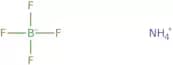
Discontinued productAmmonium tetrafluoroborate
CAS:<p>Ammonium tetrafluoroborate is a salt of the organic compound tetrafluoroborate and ammonium. It is a colorless solid that can be used as a chemical reagent. Ammonium tetrafluoroborate has a higher chemical stability than other salts of tetrafluoroborate, such as ammonium hexafluorophosphate and ammonium hexafluoroarsenate. Ammonium tetrafluoroborate is used to make the dinucleotide phosphate, which is an important component in DNA synthesis. In a redox potential test, ammonium tetrafluoroborate showed no electrochemical activity in water vapor at pH 7. Ammonium tetrafluoroborate reacts with trifluoroacetic acid to produce hydrogen fluoride and ammonium chloride. This reaction is reversible, which means that it can be used for the synthesis of ammonia gas from hydrogen and nitrogen gases or for the</p>Formula:NH4BF4Purity:Min. 98%Color and Shape:White PowderMolecular weight:104.84 g/molRef: 3D-FA55588
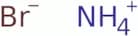
Discontinued productAmmonium bromide
CAS:<p>Ammonium bromide is a chemical compound used in wastewater treatment. It is the active ingredient in a number of water purification methods, including those used to remove nitrates and heavy metals. Ammonium bromide also has inhibitory properties on the release of neurotransmitters from nerve cells. This inhibition of neurotransmitter release may be due to its ability to inhibit the action of neurokinin-1 receptor (NK-1) at the synapse. Ammonium bromide has been shown to have some toxic effects on the heart, although it does not appear to be toxic to other organs or tissues. Experimental solubility data shows that this solution is soluble in water, but insoluble in ethanol and ether. 4-Hydroxycinnamic acid, which can be found in coffee beans, has been shown to increase ammonium bromide solubility in water solutions by forming an inclusion complex with ammonium bromide.</p>Formula:H4BrNPurity:Min. 95%Color and Shape:White SolidMolecular weight:97.94 g/molRef: 3D-FA33731
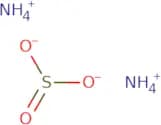
Discontinued productAmmonium sulfite
CAS:<p>Ammonium sulfite is a chemical compound that is used as an additive in wastewater treatment and as a reagent in organic synthesis. The reaction solution contains ammonium sulfite, sodium carbonate, and water. It has been shown to be toxic to animals when administered at high doses. Ammonium sulfite does not react with hydrogen fluoride or water and it is not soluble in anhydrous sodium. The polymerase chain reaction (PCR) technique has been used to study the reaction mechanism of ammonium sulfite. The reactions are catalysed by metal hydroxides such as magnesium hydroxide and aluminium hydroxide, which are present at the surface of the solid phase.</p>Formula:(NH4)2SO3Purity:Min. 95%Color and Shape:PowderMolecular weight:116.14 g/molRef: 3D-FA164872
Discontinued productAmmonium sulphate
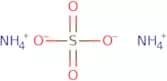
CAS:<p>Ammonium sulphate is a white, crystalline solid that is used as a fertilizer and in the manufacture of paper. Ammonium sulphate is an ammonium salt of sulfuric acid with the chemical formula NH4HSO4. It is most often used as a fertilizer, although it has many other uses. Ammonium sulfate enhances the absorption of water vapor by plants, which increases their ability to grow. The optimum concentration for ammonium sulfate is from 20-40 g/L. Ammonium sulfate also increases the rate of synthesis of RNA and proteins in cells. This may be because it provides sulfur for enzymes involved in energy metabolism and protein synthesis. Ammonium sulfate has been shown to have synergistic effects with zirconium oxide, allowing more rapid dissolution in water than would be expected from its solubility alone. Ammonium sulfate reacts with bowel disease causing inflammation and ulceration due to its effect on bowel flora (e</p>Formula:H8N2O4SPurity:Min. 95%Color and Shape:White Clear LiquidMolecular weight:132.14 g/molRef: 3D-FA30582
Discontinued productDiammonium hydrogenphosphate
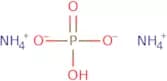
CAS:<p>Diammonium hydrogenphosphate is a monoammonium or diammonium phosphate salt of the phosphoric acid. It is used as a fertilizer and in analytical chemistry. Diammonium hydrogenphosphate is often used in wastewater treatment, because it has high solubility and low toxicity. Diammonium hydrogenphosphate can be synthesized by the reaction of ammonium phosphate with magnesium and ammonium hydroxide. This compound has synergic effects with magnesium, which may be due to its ability to reduce enzyme activities in the cell membrane. Diammonium hydrogenphosphate also has an effect on calcium-protein binding and phosphorus pentoxide crystallization.</p>Formula:H9N2O4PPurity:(%) Min. 99%Color and Shape:PowderMolecular weight:132.06 g/molRef: 3D-FD44626
Discontinued product


![1,3-Dimethyl-5-[(dimethylamino)methylene]2,4,6-(1H,3H,5H)-trioxopryimidine](/_next/image/?url=https%3A%2Fstatic.cymitquimica.com%2Fproducts%2FTR%2Fthumb-webp%2FD472550.webp&w=3840&q=75)