Amines
Subcategories of "Amines"
- Nitrosamines(3,127 products)
- Primary Amines(30,967 products)
- Quaternary Ammonium Cations and Salts(1,110 products)
- Secondary Amines(20,913 products)
- Tertiary Amines(17,219 products)
Found 8795 products of "Amines"
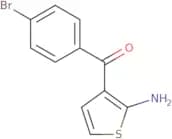
(2-Aminothiophen-3-yl)(4-bromophenyl)methanone
CAS:2-Aminothiophen-3-yl)(4-bromophenyl)methanone is a new compound that is being developed as a potential antiviral agent. Covid-19, the trade name for 2-aminothiophen-3-yl)(4-bromophenyl)methanone, prevents the replication of viruses by binding to their nucleic acids and blocking their ability to produce proteins. Covid-19 has been shown to be effective against both influenza A and B viruses in cellular and animal models. The antiviral activity of Covid-19 is due to its ability to bind to viral nucleic acid, preventing the production of proteins vital for viral replication. This compound has also been shown to have anti-inflammatory properties, which may be due to its ability to inhibit the production of amyloid plaques in mice with Alzheimer's disease.
Formula:C11H8BrNOSPurity:Min. 95%Molecular weight:282.16 g/molRef: 3D-FA54199
Discontinued product3-Amino-1,2,4-triazole
CAS:3-Amino-1,2,4-triazole is a fine chemical that has been used as a versatile building block in the synthesis of complex compounds. It reacts with many different types of molecules to form covalent bonds, and can also be used as a reactant in many organic reactions, such as the formation of amides. 3-Amino-1,2,4-triazole is not currently available commercially but can be synthesized in the laboratory from readily available starting materials. 3-Amino-1,2,4-triazole is a high quality chemical with few impurities that is suitable for use in research or industrial settings.
Formula:C2H4N4Molecular weight:84.08 g/molRef: 3D-A-7200
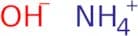
Discontinued productAmmonium hydroxide - 28% NH3 in H2O
CAS:Controlled ProductAmmonium hydroxide is a chemical compound that is used to remove sodium salts from water in the treatment of wastewater. Ammonium hydroxide is also an analytical reagent for the determination of ammonium ions by titration, and is used as a polymerization catalyst. It can be used to produce glycol ethers, which are solvents with low toxicity and high boiling points. The reaction mechanism involves the conversion of hydrogen fluoride (HF) to hydrofluoric acid (HF), which reacts with ammonia to form ammonium fluoride (NH4F). This reaction produces heat and gives off water vapor. Ammonium hydroxide is a weak base, so it will react with any strong acid, such as hydrochloric acid or sulfuric acid, but not with weak acids such as acetic acid or phosphoric acid.
Formula:NH4OHPurity:Min. 95%Color and Shape:Clear LiquidMolecular weight:35.05 g/molRef: 3D-FA35279
Discontinued productAmmonium Hexafluoroniobate
CAS:Ammonium hexafluoroniobate is an organosilicon compound that does not react with water and is used as a solvent for other organics. It can be activated to form a reactive surface by treatment with a metal such as copper or aluminum, which can then be used in the treatment of metals. Ammonium hexafluoroniobate has been used as a diagnostic agent and diagnostic reagent in various reactions at different temperatures. It has also been used as the photoreceptor in electrophotographic printing processes, where it is exposed to light-sensitive material and then developed using organic solvents.
Formula:F6H4NNbPurity:Min. 95%Molecular weight:224.94 g/mol2-Diethylamino)ethanol hydrochloride
CAS:Controlled Product2-Diethylamino)ethanol hydrochloride is a chemical compound that is used in analytical chemistry as a stationary phase for thin layer chromatography. Sephadex G-100 was developed by Pharmacia & Upjohn Company and marketed in the 1970s. It has been shown to be useful in plasma mass spectrometry experiments, which measure the molecular weight of proteins and other compounds. The solubility of 2-diethylamino)ethanol hydrochloride has been studied using experimental solubility data, electrochemical impedance spectroscopy, and amines. The reaction mechanism of 2-diethylamino)ethanol hydrochloride is not well understood but it appears to involve potassium dichromate, hydrochloric acid, fluoroacetic acid, benzalkonium chloride and other chemicals.
Formula:C6H16ClNOPurity:Min. 95%Molecular weight:153.65 g/molRef: 3D-FD21828
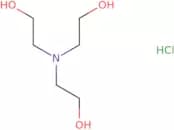
Discontinued productTriethanolamine hydrochloride
CAS:Controlled ProductTriethanolamine hydrochloride, widely known as TEA-HCl, is a buffer used in biochemistry to maintain a stable pH in the range of 7.3 to 8.3 during processes like protein extraction and purification. They are also used in enzyme assays.
Formula:C6H15NO3·HClPurity:Min. 95%Color and Shape:PowderMolecular weight:185.65 g/molRef: 3D-FT46965
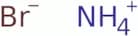
Discontinued productAmmonium bromide
CAS:Ammonium bromide is a chemical compound used in wastewater treatment. It is the active ingredient in a number of water purification methods, including those used to remove nitrates and heavy metals. Ammonium bromide also has inhibitory properties on the release of neurotransmitters from nerve cells. This inhibition of neurotransmitter release may be due to its ability to inhibit the action of neurokinin-1 receptor (NK-1) at the synapse. Ammonium bromide has been shown to have some toxic effects on the heart, although it does not appear to be toxic to other organs or tissues. Experimental solubility data shows that this solution is soluble in water, but insoluble in ethanol and ether. 4-Hydroxycinnamic acid, which can be found in coffee beans, has been shown to increase ammonium bromide solubility in water solutions by forming an inclusion complex with ammonium bromide.
Formula:H4BrNPurity:Min. 95%Color and Shape:White SolidMolecular weight:97.94 g/molRef: 3D-FA33731
Discontinued productBis(hydroxyethyl)methylamine
CAS:Controlled ProductBis(hydroxyethyl)methylamine is a chemical compound that is used in wastewater treatment. It is a strong base that can be used to remove nitrogen compounds, such as ammonia and nitrite, from wastewater. The process optimization of the thermal expansion of Bis(hydroxyethyl)methylamine has been studied. This chemical has been found to inhibit the growth of bacteria and fungi, which may be due to its ability to disrupt protein synthesis by interfering with the enzyme fatty acid synthase.
Formula:C5H13NO2Purity:Min. 95%Molecular weight:119.16 g/molRef: 3D-FB18727
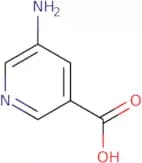
Discontinued product5-Aminopyridine-3-carboxylic acid
CAS:5-Aminopyridine-3-carboxylic acid (5APC) is a structural analog of nicotinic acid that has been shown to have anti-inflammatory effects. 5APC inhibits the production of inflammatory cytokines, such as IL-10 and IL-17, by inhibiting the activation of NFκB and MAPK pathways. This drug also has significant inhibitory activities against dextran sulfate sodium (DSS)-induced acute colitis in experimental models. 5APC is thought to act by interrupting the assembly of p38 mitogen activated protein kinase (MAPK) and nuclear factor kappa B (NFκB) signaling complexes.
Formula:C6H6N2O2Purity:Min. 95%Molecular weight:138.12 g/molRef: 3D-FA66664
Discontinued product2-Dimethylaminoethanol (+)-bitartrate salt
CAS:Controlled Product2-Dimethylaminoethanol (+)-bitartrate salt is a potent, reversible inhibitor of protein synthesis that binds reversibly to the 50S ribosomal subunit. It is used in regulatory toxicology and clinical pathology as a positive control for the study of chronic toxicity and long-term effects. 2-Dimethylaminoethanol (+)-bitartrate salt has shown no treatment effect on ovary weight or estrous cycle length in female Sprague-Dawley rats after chronic exposure and long-term exposure at doses up to 1,000 mg/kg/day. This drug has also shown no effect on rat fertility or reproductive performance, indicating it does not cause reproductive toxicity.
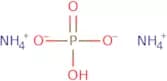
Formula:C4H11NO·C4H6O6Color and Shape:White Off-White PowderMolecular weight:239.22 g/molDiammonium hydrogenphosphate
CAS:Diammonium hydrogenphosphate is a monoammonium or diammonium phosphate salt of the phosphoric acid. It is used as a fertilizer and in analytical chemistry. Diammonium hydrogenphosphate is often used in wastewater treatment, because it has high solubility and low toxicity. Diammonium hydrogenphosphate can be synthesized by the reaction of ammonium phosphate with magnesium and ammonium hydroxide. This compound has synergic effects with magnesium, which may be due to its ability to reduce enzyme activities in the cell membrane. Diammonium hydrogenphosphate also has an effect on calcium-protein binding and phosphorus pentoxide crystallization.
Formula:H9N2O4PPurity:(%) Min. 99%Color and Shape:PowderMolecular weight:132.06 g/molRef: 3D-FD44626
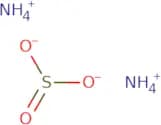
Discontinued productAmmonium sulfite
CAS:Ammonium sulfite is a chemical compound that is used as an additive in wastewater treatment and as a reagent in organic synthesis. The reaction solution contains ammonium sulfite, sodium carbonate, and water. It has been shown to be toxic to animals when administered at high doses. Ammonium sulfite does not react with hydrogen fluoride or water and it is not soluble in anhydrous sodium. The polymerase chain reaction (PCR) technique has been used to study the reaction mechanism of ammonium sulfite. The reactions are catalysed by metal hydroxides such as magnesium hydroxide and aluminium hydroxide, which are present at the surface of the solid phase.
Formula:(NH4)2SO3Purity:Min. 95%Color and Shape:PowderMolecular weight:116.14 g/molRef: 3D-FA164872
Discontinued productAmmonium sulphate
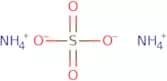
CAS:Ammonium sulphate is a white, crystalline solid that is used as a fertilizer and in the manufacture of paper. Ammonium sulphate is an ammonium salt of sulfuric acid with the chemical formula NH4HSO4. It is most often used as a fertilizer, although it has many other uses. Ammonium sulfate enhances the absorption of water vapor by plants, which increases their ability to grow. The optimum concentration for ammonium sulfate is from 20-40 g/L. Ammonium sulfate also increases the rate of synthesis of RNA and proteins in cells. This may be because it provides sulfur for enzymes involved in energy metabolism and protein synthesis. Ammonium sulfate has been shown to have synergistic effects with zirconium oxide, allowing more rapid dissolution in water than would be expected from its solubility alone. Ammonium sulfate reacts with bowel disease causing inflammation and ulceration due to its effect on bowel flora (e
Formula:H8N2O4SPurity:Min. 95%Color and Shape:White Clear LiquidMolecular weight:132.14 g/molRef: 3D-FA30582
Discontinued product3-Amino-4-fluorobenzoic acid
CAS:3-Amino-4-fluorobenzoic acid is a hydrocarbon that is used as an analgesic. It has been shown to be nontoxic and has analgesic effects in the intestinal tract. 3-Amino-4-fluorobenzoic acid also has radiopaque properties, which makes it useful for diagnosis and treatment of certain types of cancer and other tumors. The analgesic effect of 3-amino-4-fluorobenzoic acid may be due to its ability to act as a competitive antagonist at the N -methyl--aspartate (NMDA) receptor, which is important in pain perception.
Formula:C7H6FNO2Purity:Min. 95%Molecular weight:155.13 g/molRef: 3D-FA64177
Discontinued productEDTA ferric ammonium
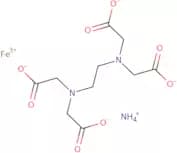
CAS:EDTA ferric ammonium is a metal complex that is used in the manufacture of textile dyes. EDTA ferric ammonium is an oxidizing agent that can be used as a reducing agent by adding an oxidizing agent such as potassium permanganate. The solution form of this compound has a particle size distribution with a median particle size of about 0.5 micrometers and a polydispersity index of about 2. In addition, it has been shown to have surfactant properties, which may be due to its ability to interact with the surface tension of water molecules. EDTA ferric ammonium has also been shown to react with silver ions to form silver ethylene diamine tetraacetic acid (AgEDTA), which can then be used for patterning purposes in textiles.
Formula:C10H12FeN2O8•NH4Purity:80%MinColor and Shape:PowderMolecular weight:362.09 g/molRef: 3D-FF147350
Discontinued product