Cyano-, Nitrile-
Found 9677 products of "Cyano-, Nitrile-"
Pyrazolo[1,5-a]pyrazine-7-carbonitrile, 4,5,6,7-tetrahydro-5-(phenylmethyl)-
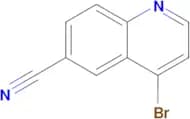
CAS:Purity:97%Molecular weight:238.294006347656254-Bromoquinoline-6-carbonitrile
CAS:Formula:C10H5BrN2Purity:98%Color and Shape:SolidMolecular weight:233.0689-(Diethylamino)-5-oxo-5H-benzo[a]phenoxazine-6-carbonitrile
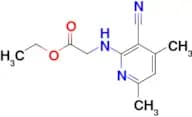
CAS:Purity:95+%Molecular weight:343.385986328125Ethyl (3-cyano-4,6-dimethylpyridin-2-ylamino)acetate
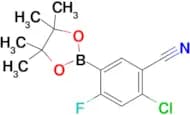
CAS:Formula:C12H15N3O2Purity:95.0%Color and Shape:SolidMolecular weight:233.2712-Chloro-4-fluoro-5-(4,4,5,5-tetramethyl-1,3,2-dioxaborolan-2-yl)benzonitrile
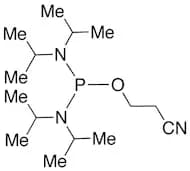
CAS:Formula:C13H14BClFNO2Purity:95.0%Color and Shape:SolidMolecular weight:281.522-Cyanoethyl N,N,N’,N’-Tetraisopropylphosphoramidite
CAS:Controlled ProductStability Explodes When Heated
Applications 2-Cyanoethyl N,N,N’,N’-Tetraisopropylphosphoramidite (cas# 102691-36-1) is a compound useful in organic synthesis.
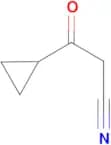
Not a dangerous good if item is equal to or less than 1g/ml and there is less than 100g/ml in the packageFormula:C15H32N3OPColor and Shape:NeatMolecular weight:301.413-Cyclopropyl-3-oxopropanenitrile
CAS:Purity:95.0%Color and Shape:LiquidMolecular weight:109.12799835205078Ref: 10-F050555
5gTo inquire10gTo inquire25gTo inquire50gTo inquire100gTo inquire100mgTo inquire250gTo inquire250mgTo inquire500gTo inquire1g16.00€1-[Bis(4-cyanophenyl)methyl]-1,2,4-triazole
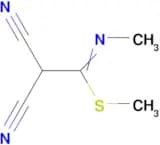
CAS:Purity:97.0%Color and Shape:SolidMolecular weight:285.309997558593752-(Methylamino-methylsulfanyl-methylene)-malononitrile
CAS:Purity:95.0%Molecular weight:153.19999694824225-amino-3-oxo-3,4-dihydro-2H-pyrrole-4-carbonitrile
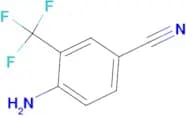
CAS:Purity:95%Molecular weight:123.114997863769532-Amino-5-cyanobenzotrifluoride
CAS:Formula:C8H5F3N2Purity:97%Color and Shape:Light brown crystalline powderMolecular weight:186.137TERT-BUTYL 4-(7-CHLOROQUINOLIN-4-YL)-4-CYANOPIPERIDINE-1-CARBOXYLATE
CAS:Purity:95.0%Molecular weight:371.86999511718752-[Cyano(4-fluorophenyl)methyl]benzonitrile
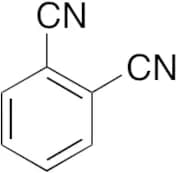
CAS:Formula:C15H9FN2Purity:95.0%Color and Shape:SolidMolecular weight:236.2491,2-Dicyanobenzene
CAS:Controlled ProductApplications Phthalodinitrile monomers can be polymerized thermally in the presence of small amounts of curing agents into thermosetting polymers. Phthalodinitrile is a precursor to phthalocyanine which is used as a dye or pigment.
References Sastri, S. B. and Keller, T. M.: J. Polym. Sci. A Polym. Chem., 36, 1885-1890(1998), Löbbert, G. Phthalocyanines. In Ullmann's Encyclopedia of Industrial Chemistry, (Ed.)., (2000).Formula:C8H4N2Color and Shape:NeatMolecular weight:128.1316,7-Bis(benzyloxy)-4-oxo-1,4-dihydroquinoline-3-carbonitrile
CAS:Purity:98%Molecular weight:382.419006347656252-Isopropyl-2,3-dimethylbutyronitrile
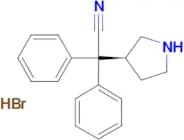
CAS:Purity:95.0%Color and Shape:LiquidMolecular weight:139.242004394531252,2-Diphenylcyclopropanecarbonitrile
CAS:Purity:95.0%Color and Shape:Liquid, No data available.Molecular weight:219.28700256347656(S)-2,2-Diphenyl-2-(pyrrolidin-3-yl)acetonitrile hydrobromide
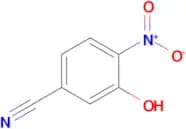
CAS:Purity:97%Molecular weight:343.268005371093753-Hydroxy-4-nitrobenzonitrile
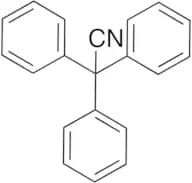
CAS:Formula:C7H4N2O3Purity:98%Color and Shape:SolidMolecular weight:164.12Triphenylacetonitrile
CAS:Controlled ProductApplications Triphenylacetonitrile is used as a reactant in the rhodium-catalyzed reductive cleavage of carbon-cyano bonds with hydrosilane.
References Tobisu, M., et al.: JACS., 131, 3174 (2009)Formula:C20H15NColor and Shape:NeatMolecular weight:269.342-(4-tert-Butyl-phenoxy)acetonitrile
CAS:2-(4-tert-Butyl-phenoxy)acetonitrile is a high quality, reagent, complex compound that is useful as a building block in the synthesis of fine chemicals and speciality chemicals. 2-(4-tert-Butyl-phenoxy)acetonitrile can be used as an intermediate in the synthesis of various pharmaceuticals and agrochemicals. It has a CAS number of 50635-24-0. This chemical is also useful for research purposes.
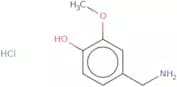
Formula:C12H15NOPurity:(%) Min. 85%Color and Shape:PowderMolecular weight:189.25 g/mol4-Hydroxy-3-methoxybenzylamine hydrochloride
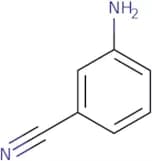
CAS:4-Hydroxy-3-methoxybenzylamine hydrochloride is a reagent, complex compound and useful intermediate for the production of speciality chemicals. CAS No. 7149-10-2 is not a hazardous chemical and does not pose any significant risk to human health or the environment when used as intended. This chemical has many uses including being a useful scaffold in organic synthesis, a useful building block for the preparation of other compounds, and a versatile building block for the preparation of various compounds. It also has many applications in research such as being an intermediate for the synthesis of other compounds, or as a reactant in various reactions.Formula:C8H12NO2ClPurity:Min. 98 Area-%Color and Shape:White PowderMolecular weight:189.64 g/mol3-Aminobenzonitrile
CAS:3-Aminobenzonitrile is an amine that has been shown to inhibit the growth of bacteria. It was synthesized by the reaction of nitrobenzene with benzamide in the presence of acetic acid. The chemical structure of 3-aminobenzonitrile is similar to that of a group of natural amino acids, including cysteine and tryptophan, which are known inhibitors of bacterial growth. This compound is soluble in organic solvents and can be used as an injection solution. 3-Aminobenzonitrile has been evaluated by kinetic studies and found to have a high affinity for bacterial cells, with an inhibition constant (Ki) value of 0.37 mM. It is also active against other microorganisms such as yeast or mold fungi, but not against plant or animal cells. 3-Aminobenzonitrile inhibits the synthesis of proteins by binding to a number of different sites on the ribosomes where
Purity:Min. 95%Color and Shape:Yellow PowderMolecular weight:118.14 g/mol(3-Methoxyphenyl)acetonitrile
CAS:3-Methoxyphenylacetonitrile (3MPAN) is a small molecule that has been shown to inhibit the activity of kinases, which are enzymes that transfer phosphate groups from ATP onto other substrates. 3MPAN has been found to be selective for the estrogen receptor alpha (ERα), with little or no effect on ERβ, and shows promise as a potential drug for hormone-dependent breast cancer. It also inhibits fatty acid synthesis and is active against some viruses. 3MPAN binds to the enzyme's ATP binding site and blocks phosphorylation by preventing access of ATP. This prevents DNA synthesis and protein synthesis, leading to cell death.
Formula:C9H9NOPurity:Min. 95%Color and Shape:PowderMolecular weight:147.17 g/mol3-Cyanophenylacetic acid
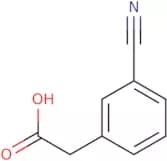
CAS:3-Cyanophenylacetic acid is a versatile building block and useful intermediate that can be used in the synthesis of a wide range of organic compounds. 3-Cyanophenylacetic acid is a fine chemical with CAS No. 1878-71-3 that can be used as a research chemical, reaction component, or speciality chemical. It is an important reagent for making complex organic compounds. 3-Cyanophenylacetic acid is a high quality product with the following characteristics:
1) Colorless crystals;
2) Soluble in water;
3) Soluble in acetone;
4) Slightly soluble in ether;
5) Reactivity: stable to heat, light, and air;
6) pH (1% solution): 2.0 - 4.0;
7) Melting point: 129 °C;
8) Boiling point: 188 °C at 760 mmHFormula:C9H7NO2Purity:Min. 95%Molecular weight:161.16 g/mol(5-Bromo-2-methoxyphenyl)acetonitrile
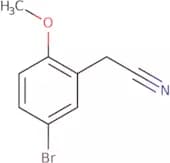
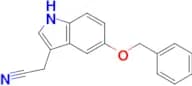
CAS:5-Bromo-2-methoxyphenyl)acetonitrile is a chemical building block that can be used in the synthesis of complex compounds. It is a versatile intermediate that can be used as a reagent in organic reactions. This compound has been shown to be useful as a reaction component and is a high quality product. 5-Bromo-2-methoxyphenyl)acetonitrile has CAS number 7062-40-0 and is listed on the Chemical Abstracts Service (CAS).Formula:C9H8BrNOPurity:Min. 95%Molecular weight:226.07 g/mol2-(6-Benzyloxyindolyl)acetonitrile
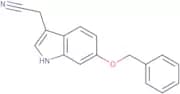
CAS:Please enquire for more information about 2-(6-Benzyloxyindolyl)acetonitrile including the price, delivery time and more detailed product information at the technical inquiry form on this page
Formula:C17H14N2OPurity:Min. 95%Molecular weight:262.31 g/mol2-Bromophenylacetonitrile
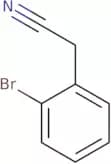
CAS:2-Bromophenylacetonitrile is a synthetic compound that is used in wastewater treatment. It is effective at removing cyanides, phenylpropionic acid, and aldehydes from wastewater. 2-Bromophenylacetonitrile has been shown to be an efficient method for the removal of liriodenine from sewage water and for the removal of 2-bromostyrene from industrial waste water. This process can be used as an analytical method to measure the concentration of these substances in samples of wastewater. The reaction mechanism involves the formation of a nitrilium ion intermediate and subsequent reactions with alcohols to form esters or ethers.
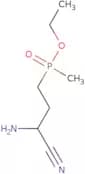
Formula:C8H6BrNPurity:Min. 95%Color and Shape:Colourless To Pale Yellow Clear LiquidMolecular weight:196.04 g/molEthyl (3-amino-3-cyanopropyl)methylphosphinate
CAS:Ethyl (3-amino-3-cyanopropyl)methylphosphinate is a versatile building block that can be used as a reagent, speciality chemical, or research chemical. It is useful as an intermediate for complex compounds and can be used as a reaction component in the synthesis of high quality compounds. Ethyl (3-amino-3-cyanopropyl)methylphosphinate is also a useful scaffold in organic synthesis.Formula:C7H15N2O2PPurity:Min. 95%Color and Shape:PowderMolecular weight:190.18 g/mol4-Cyanobenzoic acid ethyl ester
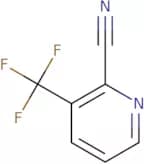
CAS:4-Cyanobenzoic acid ethyl ester is a hydrogen-bonding acceptor that is also able to form exciplexes with styrene. It has a conformation that is similar to that of aminobenzoate, which is a hydrogen-bonding donor. 4-Cyanobenzoic acid ethyl ester reacts with solvents such as benzene and chloroform, undergoing hydration reactions to form the corresponding 4-cyanophenol derivatives. It undergoes cyclization when heated in the presence of ruthenium(II) chloride to produce 1,4-dihydropyridine derivatives. The reaction mechanism for this reaction consists of two steps: an intramolecular nucleophilic attack followed by an intramolecular electrophilic substitution. The deionized water used in this synthetic process eliminates the need for drying agents and stabilizers, making it easier to carry out the synthesis.Formula:C10H9NO2Purity:Min. 95%Color and Shape:PowderMolecular weight:175.18 g/mol2-Cyano-3-trifluoromethylpyridine
CAS:2-Cyano-3-trifluoromethylpyridine is a fine chemical that is used as a versatile building block in the synthesis of complex compounds. It can be used as an intermediate in research chemicals, reaction components, and speciality chemicals. 2-Cyano-3-trifluoromethylpyridine is a high quality reagent that can be used for the synthesis of various derivatives. It is also a useful scaffold for the development of new drugs and other chemical compounds.
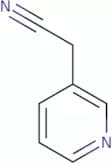
Formula:C7H3F3N2Purity:Min. 95%Color and Shape:liquid.Molecular weight:172.11 g/molPyridine-3-acetonitrile
CAS:Pyridine-3-acetonitrile is a coordination complex that can be used for the treatment of diabetes. It has been shown to have a high affinity for plasma glucose and to be selective for biological samples containing amino acids, such as proteins. The molecule is able to bind with carbon disulphide in order to form the active methylene, which has been shown to be an effective bifunctional ligand. The compound has also been shown to have a ph optimum of 9.8 - 10.2 and exhibits an atomic orbital with a molecular electrostatic potential of 0.5 eV. Pyridine-3-acetonitrile binds strongly to nucleophilic groups, such as amines and hydroxyls, making it suitable for use as a ligand in metal complexes. This compound may also have some interesting properties related to its morphology, which can be further investigated using functional theory and molecular electrostatic potential.br>br> br>br>Formula:C7H6N2Purity:Min. 95%Color and Shape:Clear LiquidMolecular weight:118.14 g/mol2-Bromo-5-cyanonitrobenzene
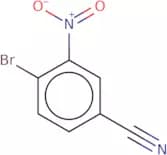
CAS:2-Bromo-5-cyanonitrobenzene is a chemical compound that has been shown to have broad-spectrum activity against drug-resistant bacteria. It is able to kill gram-negative and gram-positive bacteria, including drug-resistant strains. The mechanism of action for 2-bromo-5-cyanonitrobenzene is not well understood but it has been observed that the molecule undergoes an oxidative cyclization reaction in the presence of chloride ions or hydroxides. This process leads to the formation of a nitrosobenzene metabolite which reacts with DNA to inhibit protein synthesis and cause cell death. 2-Bromo-5-cyanonitrobenzene has also been shown to be potent against a wide range of different types of bacteria, including those most commonly associated with skin infections, respiratory tract infections, and urinary tract infections.
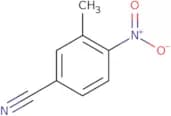
Formula:C7H3BrN2O2Purity:Min. 95%Color and Shape:PowderMolecular weight:227.02 g/mol3-Methyl-4-nitrobenzonitrile
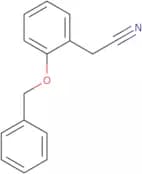
CAS:3-Methyl-4-nitrobenzonitrile is a fluorescing aromatic amine that is synthesized by aliphatic amines. It has been shown to inhibit the growth of cells in culture, which may be due to its ability to bind with and inhibit the insulin-like growth factor receptor-1 (IGF-1R). 3-Methyl-4-nitrobenzonitrile has also been shown to bind with cytochrome P450 enzymes, where it can be oxidized or reduced. The conformation of 3-methyl-4 nitrobenzonitrile is dependent on the solvent molecules present.Formula:C8H6N2O2Purity:Min. 95%Color and Shape:PowderMolecular weight:162.15 g/mol2-Benzyloxyphenylacetonitrile
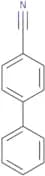
CAS:2-Benzyloxyphenylacetonitrile is a compound that is used in the manufacture of polyester, fibre and crystallized products. It is also used as a solvent for dyes and oils, as well as an industrial chemical intermediate. 2-Benzyloxyphenylacetonitrile can be thermolysed to produce benzoic acid, which can then be oxidized to produce phenol. The residue obtained from this process has been found to have a calorific value of around 2500kcal/kg. This substance has been found to react with oxygen at high temperatures and form an oxygenated product. 2-Benzyloxyphenylacetonitrile can be synthesised by reacting benzene with styrene in the presence of water and a catalyst such as sodium hydroxide or calcium oxide. The reaction produces hydrogen gas, benzoic acid and 2-benzyloxyphenylacetonitrile.Formula:C15H13NOPurity:Min. 95%Color and Shape:PowderMolecular weight:223.27 g/mol4-Cyanobiphenyl
CAS:4-Cyanobiphenyl is a contaminant of the environment. It is a reactive substance that can be found in the air, soil, and water. 4-Cyanobiphenyl is an active substance that can be used as an intermediate for the production of other chemicals. The chemical structure of 4-cyanobiphenyl has been elucidated by using a number of spectroscopic techniques including Raman spectroscopy. 4-Cyanobiphenyl is unstable in acidic conditions and reacts with chloride ions to form crotonic acid and benzoate. This reaction also occurs under basic conditions with biphenyl to form benzoate and low energy products such as benzene or phenol.Formula:C13H9NPurity:Min. 95%Color and Shape:Off-White PowderMolecular weight:179.22 g/mol2-Methoxyphenylacetonitrile
CAS:2-Methoxyphenylacetonitrile is a chemical that is used in the manufacture of pharmaceuticals. It has antibacterial activity and can be used to treat typhoid fever, staphylococcal infections, and mental disorders such as schizophrenia. 2-Methoxyphenylacetonitrile is an alkylating agent that reacts with nucleophiles in proteins, DNA, and RNA. These reactions lead to the destruction of the bacterial cell wall and inhibition of protein synthesis. The mechanism by which 2-methoxyphenylacetonitrile exerts its antibacterial effect may involve formation of a reactive intermediate that inhibits bacterial ribonucleotide reductase. The addition of an electron to this intermediate leads to the formation of a covalent bond with one or more amino acids in the protein acceptor, thereby preventing further growth and division of bacteria.Formula:C9H9NOPurity:Min. 90%Color and Shape:White PowderMolecular weight:147.17 g/mol
![Pyrazolo[1,5-a]pyrazine-7-carbonitrile, 4,5,6,7-tetrahydro-5-(phenylmethyl)-](/_next/image/?url=https%3A%2Fstatic.cymitquimica.com%2Fproducts%2F10%2Fthumb-webp%2FF613781.webp&w=3840&q=75)



![9-(Diethylamino)-5-oxo-5H-benzo[a]phenoxazine-6-carbonitrile](/_next/image/?url=https%3A%2Fstatic.cymitquimica.com%2Fproducts%2F10%2Fthumb-webp%2FF760018.webp&w=3840&q=75)

![1-[Bis(4-cyanophenyl)methyl]-1,2,4-triazole](/_next/image/?url=https%3A%2Fstatic.cymitquimica.com%2Fproducts%2F10%2Fthumb-webp%2FF036495.webp&w=3840&q=75)




![2-[Cyano(4-fluorophenyl)methyl]benzonitrile](/_next/image/?url=https%3A%2Fstatic.cymitquimica.com%2Fproducts%2F10%2Fthumb-webp%2FF010070.webp&w=3840&q=75)