Ethers
Ethers are organic compounds containing an ether functional group, characterized by an oxygen atom bonded to two hydrocarbon radicals. These compounds are valuable in synthesis and serve as solvents in various chemical reactions. At CymitQuimica, we offer a selection of high-quality ethers to support your research and industrial applications, ensuring reliable and effective results. Our range of ethers meets diverse laboratory requirements, from routine experiments to advanced research.
Found 40729 products of "Ethers"
Sort by
Purity (%)
0
100
|
0
|
50
|
90
|
95
|
100
(4aS,6R,8aS)-4a,5,9,10,11,12-Hexahydro-3-methoxy-11-methyl-6H-benzofuro[3a,3,2-ef][2]benzazepin-6-ol
CAS:Controlled Product<p>(4aS,6R,8aS)-4a,5,9,10,11,12-Hexahydro-3-methoxy-11-methyl-6H-benzofuro[3a,3,2-ef][2]benzazepin-6-ol is a natural compound that has been shown to be an effective treatment for oxidative injury. It has a cholinergic activity and is able to cross the blood brain barrier. (4aS,6R,8aS)-4a,5,9,10,11,12-Hexahydro-3-methoxy-11-methyl-6Hbenzofuro[3a. 3.2ef][2]benzazepin -6--ol was found to have protective effects in an experimental model of Alzheimer's disease where it significantly reduced neuronal death. The compound also has antiinflammatory properties which may</p>Formula:C17H21NO3Purity:Min. 95%Color and Shape:PowderMolecular weight:287.35 g/mol4-(4-Formyl-3-methoxyphenoxy)butanoic acid
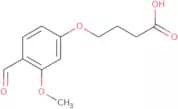
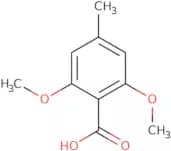
CAS:Controlled Product<p>4-(4'-Formyl-3'-methoxyphenoxy)butanoic acid is a carboxylate that can be used as a preloaded reagent for the synthesis of peptides, proteins, and other organic molecules. 4-(4'-Formyl-3'-methoxyphenoxy)butanoic acid has been shown to be an efficient linker for solid-phase peptide synthesis. 4-(4'-Formyl-3'-methoxyphenoxy)butanoic acid is labile to hydrolysis and so should be stored in an organic solvent such as dimethylsulfoxide. The carboxylate group is readily available in the form of its sodium salt, which can be synthesized by reacting sodium acetate with formaldehyde.</p>Formula:C12H14O5Purity:Min. 95%Color and Shape:PowderMolecular weight:238.24 g/mol2,6-Dimethoxy-4-methylbenzoic acid
CAS:<p>2,6-Dimethoxy-4-methylbenzoic acid is a carboxylic acid that is used as an intermediate in the production of lithium.</p>Formula:C10H12O4Purity:Min. 95%Color and Shape:PowderMolecular weight:196.2 g/molTrimethylolpropane ethoxylate - average Mn ~450
CAS:<p>Please enquire for more information about Trimethylolpropane ethoxylate - average Mn ~450 including the price, delivery time and more detailed product information at the technical inquiry form on this page</p>Formula:(C2H4O)n•(C2H4O)n•(C2H4O)n•C6H14O3Purity:Min. 95%3-Chloro-1,1-diethoxypropane - Stabilized with CaCO3
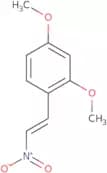
CAS:<p>3-Chloro-1,1-diethoxypropane is a molecule that has been studied for its potential in cancer treatment. It has shown to be toxic to some human cell lines but not others. 3-Chloro-1,1-diethoxypropane has also been shown to be effective at reducing blood pressure and as an antiviral agent against HIV. The molecule is stable in the presence of calcium carbonate and can be administered orally or intravenously.</p>Formula:C7H15ClO2Purity:Min. 90 Area-%Color and Shape:Clear LiquidMolecular weight:166.65 g/mol2,4-Dimethoxy-β-nitrostyrene
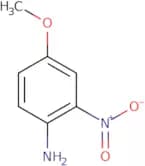
CAS:<p>2,4-Dimethoxy-beta-nitrostyrene is a high quality, versatile building block for synthesis of complex compounds. It is an intermediate for the production of pharmaceuticals and other fine chemicals. 2,4-Dimethoxy-beta-nitrostyrene is used as a reagent in organic chemistry to produce complex compounds, such as esters and amides. This chemical has also been shown to be useful in research into the synthesis of new drugs.</p>Formula:C10H11NO4Purity:Min. 95%Molecular weight:209.2 g/mol4-Methoxy-2-nitroaniline
CAS:<p>4-Methoxy-2-nitroaniline is a molecule that has been shown to be able to form an intramolecular hydrogen bond with the 5' carbon of the sugar ring. This reaction leads to the formation of an alkoxy radical, which reacts with chloride ions in acidic conditions. The formation of this intermediate product is reversible, and can be used for analysis of hydrochloric acid. 4-Methoxy-2-nitroaniline has also been shown to react with diazonium salt in the presence of acid, forming a molecule that contains two amines. This reaction can be reversed by adding hydrogen chloride to the solution and analyzing the solution's acidity.</p>Formula:C7H8N2O3Purity:Min. 98 Area-%Color and Shape:PowderMolecular weight:168.15 g/mol4'-Chloro-4-methoxychalcone
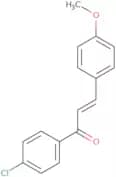
CAS:<p>4'-Chloro-4-methoxychalcone is a dihedral molecule that has been studied by laser spectroscopy. The wavelength and efficiency of the laser have been shown to be dependent on the chalcone's dipole moment. Chalcones are also used in the synthesis of other compounds, such as benzene, which is an aromatic hydrocarbon. Chalcones are used as optical brighteners in detergents and soaps and can also be used to induce evaporation of organic solvents. 4'-Chloro-4-methoxychalcone is used as an intermediate in crystal x-ray diffraction studies.</p>Formula:C16H13ClO2Purity:Min. 95%Color and Shape:PowderMolecular weight:272.73 g/molN-[3,5-Bis(trifluoroMethyl)phenyl]-N'-[(9R)-6'-Methoxy-9-cinchonanyl]thiourea
CAS:<p>Please enquire for more information about N-[3,5-Bis(trifluoroMethyl)phenyl]-N'-[(9R)-6'-Methoxy-9-cinchonanyl]thiourea including the price, delivery time and more detailed product information at the technical inquiry form on this page</p>Formula:C29H28F6N4OSPurity:Min. 95%Color and Shape:PowderMolecular weight:594.62 g/mol3,4-Dimethoxybenzaldehyde
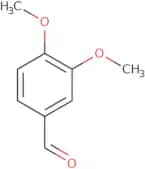
CAS:<p>3,4-Dimethoxybenzaldehyde is a crystalline cellulose that has been shown to have anthelmintic properties. 3,4-Dimethoxybenzaldehyde reduces the redox potential of the parasite and inhibits the oxidative metabolism of p-hydroxybenzoic acid (pHBA). It also inhibits the biosynthesis of dihydroconiferyl alcohol and usnic acid, which are building blocks for bacterial cell walls. The reaction mechanism is thought to be due to a hydrogen atom transfer from 3,4-dimethoxybenzaldehyde to the p-hydroxybenzoic acid molecule. The product of this reaction is an aromatic ring with a hydroxyl group on carbon 2 and an ether oxygens on carbons 3 and 4. This aromatic ring will then react with another molecule of 3,4-dimethoxybenzaldehyde to produce a new molecule with two hydroxyl groups on carbons 2 and 5. This will</p>Formula:C9H10O3Purity:Min. 95%Color and Shape:PowderMolecular weight:166.17 g/mol5-Chloro-2-methoxy-4-methylnitrobenzene
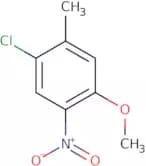
CAS:<p>5-Chloro-2-methoxy-4-methylnitrobenzene is a high quality chemical that can be used as a research chemical, reagent, or a useful scaffold. It is also an intermediate in the synthesis of organic compounds. 5-Chloro-2-methoxy-4-methylnitrobenzene is a versatile building block for the synthesis of other chemicals and has many uses in the pharmaceutical industry. The CAS number for this chemical is 101080-03-9.</p>Formula:C8H8ClNO3Purity:Min. 95%Color and Shape:PowderMolecular weight:201.61 g/molEthyl 3,4,5-trimethoxybenzoate
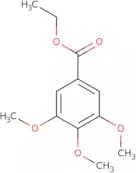
CAS:<p>Ethyl 3,4,5-trimethoxybenzoate is a synthetic chemical that is used as a precursor in the synthesis of quinoxalines. Ethyl 3,4,5-trimethoxybenzoate has been shown to have antiviral properties against human immunodeficiency virus and leishmania. It also has potent inhibitory activity against heterocyclic amines and t. rubrum.</p>Formula:C12H16O5Purity:Min. 95%Color and Shape:White To Grey SolidMolecular weight:240.25 g/mol4-Methoxy-3-nitrobenzoic acid methyl ester
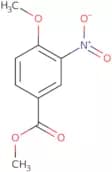
CAS:<p>4-Methoxy-3-nitrobenzoic acid methyl ester (4MNBM) is a potent antitumor agent that inhibits tumor cell proliferation by interfering with DNA replication. 4MNBM selectively binds to the nuclear magnetic resonance and has been shown to inhibit tumor growth in animal models. This drug also shows potent antitumor activity against solid tumor cells, which is due to its ability to induce conformational changes in the DNA of these cells. 4MNBM has been shown to be selective for tumor cells, which may be due to its lack of effect on the metabolism of normal tissue and its ability to bind to proteins in tumor cell nuclei.</p>Formula:C9H9NO5Purity:Min. 95%Color and Shape:Clear LiquidMolecular weight:211.17 g/molMethyl 3-iodo-4-methoxybenzoate
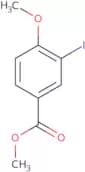
CAS:<p>Methyl 3-iodo-4-methoxybenzoate is a radioactive compound that has been shown to have pharmacological properties. It is used in the treatment of cancer and has demonstrated cytotoxic effects on tumor cells. Methyl 3-iodo-4-methoxybenzoate binds to the cell membrane and causes changes in membrane permeability, leading to cell death. This compound also demonstrates affinity for 4-ibp, a receptor found on cancer cells.</p>Formula:C9H9IO3Purity:Min. 95%Molecular weight:292.07 g/mol(2-(3,4-dimethoxyphenyl)ethyl)(phenylsulfonyl)amine
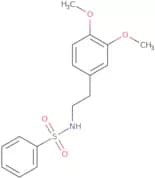
CAS:<p>Please enquire for more information about (2-(3,4-dimethoxyphenyl)ethyl)(phenylsulfonyl)amine including the price, delivery time and more detailed product information at the technical inquiry form on this page</p>Purity:Min. 95%1-Deoxy-1-(methylamino)-D-glucitol [3-[[(2R,3S)-2-[(1R)-1-[3,5-bis(trifluoromethyl)phenyl]ethoxy]-3-(4-fluorophenyl)-4-morpholinyl]m ethyl]-2,5-dihydro-5-oxo-1H-1,2,4-triazol-1-yl]phosphonate
CAS:<p>Fosaprepitant is a drug that belongs to the class of drugs used for chemotherapy. It is a prodrug that is converted in vivo to aprepitant, its active form. Fosaprepitant acts as an antagonist of the neurokinin-1 receptor (NK-1R) and inhibits the binding of substance P, which leads to an anti-inflammatory effect. Fosaprepitant has been shown to inhibit the production of substance P in animal models, leading to a reduction in inflammation. In clinical trials, fosaprepitant has been shown to be safe and well tolerated when used with other drugs such as cisplatin and docetaxel in patients with cancer.</p>Formula:C23H22F7N4O6P•(C7H17NO5)2Purity:Min. 95%Color and Shape:White To Off-White SolidMolecular weight:1,004.83 g/mol4-Methoxycinnamic acid
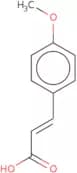
CAS:4-Methoxycinnamic acid is a derivative that is activated by light exposure. It has been shown to have antimicrobial activity against Gram-positive bacteria and yeast, but not Gram-negative bacteria. 4-Methoxycinnamic acid is an analytical reagent that can be used to measure the dry weight of skin cancer cells, as well as to study the genotoxic effects of human liver cells. The chemical has also been shown to be genotoxic in mouse bone marrow cells and human lymphocytes. 4-Methoxycinnamic acid has been found to cause synchronous fluorescence when exposed to UV light, which may be due to its ability to react with molecular oxygen. This reaction produces a linear model with two products: 4-hydroxybenzoic acid and 2,5-dihydroxybenzoic acid.Formula:C10H10O3Purity:Min. 95%Color and Shape:PowderMolecular weight:178.18 g/mol3-(4-methoxy-1-naphthyl)acrylic acid
CAS:<p>Please enquire for more information about 3-(4-methoxy-1-naphthyl)acrylic acid including the price, delivery time and more detailed product information at the technical inquiry form on this page</p>Purity:Min. 95%4-Hydroxy-3-methoxybenzylamine
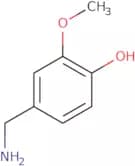
CAS:<p>4-Hydroxy-3-methoxybenzylamine is a nonsteroidal anti-inflammatory drug (NSAID) that has been shown to inhibit the production of cytokines and prostaglandins. It is metabolized by cytochrome P450 enzymes in the liver to form an amide and anhydrous sodium methyl myristate, which are excreted in urine. The reaction solution was analyzed using kinetic energy spectroscopy, which showed that 4-hydroxy-3-methoxybenzylamine reacts with vanillylamine to create a polymerase chain reaction product. This compound also has specific binding affinity for toll-like receptor 2 with high affinity, suggesting that it may have immunomodulatory properties.</p>Formula:C8H11NO2Purity:Min. 95%Color and Shape:PowderMolecular weight:153.18 g/mol6-Hydroxy-2,3,4-trimethoxyacetophenone
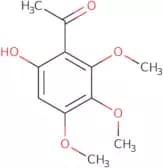
CAS:<p>6-Hydroxy-2,3,4-trimethoxyacetophenone (6HTMA) is a natural product that has been shown to have potent inhibitory activities against PC12 cells. This compound also possesses neuroprotective and antioxidative properties. 6HTMA was able to inhibit acetylation of proteins, which may be responsible for its neuroprotective activity. Furthermore, 6HTMA has been shown to possess anti-oxidant and anti-tuberculous activities.</p>Formula:C11H14O5Purity:Min. 95%Color and Shape:PowderMolecular weight:226.23 g/mol
![(4aS,6R,8aS)-4a,5,9,10,11,12-Hexahydro-3-methoxy-11-methyl-6H-benzofuro[3a,3,2-ef][2]benzazepin-6-…](/_next/image/?url=https%3A%2Fstatic.cymitquimica.com%2Fproducts%2F3D%2Fthumb-webp%2FFH15703.webp&w=3840&q=75)


![N-[3,5-Bis(trifluoroMethyl)phenyl]-N'-[(9R)-6'-Methoxy-9-cinchonanyl]thiourea](/_next/image/?url=https%3A%2Fstatic.cymitquimica.com%2Fproducts%2F3D%2Fthumb-webp%2FFB100790.webp&w=3840&q=75)
![1-Deoxy-1-(methylamino)-D-glucitol [3-[[(2R,3S)-2-[(1R)-1-[3,5-bis(trifluoromethyl)phenyl]ethoxy]-…](/_next/image/?url=https%3A%2Fstatic.cymitquimica.com%2Fproducts%2F3D%2Fthumb-webp%2FFD46503.webp&w=3840&q=75)