Ethers
Ethers are organic compounds containing an ether functional group, characterized by an oxygen atom bonded to two hydrocarbon radicals. These compounds are valuable in synthesis and serve as solvents in various chemical reactions. At CymitQuimica, we offer a selection of high-quality ethers to support your research and industrial applications, ensuring reliable and effective results. Our range of ethers meets diverse laboratory requirements, from routine experiments to advanced research.
Found 40729 products of "Ethers"
Sort by
Purity (%)
0
100
|
0
|
50
|
90
|
95
|
100
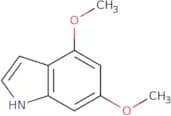
4,6-Dimethoxyindole
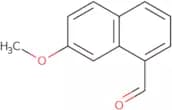
CAS:<p>4,6-Dimethoxyindole is a molecule that can be used as an amide or chloride. The molecular modeling study indicated that the 4,6-dimethoxyindole is hydrophobic and has a molecular weight of 164.4 g/mol. In the acetylation reaction, the 4,6-dimethoxyindole was synthesized with an acetyl group on one side of the molecule and an acetate group on the other side of the molecule. This molecule has shown to have anticholinesterase activity in vitro and can be used as an antibiotic. The synthesis of this molecule was confirmed by X-ray diffraction analysis, which showed that it had a crystal structure with two molecules in space group P2(1)2(1).</p>Formula:C10H11NO2Purity:Min. 95%Molecular weight:177.2 g/mol7-Methoxy-1-naphthaldehyde
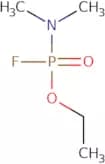
CAS:<p>7-Methoxy-1-naphthaldehyde is an aldehyde that is synthesized from acetaldehyde and 7-methoxy-1-naphthol. It has been shown to inhibit the cytosolic aldehyde dehydrogenase, which converts acetaldehyde to acetate. This reaction is one of the major routes for the metabolism of alcohol in humans. 7-Methoxy-1-naphthaldehyde can be used as a substrate in immunochemical assays, and its synthetic scheme has been published. 7MNA was also found to have cytotoxic effects on human liver cells in vitro.</p>Formula:C12H10O2Purity:Min. 95%Molecular weight:186.21 g/molN-(Ethoxy-Fluorophosphoryl)-N-Methylmethanamine
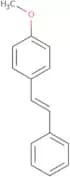
CAS:Controlled Product<p>Ethoxy-Fluorophosphoryl-N-Methylmethanamine is a chemical that belongs to the class of nerve agents. It can be used as an antidote for sarin poisoning. This compound reacts with the enzyme butyrylcholinesterase, which breaks down acetylcholine in the synapses. In this way, it blocks the transmission of nerve impulses and causes muscle paralysis. Ethoxy-Fluorophosphoryl-N-Methylmethanamine acts as an antagonist of acetylcholine receptors in both animals and humans. It also inhibits cholinesterase activity in blood pressure regulation, which leads to increased blood pressure levels. When administered at sublethal doses, this compound induces a long lasting sensitization of the central nervous system to other cholinergic drugs such as atropine or nerve gases such as sarin.</p>Formula:C4H11FNO2PPurity:Min. 95%Molecular weight:155.11 g/mol4-Methoxystilbene
CAS:<p>4-Methoxystilbene is a nonpolar solvent that has a high boiling point and is used to extract quaternary ammonium salts in organic chemistry. It has been shown to react with chloride ions and form a complex, which can be used as a nucleophilic reagent. The metal ion Mg2+ can also form complexes with 4-methoxystilbene, which can be used to synthesize organic compounds. This molecule also reacts with dimethylamine to produce the compound methyl 4-methoxysilane, which is an important precursor for the manufacture of pharmaceuticals like cinnamates and quinine.</p>Formula:C15H14OPurity:Min. 95%Color and Shape:PowderMolecular weight:210.27 g/molEthyl 2,5-dimethoxyphenylacetate
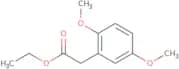
CAS:<p>Ethyl 2,5-dimethoxyphenylacetate is a chemical that has a wide range of uses in the synthesis of complex compounds. It can be used as an intermediate for the production of research chemicals or as a reaction component for speciality chemicals. The compound is also useful in the synthesis of fine chemicals and other useful scaffolds. It has been used as a building block to produce high-quality reagents.</p>Formula:C12H16O4Purity:Min. 95%Color and Shape:PowderMolecular weight:224.25 g/molN1-(6-Methoxy-8-quinolinyl)-1,4-pentanediamine
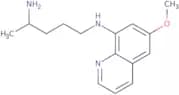
CAS:<p>Impurity found in Primaquine diphosphate</p>Formula:C15H21N3OPurity:Min. 95%Color and Shape:Yellow PowderMolecular weight:259.35 g/mol1,2,3,5-Tetramethoxybenzene
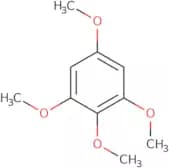
CAS:Controlled Product<p>1,2,3,5-Tetramethoxybenzene is a tannin that belongs to the class of arenes. It can be synthesized by Friedel-Crafts acylation of benzene with an acyl chloride in the presence of aluminum chloride. This reaction produces 1,2,3,5-tetramethoxybenzene and triketone as byproducts. The synthetic pathway for this compound is based on techniques such as irradiation and thermally induced rearrangement. The oxidized form has a redox potential of -0.6 V vs NHE (normal hydrogen electrode). Methoxy groups on the aromatic ring increase the electron affinity and lower the redox potential.</p>Formula:C10H14O4Purity:Min. 95%Color and Shape:White PowderMolecular weight:198.22 g/mol2,3,4,5-Tetramethoxytoluene
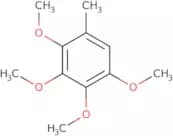
CAS:<p>2,3,4,5-Tetramethoxytoluene is a chlorinated aromatic hydrocarbon that is produced by the chloromethylation of toluene. It can be used in the synthesis of isoquinoline compounds and grignard reagents. 2,3,4,5-Tetramethoxytoluene is also a precursor for the production of 2-chloro-1-(2-chlorophenyl)ethanol (CCPE), which is used as an intermediate for the production of various pesticides and herbicides. Tetramethoxytoluene has been shown to be toxic to fish in water at concentrations as low as 0.1 micrograms per liter. It also has a potential to cause environmental pollution because it reacts with peroxide and alkylates other organic compounds.</p>Formula:C11H16O4Purity:Min. 95%Color and Shape:Clear LiquidMolecular weight:212.24 g/molEthoxyamine hydrochloride
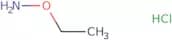
CAS:<p>Ethoxyamine hydrochloride is an organic compound that contains a hydroxyl group and a chlorine atom. It is an amine with properties of an acid. Ethoxyamine hydrochloride can be used in the treatment of metabolic disorders, such as nitro, dehydrogenase deficiency and amino acid transport disorder. The compound also has been shown to have anti-inflammatory effects, which may be due to its ability to inhibit the production of prostaglandin synthesis. This drug has been found to have no significant toxicity in humans and animals, and it has been shown to be safe for use in humans.</p>Formula:C2H7NO·HClPurity:Min. 95%Color and Shape:White PowderMolecular weight:97.54 g/mol2-(2-Methoxyphenyl)thiazole-4-carbaldehyde
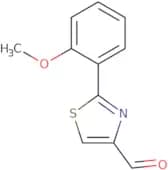
CAS:<p>Please enquire for more information about 2-(2-Methoxyphenyl)thiazole-4-carbaldehyde including the price, delivery time and more detailed product information at the technical inquiry form on this page</p>Formula:C11H9NO2SPurity:Min. 95%Color and Shape:PowderMolecular weight:219.26 g/mol5-Hydroxy-6-methoxyindole-carboxylic acid
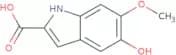
CAS:<p>5-Hydroxy-6-methoxyindole-carboxylic acid (5-HMICA) is a molecule that is found in the pericardium and urine of patients with cancer. 5-HMICA has been shown to suppress tumor growth and activate cell mediated cytotoxicity in vitro. It also induces T helper type 1 (Th1) immune responses, which are associated with the production of cytokines such as interferon gamma and tumor necrosis factor alpha.</p>Formula:C10H9NO4Color and Shape:PowderMolecular weight:207.18 g/mol3,5-Difluoro-4-methoxybenzoic acid
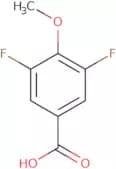
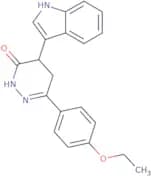
CAS:<p>3,5-Difluoro-4-methoxybenzoic acid is a chemical compound that is used as both a starting material and an intermediate in organic synthesis. It can be obtained from the reaction of 2,4-difluoro-3-methoxybenzoyl chloride with 3,5-dimethoxyaniline. 3,5-Difluoro-4-methoxybenzoic acid has been shown to be useful as a building block in the synthesis of other compounds with potent antibiotic activity such as fluoroquinolones. This compound is also used to synthesize aminomethylcyclohexane and methylaminomethylcyclohexane, which are useful in the manufacture of pesticides.</p>Formula:C8H6F2O3Purity:Min. 95%Color and Shape:PowderMolecular weight:188.13 g/mol3-(4-ethoxyphenyl)-5-indol-3-yl-1H,4H,5H-1,2-diazin-6-one
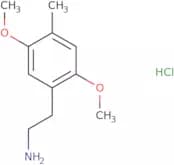
CAS:<p>Please enquire for more information about 3-(4-ethoxyphenyl)-5-indol-3-yl-1H,4H,5H-1,2-diazin-6-one including the price, delivery time and more detailed product information at the technical inquiry form on this page</p>Purity:Min. 95%2,5-Dimethoxy-4-methylphenethylamine hydrochloride
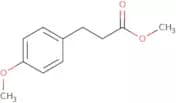
CAS:Controlled Product<p>Please enquire for more information about 2,5-Dimethoxy-4-methylphenethylamine hydrochloride including the price, delivery time and more detailed product information at the technical inquiry form on this page</p>Formula:C11H18ClNO2Purity:Min. 98 Area-%Molecular weight:231.72 g/molMethyl 4-methoxyphenylpropionate
CAS:<p>Methyl 4-methoxyphenylpropionate is a pyridine derivative that is used as a solvent, reagent, and intermediate in organic synthesis. It has been shown to be a marker for aerosols in the environment and has been detected in the atmosphere of Beijing, China. The methyl ester can also be used to synthesize dienones and benzyl mesylates.</p>Formula:C11H14O3Purity:Min. 95%Color and Shape:PowderMolecular weight:194.23 g/mol(E)-N-(2-Chloro-6-methylphenyl)-3-ethoxyacrylamide
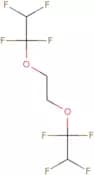
CAS:<p>(E)-N-(2-Chloro-6-methylphenyl)-3-ethoxyacrylamide is a reagent and research chemical that can be used as a building block in the synthesis of other compounds. It is also a versatile building block in organic chemistry. (E)-N-(2-Chloro-6-methylphenyl)-3-ethoxyacrylamide has been shown to be an effective intermediate for the synthesis of various complex compounds, such as pharmaceuticals and pesticides. This compound is also a useful scaffold for the synthesis of other fine chemicals.</p>Formula:C12H14ClNO2Purity:(¹H-Nmr) Min. 95 Area-%Color and Shape:PowderMolecular weight:239.7 g/mol1,2-Bis(1,1,2,2-tetrafluoroethoxy)ethane
CAS:<p>1,2-Bis(1,1,2,2-tetrafluoroethoxy)ethane is an electrolyte with a balanced composition of sulfur and fluorine. It is also a symmetric compound that can shuttle lithium ions between the two halves of the molecule. This process can be repeated many times without significant degradation. 1,2-Bis(1,1,2,2-tetrafluoroethoxy)ethane has been used as a negative electrode material in lithium ion batteries because it has high capacity and good cycling properties.</p>Formula:C6H6F8O2Purity:Min. 99 Area-%Molecular weight:262.10 g/mol2-Ethoxy-5-nitropyridine
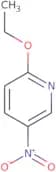
CAS:<p>2-Ethoxy-5-nitropyridine is a potassium salt of 2-ethoxy-5-nitropyridine. It has been used as a reagent in the synthesis of sulfonates, pyridines, and phenols. The nitrogen atom in this molecule can be oxidized to nitro group. This compound also reacts with anilines to form 2-chloro-5-nitropyridine and 2-hydroxy-5-nitropyridine. In addition, it can react with halogen to form substituted anilines or chloropyridines. 2-Ethoxy-5-nitropyridine is a nucleophile that can be used for the preparation of nucleophiles for biomolecular chemistry studies.</p>Formula:C7H8N2O3Purity:Min. 95%Color and Shape:PowderMolecular weight:168.15 g/mol4,5-Dimethoxy-1,2-phenylenediamine hydrochloride
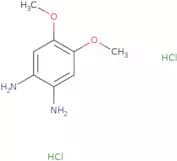
CAS:<p>Produces fluorescent benzimidazole derivatives; detects aromatic aldehydes</p>Formula:C8H14N2O2•xHClPurity:Min. 98%Color and Shape:Purple PowderMolecular weight:241.11 g/mol2,4,5-Trimethoxybenzyl alcohol
CAS:<p>2,4,5-Trimethoxybenzyl alcohol is a metabolite that is produced by the p. pastoris strain. It has been shown to be active against the enzyme glyceraldehyde-3-phosphate dehydrogenase and has been expressed heterologously in yeast. 2,4,5-Trimethoxybenzyl alcohol also has been shown to inhibit peroxidases and may have biochemical applications in pharmaceuticals as an inhibitor of lipid peroxidation.</p>Formula:C10H14O4Purity:Min. 95%Color and Shape:White PowderMolecular weight:198.22 g/mol