Ethers
Ethers are organic compounds containing an ether functional group, characterized by an oxygen atom bonded to two hydrocarbon radicals. These compounds are valuable in synthesis and serve as solvents in various chemical reactions. At CymitQuimica, we offer a selection of high-quality ethers to support your research and industrial applications, ensuring reliable and effective results. Our range of ethers meets diverse laboratory requirements, from routine experiments to advanced research.
Found 40712 products of "Ethers"
Sort by
Purity (%)
0
100
|
0
|
50
|
90
|
95
|
100
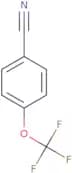
p-(Trifluoromethoxy)benzonitrile
CAS:<p>p-(Trifluoromethoxy)benzonitrile is an organic compound that reacts with electron-rich molecules to form a covalent bond. It has been shown to be reactive in abiotic conditions and can be used as a probe for electron transfer reactions. p-Trifluoromethoxybenzonitrile undergoes a reaction mechanism in which the carbonyl group first reacts with an electron donor, such as acetonitrile, to form an unstable intermediate. This intermediate then reacts with a second electron-rich molecule to form the product. p-Trifluoromethoxybenzonitrile also has been shown to react efficiently with benzonitrile and produce the desired product in one step.</p>Formula:C8H4F3NOPurity:Min. 95%Color and Shape:Clear LiquidMolecular weight:187.12 g/mol3,4-Dimethoxy-2-hydroxyacetophenone
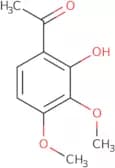
CAS:<p>3,4-Dimethoxy-2-hydroxyacetophenone is a natural product that has been shown to have significant activity against epidermoid carcinoma. The mechanism of action of 3,4-dimethoxy-2-hydroxyacetophenone is not fully understood but it has been shown to inhibit the growth of cancer cells through an unknown mechanism. This compound can be synthesized from coumarin derivatives and its fluorescence and cellular uptake are due to its flavonoid structure. 3,4-Dimethoxy-2-hydroxyacetophenone has also been shown to increase cisplatin sensitivity in nerve cells and has been used as a fluorescent probe for microscopy and magnetic resonance imaging (MRI).</p>Formula:C10H12O4Purity:Min. 98 Area-%Color and Shape:PowderMolecular weight:196.2 g/mol2-Indol-3-yl-2-oxo-N-((3-(trifluoromethoxy)phenyl)methyl)ethanamide
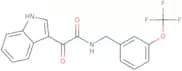
CAS:<p>Please enquire for more information about 2-Indol-3-yl-2-oxo-N-((3-(trifluoromethoxy)phenyl)methyl)ethanamide including the price, delivery time and more detailed product information at the technical inquiry form on this page</p>Formula:C18H13F3N2O3Purity:Min. 95%Color and Shape:PowderMolecular weight:362.3 g/mol5-Carboxymethoxytryptamine hydrochloride
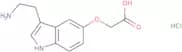
CAS:Controlled Product<p>5-Carboxymethoxytryptamine hydrochloride (5CMT) is a chemical compound that belongs to the group of useful building blocks. It is a versatile intermediate that can be used in the synthesis of many important compounds. 5CMT reacts with amines and alcohols to form amides and esters. It also reacts with carboxylic acids to form acid halides and anhydrides. 5CMT has been shown to be a useful scaffold in organic synthesis, as it can be converted into various derivatives. 5CMT is soluble in water, methanol, ethanol, acetone, and dichloromethane.</p>Formula:C12H14N2O3•HClPurity:Min. 95%Molecular weight:270.71 g/mol3-(tert-butyl)-4-((2-hydroxy-3-methoxyphenyl)methylene)-1-phenyl-2-pyrazolin-5-one
CAS:<p>Please enquire for more information about 3-(tert-butyl)-4-((2-hydroxy-3-methoxyphenyl)methylene)-1-phenyl-2-pyrazolin-5-one including the price, delivery time and more detailed product information at the technical inquiry form on this page</p>Purity:Min. 95%1-Bromo-3,4-dimethoxy-6-nitrobenzene
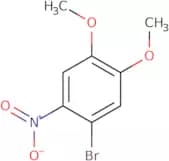
CAS:<p>1-Bromo-3,4-dimethoxy-6-nitrobenzene is a pharmacological agent that has been used as a catalyst and cleavable complex. It can be used to synthesize melamine, anilines and other moieties. The 1,2,3-triazole ring of the molecule is modified by substitution with nitroarenes or nitrobenzene to form a protoberberine alkaloid. This chemical compound has been shown to be a competitive inhibitor of topoisomerase I with an IC50 value of 0.2μM in calf thymus DNA gyrase assays. It also has thermal stability up to 90°C for at least 24 hours when treated with phenol and chloroform for purification purposes.</p>Formula:C8H8BrNO4Purity:Min. 95%Color and Shape:PowderMolecular weight:262.06 g/mol2,2'-Dimethoxybiphenyl
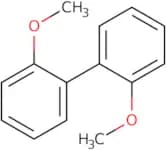
CAS:<p>2,2'-Dimethoxybiphenyl is a thermoplastic that is exothermic, making it useful in the production of polyketones. It can be used as a linker to form covalent bonds with monomers and polymers. 2,2'-Dimethoxybiphenyl has been used as a monomer to produce polyethers and polyesters. This compound has many chemical stability properties, which makes it suitable for use in polymer synthesis. It also can react with nucleophiles such as amines to form ether linkages. 2,2'-Dimethoxybiphenyl has kinetic properties that are faster than those of other ketones but slower than those of other ether-linked compounds. The activation energy for its reaction is low, making it an effective monomer for polymerization reactions.</p>Formula:C14H14O2Purity:Min. 95%Color and Shape:PowderMolecular weight:214.26 g/mol5-Chloro-2-methoxyacetophenone
CAS:<p>5-Chloro-2-methoxyacetophenone is a byproduct of the synthesis of 2-hydroxybenzofuran. It is also used in the synthesis of tetracyclic benzopyrans, which are known to be potent analgesics and have been found to have anti-inflammatory properties. 5-Chloro-2-methoxyacetophenone can be obtained by decarbonylation (loss of carbon) or elimination reactions.</p>Formula:C9H9ClO2Purity:Min. 95%Color and Shape:Clear LiquidMolecular weight:184.62 g/mol4-Methoxy-2-(trifluoromethyl)benzoic acid
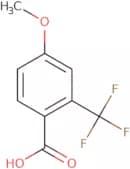
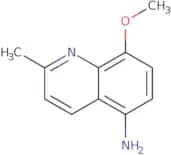
CAS:<p>4-Methoxy-2-(trifluoromethyl)benzoic acid is a useful building block for the synthesis of various organic compounds. It is used in the preparation of pharmaceuticals, agrochemicals, and pesticides. 4-Methoxy-2-(trifluoromethyl)benzoic acid is also a reagent for many organic reactions, such as Friedel–Crafts reactions, Grignard reactions, and alkylation reactions. It is also an intermediate for the synthesis of other compounds.</p>Formula:C9H7F3O3Purity:Min. 95%Color and Shape:PowderMolecular weight:220.15 g/mol8-Methoxy-2-methylquinolin-5-amine monohydrochloride
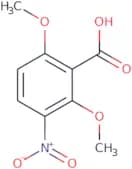
CAS:<p>8-Methoxy-2-methylquinolin-5-amine monohydrochloride is a fine chemical that is used as a versatile building block in the synthesis of complex compounds. 8-Methoxy-2-methylquinolin-5-amine monohydrochloride is an intermediate for the production of research chemicals and pharmaceuticals. It can be used to synthesize speciality chemicals, useful scaffolds, and reagents. It also has a wide range of applications as a reaction component in synthetic organic chemistry. 8-Methoxy-2-methylquinolin-5-amine monohydrochloride has high purity and quality.</p>Formula:C11H12N2O•HClPurity:Min. 95 Area-%Color and Shape:PowderMolecular weight:224.73 g/mol2,6-Dimethoxy-3-nitrobenzoic acid
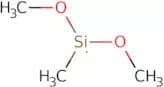
CAS:<p>2,6-Dimethoxy-3-nitrobenzoic acid is an aromatic compound that has been shown to have a molecular weight of 136.2 g/mol. It is extracted from the leaves of "Nepeta cataria" and can be found in many other plants as well. This compound has been shown to inhibit bacterial growth in vitro by inhibiting protein synthesis. The mode of action for this compound is not yet known, but it may be due to its ability to form hydrogen bonds with the ribosomes and inhibit nucleotide binding sites on the ribosome surface.</p>Formula:C9H9NO6Purity:Min. 98 Area-%Color and Shape:PowderMolecular weight:227.17 g/molDimethoxy(methyl)silane - 90%
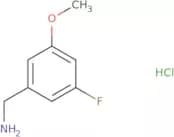
CAS:<p>Dimethoxy(methyl)silane is a fluorescing hydrocarbon that is used as a sealant. It has been shown to react with calcium carbonate and chloride, forming stable complexes. Dimethoxy(methyl)silane reacts with hydrogen chloride to form a divalent hydrocarbon and can be used to produce polymer films.</p>Formula:C3H10O2SiPurity:Min. 95%Color and Shape:Clear LiquidMolecular weight:106.2 g/mol3-Fluoro-5-methoxybenzylamine hydrochloride
CAS:<p>3-Fluoro-5-methoxybenzylamine hydrochloride is a chemical building block that can be used in organic synthesis. It is a versatile building block and can be used to synthesize complex compounds. 3-Fluoro-5-methoxybenzylamine hydrochloride is used as a reaction component and reagent for the production of pharmaceuticals, agricultural chemicals, and other organic compounds. It has CAS number 1158269-22-7 and can be found in the Chemical Abstract Services database.</p>Formula:C8H10FNO•HClPurity:Min. 95%Color and Shape:Clear LiquidMolecular weight:191.63 g/molBis[3-(triethoxysilyl)propyl]tetrasulfide
CAS:<p>Bis[3-(triethoxysilyl)propyl]tetrasulfide is a cross-linking agent that can be used to create polymer films. It has been shown to form hydrated films in deionized water, which have been studied with atomic force microscopy. Kinetic data for the polymerization of bis[3-(triethoxysilyl)propyl]tetrasulfide has also been obtained by following the increase in viscosity of a solution containing a small amount of bis[3-(triethoxysilyl)propyl]tetrasulfide and an organic modifier. Bis[3-(triethoxysilyl)propyl]tetrasulfide is typically synthesized using solid-phase synthesis on carbon nanotubes or particles.</p>Formula:C18H42Si2S4O6Purity:Min. 80%Color and Shape:Yellow Clear LiquidMolecular weight:538.96 g/molNelotanserin
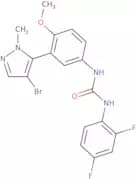
CAS:<p>1-[3-(4-Bromo-1-methyl-1H-pyrazol-5-yl)-4-methoxyphenyl]-3-(2,4-difluorophenyl)urea is the active ingredient in a drug that is used to treat chronic schizophrenia. It has been shown to have both antipsychotic and antidepressant properties. The drug works by blocking the 5HT2A receptor, which inhibits the effects of serotonin on heterocyclic amines at the postsynaptic membrane. This causes hyperpolarization of the membrane, which blocks neurotransmitter release and prevents further transmission of signals. It also blocks the H1 receptor, which decreases histamine release and reduces inflammation in the brain.</p>Formula:C18H15BrF2N4O2Purity:Min. 95%Color and Shape:PowderMolecular weight:437.24 g/mol(2,4,5-Trimethoxyphenyl)acetone
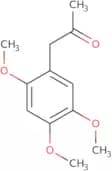
CAS:Controlled Product<p>(2,4,5-Trimethoxyphenyl)acetone is an organic compound that inhibits the replication of RNA. It was found to inhibit the activity of beta-asarone and inhibit the conversion of asarone to o-benzoquinones in cell cultures. This agent also has genotoxic effects on human liver cells. (2,4,5-Trimethoxyphenyl)acetone binds to 5-hydroxytryptamine receptors and inhibits their activities, which can lead to a decrease in serotonin concentrations. (2,4,5-Trimethoxyphenyl)acetone is a colorless liquid at room temperature with a molecular weight of 174.24 grams/mol.</p>Formula:C12H16O4Purity:Min. 95%Molecular weight:224.25 g/mol5-Bromo-3,4-dimethoxybenzyl alcohol
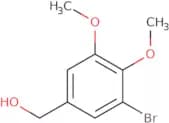
CAS:<p>5-Bromo-3,4-dimethoxybenzyl alcohol is a natural product that can be synthesized from the methyl ethers of 5-bromo-3,4-dimethoxybenzoic acid. It has been reported to have high yields and good yields for the synthesis of methyl ethers. The reaction conditions for this natural product are mild and do not require an organic solvent or a catalyst.</p>Formula:C9H11BrO3Purity:Min. 98 Area-%Color and Shape:PowderMolecular weight:247.09 g/molMethyl 3,5-diiodo-4-methoxybenzoate
CAS:<p>Please enquire for more information about Methyl 3,5-diiodo-4-methoxybenzoate including the price, delivery time and more detailed product information at the technical inquiry form on this page</p>Formula:C9H8I2O3Purity:Min. 95%Color and Shape:PowderMolecular weight:417.97 g/mol2-Dicyclohexylphosphino-2',6'-dimethoxybiphenyl
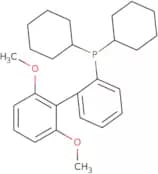
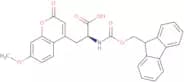
CAS:<p>2-Dicyclohexylphosphino-2',6'-dimethoxybiphenyl is a fluorescent chemical that has been used to study interactions of fatty acids and halides. It is also used in the synthesis of palladium complexes, which have been shown to be effective for hydrogenation reactions. 2-Dicyclohexylphosphino-2',6'-dimethoxybiphenyl can be synthesized from 2,6-dichlorobenzaldehyde and dicyclohexylphosphine by the addition of trifluoroacetic acid. The synthesis proceeds via a substitution reaction with methoxy groups on the aromatic ring. This product fluoresces under ultraviolet light at 351 nm.</p>Formula:C26H35O2PPurity:Min. 95%Color and Shape:PowderMolecular weight:410.53 g/molFmoc-β-(7-methoxy-coumarin-4-yl)-Ala-OH
CAS:<p>Fmoc-b-(7-methoxy-coumarin-4-yl)-Ala-OH is a reagent with the CAS No. 524698-40-6, which is used in organic synthesis. It is a versatile building block and useful intermediate that can be used to synthesize other organic compounds. Fmoc-b-(7-methoxy-coumarin-4-yl)-Ala-OH is also used as a reaction component in the synthesis of peptides and proteins, as well as in the preparation of polymers. It has been shown to be an effective building block for complex compounds.</p>Formula:C28H23NO7Purity:Min. 95%Color and Shape:PowderMolecular weight:485.48 g/mol



![Bis[3-(triethoxysilyl)propyl]tetrasulfide](/_next/image/?url=https%3A%2Fstatic.cymitquimica.com%2Fproducts%2F3D%2Fthumb-webp%2FFB33713.webp&w=3840&q=75)