Ethers
Ethers are organic compounds containing an ether functional group, characterized by an oxygen atom bonded to two hydrocarbon radicals. These compounds are valuable in synthesis and serve as solvents in various chemical reactions. At CymitQuimica, we offer a selection of high-quality ethers to support your research and industrial applications, ensuring reliable and effective results. Our range of ethers meets diverse laboratory requirements, from routine experiments to advanced research.
Found 40729 products of "Ethers"
Sort by
Purity (%)
0
100
|
0
|
50
|
90
|
95
|
100
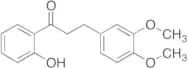
3-(3,4-Dimethoxyphenyl)-1-(2-hydroxyphenyl)propan-1-one
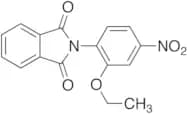
CAS:Controlled Product<p>Applications 3-(3,4-Dimethoxyphenyl)-1-(2-hydroxyphenyl)propan-1-one is an intermediate for the synthesis of dTAG-7 (D710015), which is a degradation tag, was tested for its efficiency at depleting FKBP12F36V -MELK(sg3R) and was found to have significantly degraded FKBP12F36V -MELK(sg3R) within 4 hours.Used in the study of cancer research.<br>References Hai-Tsang Huang., eLife, 1-29, (2017)<br></p>Formula:C17H18O4Color and Shape:NeatMolecular weight:286.322-(4-Nitro-2-ethoxyphenyl)pthalimide
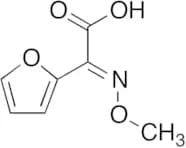
CAS:Controlled Product<p>Applications 2-(4-Nitro-2-ethoxyphenyl)pthalimide (cas# 106981-60-6) is a compound useful in organic synthesis.<br></p>Formula:C16H12N2O5Color and Shape:NeatMolecular weight:312.28(E)-(2-(Furan-2-yl)-2-(methoxyimino)acetic Acid
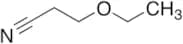
CAS:Controlled Product<p>Applications 2-(Furan-2-yl)-2-(methoxyimino)acetic Acid is an intermediate in the synthesis of Cephalosporin derivatives.<br>References Ger. Offen. (1978), DE 2731724 A1 19780119.<br></p>Formula:C15H10F3NOSColor and Shape:NeatMolecular weight:309.3063-Ethoxypropionitrile
CAS:Controlled Product<p>Applications 3-Ethoxypropionitrile (cas# 2141-62-0) is a useful research chemical.<br></p>Formula:C5H9NOColor and Shape:NeatMolecular weight:99.131,1,1-Trimethoxybutane
CAS:Controlled Product<p>Applications 1,1,1-Trimethoxybutane is used in the synthesis of angiotensin II receptor antagonists affecting blood pressure. Also used in the preparation of inhibitors of cyclin-dependant kinases.<br>References Yanagisawa, H. et al.: J. Med. Chem., 39, 323 (1996);<br></p>Formula:C7H16O3Color and Shape:NeatMolecular weight:148.2Ethoxyoxalyl Chloride
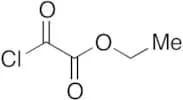
CAS:Controlled Product<p>Applications Ethoxyoxalyl Chloride has been used as a reactant in the preparation of oxyoxalamide derivatives as epoxide hydrolase inhibitors.<br> Not a dangerous good if item is equal to or less than 1g/ml and there is less than 100g/ml in the package<br>References Kim, I., et. al.: Bioorg. Med., 22, 1163 (2014)<br></p>Formula:C4H5ClO3Color and Shape:NeatMolecular weight:136.53N-(Methoxymethyl)-N-[(trimethylsilyl)methyl]benzenemethanamine (>90%)
CAS:Controlled Product<p>Applications N-(Methoxymethyl)-N-[(trimethylsilyl)methyl]benzenemethanamine is used in the synthesis of pyrrolidine derivatives as novel sodium channel blockers used to treat ischemic related ailments.<br>References Seki, M. et al.: Bioorg. Med. Chem. Lett., 23, 4230 (2013);<br></p>Formula:C13H23NOSiPurity:>90%Color and Shape:NeatMolecular weight:237.41(1-Ethoxycyclopropoxy)trimethylsilane
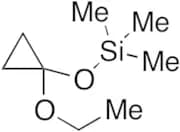
CAS:Controlled Product<p>Applications (1-Ethoxycyclopropoxy)trimethylsilane used as a reactant in the synthesis of di-, tri- and tetracyclopropylhydrazines. Also used as reagent in the synthesis of g elsemoxonine which is found in gelsemium plant species that is used in traditional asian medicine.<br> Not a dangerous good if item is equal to or less than 1g/ml and there is less than 100g/ml in the package<br>References Shestakov, A., et al.: Chem. Commun., 52, 2398 (2016); Diethelm, S., et al.: J. Am. Chem. Soc., 137, 6084 (2015);<br></p>Formula:C8H18O2SiColor and Shape:NeatMolecular weight:174.31N-(β-Cyanoethyl)-N-(ethoxycarbonylethyl)benzylamine
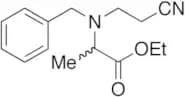
CAS:Controlled Product<p>Applications N-(β-Cyanoethyl)-N-(ethoxycarbonylethyl)benzylamine is a compound useful in organic synthesis.<br> Not a dangerous good if item is equal to or less than 1g/ml and there is less than 100g/ml in the package<br></p>Formula:C15H20N2O2Color and Shape:NeatMolecular weight:260.33[(Methoxymethoxy)methyl]tributylstannane
CAS:Controlled Product<p>Applications Reagent used to conduct (Methoxymethoxy)methyl additions<br> Not a dangerous good if item is equal to or less than 1g/ml and there is less than 100g/ml in the package<br></p>Formula:C15H34O2SnColor and Shape:NeatMolecular weight:365.144-Methoxy-3-nitroaniline
CAS:<p>4-Methoxy-3-nitroaniline is a chemical compound that has been shown to have anti-tumor and anti-inflammatory effects. It belongs to the class of amines and can be synthesized by nitrating 4-methoxy aniline. The reaction product is then reacted with sodium hydroxide in a solution of alcohol and water, which produces 2,4-dinitroaniline. When this substance is heated at high temperatures, it converts into a mixture of products, including 2,4,6-trinitroaniline. This compound has been shown to inhibit tumor growth in rats. Toxicity studies revealed that it was not toxic when administered orally in doses up to 5g/kg body weight for 7 days.</p>Formula:C7H8N2O3Purity:Min. 95%Color and Shape:Orange PowderMolecular weight:168.15 g/mol4-[2-(3,4-Dimethoxyphenyl)-1,2-dibromoethyl]-1,2-dimethoxybenzene
CAS:<p>4-[2-(3,4-Dimethoxyphenyl)-1,2-dibromoethyl]-1,2-dimethoxybenzene is a high quality chemical that is an intermediate for the synthesis of other compounds. It has been used as a reagent in the synthesis of complex compounds and has been shown to be useful for the production of fine chemicals. This compound can also be used as a scaffold or building block in organic chemistry. The versatility of 4-[2-(3,4-Dimethoxyphenyl)-1,2-dibromoethyl]-1,2-dimethoxybenzene makes it an important reaction component in organic chemistry and research chemicals.</p>Formula:C18H20Br2O4Purity:Min. 95%Molecular weight:460.16 g/mol2,5-Dimethoxyterephthalaldehyde
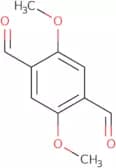
CAS:<p>2,5-Dimethoxyterephthalaldehyde (2,5DMP) is a protonated molecule that can be used in sample preparation for analytical methods. 2,5DMP has been used as a dispersive solid-phase extraction solvent and an adsorbent material. This compound has been shown to exhibit strong hydrophobic interactions with the carbonyl group of aromatic compounds and to have a high chemical stability. 2,5DMP also has an electrochemical impedance spectroscopy (EIS) property that can be used for monitoring the electrochemical behaviour of molecules and magnetic particles in the solution. The EIS property has been enhanced by hydrogen bonding between the protonated molecules and metal ions in the solution.</p>Formula:C10H10O4Purity:Min. 95%Color and Shape:PowderMolecular weight:194.18 g/mol2-Bromo-3-methoxypyrazine
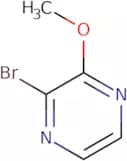
CAS:<p>2-Bromo-3-methoxypyrazine is a chemical compound that is used as a precursor in the biosynthesis of geosmin. Geosmin, also known as 2-methylisoborneol or 2-MIB, is a volatile organic compound which has a musty or earthy smell. It is produced by some species of bacteria, including Myxobacterium and Chondromyces crocatus. It can be found in soil and water samples from areas with high levels of organic matter. 2-Bromo-3-methoxypyrazine was first isolated from cultures of M. crocatus in 1950. It can be synthesized from 3,4,5-trimethoxybenzaldehyde via bromination followed by reduction with sodium hydrosulfide. This process creates an intermediate called 2-(2'-bromoethyl)pyrazine, which undergoes methylation to create 2</p>Formula:C5H5BrN2OPurity:Min. 95%Color and Shape:White Off-White PowderMolecular weight:189.01 g/mol4-Methoxy-2,3,5-trimethylpyridine
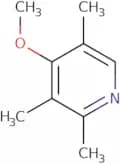
CAS:<p>4-Methoxy-2,3,5-trimethylpyridine is an efficient hydrogenolysis catalyst that can be used for the synthesis of ethers from alcohols. It is a member of the methoxides family and can be produced by condensation of chloroform with acetaldehyde and formaldehyde. 4-Methoxy-2,3,5-trimethylpyridine inhibits palladium chloride from catalyzing hydrogenation reactions. The compound also has an inhibiting activity against acidic amines and n-Oxides. Its high yield makes it useful in organic synthesis as a precursor to diethyl malonate.</p>Formula:C9H13NOPurity:Min. 95%Color and Shape:Colourless To Yellow LiquidMolecular weight:151.21 g/mol2-Chloro-3,4-dimethoxybenzylamine HCl
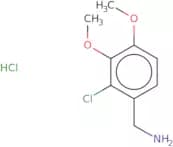
CAS:<p>2-Chloro-3,4-dimethoxybenzylamine HCl is a fine chemical that can be used as a building block to synthesize new compounds. It is also a useful intermediate in the production of pharmaceuticals and other organic chemicals. 2-Chloro-3,4-dimethoxybenzylamine HCl has been used as a reaction component for the synthesis of various complex compounds. This compound has been shown to have high purity and quality.</p>Formula:C9H12ClNO2·HClPurity:Min. 95%Molecular weight:238.11 g/molEthyl 3,3-diethoxypropionate
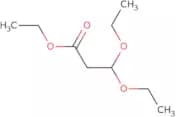
CAS:<p>Ethyl 3,3-diethoxypropionate is an organic compound that is synthesized from the reaction of diethyl malonate and chloroacetic acid in the presence of a base catalyst. This product has been shown to be an effective inhibitor of mitochondrial cytochrome c oxidase in vitro studies. Ethyl 3,3-diethoxypropionate also has been found to inhibit quinoline derivatives, such as erythromycin and tetracycline, which are involved in bacterial DNA synthesis. Furthermore, this product inhibits β-unsaturated aldehydes and allylation.</p>Formula:C9H18O4Purity:Min. 95%Color and Shape:Colorless Clear LiquidMolecular weight:190.24 g/molN-α-Fmoc-Nε-7-methoxycoumarin-4-acetyl-L-lysine
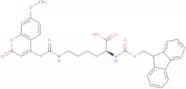
CAS:<p>N-alpha-Fmoc-Nepsilon-7-methoxycoumarin-4-acetyl-L-lysine is a fluorogenic molecule that is synthesized by the solid phase method. It is an analog of lysine, which is a bioactive amino acid. This compound binds to copper and exhibits fluorescence emission at 585 nm when excited at 488 nm. N-alpha-Fmoc-Nepsilon-7-methoxycoumarin-4-acetyl-L-lysine can be used as a substrate for bone growth in vitro and in vivo. It can also be used as a labeling reagent for bone tissue, such as bone sections or cells. It has been shown to produce osteogenic activity in vitro and in vivo.</p>Formula:C33H32N2O8Purity:Min. 97 Area-%Color and Shape:PowderMolecular weight:584.62 g/mol2,4-Dimethoxy-5-methylbenzyl alcohol
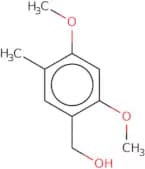
CAS:<p>2,4-Dimethoxy-5-methylbenzyl alcohol is a high quality chemical that is used as an intermediate for the synthesis of complex compounds. It has been used as a reagent and as a building block for the synthesis of other chemicals. This compound can be used to produce fine chemicals and research chemicals. 2,4-Dimethoxy-5-methylbenzyl alcohol has been shown to be useful in the production of versatile building blocks and reaction components.</p>Formula:C10H14O3Purity:Min. 95%Molecular weight:182.22 g/mol1-(3-(Trifluoromethoxy)phenyl)hydrazine hydrochloride
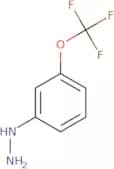
CAS:<p>1-(3-(Trifluoromethoxy)phenyl)hydrazine hydrochloride is a reagent that can be used as a reaction component in organic synthesis. It is also a useful scaffold for the preparation of high-quality research chemicals and other versatile building blocks. 1-(3-(Trifluoromethoxy)phenyl)hydrazine hydrochloride is an intermediate in the synthesis of complex compounds, such as fine chemicals.</p>Formula:C7H7F3N2OPurity:Min. 95%Molecular weight:192.14 g/mol


![N-(Methoxymethyl)-N-[(trimethylsilyl)methyl]benzenemethanamine (>90%)](/_next/image/?url=https%3A%2Fstatic.cymitquimica.com%2Fproducts%2FTR%2Fthumb-webp%2FM264620.webp&w=3840&q=75)
![[(Methoxymethoxy)methyl]tributylstannane](/_next/image/?url=https%3A%2Fstatic.cymitquimica.com%2Fproducts%2FTR%2Fthumb-webp%2FM263000.webp&w=3840&q=75)


![4-[2-(3,4-Dimethoxyphenyl)-1,2-dibromoethyl]-1,2-dimethoxybenzene](/_next/image/?url=https%3A%2Fstatic.cymitquimica.com%2Fproducts%2F3D%2Fthumb-webp%2FFD66282.webp&w=3840&q=75)