Ethers
Ethers are organic compounds containing an ether functional group, characterized by an oxygen atom bonded to two hydrocarbon radicals. These compounds are valuable in synthesis and serve as solvents in various chemical reactions. At CymitQuimica, we offer a selection of high-quality ethers to support your research and industrial applications, ensuring reliable and effective results. Our range of ethers meets diverse laboratory requirements, from routine experiments to advanced research.
Found 40729 products of "Ethers"
Sort by
Purity (%)
0
100
|
0
|
50
|
90
|
95
|
100
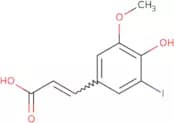
3-(5-Iodo-4-hydroxy-3-methoxy)cinnamic acid
CAS:<p>3-(5-Iodo-4-hydroxy-3-methoxy)cinnamic acid is a chemical compound that can be used as a starting material for synthesis of complex compounds. It is a white solid with a melting point of about 100°C, and it is soluble in water. This product is an excellent reagent for the synthesis of new chemicals, and it has been widely used as a reaction component in organic syntheses. 3-(5-Iodo-4-hydroxy-3-methoxy)cinnamic acid also has antibacterial properties.</p>Formula:C10H9IO4Purity:Min. 95%Molecular weight:320.08 g/mol4-Methoxy-3-nitroaniline
CAS:<p>4-Methoxy-3-nitroaniline is a chemical compound that has been shown to have anti-tumor and anti-inflammatory effects. It belongs to the class of amines and can be synthesized by nitrating 4-methoxy aniline. The reaction product is then reacted with sodium hydroxide in a solution of alcohol and water, which produces 2,4-dinitroaniline. When this substance is heated at high temperatures, it converts into a mixture of products, including 2,4,6-trinitroaniline. This compound has been shown to inhibit tumor growth in rats. Toxicity studies revealed that it was not toxic when administered orally in doses up to 5g/kg body weight for 7 days.</p>Formula:C7H8N2O3Purity:Min. 95%Color and Shape:Orange PowderMolecular weight:168.15 g/mol4-[2-(3,4-Dimethoxyphenyl)-1,2-dibromoethyl]-1,2-dimethoxybenzene
CAS:<p>4-[2-(3,4-Dimethoxyphenyl)-1,2-dibromoethyl]-1,2-dimethoxybenzene is a high quality chemical that is an intermediate for the synthesis of other compounds. It has been used as a reagent in the synthesis of complex compounds and has been shown to be useful for the production of fine chemicals. This compound can also be used as a scaffold or building block in organic chemistry. The versatility of 4-[2-(3,4-Dimethoxyphenyl)-1,2-dibromoethyl]-1,2-dimethoxybenzene makes it an important reaction component in organic chemistry and research chemicals.</p>Formula:C18H20Br2O4Purity:Min. 95%Molecular weight:460.16 g/molN-(4-Methoxyphenyl)ethane-1,2-diamine
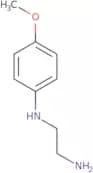
CAS:<p>N-(4-Methoxyphenyl)ethane-1,2-diamine is a synthetic compound that has been shown to inhibit the activity of cathepsins. It can be used in the treatment of diseases caused by these enzymes, such as osteoarthritis and Alzheimer's disease. N-(4-Methoxyphenyl)ethane-1,2-diamine has a pharmacokinetic profile that is favorable for oral administration. The drug is absorbed from the gastrointestinal tract readily and undergoes extensive metabolism in the liver. This process leads to the formation of active metabolites which are excreted in urine or bile. N-(4-Methoxyphenyl)ethane-1,2-diamine also inhibits nitroalkanes with activated aromatic rings, such as 4-nitrobenzaldehyde and 2,4,6-trinitrobenzene.</p>Formula:C9H14N2OPurity:Min. 95%Color and Shape:Slightly Yellow PowderMolecular weight:166.22 g/mol3'-(Trimethoxyphenyl)acetone
<p>3'-(Trimethoxyphenyl)acetone is a reagent and useful scaffold for the synthesis of complex compounds. It is also used as a reaction component in the preparation of valuable research chemicals, specialty chemicals, and fine chemicals. 3'-(Trimethoxyphenyl)acetone has been shown to be an effective building block for synthesizing complex compounds, such as heterocycles. This chemical has a CAS number of 689-52-3.</p>Purity:Min. 95%4',2-Dihydroxy-3-methoxychalcone
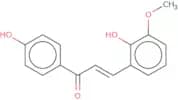
CAS:<p>4,2-Dihydroxy-3-methoxychalcone is a fine chemical that is useful in the synthesis of various pharmaceuticals and other chemicals. It is a versatile building block that can be used as a reaction component or intermediate in the synthesis of complex compounds. 4,2-Dihydroxy-3-methoxychalcone has been shown to be a high quality reagent for use in the synthesis of speciality chemicals and research chemicals. This compound is also useful as a scaffold for the development of new drugs.</p>Formula:C16H14O4Purity:Min. 95%Molecular weight:270.28 g/mol2,3,3',4'-Tetramethoxybenzophenone
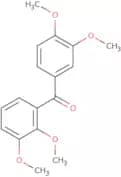
CAS:<p>2,3,3',4'-Tetramethoxybenzophenone is a fine chemical that is used as a versatile building block in the synthesis of various organic compounds. It is used as an intermediate to synthesize other chemicals and research chemicals. 2,3,3',4'-Tetramethoxybenzophenone has a CAS number of 50625-53-1 and can be found in the following chemical names: 2,2-Dimethoxy-2-phenylacetophenone; 2-(2'-Methoxyphenyl)-2-(methoxymethyl) acetophenone; 2,2'-(Phenylenediisopropylidene)bis(p-methoxyphenol); 1-[(2'-Methoxyphenyl)methyl]-1,2-diphenylethane. The compound is soluble in organic solvents but insoluble in water. This fine chemical</p>Formula:C17H18O5Purity:Min. 95%Color and Shape:PowderMolecular weight:302.32 g/mol4-Methyl-5,7-dimethoxycoumarin
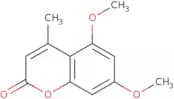
CAS:<p>4-Methyl-5,7-dimethoxycoumarin is a coumarin derivative that has been synthesized from acetonitrile and aluminium. It is used as an antiplatelet drug in the treatment of cardiovascular diseases such as unstable angina, myocardial infarction, and transient ischemic attack. 4-Methyl-5,7-dimethoxycoumarin reversibly inhibits platelet aggregation by blocking the platelet receptor P2Y12 on the surface of platelets. This drug also has antioxidant effects and can be used to identify markers associated with cardiovascular disease.</p>Formula:C12H12O4Purity:Min. 95%Molecular weight:220.22 g/mol2,4-Dimethoxy-5-methylbenzyl alcohol
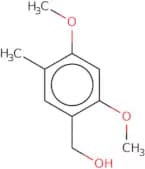
CAS:<p>2,4-Dimethoxy-5-methylbenzyl alcohol is a high quality chemical that is used as an intermediate for the synthesis of complex compounds. It has been used as a reagent and as a building block for the synthesis of other chemicals. This compound can be used to produce fine chemicals and research chemicals. 2,4-Dimethoxy-5-methylbenzyl alcohol has been shown to be useful in the production of versatile building blocks and reaction components.</p>Formula:C10H14O3Purity:Min. 95%Molecular weight:182.22 g/mol3'-(Tetrafluoroethoxy)-β-methyl-β-nitrostyrene
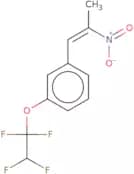
CAS:<p>3'-(Tetrafluoroethoxy)-beta-methyl-beta-nitrostyrene is a versatile building block that can be used as a reaction component for the synthesis of more complex compounds. This compound is also known to have speciality chemical and research chemical properties. 3'-(Tetrafluoroethoxy)-beta-methyl-beta-nitrostyrene has been shown to be an effective reagent for the synthesis of high quality complex compounds.</p>Formula:C11H9F4NO3Purity:Min. 95%Molecular weight:279.19 g/molBis(2-bromoethyl) Ether
CAS:Formula:C4H8Br2OPurity:>98.0%(GC)Color and Shape:Colorless to Yellow clear liquidMolecular weight:231.923,4'-Dimethoxy-2'-hydroxychalcone
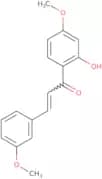
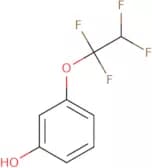
CAS:<p>3,4'-Dimethoxy-2'-hydroxychalcone is a reaction component and useful scaffold for the synthesis of complex compounds. This chemical is an intermediate in the synthesis of various pharmaceuticals, such as anti-tuberculosis drugs, cancer chemotherapeutics and antibiotics. 3,4'-Dimethoxy-2'-hydroxychalcone has been shown to be a versatile building block that can be used to synthesize both natural products and pharmaceuticals. This compound also has a wide range of applications in the production of fine chemicals.</p>Formula:C17H16O4Purity:Min. 95%Molecular weight:284.31 g/mol3-(1,1,2,2-Tetrafluoroethoxy)phenol
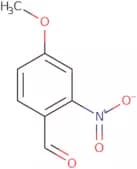
CAS:<p>3-(1,1,2,2-Tetrafluoroethoxy)phenol is a versatile building block that can be used in the synthesis of complex compounds. It is also a reagent and speciality chemical and has CAS No. 53997-99-2. 3-(1,1,2,2-Tetrafluoroethoxy)phenol is a useful building block for organic synthesis and has been used as a reaction component or scaffold.</p>Formula:C8H6F4O2Purity:Min. 95%Molecular weight:210.13 g/mol4-Methoxy-2-nitro-benzaldehyde
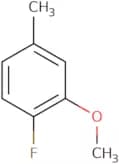
CAS:<p>4-Methoxy-2-nitrobenzaldehyde is a chemical that is used in the synthesis of many pharmaceuticals. It has been shown to be an effective agent in the treatment of cancer cells and is activated by chloride ions. 4-Methoxy-2-nitrobenzaldehyde reacts with nucleophiles such as hydroxide, amines, or thiols in order to form alkylating agents. This reaction can be used for the synthesis of many drugs including antihistamines, antidiabetic drugs, and antipsychotics. The rate of this reaction increases with increasing temperature. It also undergoes demethylation when exposed to nitrous acid, which may lead to a different product.</p>Formula:C8H7NO4Purity:Min. 95%Molecular weight:181.15 g/mol4-Fluoro-3-methoxytoluene
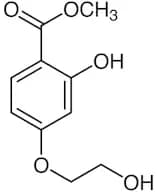
CAS:<p>4-Fluoro-3-methoxytoluene (4FMET) is a polymeric organic compound that has an index of refraction of 1.5. It is soluble in common solvents, such as chloroform, acetone and ethanol, but insoluble in water. 4FMET can be used as a copolymerization additive to improve the chemical stability of polymers and plastics. It also has antibacterial properties that are due to its ability to disrupt bacterial membranes and inhibit protein synthesis. 4FMET is FDA approved for use in ophthalmic solutions that transmit ultraviolet light, such as UV-A or UV-B radiation.</p>Formula:C8H9FOPurity:Min. 95%Color and Shape:Clear LiquidMolecular weight:140.15 g/molMethyl 4-(2-Hydroxyethoxy)salicylate
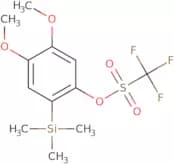
Formula:C10H12O5Purity:>98.0%(GC)Color and Shape:White to Light yellow to Light orange powder to crystalMolecular weight:212.204,5-Dimethoxy-2-(trimethylsilyl)phenyl trifluoromethanesulfonate
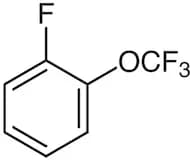
CAS:<p>4,5-Dimethoxy-2-(trimethylsilyl)phenyl trifluoromethanesulfonate is a reagent for the synthesis of propiolates. It is prepared by reacting methyl propiolate with tetrachloride, hexachloroethane, or tetrabromide in acetonitrile. The reactants are heated to reflux under argon and then cooled to room temperature. This product is an ionic liquid that can be used as a solvent. 4,5-Dimethoxy-2-(trimethylsilyl)phenyl trifluoromethanesulfonate is a zwitterion and reacts with amines to form quaternary ammonium salts. It can also be used for the synthesis of unactivated transition metal complexes by reacting it with palladium and amines.</p>Formula:C12H17F3O5SSiPurity:Min. 95%Color and Shape:Colorless PowderMolecular weight:358.41 g/mol1-Fluoro-2-(trifluoromethoxy)benzene
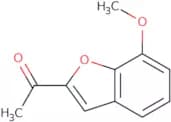
CAS:Formula:C7H4F4OPurity:>98.0%(GC)Color and Shape:Colorless to Almost colorless clear liquidMolecular weight:180.102-Acetyl-7-methoxybenzofuran
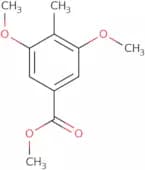
CAS:<p>2-Acetyl-7-methoxybenzofuran is an antibacterial agent that has potent inhibitory activity against methicillin-resistant Staphylococcus aureus and other bacterial species. It also inhibits the growth of endophytic fungus in plants. 2-Acetyl-7-methoxybenzofuran is synthesized by the fungus Cereus, which is used in traditional medicine to treat various ailments. This compound binds to the 16S ribosomal RNA, which inhibits protein synthesis and cell division. 2-Acetyl-7-methoxybenzofuran also shows potent inhibitory activity against methicillin-resistant Staphylococcus aureus, as well as other bacterial species. This antibiotic binds to the 16S ribosomal RNA, inhibiting protein synthesis and cell division.</p>Purity:Min. 95%Color and Shape:PowderMolecular weight:190.2 g/mol3,5-Dimethoxy-4-methylbenzoic acid methyl ester
CAS:<p>3,5-Dimethoxy-4-methylbenzoic acid methyl ester (DMMBME) is a synthetic compound that is used as an immunogen to generate antibodies against fungal proteins. DMMBME is specifically used to identify the presence of bryoria and australian fungi in plants. The chemical structure of DMMBME can be oxidized by depsidones, which leads to the production of reactive oxygen species that are believed to be responsible for the oxidative coupling of target proteins. This reaction can be catalyzed by a number of enzymes such as nidulin, which is found in plant roots.</p>Formula:C11H14O4Purity:Min. 95%Color and Shape:PowderMolecular weight:210.23 g/mol


![4-[2-(3,4-Dimethoxyphenyl)-1,2-dibromoethyl]-1,2-dimethoxybenzene](/_next/image/?url=https%3A%2Fstatic.cymitquimica.com%2Fproducts%2F3D%2Fthumb-webp%2FFD66282.webp&w=3840&q=75)