Ethers
Ethers are organic compounds containing an ether functional group, characterized by an oxygen atom bonded to two hydrocarbon radicals. These compounds are valuable in synthesis and serve as solvents in various chemical reactions. At CymitQuimica, we offer a selection of high-quality ethers to support your research and industrial applications, ensuring reliable and effective results. Our range of ethers meets diverse laboratory requirements, from routine experiments to advanced research.
Found 40902 products of "Ethers"
Sort by
Purity (%)
0
100
|
0
|
50
|
90
|
95
|
100
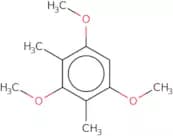
2,4,6-Trimethoxy-m-xylene
CAS:<p>2,4,6-Trimethoxy-m-xylene is a methylated aromatic hydrocarbon that can be found in coal tar and oil. It is a stable compound that can be protonated by superacids such as arenium ion (H2SO4). The protonation of 2,4,6-trimethoxy-m-xylene leads to the formation of carbocations, which are electron deficient species. This radical cation has a resonance structure with three double bonds between carbon atoms. The resonance structure of the radical cation is stabilized by hyperconjugative interactions between the electron pair on oxygen and the empty p orbital on carbon.</p>Formula:C11H16O3Purity:Min. 95%Molecular weight:196.24 g/mol1-(3-(Trifluoromethoxy)phenyl)hydrazine hydrochloride
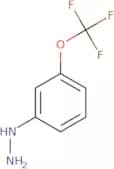
CAS:<p>1-(3-(Trifluoromethoxy)phenyl)hydrazine hydrochloride is a reagent that can be used as a reaction component in organic synthesis. It is also a useful scaffold for the preparation of high-quality research chemicals and other versatile building blocks. 1-(3-(Trifluoromethoxy)phenyl)hydrazine hydrochloride is an intermediate in the synthesis of complex compounds, such as fine chemicals.</p>Formula:C7H7F3N2OPurity:Min. 95%Molecular weight:192.14 g/mol2-Hydroxy-4,6-dimethoxy-3,5-dimethylbenzaldehyde
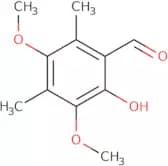
CAS:2-Hydroxy-4,6-dimethoxy-3,5-dimethylbenzaldehyde is a versatile building block that can be used in research chemicals, reagents, and speciality chemicals. It is also a useful building block that can be used as a reaction component or scaffold for high-quality compounds. This chemical has been shown to have antihistamine properties with applications in treatment of allergies and asthma.Formula:C11H14O4Purity:Min. 95%Color and Shape:PowderMolecular weight:210.23 g/mol5-Chloro-2-methoxybenzylamine hydrochloride
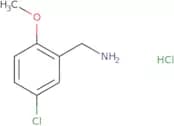
CAS:<p>5-Chloro-2-methoxybenzylamine hydrochloride is a chemical substance that is used as an intermediate in the synthesis of pharmaceuticals and other chemicals. It can be used as a building block to create complex compounds, or it can be used in reactions to produce speciality chemicals. 5-Chloro-2-methoxybenzylamine hydrochloride is a high quality reagent that can be used as a reaction component in research and development.<br>A fine chemical, 5-Chloro-2-methoxybenzylamine hydrochloride has many uses as a versatile building block for organic synthesis. It is also useful for generating research chemicals and complex compounds for use in medicines and other products.</p>Formula:C8H10ClNO·(HCl)Purity:Min. 95%Color and Shape:PowderMolecular weight:208.08 g/mol5-Methoxydurmillone
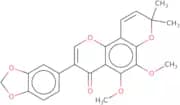
CAS:<p>5-Methoxydurmillone is a rotenoid that is found in many plants, including the seeds of the plant Ferruginea. 5-Methoxydurmillone has been shown to have anti-inflammatory properties and can be used to treat inflammatory diseases such as arthritis. It also inhibits the production of superoxide radicals and nitric oxide, which are important mediators of inflammation. 5-Methoxydurmillone has been shown to inhibit protein synthesis in bacteria, but not mammalian cells.</p>Formula:C23H20O7Purity:Min. 95%Molecular weight:408.4 g/mol3-(3,4-Dimethoxyphenyl)-1H-pyrazole-5-carboxylic acid
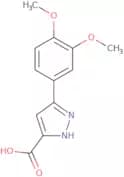
CAS:<p>3-(3,4-Dimethoxyphenyl)-1H-pyrazole-5-carboxylic acid is a fine chemical that is used as a building block for other compounds. It is also a research chemical that can be used in the production of many types of drugs and chemicals. 3-(3,4-Dimethoxyphenyl)-1H-pyrazole-5-carboxylic acid has been shown to be a useful reagent for reactions involving alcohols, amines, and acids. This product is also a versatile building block for the synthesis of complex molecules with many types of substituents.</p>Formula:C12H12N2O4Purity:Min. 95%Color and Shape:White PowderMolecular weight:248.23 g/molbeta-2'-Methoxynaphthoflavone
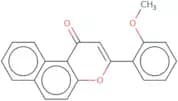
CAS:<p>beta-2'-Methoxynaphthoflavone is a fine chemical that is useful as a scaffold for complex compounds, as a building block for speciality chemicals, and as an intermediate in the synthesis of research chemicals. It can be used in pharmaceuticals, agrochemicals, and other industries. beta-2'-Methoxynaphthoflavone has been found to be a versatile building block with high quality that can be used to synthesize a variety of compounds. This compound also has the ability to react with other chemicals such as ammonia or amines.</p>Formula:C20H14O3Purity:Min. 95%Molecular weight:302.32 g/mol4-Methoxy-2-nitro-benzaldehyde
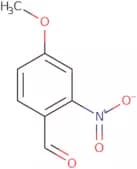
CAS:<p>4-Methoxy-2-nitrobenzaldehyde is a chemical that is used in the synthesis of many pharmaceuticals. It has been shown to be an effective agent in the treatment of cancer cells and is activated by chloride ions. 4-Methoxy-2-nitrobenzaldehyde reacts with nucleophiles such as hydroxide, amines, or thiols in order to form alkylating agents. This reaction can be used for the synthesis of many drugs including antihistamines, antidiabetic drugs, and antipsychotics. The rate of this reaction increases with increasing temperature. It also undergoes demethylation when exposed to nitrous acid, which may lead to a different product.</p>Formula:C8H7NO4Purity:Min. 95%Molecular weight:181.15 g/mol3,5-Dimethyl-4-methoxybenzoic acid
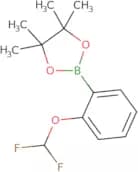
CAS:<p>3,5-Dimethyl-4-methoxybenzoic acid is a disulphide monomer with the chemical formula C7H8O2S. It can be used as a building block for organic synthesis. This compound has been widely studied because it contains a benzyl group, which is the simplest aromatic system. The symmetric and asymmetric vibrational frequencies of 3,5-dimethyl-4-methoxybenzoic acid have been measured by nmr spectroscopy and theory. The thermodynamic properties of this compound have also been studied by molecular dynamics simulations and quantum chemical calculations.</p>Formula:C10H12O3Purity:Min. 95%Molecular weight:180.2 g/mol2-Difluoromethoxyphenylboronic acid pinacol ester
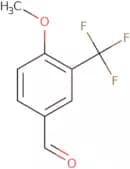
CAS:<p>2-Difluoromethoxyphenylboronic acid pinacol ester is a high quality reagent that can be used as a useful intermediate, fine chemical, or speciality chemical in reactions. This compound is an important building block for synthesizing other chemicals and can also be used to make novel compounds with pharmaceutical properties. 2-Difluoromethoxyphenylboronic acid pinacol ester is versatile and can be used in many different reactions. It has been reported to react with various other molecules to form new scaffolds and building blocks for use in organic synthesis.</p>Formula:C13H17BF2O3Purity:Min. 95%Color and Shape:PowderMolecular weight:270.08 g/mol4-Methoxy-3-(trifluoromethyl)benzaldehyde
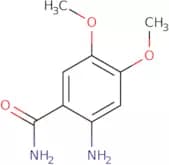
CAS:<p>4-Methoxy-3-(trifluoromethyl)benzaldehyde is a fine chemical that can be used as a building block for pharmaceuticals and other organic compounds. It is also used in research for the synthesis of complex compounds. This chemical has been reported to be a useful intermediate or scaffold for organic syntheses. 4-Methoxy-3-(trifluoromethyl)benzaldehyde is soluble in water and ethanol, and insoluble in ether. It has a melting point of 140°C, boiling point of 249°C, density 1.096 g/cm³, and refractive index (20°C) 1.567.</p>Formula:C9H7F3O2Purity:Min. 95%Molecular weight:204.15 g/mol2-Amino-4,5-dimethoxybenzamide
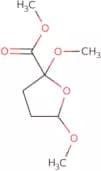
CAS:<p>2-Amino-4,5-dimethoxybenzamide is an anticancer agent that inhibits the epidermal growth factor receptor tyrosine kinase. It binds to the linker region of the epidermal growth factor receptor and prevents autophosphorylation. 2-Amino-4,5-dimethoxybenzamide has shown in vitro cytotoxic activity against testicular cancer cells and acute lymphoblastic leukemia cells. 2-Amino-4,5-dimethoxybenzamide is a synthetic compound that has been shown to have bioisosteric properties with other growth factors such as epidermal growth factor.</p>Formula:C9H12N2O3Purity:Min. 95%Color and Shape:PowderMolecular weight:196.2 g/molMethyl tetrahydro-2,5-dimethoxy-2-furancarboxylate
CAS:<p>Methyl tetrahydro-2,5-dimethoxy-2-furancarboxylate is a sterically bulky molecule with a nitrogen atom in the ortho position. It has been used for the synthesis of various heterocyclic compounds. The steric bulk of methyl tetrahydro-2,5-dimethoxy-2-furancarboxylate prevents it from being substituted easily. This can be demonstrated by the refluxing of methyl tetrahydro-2,5-dimethoxy-2-furancarboxylate in benzene. The steric bulk also causes electron density to be distributed around methyl tetrahydro-2,5-dimethoxy-2-furancarboxylate, which creates a conjugated system.</p>Formula:C8H14O5Purity:Min. 95%Color and Shape:Colourless To Pale Yellow Clear LiquidMolecular weight:190.19 g/mol2-Amino-6-methoxybenzoic acid
CAS:2-Amino-6-methoxybenzoic acid is a monosubstituted amide, which is synthesized by the hydrolysis of 2-amino-5-methylbenzoic acid with hydrochloric acid in the presence of diacetate. This compound is formed as part of the biosynthesis of aminophenols and heterocycles. It can be used to adsorb metal ions and organic compounds, such as chloride and butyllithium. 2-Amino-6-methoxybenzoic acid is also found in aeruginosa infections due to its ability to inhibit bacterial growth by inhibiting protein synthesis. The synthesis of this compound requires shikimate pathway enzymes.Formula:C8H9NO3Purity:Min. 95%Color and Shape:PowderMolecular weight:167.16 g/mol2,5-Dimethoxyterephthalaldehyde
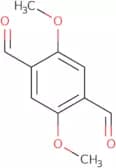
CAS:<p>2,5-Dimethoxyterephthalaldehyde (2,5DMP) is a protonated molecule that can be used in sample preparation for analytical methods. 2,5DMP has been used as a dispersive solid-phase extraction solvent and an adsorbent material. This compound has been shown to exhibit strong hydrophobic interactions with the carbonyl group of aromatic compounds and to have a high chemical stability. 2,5DMP also has an electrochemical impedance spectroscopy (EIS) property that can be used for monitoring the electrochemical behaviour of molecules and magnetic particles in the solution. The EIS property has been enhanced by hydrogen bonding between the protonated molecules and metal ions in the solution.</p>Formula:C10H10O4Purity:Min. 95%Color and Shape:PowderMolecular weight:194.18 g/molGly-pro-4-methoxy-beta-naphthylamide
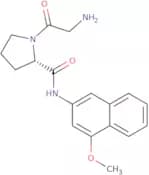
CAS:<p>Gly-pro-4-methoxy-beta-naphthylamide is a synthetic substrate that is used to measure the activity of human plasma phosphatases. Gly-pro-4-methoxy-beta-naphthylamide is synthesized in an organic solvent and then reacted with diazonium salt to form a glycosylated aminophosphonic acid. The product is purified by chromatography and identified by mass spectrometry. Gly-pro-4-methoxy beta naphthylamide has been shown to inhibit the growth of cancer cells in vitro, as well as having antiinflammatory properties. This drug also has been shown to be effective in treating patients with severe hyperbilirubinemia who are undergoing hematopoietic stem cell transplantation.</p>Formula:C18H21N3O3Purity:Min. 95%Molecular weight:327.38 g/mol1-Cyclopropyl-6,7-difluoro-1,4-dihydro-8-methoxy-4-oxo-3-quinolinecarboxylic acid
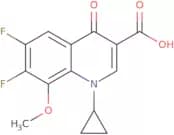
CAS:<p>Moxifloxacin is an analog of the antibiotic quinolone. It is a prodrug that is hydrolyzed in vivo to its active form, moxifloxacin. Moxifloxacin has been shown to be effective against a variety of bacteria, including methicillin-resistant Staphylococcus aureus (MRSA), Mycobacterium tuberculosis and Mycobacterium avium complex. The reaction yield for the synthesis of moxifloxacin is very high, with an industrial production capacity in excess of 500 tons per year. Impurities are not usually found in the final product due to the use of methyl alcohol as a solvent during the reaction process. The drug has discoloring properties and deuterium atoms are often substituted for hydrogen atoms on the molecule to make it more stable. Deuterium atoms can be easily identified by mass spectrometry analysis. Moxifloxac</p>Formula:C14H11F2NO4Purity:Min. 95%Color and Shape:PowderMolecular weight:295.24 g/mol2-Bromo-5-methoxybenzyl bromide
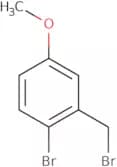
CAS:<p>2-Bromo-5-methoxybenzyl bromide is a ligand in organic chemistry. It is used as a reaction partner for the synthesis of heterocycles, such as 2-pyridone, which are biologically relevant. This ligand can be prepared by refluxing anhydrous potassium carbonate with chloroform and phenol. Macrocyclic compounds can be synthesized from this product through the Witting reaction. The efficiency of this method makes it suitable for use in biological studies.</p>Formula:C8H8Br2OPurity:Min. 95%Color and Shape:White PowderMolecular weight:279.96 g/mol3-Ethoxy-4-hydroxyphenylacetone
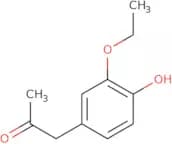
CAS:<p>3-Ethoxy-4-hydroxyphenylacetone is a fine chemical that can be used as a versatile building block and useful intermediate. It has a CAS number of 88659-82-9. 3-Ethoxy-4-hydroxyphenylacetone is a complex compound with many uses, such as research chemicals, reaction component, or speciality chemical. It is water soluble and has been shown to be non toxic. The purity of the product is high quality.</p>Formula:C11H14O3Purity:Min. 95%Molecular weight:194.23 g/molBis(2-bromoethyl) Ether
CAS:Formula:C4H8Br2OPurity:>98.0%(GC)Color and Shape:Colorless to Yellow clear liquidMolecular weight:231.92