Ethers
Ethers are organic compounds containing an ether functional group, characterized by an oxygen atom bonded to two hydrocarbon radicals. These compounds are valuable in synthesis and serve as solvents in various chemical reactions. At CymitQuimica, we offer a selection of high-quality ethers to support your research and industrial applications, ensuring reliable and effective results. Our range of ethers meets diverse laboratory requirements, from routine experiments to advanced research.
Found 40729 products of "Ethers"
Sort by
Purity (%)
0
100
|
0
|
50
|
90
|
95
|
100
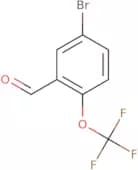
5-Bromo-2-(trifluoromethoxy)benzaldehyde
CAS:<p>5-Bromo-2-(trifluoromethoxy)benzaldehyde is a chemical that is used as a reactant in organic chemistry. It can be used as a building block for the synthesis of complex compounds, or as an intermediate in the preparation of fine chemicals. 5-Bromo-2-(trifluoromethoxy)benzaldehyde is also useful in research and development. It has been used to synthesize pharmaceuticals, pesticides, and other organic compounds.</p>Formula:C8H4BrF3O2Purity:Min. 95%Color and Shape:PowderMolecular weight:269.02 g/molN-(2-Aminoethyl)-3-(trimethoxysilyl)propylamine
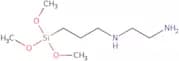
CAS:<p>N-(2-Aminoethyl)-3-(trimethoxysilyl)propylamine (NAP) is a cationic surfactant that is used as a fluorescent probe to study the binding of proteins to cell surface integrin receptors. The adsorption mechanism is based on the interaction between the hydrophobic parts of the protein and the hydrophobic parts of NAP. This interaction leads to an increase in the concentration of NAP at the interface and thus an increase in fluorescence. NAP has been shown to bind human serum albumin, fatty acids, and monoclonal antibodies with high affinity. It also has been shown to bind to plasma proteins through hydrogen bonding. The optimum concentration for NAP adsorption is 1mM.</p>Formula:C8H22N2O3SiPurity:Min. 95%Molecular weight:222.36 g/molMethyl 3,5-dichloro-4-methoxybenzoate
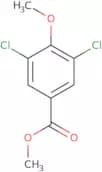
CAS:<p>Methyl 3,5-dichloro-4-methoxybenzoate is a fine chemical and useful building block for research chemicals. It belongs to the class of speciality chemicals and can be used as a reagent in organic synthesis. Methyl 3,5-dichloro-4-methoxybenzoate is a versatile building block that has been reported in the synthesis of many complex compounds. This compound can also be used as an intermediate or scaffold for medicinal chemistry applications.</p>Formula:C9H8Cl2O3Purity:Min. 95%Molecular weight:235.06 g/mol5-(Difluoromethoxy)-2-mercaptobenzimidazole
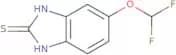
CAS:<p>5-(Difluoromethoxy)-2-mercaptobenzimidazole is an organic solvent that is used in the crystallization process of pantoprazole, a benzimidazole derivative. It is also used as a corrosion inhibitor and pump inhibitor in analytical chemistry. The purity of 5-(difluoromethoxy)-2-mercaptobenzimidazole can be determined by chromatographic methods or by the use of analytical chemistry. Impurities may be genotoxic and include reactive impurities such as thiourea and 2-thiouracil. These impurities are removed during the synthetic process to produce 5-(difluoromethoxy)-2-mercaptobenzimidazole. This drug substance has been found to inhibit DNA polymerase activity in vitro, but its effects on human cells have not been studied.</p>Formula:C8H6F2N2OSPurity:Min. 95%Color and Shape:Off-White PowderMolecular weight:216.21 g/mol2-Amino-5-methoxypyridine
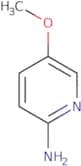
CAS:<p>2-Amino-5-methoxypyridine (2AM5MP) is a synthetic compound that is used to study the nicotinic acetylcholine receptor. It has been shown that 2AM5MP can be used as an agonist for the nicotinic acetylcholine receptor, which may be due to its ability to act as a substrate for amine oxidase. This compound has been shown to have anti-cancer properties and fluoresce when exposed to positron emission tomography (PET) scans. The anti-cancer effects of 2AM5MP are thought to be due to its ability to inhibit cancer cell proliferation and induce cancer cell apoptosis.</p>Formula:C6H8N2OPurity:Min. 95%Molecular weight:124.14 g/mol7α-Methyl-3,3-dimethoxy-5(10)-estrene-17-one
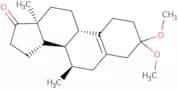
CAS:Controlled Product<p>Please enquire for more information about 7alpha-Methyl-3,3-dimethoxy-5(10)-estrene-17-one including the price, delivery time and more detailed product information at the technical inquiry form on this page</p>Formula:C21H32O3Purity:Min. 95%Color and Shape:PowderMolecular weight:332.48 g/mol7,9-Dimethoxycarbonyl-2-ethoxycarbonyl-1H-pyrrolo-[2,3-f]quinoline-4,5-dione
CAS:<p>7,9-Dimethoxycarbonyl-2-ethoxycarbonyl-1H-pyrrolo-[2,3-f]quinoline-4,5-dione is a chemical compound that is used as an intermediate for research chemicals. It has a CAS number of 80721-47-7 and is classified as a fine chemical with the Chemical Abstracts Service (CAS) classification code of 3272. This compound is a versatile building block that can be used in the synthesis of other compounds. 7,9-Dimethoxycarbonyl-2-ethoxycarbonyl-1H-pyrrolo-[2,3f]quinoline 4,5dione can be used to produce high quality products.</p>Formula:C18H14N2O8Purity:Min. 95%Color and Shape:Orange PowderMolecular weight:386.31 g/mol5-Fluoro-2-methoxyphenylacetone
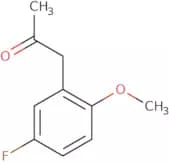
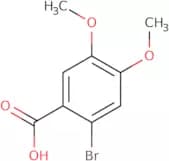
CAS:<p>5-Fluoro-2-methoxyphenylacetone is a chemical with a wide array of applications in research and industry. It is a versatile building block, useful intermediate, and reagent for organic synthesis. This compound has been used as a starting material in the synthesis of other compounds. CAS No. 1017082-10-8</p>Formula:C10H11FO2Color and Shape:PowderMolecular weight:182.19 g/mol2-Bromo-4,5-dimethoxybenzoic acid
CAS:<p>2-Bromo-4,5-dimethoxybenzoic acid is a synthetic compound that belongs to the group of anticancer drugs. It is a potent inhibitor of mitochondrial membrane depolarization and has been shown to inhibit tumor growth in vivo. 2-Bromo-4,5-dimethoxybenzoic acid also induces cell death by demethylation and hydroxylation of DNA, leading to apoptosis. This compound is synthesized by reacting 3,4-dihydroxybenzoic acid with bromine and potassium hydroxide. Surrogates such as amides are used for this synthesis because the original product is not stable enough. Protocatechuic acid can be produced from 2-bromo-4,5-dimethoxybenzoic acid through hydrolysis.</p>Formula:C9H9BrO4Purity:Min. 95%Color and Shape:PowderMolecular weight:261.07 g/mol4-Fluoro-2-methoxyphenol
CAS:<p>4-Fluoro-2-methoxyphenol is a fluorinating agent that is used in the manufacture of pharmaceuticals, plastics and pesticides. It has been shown to induce apoptosis in cultured cells by upregulating reactive oxygen species (ROS) and increasing mitochondrial membrane permeability, as well as inhibiting cellular physiology. 4-Fluoro-2-methoxyphenol also inhibits the production of ATP and may be toxic to cells by interfering with dinucleotide phosphate.</p>Formula:C7H7FO2Purity:Min. 95%Color and Shape:Clear LiquidMolecular weight:142.13 g/mol(2-{Ethyl-[4-(4-nitro-phenylazo)-phenyl]-amino}-ethoxy)-acetic acid-4-nitro-phenyl ester
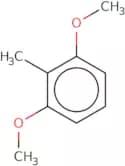
CAS:<p>Please enquire for more information about (2-{Ethyl-[4-(4-nitro-phenylazo)-phenyl]-amino}-ethoxy)-acetic acid-4-nitro-phenyl ester including the price, delivery time and more detailed product information at the technical inquiry form on this page</p>Formula:C24H23N5O7Purity:Min. 95%Molecular weight:493.47 g/mol2,6-Dimethoxytoluene
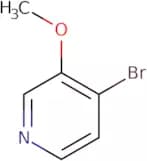
CAS:<p>2,6-Dimethoxytoluene is a regiospecific pentafluorophenyl compound with a thermal isomerization. It is an extractive yield that can be isolated from the reaction of acetaldehyde and formaldehyde in the presence of an imine. The process of making 2,6-dimethoxytoluene begins by reacting chloromethane with oxygenated tetrafluorobenzyne to make an intermediate. Then, this intermediate reacts with methoxylated fatty acids to create the final product. This reaction is stereoselective because it produces only one stereoisomer of 2,6-dimethoxytoluene.</p>Formula:C9H12O2Purity:Min. 95%Color and Shape:PowderMolecular weight:152.19 g/mol4-Bromo-3-methoxypyridine
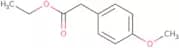
CAS:<p>Please enquire for more information about 4-Bromo-3-methoxypyridine including the price, delivery time and more detailed product information at the technical inquiry form on this page</p>Formula:C6H6BrNOPurity:Min. 95%Molecular weight:188.02 g/molEthyl 4-methoxyphenylacetate
CAS:<p>Ethyl 4-methoxyphenylacetate is a fatty acid that is synthesized by the condensation of aniline and pyrrole. It has been shown to inhibit the growth of bacteria, such as Salmonella typhi and Staphylococcus aureus, in vitro. The inhibition of bacterial growth is thought to be due to its ability to react with hydrogen fluoride, which results in the formation of reactive oxygen species and nitrogen radicals. This compound also inhibits the production of tyrosinase in human skin cells, which may be beneficial for individuals with acne. Ethyl 4-methoxyphenylacetate has been shown to be safe for use in clinical trials.</p>Formula:C11H14O3Purity:Min. 95%Color and Shape:Clear LiquidMolecular weight:194.23 g/mol3-(3,5-Dimethoxyphenyl)propionic acid methyl ester
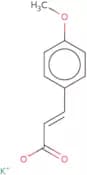
CAS:<p>3-(3,5-Dimethoxyphenyl)propionic acid methyl ester is a reagent that is used as a reactant in organic synthesis. It is also useful as a scaffold for the synthesis of heterocycles and other complex compounds. 3-(3,5-Dimethoxyphenyl)propionic acid methyl ester is used in research chemical synthesis and as a versatile building block for the production of fine chemicals. This chemical can be used to create products such as pharmaceuticals, pesticides, and cosmetics.</p>Formula:C12H16O4Purity:Min. 95%Molecular weight:224.25 g/molPotassium 4-methoxycinnamate
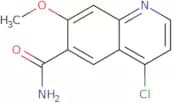
CAS:<p>Potassium 4-methoxycinnamate is a fine chemical that is used as a versatile building block in the synthesis of complex compounds. It can be used in research and as a reagent or speciality chemical. It is also a useful building block for high quality, useful intermediate, and reaction component. Potassium 4-methoxycinnamate can be used as a scaffold to synthesize compounds with diverse applications such as pharmaceuticals, polymers, and agrochemicals.</p>Formula:C10H9O3·KPurity:Min. 95%Molecular weight:216.27 g/mol4-Chloro-7-methoxyquinoline-6-carboxamide
CAS:<p>Intermediate in the synthesis of lenvatinib</p>Formula:C11H9ClN2O2Purity:Min. 95%Molecular weight:236.65 g/mol(2R,3S)-2-[(1R)-1-[3,5-Bis(trifluoromethyl)phenyl]ethoxy]-3-(4-fluorophenyl)morpholine hydrochloride
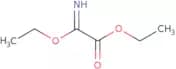
CAS:<p>Please enquire for more information about (2R,3S)-2-[(1R)-1-[3,5-Bis(trifluoromethyl)phenyl]ethoxy]-3-(4-fluorophenyl)morpholine hydrochloride including the price, delivery time and more detailed product information at the technical inquiry form on this page</p>Formula:C20H18F7NO2•HClPurity:Min. 95%Molecular weight:473.81 g/molEthoxyiminoacetic acid ethyl ester
CAS:<p>Ethoxyiminoacetic acid ethyl ester is an annulated, lactam-containing compound that is synthesized via the condensation of ethyl thiooxamate and carboxylic acid. This drug has been shown to be efficient in inhibiting the growth of bacteria that are resistant to antibiotics such as polycyclic, triazoles, and condensates. It also inhibits protein synthesis by binding to bacterial DNA gyrase and topoisomerase IV. Ethoxyiminoacetic acid ethyl ester has shown significant antimicrobial activity against Gram-positive bacteria such as streptococci and staphylococci.</p>Formula:C6H11NO3Purity:Min. 95%Molecular weight:145.16 g/mol2-Fluoro-6-methoxybenzonitrile
CAS:<p>2-Fluoro-6-methoxybenzonitrile (2FMN) is a compound that is used as a starting material for the synthesis of other pharmaceuticals. It has been shown to bind to the acetylcholine receptor by using vibrational spectroscopy and functional theory. It also has been shown to be an effective chemokine inhibitor. Computational methods were used to optimize 2FMN's binding affinity for the acetylcholine receptor, and it was found that 2FMN binds with a dipole orientation in order to increase its binding affinity.</p>Formula:C8H6FNOPurity:Min. 95%Color and Shape:PowderMolecular weight:151.14 g/mol

![7,9-Dimethoxycarbonyl-2-ethoxycarbonyl-1H-pyrrolo-[2,3-f]quinoline-4,5-dione](/_next/image/?url=https%3A%2Fstatic.cymitquimica.com%2Fproducts%2F3D%2Fthumb-webp%2FFD22201.webp&w=3840&q=75)

![(2-{Ethyl-[4-(4-nitro-phenylazo)-phenyl]-amino}-ethoxy)-acetic acid-4-nitro-phenyl ester](/_next/image/?url=https%3A%2Fstatic.cymitquimica.com%2Fproducts%2F3D%2Fthumb-webp%2FFE111186.webp&w=3840&q=75)

![(2R,3S)-2-[(1R)-1-[3,5-Bis(trifluoromethyl)phenyl]ethoxy]-3-(4-fluorophenyl)morpholine hydrochlori…](/_next/image/?url=https%3A%2Fstatic.cymitquimica.com%2Fproducts%2F3D%2Fthumb-webp%2FFB102459.webp&w=3840&q=75)