Organoboranes
Organoboranes are organic compounds characterized by the presence of boron atoms bonded to carbon. These compounds are derivatives of the BH3 molecule and play animportant role in various chemical reactions, including as intermediates in organic synthesis. At CymitQuimica, we offer a wide range of organoboranes to support your research and industrial needs. Our products are designed to deliver high performance and reliability in your synthetic processes.
Found 6101 products of "Organoboranes"
Sort by
Purity (%)
0
100
|
0
|
50
|
90
|
95
|
100
(2-Fluoro-4-methylsulfonylphenyl)boronic acid
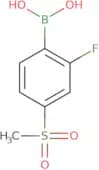
CAS:<p>2-Fluoro-4-methylsulfonylphenyl)boronic acid is a fine chemical that is useful as a scaffold for the production of other compounds. It can be used as a versatile building block in organic synthesis, and is often used as an intermediate or research chemical. 2-Fluoro-4-methylsulfonylphenyl)boronic acid has been shown to react with many different types of compounds, making it a valuable reagent. This compound is also known for its high quality, which makes it an excellent choice for use in reactions that require speciality chemicals.</p>Formula:C7H8BFO4SPurity:Min. 95%Color and Shape:White PowderMolecular weight:218.01 g/mol3-(Trimethylsilyl)-2-naphthyl trifluoromethanesulfonate
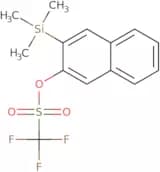
CAS:<p>3-(Trimethylsilyl)-2-naphthyl trifluoromethanesulfonate is a synthetic molecule that is used to synthesize benzofurans. 3-(Trimethylsilyl)-2-naphthyl trifluoromethanesulfonate is activated by reaction with N-bromosuccinimide, which creates an electrophilic carbon center. This electrophilic center reacts with nucleophiles such as alcohols, amines, and thiols to form a new bond. The product of this reaction is benzoylated, which can then undergo further reactions to form other compounds. X-ray crystallography has been used to characterize the structure of 3-(trimethylsilyl)-2-naphthyl trifluoromethanesulfonate.</p>Formula:C14H15F3O3SSiPurity:Min. 95%Color and Shape:Colorless Clear LiquidMolecular weight:348.41 g/molIodomethylboronic acid, pinacol ester
CAS:<p>Iodomethylboronic acid is a synthetic compound that contains a boron atom. Iodomethylboronic acid can be used to produce other compounds, such as dibutyl iodide and epoxides, by introducing an oxygenated linker. The properties of iodomethylboronic acid have been extensively studied using modelling and assays. It has been shown to form stable complexes with aromatic hydrocarbons and amines. Iodomethylboronic acid can also be used in the synthesis of radionuclides, which are radioactive isotopes of elements that emit radiation spontaneously or when they undergo radioactive decay. Iodomethylboronic acid is often used in chemical reactions as a quaternary ammonium salt, which is a positively charged ion (cation) with four groups attached to it. These groups may be either organic or inorganic in nature.</p>Formula:C7H14BIO2Purity:Min. 95%Color and Shape:PowderMolecular weight:267.9 g/mol(3-(Pyrrolidin-1-ylmethyl)phenyl)boronic acid
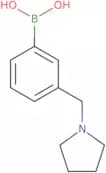
CAS:<p>(3-(Pyrrolidin-1-ylmethyl)phenyl)boronic acid (BPABA) is a fine chemical that is a useful building block in the synthesis of organic compounds. It is also a reagent in organic chemistry and research, as well as a speciality chemical and high quality compound. BPABA is versatile as a building block for the synthesis of complex compounds. It has been used in reactions with many different types of substrates, including nucleophilic addition to unsaturated carbon-carbon bonds, alkylation, vinylation, and Michael reaction. BPABA has been shown to be an effective intermediate for the synthesis of biologically active compounds such as antibiotics and antifungals. BPABA is also used for the synthesis of scaffolds in organic chemistry, such as polymers and nanomaterials.</p>Formula:C11H16BNO2Purity:Min. 95%Color and Shape:PowderMolecular weight:205.06 g/molBis(pinacolato)diboron
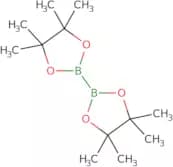
CAS:<p>Bis(pinacolato)diboron is a versatile reagent that is used in organic synthesis. It is a boron-containing compound that inhibits the reaction between amines and hydroxide solutions, forming an intermediate copper complex with a carbonyl group. The mechanism of this inhibition has been explored and found to be due to the presence of a hydroxyl group on the bis(pinacolato)diboron molecule. Bis(pinacolato)diboron reacts with an amine to form an adduct containing a boron-nitrogen double bond. This intermediate then reacts with hydroxide ions from the solution to form the final product, which contains both an amine and hydroxyl groups. The isolated yield of this reaction is typically low, but can be increased by using palladium as a catalyst.</p>Formula:C12H24B2O4Purity:Min. 98 Area-%Color and Shape:PowderMolecular weight:253.94 g/mol3’-O-t-Bulyldimethylsilyl thymidine
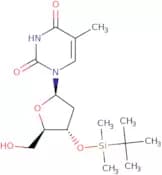
CAS:<p>3’-O-t-Bulyldimethylsilyl thymidine is a nucleoside analog that is chemically stable and has been shown to be a potential biomarker for the diagnosis of fetal bovine spongiform encephalopathy (BSE). 3’-O-t-Bulyldimethylsilyl thymidine binds to basic proteins in the cell nucleus, which can be detected by immunoassay. It also has been shown to inhibit protein synthesis in tubule cells of the kidney and skin cancer cells. The drug is metabolized by dephosphorylation to t-butyldeoxyuridine, which is then converted into thymidine.</p>Formula:C16H28N2O5SiPurity:Min. 95%Color and Shape:White PowderMolecular weight:356.49 g/mol3-(Trifluoromethyl)phenylboronic acid
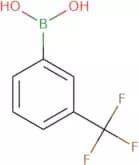
CAS:<p>3-(Trifluoromethyl)phenylboronic acid is a potent fatty acid that inhibits the release of TNF-α, a pro-inflammatory cytokine. 3-(Trifluoromethyl)phenylboronic acid binds to the p65 subunit of NF-κB, thereby preventing its activation. This limits the production of reactive oxygen species and neutrophil infiltration in response to LPS-induced lung injury. 3-(Trifluoromethyl)phenylboronic acid also has anti-inflammatory potential, inhibiting the activation of CRTH2 and reducing emissions from diesel engine exhausts. The molecule is homologous to fenofibrate, which belongs to a class of drugs that are used for lowering blood cholesterol. 3-(Trifluoromethyl)phenylboronic acid is not active against life threatening bacterial infections caused by other bacteria.</p>Formula:C7H6BF3O2Purity:Min. 95%Color and Shape:PowderMolecular weight:189.93 g/mol4,5-Dimethoxy-2-(trimethylsilyl)phenyl trifluoromethanesulfonate
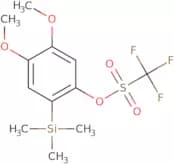
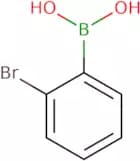
CAS:<p>4,5-Dimethoxy-2-(trimethylsilyl)phenyl trifluoromethanesulfonate is a reagent for the synthesis of propiolates. It is prepared by reacting methyl propiolate with tetrachloride, hexachloroethane, or tetrabromide in acetonitrile. The reactants are heated to reflux under argon and then cooled to room temperature. This product is an ionic liquid that can be used as a solvent. 4,5-Dimethoxy-2-(trimethylsilyl)phenyl trifluoromethanesulfonate is a zwitterion and reacts with amines to form quaternary ammonium salts. It can also be used for the synthesis of unactivated transition metal complexes by reacting it with palladium and amines.</p>Formula:C12H17F3O5SSiPurity:Min. 95%Color and Shape:Colorless PowderMolecular weight:358.41 g/mol2-Bromophenylboronic acid
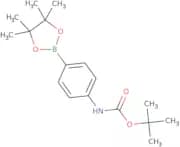
CAS:<p>2-Bromophenylboronic acid is a glucose monitoring agent that has a ruthenium complex with an acidic environment. The nitro group and the amines are in close proximity to the boron center, and this proximity leads to a high nucleophilic character of the molecule. This reactivity allows 2-bromophenylboronic acid to be used as a fluorescence probe for acidic environments. 2-Bromophenylboronic acid also inhibits secretase enzymes, which are involved in Alzheimer’s disease and other neurodegenerative disorders. It is an inhibitor of γ-secretase, which is responsible for cleaving the amyloid precursor protein (APP), and it has shown efficacy against biphenyl, an anticancer drug that binds to benzodiazepine receptors.<br>2-Bromophenylboronic acid is also an enantiopure compound because all four substituents are different from each other.</p>Formula:C6H6BBrO2Purity:Min. 95%Color and Shape:White PowderMolecular weight:200.83 g/moltert-Butyl (4-(4,4,5,5-tetramethyl-1,3,2-dioxaborolan-2-yl)phenyl)carbamate
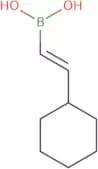
CAS:<p>Tert-butyl (4-(4,4,5,5-tetramethyl-1,3,2-dioxaborolan-2-yl)phenyl)carbamate is a potent antitumor agent that inhibits the proliferation of human tumor cells. It binds to isoforms of protein kinase C and inhibits the activity of protein kinase C. Tert-butyl (4-(4,4,5,5-tetramethyl-1,3,2-dioxaborolan-2-yl)phenyl)carbamate has been shown to have strong inhibitory potency against human tumor cells in cell culture assays with IC50 values as low as 1 nanomolar. The compound has also been shown to selectively inhibit certain cancer cell lines in mice with no effect on normal tissue or other cancerous cells.</p>Formula:C17H26BNO4Purity:Min. 95%Color and Shape:White PowderMolecular weight:319.2 g/mol2-Cyclohexylethenylboronic acid
CAS:<p>2-Cyclohexylethenylboronic acid is an intermediate in the synthesis of petasis, a drug that is used to treat epilepsy. This compound is enantioenriched and diastereoselectively synthesized from 2-bromoethanol and cyclohexene with sodium acetate as the catalyst. The method for synthesis includes the addition of boron trifluoride etherate to the reaction mixture, which produces aldehydes in an enantiomeric ratio of greater than 99%.</p>Formula:C8H15BO2Purity:Min. 95%Color and Shape:SolidMolecular weight:154.01 g/mol[[(3,5-Dimethyl-1H-pyrrol-2-yl)(3,5-dimethyl-2H-pyrrol-2-ylidene)methyl]methane](difluoroborane)
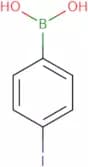
CAS:<p>[[(3,5-Dimethyl-1H-pyrrol-2-yl)(3,5-dimethyl-2H-pyrrol-2-ylidene)methyl]methane](difluoroborane) is a compound that is used in photophysical studies. It has been shown to exhibit low energy levels and fluorescence properties. The chloro atom in this molecule has been shown to have a photostability of approximately 10 μs, which may be due to the lack of electron delocalization that would lead to a significant amount of excited state decay. This compound also exhibits fatty acid microcapsule formation and particle formation, which may be useful for confocal microscopy. [[(3,5-Dimethyl-1H-pyrrol-2-yl)(3,5-dimethyl-2H-pyrrol-2-ylidene)methyl]methane](difluorob</p>Formula:C14H17BF2N2Purity:Min. 95%Color and Shape:Red PowderMolecular weight:262.11 g/mol4-Iodophenylboronic acid
CAS:<p>4-Iodophenylboronic acid is a chemical compound that has been shown to bind to disaccharides and form hydrogen bonding interactions. It has also been shown to enhance the chemiluminescence of ethylene diamine in a light emission assay, which is due to its ability to bind to fatty acids. 4-Iodophenylboronic acid has been used in studies on tumor xenografts and optical properties. 4-Iodophenylboronic acid has also been shown to have vibrational and nmr spectra that differ from other boronic acids. This compound is unique because it binds with water molecules more strongly than any other boronic acid.</p>Formula:C6H6BIO2Purity:Min. 95%Color and Shape:PowderMolecular weight:247.83 g/mol2-(Dimethylphenylsilyl)-4,4,5,5-tetramethyl-1,3,2-dioxaborolane
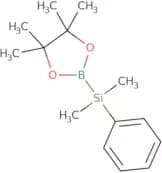
CAS:<p>2-(Dimethylphenylsilyl)-4,4,5,5-tetramethyl-1,3,2-dioxaborolane is a chiral ligand that can be used in asymmetric synthesis. It has been shown to be effective in the palladium-catalyzed cross-coupling of aldehydes with organoboronic acids. 2-(Dimethylphenylsilyl)-4,4,5,5-tetramethyl-1,3,2-dioxaborolane inhibits the formation of an undesired enolate by binding to the silicon atom and sterically preventing nucleophilic attack at this site. This ligand is also selective for anions with a single negative charge such as chloride and bromide.</p>Formula:C14H23BO2SiPurity:Min. 95%Color and Shape:Yellow PowderMolecular weight:262.23 g/molNα,Nε-Di-Boc-L-lysine
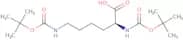
CAS:<p>Nalpha,Nepsilon-Di-Boc-L-lysine is a synthetic peptide that has been shown to be reactive with neutrophils and is being developed for the treatment of heart disease. This peptide has been shown to have an antioxidant effect in rat neutrophils by preventing oxidative injury to DNA and protein. Nalpha,Nepsilon-Di-Boc-L-lysine also has an anticancer effect on liver cancer cells, which may be due to its ability to induce antibody responses and inhibit cell proliferation. It has also been shown that this peptide does not cause any adverse effects in rats when administered at high doses.</p>Formula:C16H30N2O6Purity:Min. 95%Color and Shape:Colorless PowderMolecular weight:346.42 g/molN-Phenyl-2,4,6-triphenyl pyridinium tetrafluoroborate
CAS:<p>N-Phenyl-2,4,6-triphenyl pyridinium tetrafluoroborate is a crystalline material that is insoluble in water and organic solvents. It can be used as a monomer in the synthesis of polymers and for immobilization of enzymes. N-Phenyl-2,4,6-triphenyl pyridinium tetrafluoroborate can be used to reprocess technetium and has been shown to diffract x-rays with high resolution. This compound is also fluorescent with a long wavelength (620 nm) and can be used as a radioactive tracer.</p>Formula:C29H22N·BF4Purity:Min. 95%Molecular weight:471.3 g/mol3-(Trimethylsilyl)-2-propynal
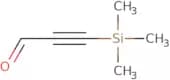
CAS:<p>3-(Trimethylsilyl)-2-propynal is a molecule that has been studied for its potential use as a vitamin D3 analog. It contains a hydroxy group and an asymmetric carbon atom that could allow it to bind to the vitamin D receptor. 3-(Trimethylsilyl)-2-propynal is also an intramolecular hydrogen bond donor, which may play a role in receptor binding. This compound has shown promising results in animal models of inflammatory diseases, such as asthma and arthritis. The compound binds to the receptor with low energy and has a stereoselective orientation of the benzimidazole ring, which may give it an advantage over other compounds that have similar activity.</p>Formula:C6H10OSiPurity:Min. 95%Color and Shape:Colorless Clear LiquidMolecular weight:126.23 g/mol3-Aminopropyltriethoxysilane
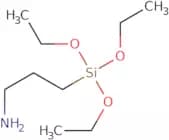
CAS:<p>3-Aminopropyltriethoxysilane is a liquid that has a phase transition temperature of -88.3°C. It is soluble in water at 1 g/L and in ethanol at 0.1 g/L. 3-Aminopropyltriethoxysilane has been shown to inhibit the production of prostaglandin E2 and leukotrienes by inhibiting cyclooxygenase activity in red blood cells, which may be due to its ability to chelate metal ions such as iron or copper. 3-Aminopropyltriethoxysilane also inhibits the production of prostaglandin E2 and leukotrienes by inhibiting cyclooxygenase activity in red blood cells, which may be due to its ability to chelate metal ions such as iron or copper. The compound also inhibits the production of prostaglandin E2 and leukotrienes by inhibiting</p>Formula:C9H23NO3SiPurity:Min. 97 Area-%Color and Shape:Colorless Clear LiquidMolecular weight:221.37 g/mol(R)-Benzyl-2-[4-(trifluoromethyl)phenyl]-6,7-dihydro-5H-pyrrolo[2,1-c][1,2,4]triazolium Tetrafluoroborate
CAS:<p>(R)-Benzyl-2-[4-(trifluoromethyl)phenyl]-6,7-dihydro-5H-pyrrolo[2,1-c][1,2,4]triazolium Tetrafluoroborate is a bactericide that inhibits the production of proteins necessary for cellular growth. It has been shown to inhibit the growth of bacteria such as E. coli in vitro and in animal models. The effective dose for this drug is not known at this time.</p>Formula:C19H17BF7N3Purity:Min. 95%Color and Shape:White PowderMolecular weight:431.16 g/mol4,4'-Biphenyldiboronic acid
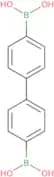
CAS:<p>4,4'-Biphenyldiboronic acid is a boronate ester that can be used as a cross-linker in the synthesis of polymers. It is soluble in organic solvents, but insoluble in water. The chemical structure of 4,4'-biphenyldiboronic acid consists of two phenyl groups and one boronic acid group. This compound has been shown to have a spacing between 2.2 and 2.4 Å for germanium atoms and has been used for microscopy studies with morphology and diffraction experiments.</p>Formula:C12H12B2O4Purity:Min. 95%Color and Shape:White Off-White PowderMolecular weight:241.84 g/mol(-)-Bis(pinanediolato)diboron
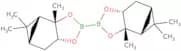
CAS:<p>(-)-Bis(pinanediolato)diboron is a reactive component that can be used as a reagent. It reacts with alkenes to form pinacolboronates, which are useful for the synthesis of complex compounds. (-)-Bis(pinanediolato)diboron is also an intermediate in the synthesis of diboronic acid and pinacolborane. This compound has broad utility as a building block, scaffold, or intermediate in organic synthesis.<br>-Pinanediolato boron is also a versatile building block that can be used to synthesize many other chemical compounds. For example, it can be used as an intermediate to synthesize (-)-pinanediol and 3-hydroxy-1-methylpyridinium iodide (3HMPI), which are speciality chemicals.<br>-Pinanediolato boron is also an excellent building block for organic synthesis due to its ability</p>Formula:C20H32B2O4Purity:Min. 95%Color and Shape:White SolidMolecular weight:358.09 g/mol(2-Fluoro-4-methylpyridin-3-yl)boronic acid
CAS:Formula:C6H7BFNO2Purity:98%Color and Shape:SolidMolecular weight:154.94(6-(Piperazin-1-yl)pyridin-3-yl)boronic acid
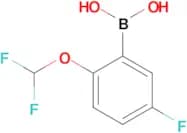
CAS:Formula:C9H14BN3O2Purity:98%Color and Shape:SolidMolecular weight:207.04(2-(Difluoromethoxy)-5-fluorophenyl)boronic acid
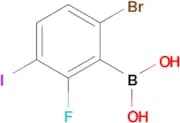
CAS:Purity:95+%Color and Shape:SolidMolecular weight:205.9299927(6-Bromo-2-fluoro-3-iodophenyl)boronic acid
CAS:Formula:C6H4BBrFIO2Purity:≥95%Molecular weight:344.71(4-(N,N-Dimethylsulfamoyl)-2-methylphenyl)boronic acid
CAS:Formula:C9H14BNO4SPurity:96%Color and Shape:Liquid, No data available.Molecular weight:243.08(3-Fluoro-4′-propyl-[1,1′-biphenyl]-4-yl)boronic acid
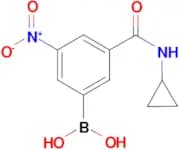
CAS:Formula:C15H16BFO2Purity:97%Molecular weight:258.1(3-(Cyclopropylcarbamoyl)-5-nitrophenyl)boronic acid
CAS:Formula:C10H11BN2O5Purity:98%Molecular weight:250.02(3-(Chlorocarbonyl)phenyl)boronic acid
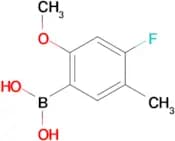
CAS:Formula:C7H6BClO3Purity:95.0%Color and Shape:SolidMolecular weight:184.38(4-Fluoro-2-methoxy-5-methylphenyl)boronic acid
CAS:Formula:C8H10BFO3Purity:98%Molecular weight:183.97Cyclopenten-1-yl boronic acid
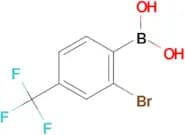
CAS:Formula:C5H9BO2Purity:97%Color and Shape:Solid, Crystalline PowderMolecular weight:111.94(2-Bromo-4-(trifluoromethyl)phenyl)boronic acid
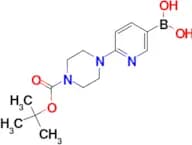
CAS:Formula:C7H5BBrF3O2Purity:98%Molecular weight:268.82(6-(4-(tert-Butoxycarbonyl)piperazin-1-yl)pyridin-3-yl)boronic acid
CAS:Formula:C14H22BN3O4Purity:95%Color and Shape:SolidMolecular weight:307.16(4-(Isobutylcarbamoyl)phenyl)boronic acid
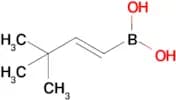
CAS:Formula:C11H16BNO3Purity:≥95%Color and Shape:SolidMolecular weight:221.063,3-Dimethyl-1-butenylboronic acid
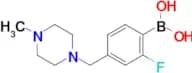
CAS:Formula:C6H13BO2Purity:95.0%Color and Shape:SolidMolecular weight:127.98(2-fluoro-4-((4-methylpiperazin-1-yl)methyl)phenyl)boronic acid
CAS:Purity:98%Molecular weight:252.1000061Ref: 10-F618270
1g631.00€5g1,503.00€10g2,537.00€25g6,339.00€100g23,375.00€2.5g1,160.00€100mg225.00€250mg336.00€500mg434.00€


![[[(3,5-Dimethyl-1H-pyrrol-2-yl)(3,5-dimethyl-2H-pyrrol-2-ylidene)methyl]methane](difluoroborane)](/_next/image/?url=https%3A%2Fstatic.cymitquimica.com%2Fproducts%2F3D%2Fthumb-webp%2FFD62165.webp&w=3840&q=75)

![(R)-Benzyl-2-[4-(trifluoromethyl)phenyl]-6,7-dihydro-5H-pyrrolo[2,1-c][1,2,4]triazolium Tetrafluor…](/_next/image/?url=https%3A%2Fstatic.cymitquimica.com%2Fproducts%2F3D%2Fthumb-webp%2FFB59921.webp&w=3840&q=75)



![[4-(4-Methoxycarbonylphenyl)phenyl]boronic acid](/_next/image/?url=https%3A%2Fstatic.cymitquimica.com%2Fproducts%2F10%2Fthumb-webp%2FF788060.webp&w=3840&q=75)
![(3-Fluoro-4′-propyl-[1,1′-biphenyl]-4-yl)boronic acid](/_next/image/?url=https%3A%2Fstatic.cymitquimica.com%2Fproducts%2F10%2Fthumb-webp%2FF222895.webp&w=3840&q=75)