Nitro
Nitro compounds are organic molecules containing one or more nitro groups (NO2). These compounds are widely used in the synthesis of explosives, pharmaceuticals, and dyes. At CymitQuimica, we offer a wide range of high-quality nitro compounds to support your research and industrial applications, ensuring safe and effective results. Our selection includes a variety of nitro compounds suitable for different chemical syntheses and applications.
Found 2516 products of "Nitro"
Sort by
Purity (%)
0
100
|
0
|
50
|
90
|
95
|
100
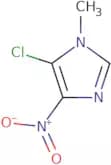
5-Chloro-1-methyl-4-nitroimidazole
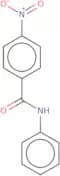
CAS:<p>5-Chloro-1-methyl-4-nitroimidazole (5C1MI) is a fatty acid that is synthesized by the reaction of phosphorus pentachloride and an aliphatic hydrocarbon. It has been shown to be effective in treating women with breast cancer. 5C1MI blocks the activity of a protein called HER2, which promotes tumor growth. The drug has been shown to cause an increase in the number of circulating lymphocytes and natural killer cells, as well as an increase in the production of antibodies in mice. These effects are likely caused by 5C1MI's ability to inhibit the proliferation of T cells and B cells. 5C1MI has also been shown to have a high solubility in water and low solubility in lipids, which makes it suitable for administration via intravenous injection.</p>Formula:C4H4ClN3O2Purity:Min. 95%Color and Shape:PowderMolecular weight:161.55 g/mol4-Nitrobenzanilide
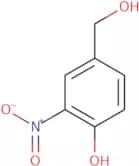
CAS:<p>4-Nitrobenzanilide is a synthetic dyestuff that is used to produce a variety of dyes. It is also an inhibitor that has been shown to have amoebicidal activity in vivo and in vitro. 4-Nitrobenzanilide inhibits organisms by reacting with the chloride ion, which is essential for the synthesis of DNA and RNA. The demethylation reaction leads to the formation of hydrogen chloride, which may be responsible for its cytotoxic effects on living cells.</p>Formula:C13H10N2O3Purity:Min. 95%Color and Shape:Yellow PowderMolecular weight:242.23 g/mol4-Hydroxy-3-nitrobenzyl alcohol
CAS:<p>4-Hydroxy-3-nitrophenylacetic acid (4ONPA) is an organic compound that is the product of the reaction between hydroxylamine and nitrobenzaldehyde. It has been shown to have cytotoxicity in breast cancer cells and has been used as a probe for optical imaging studies. 4ONPA has also been shown to be able to inhibit the activity of enzymes such as catalase, peroxidase, and lipoxygenase. The uptake of 4ONPA into cells is dependent on its concentration and the cell type. This drug can be useful for treating degenerative diseases because it inhibits microglia activation by blocking the enzyme phospholipase A2. Clinical trials are currently being conducted for 4ONPA’s potential use in treating herpes simplex virus infections and cancerous lesions associated with Alzheimer's disease.</p>Formula:C7H7NO4Purity:Min. 95%Color and Shape:PowderMolecular weight:169.13 g/mol1-(2,5-Dichlorophenyl)-2-nitroethene
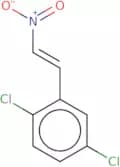
CAS:<p>1-(2,5-Dichlorophenyl)-2-nitroethene is a chemical compound that is used as a research chemical. It's an aromatic organic compound that can be used as a versatile building block for the synthesis of complex compounds. It's also a good intermediate for many fine chemicals. 1-(2,5-Dichlorophenyl)-2-nitroethene has CAS number 1056473-63-2 and is classified as an "Aromatic Organic Chemical".</p>Formula:C8H5Cl2NO2Purity:Min. 95%Color and Shape:PowderMolecular weight:218.04 g/mol4-Fluoro-3-nitrobenzonitrile
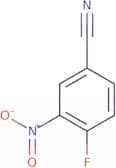
CAS:<p>4-Fluoro-3-nitrobenzonitrile is a potent inhibitor of tyrosine kinase. It binds to the ATP binding site of the enzyme and prevents it from phosphorylating tyrosine residues on other proteins. 4-Fluoro-3-nitrobenzonitrile has been used as a tool in analytical chemistry, where it was shown to be able to detect trace amounts of benzene. This compound has also been shown to have toxicological effects, such as lowered body weight, increased liver weight, and decreased spleen weight. These effects were observed in mice exposed to 4-fluoro-3 nitrobenzonitrile at doses that were well below those needed for lethal toxicity.</p>Formula:C7H3FN2O2Purity:Min. 95%Color and Shape:PowderMolecular weight:166.11 g/mol3-Nitro-6-pyridinecarboxaldehyde
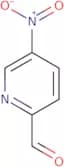
CAS:<p>3-Nitro-6-pyridinecarboxaldehyde is a colorless liquid that is soluble in water. It has a boiling point of 155 degrees Celsius, and it has a density of 1.03 grams per milliliter. This chemical reacts with metal ions to form nitro compounds. 3-Nitro-6-pyridinecarboxaldehyde has been used as an analytical reagent for the determination of benzenes and pyridines in organic solvents and gas chromatography calibration. The reactivity of this chemical is due to its pyridine ring, which can be used as a ligand or reagent.</p>Formula:C6H4N2O3Purity:Min. 98%Color and Shape:PowderMolecular weight:152.11 g/mol2'-Ethoxy-4'-nitroacetanilide
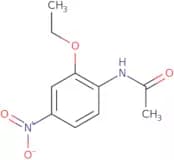
CAS:<p>2'-Ethoxy-4'-nitroacetanilide is a chemical compound that is used as a building block in the synthesis of other chemicals. It is a versatile building block and can be used to synthesize many different types of compounds, including drugs, pesticides, and dyes. 2'-Ethoxy-4'-nitroacetanilide has been classified as a speciality chemical and is not for human consumption.</p>Formula:C10H12N2O4Purity:Min. 95%Color and Shape:PowderMolecular weight:224.21 g/molL-Methionine 4-nitroanilide
CAS:<p>L-Methionine 4-nitroanilide is a polymerase chain reaction (PCR) substrate. It has been shown to bind to DNA with calcium and to have protease activity. L-Methionine 4-nitroanilide is a synthetic substrate used in the biochemical study of serine proteases. L-Methionine 4-nitroanilide has been found to be active against P. aeruginosa and thermococcus, but not against mosquitoes. The optimum pH for this compound is 7 and it can be found at a concentration of 10mM in the range of pH 5 - 8.</p>Formula:C11H15N3O3SPurity:Min. 95%Color and Shape:White To Light (Or Pale) Yellow SolidMolecular weight:269.32 g/mol2-Fluoro-3-nitrobenzoic acid ethyl ester
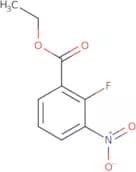
CAS:<p>2-Fluoro-3-nitrobenzoic acid ethyl ester is a versatile, high quality building block with a number of uses in research and industry. It is an intermediate in the synthesis of a range of compounds, including pharmaceuticals and other fine chemicals. 2-Fluoro-3-nitrobenzoic acid ethyl ester is also used as a reagent for the synthesis of complex compounds, such as pharmaceuticals. This compound can be synthesized from readily available starting materials and has been shown to be useful for the preparation of scaffolds for organic synthesis. 2-Fluoro-3-nitrobenzoic acid ethyl ester is not listed on the Chemical Abstract Service (CAS) registry, but it does have an IUPAC name (2-(2,6-difluorophenyl)-5-(1,1,2,2 tetrafluoropropoxy)-3H-[1]py</p>Formula:C9H8FNO4Purity:Min. 95%Color and Shape:Off-White PowderMolecular weight:213.16 g/mol3-Nitrotyramine
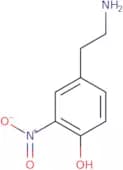
CAS:<p>3-Nitrotyramine is a compound that has catabolic properties. It is the product of tyrosine, which is an amino acid found in most proteins. 3-Nitrotyramine has been shown to be metabolized by humans through the liver and kidneys. The metabolic pathway for this compound starts with the conversion of L-methionine into dl-methionine. This reaction generates a molecule called S-adenosyl methionine, or SAMe, which is involved in many biological processes such as neurotransmitter synthesis and gene expression regulation. 3-Nitrotyramine can also be converted into dopamine by way of the enzyme catecholamine methyltransferase. Dopamine has been shown to have a variety of effects on human physiology, including being involved in mood disorders and motor control. 3-Nitrotyramine can also be converted into gold nanoparticles by means of an acid analysis test.</p>Formula:C8H10N2O3Purity:Min. 95%Color and Shape:PowderMolecular weight:182.18 g/mol2,2'-Dinitrobiphenyl
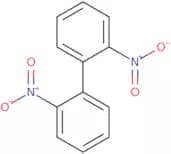
CAS:<p>2,2'-Dinitrobiphenyl is an organic chemical compound that belongs to the class of diazo compounds. It is a white crystalline solid that is soluble in organic solvents such as benzene, ether and chloroform. 2,2'-Dinitrobiphenyl has been used in analytical chemistry as a reducing agent for phosphite and other anion radicals. The reduction products can be analyzed using various techniques such as infrared spectroscopy or electron paramagnetic resonance spectroscopy. It also reacts with amide ions to form nitro or chloride compounds.</p>Formula:C12H8N2O4Purity:Min. 96.5%Color and Shape:PowderMolecular weight:244.2 g/mol2-Fluoro-3-nitrobenzoic acid
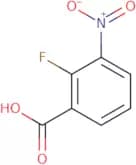
CAS:<p>2-Fluoro-3-nitrobenzoic acid is a fine chemical that has been used as a building block for research chemicals, reagents, and speciality chemicals. It is also a versatile building block for the synthesis of complex compounds and useful scaffolds. 2-Fluoro-3-nitrobenzoic acid can be used as an intermediate in organic reactions or as a reaction component in the synthesis of pharmaceuticals. This compound has been shown to have high purity and good quality with CAS No. 317-46-4.</p>Formula:C7H4O4NFPurity:Min. 95%Color and Shape:PowderMolecular weight:185.11 g/molPhenyl 4-nitrobenzoate
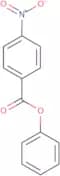
CAS:<p>Phenyl 4-nitrobenzoate is a polymerized ester with hydroxy groups and phosphorus oxychloride as the raw material. It is synthesized by heating ethyl esters in trifluoroacetic acid, which reacts with nitric acid and phosphorus oxychloride. The compound is an amide with a bond cleavage activation energy of 109 kJ/mol. The kinetic of the reaction was determined by measuring the time it took for the reaction to reach certain levels. Phenyl 4-nitrobenzoate has been shown to be able to activate supramolecular assemblies, leading to new catalytic processes such as hydrogenation, oxidation and reduction reactions.</p>Formula:C13H9NO4Purity:Min. 95%Color and Shape:PowderMolecular weight:243.21 g/mol3-(tert-butyl)-2-methyl-6-nitroindeno[3,2-c]pyrazol-4-one
CAS:Please enquire for more information about 3-(tert-butyl)-2-methyl-6-nitroindeno[3,2-c]pyrazol-4-one including the price, delivery time and more detailed product information at the technical inquiry form on this pagePurity:Min. 95%(5-Methyl-2-oxo-1,3-dioxol-4-yl)methyl 4-nitrophenyl carbonate
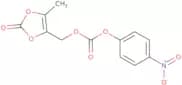
CAS:<p>(5-Methyl-2-oxo-1,3-dioxol-4-yl)methyl 4-nitrophenyl carbonate is a fine chemical that is used as a building block for the synthesis of complex compounds. It is an intermediate in the synthesis of 3,4-Dihydroquinazolinone. This compound has been reported to have useful pharmacological activity and has been used as a research chemical and in the synthesis of pharmaceuticals. (5-Methyl-2-oxo-1,3-dioxol-4-yl)methyl 4 nitrophenyl carbonate also has potential as a reagent and can be used in organic synthesis.</p>Formula:C12H9NO8Purity:Min. 95%Color and Shape:White PowderMolecular weight:295.2 g/mol(2-methoxyethyl)((2-nitrophenyl)sulfonyl)amine
CAS:<p>Please enquire for more information about (2-methoxyethyl)((2-nitrophenyl)sulfonyl)amine including the price, delivery time and more detailed product information at the technical inquiry form on this page</p>Purity:Min. 95%3-Methoxy-4-nitroacetophenone
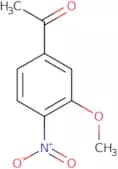
CAS:<p>3-Methoxy-4-nitroacetophenone is an enamine that can be used in the synthesis of a variety of organic compounds. It is a good reducing agent and can be used to synthesize nitrophenols and nitrosamines. Catalytic hydrogenation, transfer hydrogenation, and reductive condensation reactions all use 3-methoxy-4-nitroacetophenone as a starting material. It has been shown to react with a range of alcohols to form acetals, which are stable compounds with a protective group on the alcohol. Cyclization reactions using 3-methoxy-4-nitroacetophenone have also been reported. This compound has been crystallized in pure form.</p>Formula:C9H9NO4Purity:Min. 95%Color and Shape:PowderMolecular weight:195.17 g/mol1-(4-Acetoxyphenyl)-2-nitropropene
<p>Please enquire for more information about 1-(4-Acetoxyphenyl)-2-nitropropene including the price, delivery time and more detailed product information at the technical inquiry form on this page</p>Formula:C11H11NO4Purity:Min. 95%Molecular weight:221.21 g/mol4-Bromo-2-fluoro-5-nitroacetanilide
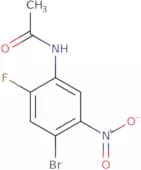
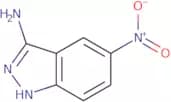
CAS:<p>4-Bromo-2-fluoro-5-nitroacetanilide is a versatile building block that has been used in the synthesis of complex compounds. It is a reagent which can be used in the research and development of pharmaceuticals, agricultural chemicals, and other specialty chemicals. 4-Bromo-2-fluoro-5-nitroacetanilide is also a useful building block for synthesis of other chemical compounds. This compound has been shown to have high quality for use in organic synthesis and as a reaction component for the preparation of useful scaffolds. This compound is also useful as an intermediate in organic reactions. CAS No. 95635-46-4</p>Formula:C8H6BrFN2O3Purity:Min. 95%Color and Shape:PowderMolecular weight:277.05 g/mol3-Amino-5-nitroindazole
CAS:<p>3-Amino-5-nitroindazole is an anticancer drug that inhibits the growth of cancer cells. It has been shown to inhibit the growth of cancer cells by blocking the synthesis and repair of DNA, leading to cell death. 3-Amino-5-nitroindazole also blocks the production of new proteins, which are needed for cell division. This drug also acts on pathways that are important for tumor development and progression, such as signaling pathways and transcription factors. This compound has been shown to be selective against human squamous cell carcinoma cells and has been studied in combination with other anticancer drugs in clinical trials.</p>Formula:C7H6N4O2Purity:Min. 95%Color and Shape:SolidMolecular weight:178.15 g/mol

![3-(tert-butyl)-2-methyl-6-nitroindeno[3,2-c]pyrazol-4-one](/_next/image/?url=https%3A%2Fstatic.cymitquimica.com%2Fproducts%2F3D%2Fthumb-webp%2FFB169678.webp&w=3840&q=75)