


Ketones
Found 18871 products of "Ketones"
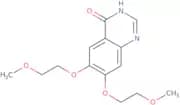
6,7-Bis(2-methoxyethoxy)-3,4-dihydroquinazolin-4-one
CAS:This compound is a synthetic molecule that has been shown to have growth factor activity and may be useful in cancer research. The molecule is a nucleophile and reacts with epidermal growth factor (EGF) to form the corresponding adduct. This adduct can then react with chloride to form the corresponding chloro-adduct. It also binds to cellular proteins, such as antigen and factor receptors. The piperazine ring of this molecule is responsible for its binding affinity for these receptors.
The compound was expressed from a plasmid under normoxic conditions, but was not expressed under hypoxic conditions.Formula:C14H18N2O5Purity:Min. 95%Color and Shape:White PowderMolecular weight:294.3 g/mol4-((4-(dimethylamino)phenyl)methylene)-3-methyl-1-phenyl-2-pyrazolin-5-one
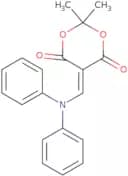
CAS:Please enquire for more information about 4-((4-(dimethylamino)phenyl)methylene)-3-methyl-1-phenyl-2-pyrazolin-5-one including the price, delivery time and more detailed product information at the technical inquiry form on this pagePurity:Min. 95%5-((diphenylamino)methylene)-2,2-dimethyl-1,3-dioxane-4,6-dione
CAS:Please enquire for more information about 5-((diphenylamino)methylene)-2,2-dimethyl-1,3-dioxane-4,6-dione including the price, delivery time and more detailed product information at the technical inquiry form on this page
Purity:Min. 95%Ethyl undecyl ketone
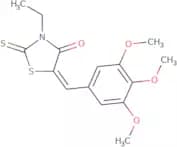
CAS:Ethyl undecyl ketone is the organic compound with the formula (CH3)2C(=O)C(CH3)2. It is a colorless liquid that smells like oranges. It is used as a solvent and in the production of citronella oil, which is used in perfumes, soaps, and insecticides. The reaction vessel can be used to produce mosquitoes by introducing the bacteria Culex pipiens and feeding them with sugar or yeast. The strain of mosquito that develops has been shown to be more resistant to dry weight loss than other strains. Ethyl undecyl ketone also reacts with citratus in a process called esterification, resulting in fatty alcohols such as ethyl oleate and ethyl stearate. Ethyl undecyl ketone contains methyl ketones that are diagnostic for various systemic diseases such as hyperthyroidism and liver disease. These compounds are also found in fatty acids found in AsFormula:C14H28OPurity:Min. 95%Color and Shape:SolidMolecular weight:212.37 g/mol3-ethyl-2-thioxo-5-((3,4,5-trimethoxyphenyl)methylene)-1,3-thiazolidin-4-one
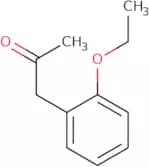
CAS:Please enquire for more information about 3-ethyl-2-thioxo-5-((3,4,5-trimethoxyphenyl)methylene)-1,3-thiazolidin-4-one including the price, delivery time and more detailed product information at the technical inquiry form on this pagePurity:Min. 95%(2-Ethoxyphenyl)acetone
CAS:(2-Ethoxyphenyl)acetone is a monoaminergic compound that has antioxidant and analgesic properties. It also has antidepressant-like effects, which can be attributed to its ability to inhibit the reuptake of serotonin and norepinephrine. (2-Ethoxyphenyl)acetone has been shown to have neuroprotective effects in mice with Parkinson's disease. This compound also exhibits anti-inflammatory properties and may be useful for the treatment of depression.Formula:C11H14O2Purity:Min. 95%Color and Shape:PowderMolecular weight:178.23 g/mol(2S)-1,2-Dihydroxy-3,4-octanedione - aqueous solution
CAS:(2S)-1,2-Dihydroxy-3,4-octanedione is a versatile building block that can be used for the synthesis of complex compounds. This compound is a reagent and useful building block in organic chemistry. (2S)-1,2-Dihydroxy-3,4-octanedione can be used as a high quality research chemical that is available at CAS No. 1173172-85-4. This compound also has a wide range of applications as a reaction component or scaffold in organic synthesis.Formula:C8H14O4Purity:Min. 95%Color and Shape:Colourless LiquidMolecular weight:174.19 g/mol3-(tert-butyl)-2-phenylindeno[3,2-c]pyrazol-4-one
CAS:Please enquire for more information about 3-(tert-butyl)-2-phenylindeno[3,2-c]pyrazol-4-one including the price, delivery time and more detailed product information at the technical inquiry form on this pageFormula:C20H18N2OPurity:Min. 95%Color and Shape:PowderMolecular weight:302.37 g/mol3-Thioxo-1,2,4-triazin-5-one
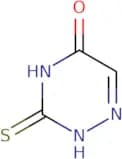
CAS:3-Thioxo-1,2,4-triazin-5-one is a chemical compound that has been shown to inhibit the growth rate of various bacteria. It inhibits the enzyme hydroxyproline hydroxylase in plants and fungi. The tautomeric form of 3-thioxo-1,2,4-triazin-5-one is found in triticum aestivum (wheat) and glyoxylate. In the presence of thiosemicarbazide or carbazone this compound undergoes a base catalyzed cyclization reaction that leads to the formation of orotic acid. 3-Thioxo-1,2,4-triazin-5-one also inhibits viral replication by blocking the synthesis of nucleobases and can be used as an antiviral agent against herpes virus.Formula:C3H3N3OSPurity:Min. 95%Color and Shape:Brown SolidMolecular weight:129.14 g/mol(8S,10S,11S,13S,14S,17S)-9-Fluoro-11-Hydroxy-17-(2-Hydroxyacetyl)-10,13-Dimethyl-2,6,7,8,11,12,14,15,16,17-Decahydro-1H-Cyclopenta[a ]Phenanthren-3-One
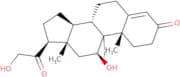
CAS:Controlled Product(8S,10S,11S,13S,14S,17S)-9-Fluoro-11-hydroxy-17-(2-hydroxyacetyl)-10,13-dimethyl-2,6,7,8,11,12,14,15,16,17-decahydrocyclopenta[a]phenanthren-3-one (fluorometholone) is a corticosteroid that is used in the treatment of asthma and other respiratory diseases. Fluorometholone has been shown to have strong antiinflammatory activity and inhibit the production of inflammatory cytokines. It also has mineralocorticoid activity and can be used to treat adrenal insufficiency. This drug has potent potencies structurally similar to glucocorticoids and mineralocorticoids.Formula:C21H29FO4Purity:Min. 95%Molecular weight:364.45 g/molalpha-Methylanisalacetone
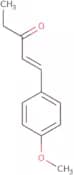
CAS:Alpha-Methylanisalacetone is a chemical substance that is used as a reagent in the production of other chemicals. It is also an allergen and a sensitizer, which may cause health risks. Alpha-Methylanisalacetone can react with trifluoroacetic acid to form alpha-methylbenzeneacetic acid, which can be detected by an ionization detector. This reaction takes about 1 hour. The fluid extract from alpha-methylanisalacetone contains histidine, which reacts with the reagent 2,4-dinitrophenylhydrazine hydrochloride and produces dinitrophenylhydrazine. The analytical method for alpha-methylanisalacetone involves measuring the turbidity of the solution at 660 nm using a spectrophotometer.Formula:C12H14O2Purity:Min. 95%Color and Shape:White PowderMolecular weight:190.24 g/mol(5-Bromo-2-methoxyphenyl)acetone
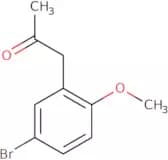
CAS:5-Bromo-2-methoxyphenyl)acetone (BMPA) is a versatile building block used in the synthesis of complex compounds and speciality chemicals. BMPA has been shown to be a useful intermediate for the synthesis of pharmaceuticals, agrochemicals, perfumes, and other products. It is also used as a reagent for research purposes. The compound was first synthesized by the condensation of aniline with acetaldehyde in 1885 by two French chemists, but has since been prepared in various ways. CAS number: 205826-73-9Formula:C10H11BrO2Purity:Min. 95%Molecular weight:243.1 g/molHeptylphenylketone
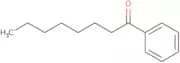
CAS:Heptylphenylketone is a colorless liquid that is soluble in organic solvents. It is used as a chemical intermediate and has been found to be toxic to humans. Heptylphenylketone can be reduced with borohydride, which will result in the formation of phenol. The reduction of heptylphenylketone with borohydride at constant pressure will yield phenol, acetophenone, and benzoic acid. The transport properties of heptylphenylketone are controlled by its hydrophobicity and the degree of hydrogen bonding between the molecules. Human metabolism of heptylphenylketone has been studied by analysis of urine samples collected from volunteers who were given an oral dose of 25 mg/kg body weight. It was found that heptylphenylketone was metabolized mainly by oxidation to produce aldehydes, ketones, acids, fatty acids, and carboxylic acids.
Formula:C14H20OPurity:Min. 95%Molecular weight:204.31 g/mol1,3-Bis-(Z-Leu-Leu)-diaminoacetone
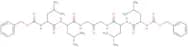
CAS:1,3-Bis-(Z-Leu-Leu)-diaminoacetone is a synthetic diketone inhibitor, which is a formulation derived through specialized organic synthesis. It functions by targeting and inhibiting aspartic proteases, a class of enzymes that play critical roles in numerous biological processes, including protein degradation and processing. This compound's mechanism involves the reversible covalent modification of the enzyme's active site, leading to an obstruction of its catalytic function.Formula:C43H64N6O9Purity:Min. 95%Color and Shape:PowderMolecular weight:809 g/mol1,3-Diphenylacetone, 97.0%+
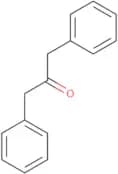
CAS:1,3-Diphenylacetone is a high quality chemical that is used as a reagent and intermediate in the production of specialty chemicals. It can be used to synthesize other compounds such as pharmaceuticals, pesticides, and lubricants. 1,3-Diphenylacetone has been shown to be an effective building block for a variety of chemical reactions. This compound is also versatile because it can be used as a research chemical or scaffold for synthesis of other compounds. 1,3-Diphenylacetone has CAS number 102-04-5 and can be found in the speciality chemical category.Formula:C15H14OPurity:Min. 97.0 Area-%Molecular weight:210.28 g/molRef: 3D-D-6112
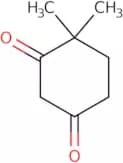
1kgTo inquire5kgTo inquire250gTo inquire500gTo inquire2500gTo inquire-Unit-kgkgTo inquire4,4-Dimethyl-1,3-cyclohexanedione
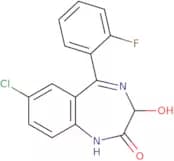
CAS:4,4-Dimethyl-1,3-cyclohexanedione is a covalent inhibitor that inhibits the acetoxylation of l-type calcium channels. This inhibition prevents the opening of calcium channels, which leads to a decrease in neuronal excitability. 4,4-Dimethyl-1,3-cyclohexanedione has shown antimycobacterial activity against mycobacteria in dilution assays and can be used for the treatment of tuberculosis. It also has been shown to have antagonistic activities against nerve injury and isomers with potential use for nerve damage. The reaction time for this compound is not known.Formula:C8H12O2Purity:Min. 97.5 Area-%Color and Shape:PowderMolecular weight:140.18 g/mol7-Chloro-5-(2-fluorophenyl)-1,3-dihydro-3-hydroxy-2H-1,4-benzodiazepin-2-one
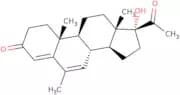
CAS:Controlled ProductThe chemical structure of 7-chloro-5-(2-fluorophenyl)-1,3-dihydro-3-hydroxy-2H-1,4-benzodiazepin-2-one (7CFT) is characterized by a constant and long duration of action. It is a hydroxy group extractant and has amplitudes in the organic tissues. The chlorine atom is located in the center of the molecule. 7CFT has methoxy groups on each side of the chlorine atom, which are responsible for its nature. This compound has been used as an analytical toxicology reagent and as a reference substance in analytical chemistry applications. This product description was generated using ChemSpider.Formula:C15H10ClFN2O2Purity:Min. 95%Molecular weight:304.7 g/mol17-Hydroxy-6-methylpregna-4,6-diene-3,20-dione
CAS:Controlled Product17-Hydroxy-6-methylpregna-4,6-diene-3,20-dione is a progestin that is used as an antiretroviral agent in the treatment of HIV. It has been shown to be effective for chronic cough and cancer. 17-Hydroxy-6-methylpregna-4,6-diene-3,20-dione can be used for the treatment of infectious diseases such as HIV by inhibiting viral replication and reducing the amount of virus in the blood. This drug can also be used to treat some cancers and solid tumours. It has been shown to have long term efficacy in these conditions due to its ability to block cell division. 17 hydroxy pregnane 4,6 diene 3,20 dione is also used in the treatment of geriatric patients with chronic illnesses or who are immunocompromised due to its ability to stimulate appetite.Formula:C22H30O3Purity:Min. 98 Area-%Color and Shape:White Off-White PowderMolecular weight:342.47 g/mol2-(2-Butyl)-4-{4-[4-(4-methyloxy-phenyl)-piperazin-1-yl]-phenyl}-2,4-dihydro-[1,2,4]-triazol-3-one
CAS:2-(2-Butyl)-4-{4-[4-(4-methyloxy-phenyl)-piperazin-1-yl]-phenyl}-2,4-dihydro-[1,2,4]-triazol-3-one (ITZ) is an antifungal drug that inhibits the synthesis of ergosterol. It is used in the treatment of systemic fungal infections such as candidiasis and cryptococcosis. ITZ is a metabolite of itraconazole and fluconazole. The presence of impurities in ITZ can be detected by liquid chromatography with a diode array detector or a fluorescence detector. An antiinfective drug product should be bioequivalent to the reference product and have comparable levels of impurities. Chromatograms are used to identify peaks on a graph and measure their height (area under the curve) to determine how much of each substance is present in the sample.Formula:C23H29N5O2Purity:Min. 95%Color and Shape:White To Yellow SolidMolecular weight:407.51 g/molPyridin-3-Yl-[4-[3-(Trifluoromethyl)Phenyl]Piperazin-1-Yl]Methanone Dihydrochloride
CAS:Controlled ProductThis polymer is a high efficiency, low cost particle that can be used to store electricity at temperatures of up to 300 degrees Celsius. It has a cycle life of more than 10,000 cycles and can be recharged in less than one minute. This polymer has been shown to have excellent structural stability and structural reversibility with lithium ion insertion/extraction. The coulombic efficiency is greater than 99%.Formula:C17H18Cl2F3N3OPurity:Min. 95%Molecular weight:408.25 g/mol



![3-(tert-butyl)-2-phenylindeno[3,2-c]pyrazol-4-one](/_next/image/?url=https%3A%2Fstatic.cymitquimica.com%2Fproducts%2F3D%2Fthumb-webp%2FFB169663.webp&w=3840&q=75)
![2-(2-Butyl)-4-{4-[4-(4-methyloxy-phenyl)-piperazin-1-yl]-phenyl}-2,4-dihydro-[1,2,4]-triazol-3-one](/_next/image/?url=https%3A%2Fstatic.cymitquimica.com%2Fproducts%2F3D%2Fthumb-webp%2FFB19470.webp&w=3840&q=75)
![Pyridin-3-Yl-[4-[3-(Trifluoromethyl)Phenyl]Piperazin-1-Yl]Methanone Dihydrochloride](/_next/image/?url=https%3A%2Fstatic.cymitquimica.com%2Fproducts%2F3D%2Fthumb-webp%2FFP100969.webp&w=3840&q=75)