Ketones
Ketones are organic compounds characterized by the presence of a carbonyl group (C=O) bonded to two carbon atoms. These compounds are highly versatile and play a crucial role in various chemical reactions, including oxidation, reduction, and condensation. Ketones are essential intermediates in the synthesis of pharmaceuticals, fragrances, and polymers. At CymitQuimica, we provide a wide range of high-quality ketones to support your research and industrial applications.
Found 18809 products of "Ketones"
Sort by
Purity (%)
0
100
|
0
|
50
|
90
|
95
|
100
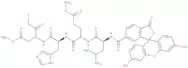
Fluorescein-6-carbonyl-Leu-Glu(OMe)-His-DL-Asp(OMe)-fluoromethylketone
CAS:<p>Please enquire for more information about Fluorescein-6-carbonyl-Leu-Glu(OMe)-His-DL-Asp(OMe)-fluoromethylketone including the price, delivery time and more detailed product information at the technical inquiry form on this page</p>Formula:C45H47FN6O14Purity:Min. 95%Molecular weight:914.89 g/mol6-Methoxy-2,3,4,9-tetrahydro-1H-β-carbolin-1-one
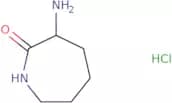
CAS:<p>6-Methoxy-2,3,4,9-tetrahydro-1H-beta-carbolin-1-one is a β-carboline alkaloid that is structurally related to harmaline and tetrahydroharmine. It has been shown to have antidepressant activity in animals. 6-Methoxy-2,3,4,9-tetrahydro-1H-beta-carbolin-1-one was analyzed by GC/MS and found to be present in the leaves of plants from the genus Tetraclinis. 6MHBC was also identified as a metabolite of diazepam in rat urine after administration of a single oral dose of 10 mg/kg diazepam. The observed β carboline metabolite was determined to be 6MHBC.</p>Formula:C12H12N2O2Purity:Min. 95%Molecular weight:216.24 g/mol3-Aminoazepan-2-one hydrochloride
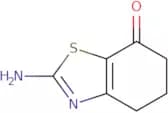
CAS:<p>Please enquire for more information about 3-Aminoazepan-2-one hydrochloride including the price, delivery time and more detailed product information at the technical inquiry form on this page</p>Formula:C6H12N2O•HClPurity:Min. 95%Molecular weight:164.63 g/mol2-Amino-5,6-dihydro-4H-benzothiazol-7-one
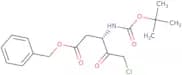
CAS:<p>2-Amino-5,6-dihydro-4H-benzothiazol-7-one is a thiourea that is used as a reactant in the synthesis of brominated compounds. It reacts with ethanol to form 2,5,6-triaminopyrimidine and hydrogen bromide. This reaction occurs in the presence of acid such as hydrochloric acid or acetic acid. The reflux reaction is commonly conducted at elevated temperatures and pressures.</p>Purity:Min. 95%Boc-Asp(OBzl)-chloromethylketone
CAS:<p>Boc-Asp(OBzl)-chloromethylketone is a synthetic molecule that is immunoreactive with gp120, the virus protein. It has been shown to inhibit the proliferation of human neuroblastoma cells and induce cell death. This compound also has an effect on cytokine production in vitro. This drug is currently being studied as a potential treatment for HIV infection. Boc-Asp(OBzl)-chloromethylketone binds to the receptor type and viral type, which are essential for the virus life cycle and induces antibody production in vivo.</p>Formula:C17H22ClNO5Purity:Min. 95%Molecular weight:355.81 g/molZ-Asp-Glu-Val-Asp-chloromethylketone
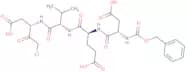
CAS:<p>Z-Asp-Glu-Val-Asp-chloromethylketone is a reactive compound that inhibits the activity of proteases and induces neuronal death. Z-Asp-Glu-Val-Asp-chloromethylketone has been shown to induce necrotic cell death in malignant brain cells and has neurotrophic properties. It also causes mitochondrial membrane depolarization, which leads to mitochondrial cytochrome c release and subsequent apoptosis. The reaction mechanism is still unclear but it may involve hydrogen bonding between the ketone group and the amide nitrogen atom of the aspartate residue.</p>Formula:C27H35ClN4O12Purity:Min. 95%Molecular weight:643.04 g/molZ-Asp(OMe)-Gln-Met-DL-Asp(OMe)-fluoromethylketone
CAS:<p>Z-Asp(OMe)-Gln-Met-DL-Asp(OMe)-fluoromethylketone is a mitochondria-targeting compound that has been shown to have neuroprotective and anti-inflammatory properties. It binds to the ATP synthase in the mitochondrial membrane, inhibiting ATP production and causing cell death by apoptosis. ZAFMK also inhibits kinases such as protein kinase 3β (PK3β) and caspase 9, which are involved in inflammation and apoptosis. ZAFMK has been shown to be effective against various diseases such as multiple sclerosis, Alzheimer's disease, Parkinson's disease, amyotrophic lateral sclerosis, Huntington's disease, and stroke.</p>Formula:C29H40FN5O11SPurity:Min. 95%Molecular weight:685.72 g/mol17-α,21-Dihydroxy-16-a-methylpregna-1,4,9(11)-triene-3,20-dione 21-acetate
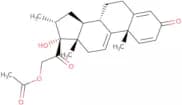
CAS:Controlled Product<p>Please enquire for more information about 17-alpha,21-Dihydroxy-16-a-methylpregna-1,4,9(11)-triene-3,20-dione 21-acetate including the price, delivery time and more detailed product information at the technical inquiry form on this page</p>Formula:C24H30O5Purity:Min. 95%Molecular weight:398.49 g/mol1-(4-Acetylphenyl)-2-methyl-1-propanone
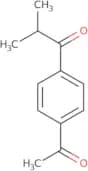
CAS:<p>1-(4-Acetylphenyl)-2-methyl-1-propanone (AMP) is a synthetic analgesic that has been evaluated for the treatment of pain. It is primarily used in pharmaceuticals and medicinal preparations, as well as being a common solvent in chemical syntheses. AMP has been shown to be an effective treatment for joint pain, muscle pain, and other types of pain. The mechanism of action for this compound is unknown but may involve the inhibition of an enzyme called hydratropic acid group. This molecule also has a carboxylic acid group that undergoes detoxification through elemental analysis or mechanochemistry.</p>Formula:C12H14O2Purity:Min. 95%Molecular weight:190.24 g/molZ-Phe-Ala-diazomethylketone
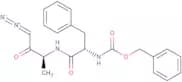
CAS:<p>Z-Phe-Ala-diazomethylketone is a molecule that belongs to the class of hydrolase inhibitors. It has been shown to have inhibitory properties against trichomonas vaginalis and proteolytic activity against liver cells. Z-Phe-Ala-diazomethylketone also has a kinetic energy of 11.2 kcal/mol, which is higher than most protease inhibitors. This molecule has been shown to be effective as a cell vaccine in wild-type mice and as a protease inhibitor in brain cells. The optimal ph for this molecule is 7.5, which corresponds to its pKa value of 5.1.</p>Formula:C21H22N4O4Purity:Min. 95%Molecular weight:394.42 g/molZ-Leu-Glu(OMe)-Thr-DL-Asp(OMe)-fluoromethylketone
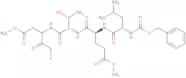
CAS:<p>Please enquire for more information about Z-Leu-Glu(OMe)-Thr-DL-Asp(OMe)-fluoromethylketone including the price, delivery time and more detailed product information at the technical inquiry form on this page</p>Formula:C30H43FN4O11Purity:Min. 95%Molecular weight:654.68 g/molFluorescein-6-carbonyl-Ile-Glu(OMe)-Thr-DL-Asp(OMe)-fluoromethylketone
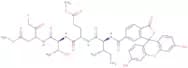
CAS:<p>Please enquire for more information about Fluorescein-6-carbonyl-Ile-Glu(OMe)-Thr-DL-Asp(OMe)-fluoromethylketone including the price, delivery time and more detailed product information at the technical inquiry form on this page</p>Formula:C43H47FN4O15Purity:Min. 95%Molecular weight:878.85 g/mol2-Amino-6-chloropyrimidin-4(3h)-one
CAS:<p>2-Amino-6-chloropyrimidin-4(3H)-one (ACPP) is a betaine that has been shown to exhibit potent activity against clinical isolates of methicillin-resistant Staphylococcus aureus (MRSA). It is a mesomeric molecule, which means that it can exist as two different tautomers. The frequency of the absorption bands in the FTIR spectra for ACPP are characteristic of the carbenes and ethanolamine tautomers. The presence of these tautomers may be due to stabilization from the nucleophilic character of the nitrogen atom in betaines. Betaines are also able to form polymersized chains by reacting with themselves or other molecules, such as ethanolamine.</p>Formula:C4H4ClN3OPurity:Min. 95%Color and Shape:PowderMolecular weight:145.55 g/molZ-Leu-Tyr-chloromethylketone
CAS:<p>Z-Leu-Tyr-chloromethylketone is a peptide that binds to the reticulum and prevents the release of calcium ions. It is a chloromethyl ketone, which inhibits the L-type calcium channels in cells. Z-Leu-Tyr-chloromethylketone has been shown to block the influx of calcium ions into cytosolic compartments. This process leads to inhibition of protein synthesis and cell death by apoptosis.</p>Formula:C24H29ClN2O5Purity:Min. 95%Molecular weight:460.95 g/molDynorphin A (1-10)-Gly-chloromethylketone trifluoroacetate salt
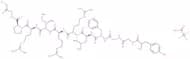
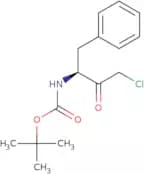
CAS:<p>Please enquire for more information about Dynorphin A (1-10)-Gly-chloromethylketone trifluoroacetate salt including the price, delivery time and more detailed product information at the technical inquiry form on this page</p>Formula:C60H95ClN20O12Purity:Min. 95%Molecular weight:1,323.98 g/mol(3S)-3-(tert-Butoxycarbonyl)amino-1-chloro-4-phenyl-2-butanone
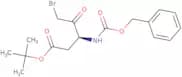
CAS:<p>(3S)-3-(tert-Butoxycarbonyl)amino-1-chloro-4-phenyl-2-butanone is an organic compound that belongs to the class of carbonyl reductase. It is used as a catalyst for the transformation of secondary alcohols to ketones or aldehydes, including isopropyl alcohol. The reaction proceeds via an intermediate carboxylic acid. The enzyme has been found in various microorganisms, and can be purified from Bacillus megaterium and Streptomyces lividans. The enzyme’s activity can be inhibited by steric effects, metal ions, or other compounds. (3S)-3-(tert-Butoxycarbonyl)amino-1-chloro-4-phenyl-2-butanone crystallizes in two forms: one with the chiral center at the 3 position and one with it at the 4 position.</p>Purity:Min. 95%Z-Asp(OtBu)-bromomethylketone
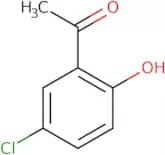
CAS:<p>Please enquire for more information about Z-Asp(OtBu)-bromomethylketone including the price, delivery time and more detailed product information at the technical inquiry form on this page</p>Formula:C17H22BrNO5Purity:Min. 95%Molecular weight:400.26 g/mol1-(5-Chloro-2-hydoxyphenyl)ethanone
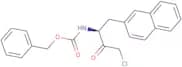
CAS:<p>1-(5-Chloro-2-hydoxyphenyl)ethanone is a potent inhibitor of the antiapoptotic protein survivin. It binds to the carbonyl group of the molecule, which is located on the intramolecular hydrogen bond surface. This leads to conformational changes in the molecule and ternary complex formation, which eventually leads to apoptosis protein aggregation and activation. 1-(5-Chloro-2-hydoxyphenyl)ethanone has been shown to inhibit prostate cancer cells and has also been studied in clinical trials for its anticancer properties.</p>Formula:C8H7ClO2Purity:Min. 95%Color and Shape:White PowderMolecular weight:170.59 g/molZ-2-Nal-chloromethylketone
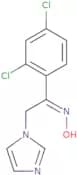
CAS:<p>Please enquire for more information about Z-2-Nal-chloromethylketone including the price, delivery time and more detailed product information at the technical inquiry form on this page</p>Formula:C22H20ClNO3Purity:Min. 95%Molecular weight:381.85 g/mol(Z)-1-(2,4-Dichlorophenyl)-2-(1H-imidazol-1-yl)ethanone oxime
CAS:<p>(Z)-1-(2,4-Dichlorophenyl)-2-(1H-imidazol-1-yl)ethanone oxime is an antifungal agent that inhibits the synthesis of ergosterol, a major constituent of fungal cell membranes. It has been shown to be active against a variety of fungi and yeasts. (Z)-1-(2,4-Dichlorophenyl)-2-(1H-imidazol-1-yl)ethanone oxime also has antimicrobial activity against bacteria such as Staphylococcus aureus and Pseudomonas aeruginosa.</p>Formula:C11H9Cl2N3OPurity:Min. 95%Molecular weight:270.11 g/mol