Ketones
Found 18870 products of "Ketones"
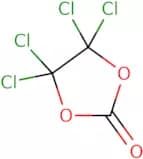
4,4,5,5-Tetrachloro-1,3-dioxolan-2-one
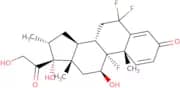
CAS:4,4,5,5-Tetrachloro-1,3-dioxolan-2-one is a chemical compound that is the product of the reaction between phosphorus pentachloride and amines. This compound has been used as a reagent for the synthesis of nanotubes in an efficient method. The interaction with malonic acid leads to formation of vinylene carbonate ester. Hydrogen chloride and chloride are used as hydrogen donors and acceptors respectively during this process. 4,4,5,5-Tetrachloro-1,3-dioxolan-2-one also reacts with oxalyl in the presence of base to form 4-(4',4'''-dimethoxytrityl)benzoic acid.Formula:C3Cl4O3Purity:(%) Min. 95%Molecular weight:225.84 g/mol(9R,11S,14S,16R,17R)-6,6,9-Trifluoro-11,17-Dihydroxy-17-(2-Hydroxyacetyl)-10,13,16-Trimethyl-8,11,12,14,15,16-Hexahydro-7H-Cyclopent a[a]Phenanthren-3-One
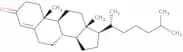
CAS:Controlled Product(9R,11S,14S,16R,17R)-6,6,9-Trifluoro-11,17-dihydroxy-17-(2-hydroxyacetyl)-10,13,16-trimethyl-8,11,12,14,15,16-hexahydro-7H-cyclopenta[a]phenanthrene 3-one is a congestive heart failure drug that belongs to the group of cardiotonic drugs. It has high resistance to elution and is used in the diagnosis of autoimmune diseases. (9R,11S) 6-(1′Hexahydrocyclohexa[b]pyrrolo[2′1′b]indolizinium bromide) is a nitrogenous compound that has been employed as a pharmaceutical preparation for the treatment of cardiac disorders. The biological properties of (9R) 11-(2′HydroxyacetylFormula:C22H27F3O5Purity:Min. 95%Molecular weight:428.44 g/mol4-Cholesten-3-one
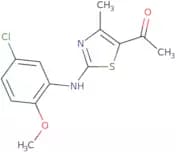
CAS:Controlled Product4-Cholesten-3-one is a steroid that is structurally similar to cholesterol. It has been used as a model system to study the biosynthesis of cholesterol and plant sterols. 4-Cholesten-3-one can be synthesized by the oxidation of cholestenone by cytochrome P450 enzymes in rat liver microsomes. The reaction mechanism of this process involves a dinucleotide phosphate intermediate. This compound has also been shown to inhibit cancer cell viability and human fecal sterols, suggesting that it may have potential as an anti-cancer drug or for the treatment of cholesterol disorders.Formula:C27H44OPurity:Min. 95%Color and Shape:Off-White PowderMolecular weight:384.65 g/mol1-(3-((5-Chloro-2-methoxyphenyl)amino)-5-methyl-2,4-thiazolyl)ethan-1-one
CAS:Please enquire for more information about 1-(3-((5-Chloro-2-methoxyphenyl)amino)-5-methyl-2,4-thiazolyl)ethan-1-one including the price, delivery time and more detailed product information at the technical inquiry form on this pageFormula:C13H13ClN2O2SPurity:Min. 95%Molecular weight:296.77 g/molEurycomanone
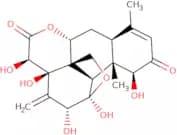
CAS:Eurycomanone is a natural product that belongs to the group of quassinoids. It is obtained from the plant Eurycoma longifolia, which grows in tropical Asia and Africa. The extract has been shown to have clinical properties such as body formation, protein target, and surface methodology. 3T3-L1 preadipocytes were used for the in vitro assays of eurycomanone. Group P2 cells were used for histological analysis and pharmacological agents were found to be chemical stable.Formula:C20H24O9Purity:Min. 95%Color and Shape:PowderMolecular weight:408.4 g/mol2(5H)-Furanone
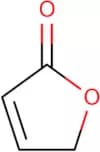
CAS:2(5H)-Furanone is a naturally occurring compound that has been found to have hypoglycemic effects. Studies have shown that 2(5H)-furanone inhibits the activity of cox-2, an enzyme involved in the synthesis of prostaglandins, which are inflammatory compounds. This chemical may be useful as an anti-inflammatory agent and for the treatment of bowel diseases. 2(5H)-Furanone also has antimicrobial properties and has been shown to inhibit the growth of animal cells that are resistant to anticancer drugs. It binds to cell nuclei and disrupts DNA synthesis by competing with basic proteins for binding sites on DNA strands. The chemical structure of 2(5H)-furanone is very similar to butenolide, a natural plant compound used in traditional Chinese medicine; both compounds have been shown to inhibit COX-2 activity.Formula:C4H4O2Purity:Min. 95%Color and Shape:Clear LiquidMolecular weight:84.07 g/mol1,3-Dihydroxyacetone
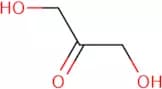
CAS:1,3-Dihydroxyacetone is a chemical compound that has been used as a reactant in the synthesis of glycerol. It is the simplest ketone formed from glycerol and a hydroxyl group. The reaction mechanism for the formation of 1,3-dihydroxyacetone involves the reaction of metal hydroxides with glycerol to form an intermediate product, which then reacts with hydrogen peroxide to produce dihydroxyacetone. 1,3-Dihydroxyacetone is also an analytical reagent for phosphorus pentoxide due to its acidic properties. Structural analysis and surface methodology have been used to determine the intramolecular hydrogen bonding between hydroxyl groups on the 1,3-dihydroxyacetone molecule.
Formula:C3H6O3Purity:Min. 95%Color and Shape:White PowderMolecular weight:90.08 g/mol4-((4-(dimethylamino)phenyl)methylene)-3-methyl-1-phenyl-2-pyrazolin-5-one
CAS:Please enquire for more information about 4-((4-(dimethylamino)phenyl)methylene)-3-methyl-1-phenyl-2-pyrazolin-5-one including the price, delivery time and more detailed product information at the technical inquiry form on this pagePurity:Min. 95%3-((4-(dimethylamino)phenyl)amino)-5,5-dimethylcyclohex-2-en-1-one
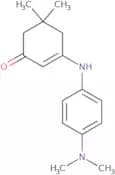
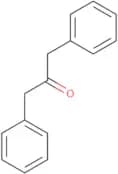
CAS:Please enquire for more information about 3-((4-(dimethylamino)phenyl)amino)-5,5-dimethylcyclohex-2-en-1-one including the price, delivery time and more detailed product information at the technical inquiry form on this pagePurity:Min. 95%1,3-Diphenylacetone, 97.0%+
CAS:1,3-Diphenylacetone is a high quality chemical that is used as a reagent and intermediate in the production of specialty chemicals. It can be used to synthesize other compounds such as pharmaceuticals, pesticides, and lubricants. 1,3-Diphenylacetone has been shown to be an effective building block for a variety of chemical reactions. This compound is also versatile because it can be used as a research chemical or scaffold for synthesis of other compounds. 1,3-Diphenylacetone has CAS number 102-04-5 and can be found in the speciality chemical category.Formula:C15H14OPurity:Min. 97.0 Area-%Molecular weight:210.28 g/molRef: 3D-D-6112
1kgTo inquire5kgTo inquire250gTo inquire500gTo inquire2500gTo inquire-Unit-kgkgTo inquire1-Hydroxycyclohexyl phenyl ketone
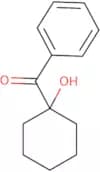
CAS:1-Hydroxycyclohexyl phenyl ketone is a reactive, water-soluble polymer that can be used as a substrate for forming thin films. It is a biocompatible polymer with a relatively low degree of toxicity. The film can be used to immobilize enzymes and other proteins on the surface of polymers. 1-Hydroxycyclohexyl phenyl ketone is also an analytical method for determining the concentration of hydroxyl groups in organic solvents. This substance has been shown to have strong fluorescence properties when it is mixed with trifluoroacetic acid and used as a probe for axonal growth.
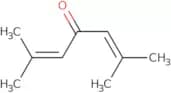
Formula:C13H16O2Purity:Min. 98 Area-%Color and Shape:White Off-White PowderMolecular weight:204.26 g/mol2,6-Dimethyl-2,5-heptadien-4-one
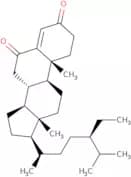
CAS:2,6-Dimethyl-2,5-heptadien-4-one is an organic compound that belongs to a class of compounds called reactive oxygen species (ROS). It is produced by the oxidation of 2,6-dimethyl-2,5-heptadienoic acid. ROS are formed in the mitochondria and have been shown to be involved in many cellular processes including mitochondrial function. ROS can induce oxidative stress leading to cell death. This compound has been shown to enhance the antibacterial efficacy of other antibiotics such as gentamycin and vancomycin. The mechanism of action is not fully understood but appears to involve intracellular glutathione depletion and damage to mitochondrial membrane potential.Formula:C9H14OPurity:Min. 95%Color and Shape:Yellow Clear LiquidMolecular weight:138.21 g/molStigmast-4-ene-3,6-dione
CAS:Controlled ProductStigmast-4-ene-3,6-dione is a tannin found in the bark of many plants. It has been shown to have neuroprotective effects by binding to cannabinoid receptor CB2 and activating its downstream signaling pathway. Stigmast-4-ene-3,6-dione also has anti-inflammatory properties due to its ability to inhibit fatty acid synthesis through its inhibition of acetyl CoA carboxylase (ACC). This compound also has antioxidant properties and is able to inhibit the production of reactive oxygen species by binding with copper ions.Purity:Min. 95%4-Mercapto-4-methyl-pentan-2-one
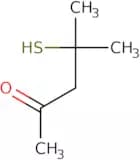
CAS:4-Mercapto-4-methyl-pentan-2-one is a fatty acid that is used as a flavor and fragrance agent. It has shown potential as a biomarker for exposure to volatile organic compounds (VOCs). 4-Mercapto-4-methylpentan2one has been found to inhibit the transcriptional regulation of genes encoding thiols and is an important component of the matrix effect. This compound can be extracted by solid phase microextraction, which will require sample preparation before use. The wild type strain of Escherichia coli was used in this experiment, but it may also be possible to use other bacteria such as Bacillus subtilis or Pseudomonas aeruginosa. Chemical ionization mass spectrometry was used to identify 4-mercapto-4-methylpentan2one in the extract.Formula:C6H12SOPurity:Min. 98 Area-%Molecular weight:132.22 g/mol6-Fluoropregn-4-Ene-3,20-Dione
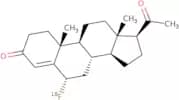
CAS:Controlled Product6-Fluoropregn-4-Ene-3,20-Dione is a hydrocarbon that is used in the production of an oil solution for oral administration. This product is well tolerated and has been shown to have good activity against Leptosphaeria species, which are members of the class of microorganisms. 6-Fluoropregn-4-Ene-3,20-Dione may be used as diluent with other substances. It can also be used as a corynebacterium culture media or as a dehydrated culture medium for corynebacteria. 6FPD can also be used to make emulsions containing microorganisms such as Cylindrocarpon species and Hydrolysing strains. It can function as a peracid or alkylene acylate oxidising agent.Formula:C21H29FO2Purity:Min. 95%Molecular weight:332.45 g/mol6-Bromo-2H-pyrido[3,2-b][1,4]oxazin-3(4H)-one
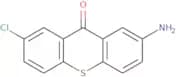
CAS:6-Bromo-2H-pyrido[3,2-b][1,4]oxazin-3(4H)-one is a versatile building block that can be used in a variety of chemical reactions as an intermediate. It is also useful in the synthesis of a variety of compounds, such as pharmaceuticals and research chemicals. 6-Bromo-2H-pyrido[3,2-b][1,4]oxazin-3(4H)-one is an organic compound with a molecular formula of C8H5BrN4O. It has an mp of 152°C and decomposes to form nitrogen gas and carbon monoxide at higher temperatures.Formula:C7H5BrN2O2Purity:Min. 95%Color and Shape:SolidMolecular weight:229.03 g/mol2-Amino-7-chloro-9H-thioxanthen-9-one
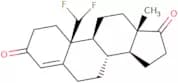
CAS:Please enquire for more information about 2-Amino-7-chloro-9H-thioxanthen-9-one including the price, delivery time and more detailed product information at the technical inquiry form on this pageFormula:C13H8ClNOSPurity:Min. 95%Molecular weight:261.73 g/mol19,19-Difluoroandrost-4-Ene-3,17-Dione
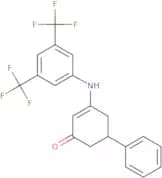
CAS:Controlled Product19,19-Difluoroandrost-4-Ene-3,17-Dione is a functional group that is incorporated into the biosynthesis of sex hormones and steroids. It has been postulated to be an efficient method for synthesizing 19,19-difluoroandrost-4-ene from 19,19-difluorodienoic acid. The inhibition constant of this functional group has been determined to be 4.8 x 10 M at 37 degrees Celsius and pH 7.0 in the presence of benzoate and hydroxyl groups. 19,19-Difluoroandrost-4-Ene-3,17-Dione can also inhibit enzymes such as esterase and glutathione reductase. Its nmr spectra are consistent with a dione ring structure.Formula:C19H24F2O2Purity:Min. 95%Molecular weight:322.39 g/mol3-((3,5-bis(trifluoromethyl)phenyl)amino)-5-phenylcyclohex-2-en-1-one
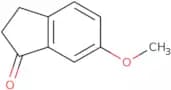
CAS:Please enquire for more information about 3-((3,5-bis(trifluoromethyl)phenyl)amino)-5-phenylcyclohex-2-en-1-one including the price, delivery time and more detailed product information at the technical inquiry form on this pagePurity:Min. 95%6-Methoxy-1-indanone
CAS:6-Methoxy-1-indanone is a chemical compound that can be found in the form of two structural isomers. They both have the same pharmacokinetic properties and are potent inhibitors of 5-HT1A receptors. 6-Methoxy-1-indanone also has potent inhibitory activity on the MT2 receptors, which are present in the central nervous system. This compound has been shown to be an active methylene group with neurodegenerative disease and has carbonyl groups.Formula:C10H10O2Purity:Min. 98 Area-%Color and Shape:PowderMolecular weight:162.19 g/mol


![6-Bromo-2H-pyrido[3,2-b][1,4]oxazin-3(4H)-one](/_next/image/?url=https%3A%2Fstatic.cymitquimica.com%2Fproducts%2F3D%2Fthumb-webp%2FFB144104.webp&w=3840&q=75)