Ketones
Found 18870 products of "Ketones"
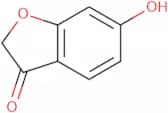
6-Hydroxy-2H-benzofuran-3-one
CAS:6-Hydroxy-2H-benzofuran-3-one is a potent inhibitor that blocks the formation of aurones and aldehydes, which are markers for insulin sensitivity. This compound has also been shown to inhibit dna replication in vitro by binding to the enzyme beta-diketone reductase (BDKR) and inhibiting its activity. 6-Hydroxy-2H-benzofuran-3-one is a fluorinated benzofuran derivative with an erythrocentaurin core structure. It has been shown to be effective against Gram positive bacteria, including methicillin resistant Staphylococcus aureus (MRSA). 6HBF3 also inhibits the growth of Gram negative bacteria, including Mycobacterium tuberculosis and Mycobacterium avium complex. The mechanism of action is not fully understood but may involve blocking lipid synthesis or preventing the synthesis of precursors for bacterial cell wall biosynthesis.Formula:C8H6O3Purity:Min. 95%Color and Shape:PowderMolecular weight:150.13 g/mol4,4-Dimethyl-1,3-cyclohexanedione
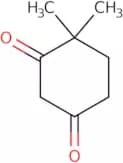
CAS:4,4-Dimethyl-1,3-cyclohexanedione is a covalent inhibitor that inhibits the acetoxylation of l-type calcium channels. This inhibition prevents the opening of calcium channels, which leads to a decrease in neuronal excitability. 4,4-Dimethyl-1,3-cyclohexanedione has shown antimycobacterial activity against mycobacteria in dilution assays and can be used for the treatment of tuberculosis. It also has been shown to have antagonistic activities against nerve injury and isomers with potential use for nerve damage. The reaction time for this compound is not known.Formula:C8H12O2Purity:Min. 97.5 Area-%Color and Shape:PowderMolecular weight:140.18 g/molFlavanone diacetyl hydrazone
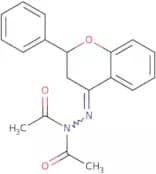
CAS:Flavanone diacetyl hydrazone is a hydrogenated flavonoid derivative, which is synthesized from natural flavonoid sources. This compound exhibits its mode of action primarily through its ability to donate hydrogen atoms, effectively scavenging free radicals and inhibiting oxidative stress. Furthermore, it interacts with various cellular pathways to exert anti-inflammatory effects, making it a potential therapeutic agent in oxidative stress-related disorders.
Formula:C19H18N2O3Purity:Min. 95%Molecular weight:322.36 g/mol2-Methylphenylacetone
CAS:2-Methylphenylacetone (2MP) is a cocatalyst that is used in cross-coupling reactions. It has been shown to be an effective methyl donor and titanium oxide activator. 2MP is also used in the dehydrogenative coupling of acetone and toluene, which leads to the formation of aliphatic products with nature and mechanisms of reactivity similar to those observed in benzene.Formula:C10H12OPurity:Min. 95%Color and Shape:LiquidMolecular weight:148.2 g/mol2-Bromo-1,3-diphenylpropane-1,3-dione
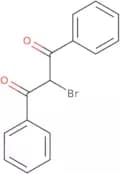
CAS:2-Bromo-1,3-diphenylpropane-1,3-dione is a ligand that binds to metal ions. It has been used as an efficient method for the synthesis of phenyl groups in organic chemistry. 2-Bromo-1,3-diphenylpropane-1,3-dione was found to have a catalytic effect on reactions involving halides and phosphine. A study on the reaction mechanism revealed that 2-bromo-1,3-diphenylpropane-1,3-dione acts as an electron donor to phosphites and phosphines. The xray diffraction study showed that the ligand binds to metal ions through its phenyl groups.Formula:C15H11BrO2Purity:Min. 95%Molecular weight:303.15 g/mol1-Acetamido-acetone
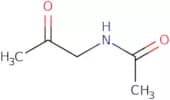
CAS:Acetamido-acetone is a chloromethyl ketone that reacts with water to form hydrochloric acid and acetone. It is used as a hydration agent in the synthesis of polyesters, such as polyethylene terephthalate (PET). Acetamido-acetone is also used for the synthesis of a variety of organic compounds and plastics. Acetamido-acetone can be used as a polymerization initiator or an intermediate in the production of other chemicals. Acetamido-acetone has low toxicity and does not react with most materials. However, it should not be mixed with strong acids or bases because this may cause hazardous fumes to form. Acetamido-acetone reacts with deuterium isotopes to produce light emission, which can be used for chemical research.
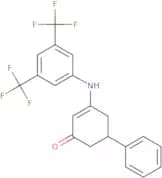
br>Formula:C5H9NO2Purity:Min. 95%Molecular weight:115.13 g/mol3-((3,5-bis(trifluoromethyl)phenyl)amino)-5-phenylcyclohex-2-en-1-one
CAS:Please enquire for more information about 3-((3,5-bis(trifluoromethyl)phenyl)amino)-5-phenylcyclohex-2-en-1-one including the price, delivery time and more detailed product information at the technical inquiry form on this pagePurity:Min. 95%3-(tert-butyl)-1-(4-nitrophenyl)indeno[2,3-d]pyrazol-4-one
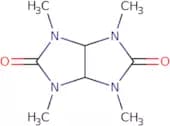
CAS:Please enquire for more information about 3-(tert-butyl)-1-(4-nitrophenyl)indeno[2,3-d]pyrazol-4-one including the price, delivery time and more detailed product information at the technical inquiry form on this pagePurity:Min. 95%Tetrahydro-1,3,4,6-tetramethylimidazo(4,5-d)imidazole-2,5(1H,3H)-dione
CAS:Tetrahydro-1,3,4,6-tetramethylimidazo(4,5-d)imidazole-2,5(1H,3H)-dione (DMTI) is a phosphotungstic acid analog that has been shown to have potent synergic activity with pharmacological agents used in the treatment of congestive heart failure. It increases ATP production in cells by inhibiting the enzyme pyruvate dehydrogenase kinase and stimulating protein kinase C. DMTI also has an effect on energy metabolism by increasing the concentration of adenosine monophosphate (AMP) and decreasing the concentration of adenosine triphosphate (ATP). DMTI is a chiral compound that contains two asymmetric carbon atoms. The molecule itself is not biologically active but must be metabolized to produce the active form. This compound has a high affinity for oxytocin receptors and can be used to induceFormula:C8H14N4O2Purity:Min. 95 Area-%Color and Shape:PowderMolecular weight:198.22 g/mol3,8-Dihydroxy-6H-benzo[c]chromen-6-one
CAS:3,8-Dihydroxy-6H-benzo[c]chromen-6-one (3,8 DHC) is a natural compound that has been shown to have antioxidant and anti-inflammatory properties. It increases the production of ATP (cellular energy) by activating the ATP binding cassette transporter and increasing autophagy. 3,8 DHC may also inhibit apoptosis (cell death), which has been observed in studies involving balloon injury and atherosclerotic lesions. This compound may also have potential therapeutic benefits for bowel disease, cancer, and neuronal death.
Formula:C13H8O4Purity:Min. 95%Color and Shape:White To Beige To Yellow To Brown SolidMolecular weight:228.2 g/molEthyl tridecyl ketone
CAS:Ethyl tridecyl ketone (ETK) is a fatty acid that is an oxidation product of the natural fatty acids found in plants. ETK has been shown to inhibit cell growth and physiological function, which may be due to its ability to react with plasma proteins, such as polysorbate. ETK is also an anti-inflammatory agent and has shown activity against infectious diseases. ETK inhibits the production of inflammatory cytokines by interfering with the synthesis of arachidonic acid, which is an important precursor for these molecules.
Formula:C16H32OPurity:Min. 95%Color and Shape:PowderMolecular weight:240.42 g/mol3-(tert-butyl)-2-phenylindeno[3,2-c]pyrazol-4-one
CAS:Please enquire for more information about 3-(tert-butyl)-2-phenylindeno[3,2-c]pyrazol-4-one including the price, delivery time and more detailed product information at the technical inquiry form on this pageFormula:C20H18N2OPurity:Min. 95%Color and Shape:PowderMolecular weight:302.37 g/mol1H-Pyrrolo[3,2-c]pyridin-4(5H)-one
CAS:The compound 1H-Pyrrolo[3,2-c]pyridin-4(5H)-one is an enantiomer that is used as a starting material for the synthesis of other drugs. The hydrochloride salt is used in the manufacture of pharmaceuticals. This drug has been shown to be a potent inhibitor of xanthine oxidase and may have potential use in the treatment of gout and hyperuricemia.Formula:C7H6N2OPurity:Min. 95%Molecular weight:134.14 g/mol3-(4-ethoxyphenyl)spiro[1,3-thiazolidine-2,3'-indoline]-4,7-dione
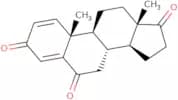
CAS:Please enquire for more information about 3-(4-ethoxyphenyl)spiro[1,3-thiazolidine-2,3'-indoline]-4,7-dione including the price, delivery time and more detailed product information at the technical inquiry form on this pagePurity:Min. 95%6-Oxo boldione
CAS:Controlled Product6-Oxo boldione is an aromatase inhibitor that inhibits the conversion of testosterone to estradiol and has been shown to be effective in inhibiting the growth of bacteria such as Typhimurium. 6-Oxo boldione has been shown to inhibit the growth of estrogen-sensitive breast cancer cells in vitro. It also has a dose-dependent effect on rat liver microsomes, with a greater inhibition at high doses. This drug may be metabolized by modification of its side chain or by biotransformation. 6-Oxo boldione is not active against other enzymes such as cytochrome P450 or glutathione S-transferases.Formula:C19H22O3Purity:Min. 95%Color and Shape:PowderMolecular weight:298.38 g/molSpiro[4.5]decan-6-one
CAS:Spiro[4.5]decan-6-one is a spirocyclic compound that belongs to the class of dienones. It is postulated to be synthesized from the condensation reaction of an imidazole and a cyclic ketone. This compound was originally isolated as a product in the crystallization process of zirconium dichloride, which was used in the immobilization of enzymes for biofuel production. Spiro[4.5]decan-6-one has been shown to be catalysed by trifluoride, which may be due to its natural products activity.
Formula:C10H16OPurity:Min. 95%Molecular weight:152.23 g/mol4-(2- fluorophenyl)-6,8-dihydro-1,3,8-trimethyl-Pyrazolo[3,4-e][1,4]diazepin-7(1H)-one mixt. with 2-(ethylamino)-2-(2-thienyl)cycloh exanone hydrochloride
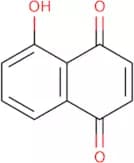
CAS:Controlled ProductTelazol is an anesthetic that belongs to the class of nonbenzodiazepine drugs. It is used as a short-term sedative and analgesic in preoperative, obstetrical, and diagnostic procedures. Telazol is a prodrug that is metabolized in vivo to its active form, 4-(2-fluorophenyl)-6,8-dihydro-1,3,8-trimethyl-Pyrazolo[3,4-e][1,4]diazepin-7(1H)-one (TFD). Telazol has been shown to have low toxicity when administered at low doses (0.5 mg/kg) to rats.Formula:C27H33ClFN5O2SPurity:Min. 95%Molecular weight:546.1 g/mol5-Hydroxy-1,4-naphthalenedione
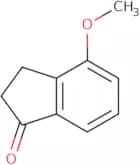
CAS:Blocks RNA polymerases I, II, and III; inhibits PPlasesFormula:C10H6O3Purity:Min. 98 Area-%Color and Shape:PowderMolecular weight:174.15 g/mol4-Methoxy-1-indanone
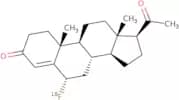
CAS:4-Methoxy-1-indanone is a quinoline derivative that is used as an intermediate for the synthesis of a number of bioactive molecules, such as gephyrotoxin (a potent neurotoxin) and oxime derivatives. 4-Methoxy-1-indanone has been shown to be activated by metal ions and oximes to form iminium cations. These cations are then converted into chloride or carbonic anions by dehydrogenase enzymes, which are important in the metabolism of carbohydrates in living organisms.Formula:C10H10O2Purity:Min. 95%Color and Shape:PowderMolecular weight:162.19 g/mol6-Fluoropregn-4-Ene-3,20-Dione
CAS:Controlled Product6-Fluoropregn-4-Ene-3,20-Dione is a hydrocarbon that is used in the production of an oil solution for oral administration. This product is well tolerated and has been shown to have good activity against Leptosphaeria species, which are members of the class of microorganisms. 6-Fluoropregn-4-Ene-3,20-Dione may be used as diluent with other substances. It can also be used as a corynebacterium culture media or as a dehydrated culture medium for corynebacteria. 6FPD can also be used to make emulsions containing microorganisms such as Cylindrocarpon species and Hydrolysing strains. It can function as a peracid or alkylene acylate oxidising agent.Formula:C21H29FO2Purity:Min. 95%Molecular weight:332.45 g/mol


![3-(tert-butyl)-1-(4-nitrophenyl)indeno[2,3-d]pyrazol-4-one](/_next/image/?url=https%3A%2Fstatic.cymitquimica.com%2Fproducts%2F3D%2Fthumb-webp%2FFB169695.webp&w=3840&q=75)
![3,8-Dihydroxy-6H-benzo[c]chromen-6-one](/_next/image/?url=https%3A%2Fstatic.cymitquimica.com%2Fproducts%2F3D%2Fthumb-webp%2FFD171109.webp&w=3840&q=75)

![3-(tert-butyl)-2-phenylindeno[3,2-c]pyrazol-4-one](/_next/image/?url=https%3A%2Fstatic.cymitquimica.com%2Fproducts%2F3D%2Fthumb-webp%2FFB169663.webp&w=3840&q=75)
![1H-Pyrrolo[3,2-c]pyridin-4(5H)-one](/_next/image/?url=https%3A%2Fstatic.cymitquimica.com%2Fproducts%2F3D%2Fthumb-webp%2FFP140758.webp&w=3840&q=75)
![3-(4-ethoxyphenyl)spiro[1,3-thiazolidine-2,3'-indoline]-4,7-dione](/_next/image/?url=https%3A%2Fstatic.cymitquimica.com%2Fproducts%2F3D%2Fthumb-webp%2FFE169782.webp&w=3840&q=75)
![Spiro[4.5]decan-6-one](/_next/image/?url=https%3A%2Fstatic.cymitquimica.com%2Fproducts%2F3D%2Fthumb-webp%2FFS122046.webp&w=3840&q=75)
![4-(2- fluorophenyl)-6,8-dihydro-1,3,8-trimethyl-Pyrazolo[3,4-e][1,4]diazepin-7(1H)-one mixt. with …](/_next/image/?url=https%3A%2Fstatic.cymitquimica.com%2Fproducts%2F3D%2Fthumb-webp%2FFF104101.webp&w=3840&q=75)