Ketones
Found 18870 products of "Ketones"
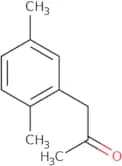
(2,5-Dimethylphenyl)acetone
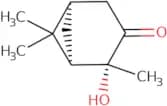
CAS:2,5-Dimethylphenyl)acetone is an analogue of amphetamine that has been shown to have similar binding and uptake properties in the brain. This drug was synthesized for use in positron emission tomography (PET) studies on the distribution of amphetamine analogues in the human brain. It is also used as a radioligand for studies on cerebral uptake of amphetamines. 2,5-Dimethylphenyl)acetone itself has no significant central nervous system activity. However, it can be used to determine whether other drugs are able to cross the blood-brain barrier and enter the brain. Radiofluorination with iodine-123, which emits positrons during decay, yields a compound that binds to amines such as dopamine and norepinephrine receptors in the brain. The presence of these amines can then be detected using PET imaging techniques.END>Formula:C11H14OPurity:Min. 96 Area-%Color and Shape:Clear LiquidMolecular weight:162.23 g/mol(+)-(1R,2R,5R)-2-Hydroxy-3-pinanone
CAS:(+)-(1R,2R,5R)-2-Hydroxy-3-pinanone is an organic compound that can be prepared by a kinetic resolution of the racemic mixture of (+)-(1S,2S,5S)-2-hydroxy-3-pinanone. This reaction is performed in two steps: first the racemic mixture is converted to the corresponding chiral acetylacetonate by reaction with acetic anhydride followed by hydrolysis with sodium hydroxide. The pentane reacts with the ring opening of the acetylacetonate to give (+)-(1R,2R,5R)-2-hydroxypinanone and its enantiomer. The nature of this preparative method means that it is not possible to recover (+)-(1R,2R,5R)-2-hydroxypinanone from the reaction products.Formula:C10H16O2Purity:Min. 95%Color and Shape:PowderMolecular weight:168.23 g/mol2-Bromo-2-(2-fluorophenyl)-1-cyclopropylethanone
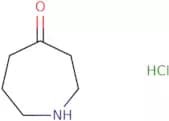
CAS:2-Bromo-2-(2-fluorophenyl)-1-cyclopropylethanone is a synthetic peroxide that is used as an additive in the production of polyvinylpyrrolidone. It has been shown to have efficient methods for the reduction of amines and chlorides to the corresponding hydroxylamine and hydrochloride, respectively. The tribromide may be generated by treatment with bromine and a base, such as potassium hydroxide or sodium hydroxide, in an inert solvent such as benzene or dichloromethane. 2-Bromo-2-(2-fluorophenyl)-1-cyclopropylethanone can also be synthesized from phenacyl chloride and acetylene.Formula:C11H10BrFOPurity:Min. 95 Area-%Color and Shape:Clear LiquidMolecular weight:257.1 g/molAzepan-4-one hydrochloride
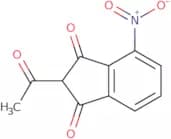
CAS:Azepan-4-one hydrochloride is a versatile building block that can be used as a precursor to many other compounds. It is an important reagent in organic synthesis and is also used as a reactant in the preparation of complex compounds. Azepan-4-one hydrochloride has been shown to be useful for the synthesis of valuable research chemicals, such as thiophene and benzothiophene derivatives. It is also an intermediate in the production of high quality pharmaceuticals, such as anti-cancer drugs and antibiotics. Azepan-4-one hydrochloride is a useful scaffold for the design of new compounds with desired properties.BR> Azepan-4-one hydrochloride can be used as an intermediate for pharmaceuticals, speciality chemicals, and research chemicals.BR> Azepan-4-one hydrochloride can be converted into other products by using it as a building block or reagent in organic synthesis.BRFormula:C6H11NO•HClPurity:Min. 95%Color and Shape:PowderMolecular weight:149.62 g/mol2-Acetyl-4-nitroindane-1,3-dione
CAS:2-Acetyl-4-nitroindane-1,3-dione is a synthetic compound that is assembled in two steps from commercially available starting materials. The first step involves the assembly of the nitro group and acetyl group on the indane ring. The second step involves the oxidative cyclization of the nitro group to form the final product. The compound was monitored by UV absorption and HPLC analysis with a spermidine standard. It has been shown to selectively inhibit trypanothione reductase, an enzyme involved in trypanosome metabolism. 2-Acetyl-4-nitroindane-1,3-dione is also an analogue of disulphide, which has been shown to be effective against trypanosomes. 2-Acetyl-4-nitroindane-1,3-dione is synthesized on solid phase using strategies developed for peptides and amines. This compound has alsoFormula:C11H7NO5Purity:Min. 95%Color and Shape:PowderMolecular weight:233.18 g/mol(2,5-Dimethoxyphenyl)acetone
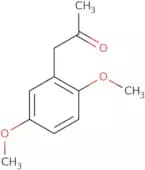
CAS:2,5-Dimethoxyphenyl)acetone is an impure chemical compound that has been used in the synthesis of 4-methoxyamphetamine. 2,5-Dimethoxyphenyl)acetone is a colorless liquid with a sweet odor. It can be purified by passing through a column of activated charcoal and washing with water or alcohol. The purity can be determined by spectrometry or magnetic resonance spectroscopy. The compound's homologues are also available for purchase on our website.
Formula:C11H14O3Purity:Min. 95%Color and Shape:Clear LiquidMolecular weight:194.23 g/mol5-Fluorodihydropyrimidine-2,4-dione
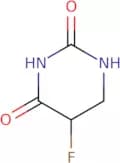
CAS:5-Fluorodihydropyrimidine-2,4-dione is a drug that inhibits the activity of certain enzymes. It has been shown to inhibit the activity of dehydrogenase in human serum and liver cells. This drug has also been shown to be successful in treating autoimmune diseases. 5-Fluorodihydropyrimidine-2,4-dione is an oral prodrug which is converted into its active form by esterases in the gastrointestinal tract. The enzyme inhibitors are used to increase the bioavailability of the drug. This conversion process can be monitored using urine samples or blood sampling.
Formula:C4H5FN2O2Purity:Min. 95%Color and Shape:PowderMolecular weight:132.09 g/mol5-[3,4-(Methylenedioxy)phenyl]-cyclohexane-1,3-dione
CAS:5-[3,4-(Methylenedioxy)phenyl]-cyclohexane-1,3-dione is a versatile building block for the synthesis of complex compounds. It is a reagent that is used in the preparation of research chemicals and speciality chemicals. The compound has been shown to be useful as a building block or scaffold for various reactions. This chemical also has many useful applications, such as being an intermediate in the synthesis of pharmaceuticals and agrochemicals. 5-[3,4-(Methylenedioxy)phenyl]-cyclohexane-1,3-dione is available commercially with CAS No. 55579-76-5 and can be used in high quality experiments when it is required as a reaction component.Formula:C13H12O4Purity:Min. 95%Molecular weight:232.23 g/mol(5-Chloro-4-hydroxy-3-methoxyphenyl)acetone
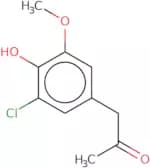
CAS:(5-Chloro-4-hydroxy-3-methoxyphenyl)acetone is a high quality reagent that is useful as an intermediate in the synthesis of complex compounds. It can be used to synthesize a wide range of fine chemicals, such as pharmaceuticals, pesticides, and fragrances. (5-Chloro-4-hydroxy-3-methoxyphenyl)acetone is also a versatile building block for the synthesis of speciality chemicals. This compound has been shown to react with other compounds to form reaction components for research purposes.
Formula:C10H11ClO3Purity:Min. 95%Molecular weight:214.65 g/mol[4-(2-Aminoethoxy)phenyl](phenyl)methanone HCl
CAS:[4-(2-Aminoethoxy)phenyl](phenyl)methanone HCl is a fine chemical that belongs to the group of versatile building blocks. It can be used as a reagent, speciality chemical, useful building block, high quality research chemical, or useful intermediate. The CAS registry number is 1185504-45-3.
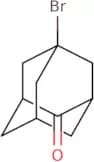
Formula:C15H15NO2·HClPurity:Min. 95%Color and Shape:White PowderMolecular weight:277.75 g/mol5-Bromo-2-adamantanone
CAS:5-Bromo-2-adamantanone is a potent and selective inhibitor of human alpha-amylase. It binds to the active site in the enzyme, hindering its catalytic activity. 5-Bromo-2-adamantanone has been shown to inhibit the production of glucose by inhibiting alpha amylase, an enzyme that breaks down starch into maltose. 5-Bromo-2-adamantanone has also been shown to be a potential drug for diabetes therapy.
Formula:C10H13BrOPurity:Min. 95%Color and Shape:PowderMolecular weight:229.11 g/molIndole-3-acetone
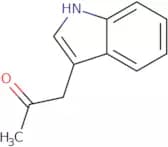
CAS:Controlled ProductIndole-3-acetone is a nitrogen nucleophile that has been used in the synthesis of amino acids. Indole-3-acetone has also been shown to inhibit the oxidation of primary amines and chloride by oxidases, which play a role in the physiology of plants. It also inhibits hydroxylase and pyrylium, which are enzymes involved in plant metabolism. Indole-3-acetone is found in dietary sources such as cabbage, cauliflower, celery, and spinach.Formula:C11H11NOColor and Shape:PowderMolecular weight:173.21 g/mol1-Indanone
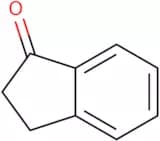
CAS:1-Indanone is a low potency, irreversible inhibitor of NADH-dependent IDO1 that may be useful as an anti-cancer agent. 1-Indanone inhibits the enzyme IDO1 by steric interactions and pyrazinoic acid. This inhibitor has been shown to have cox-2 inhibitory activity in an experimental model system. In addition, 1-indanone also inhibits mitochondrial membrane potential and can be used as a natriuretic agent. The protein target of 1-indanone is unknown at this time, but it has been shown to inhibit sugar transport in animal models.Formula:C9H8OColor and Shape:PowderMolecular weight:132.16 g/mol4-Chloro-5-morpholin-4-ylpyridazin-3(2H)-one
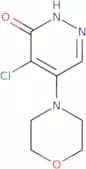
CAS:Please enquire for more information about 4-Chloro-5-morpholin-4-ylpyridazin-3(2H)-one including the price, delivery time and more detailed product information at the technical inquiry form on this pageFormula:C8H10ClN3O2Purity:90%MinColor and Shape:PowderMolecular weight:215.64 g/molNaloxone hydrochloride dihydrate
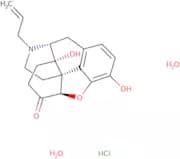
CAS:Controlled ProductNaloxone hydrochloride dihydrate is a drug that blocks the effects of opioids. It is administered by injection and has a short half-life. Naloxone hydrochloride dihydrate binds to opioid receptors in the central nervous system, which prevents binding by other opioids. This results in an increased metabolic rate, which can be used as a marker for effectiveness of treatment. Naloxone hydrochloride dihydrate has been shown to have an inhibitory effect on monoamine neurotransmitters, including dopamine, serotonin and norepinephrine. The use of this drug should be limited to outpatients because it produces less physical dependence than other opioids. Naloxone hydrochloride dihydrate can also be used as a sample preparation agent for urine samples or as an effective dose for pharmaceutical preparations.END>Formula:C19H26NO6ClPurity:98 To 100%Color and Shape:White Off-White PowderMolecular weight:399.87 g/mol2-(2-aza-1-(4-methoxyphenyl)-2-(amino)vinyl)indane-1,3-dione
CAS:Please enquire for more information about 2-(2-aza-1-(4-methoxyphenyl)-2-(amino)vinyl)indane-1,3-dione including the price, delivery time and more detailed product information at the technical inquiry form on this pageFormula:C17H14N2O3Purity:Min. 95%Color and Shape:PowderMolecular weight:294.3 g/mol4-Methyl-2(5H)-furanone
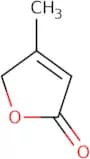
CAS:4-Methyl-2(5H)-furanone is an isomeric compound that can be isolated from various plant sources including isoprene, chalcones, and other plant extracts. It has been shown to inhibit the formation of dental plaque and the growth of oral bacteria in a functional group study. 4-Methyl-2(5H)-furanone is also known as a chalcone and has been shown to have antibacterial properties. This chemical reaction can be used as an alternative to chlorhexidine for the treatment of dental plaque.Formula:C5H6O2Purity:Min. 95%Color and Shape:Clear LiquidMolecular weight:98.1 g/mol2,6-Adamantanedione
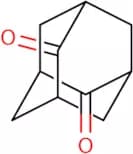
CAS:2,6-Adamantanedione is a molecule that is used in the synthesis of other compounds. It has two functional groups, one of which is a chromatographically detectable group. 2,6-Adamantanedione has been shown to react with silver ions and form potential impurities in the synthesized compound. The molecule has also been shown to react with organic materials such as perfluorinated compounds.
2,6-Adamantanedione is an interpretable drug substance that can be used for palladium-catalyzed cross-coupling reactions involving multigram quantities. This molecule has x-ray crystal structures that can be analyzed by nmr spectroscopy and steric interactions that can be examined using perfluorinated compounds.Formula:C10H12O2Color and Shape:PowderMolecular weight:164.2 g/mol2-Bromo-1,3-diphenylpropane-1,3-dione
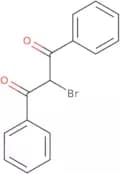
CAS:2-Bromo-1,3-diphenylpropane-1,3-dione is a ligand that binds to metal ions. It has been used as an efficient method for the synthesis of phenyl groups in organic chemistry. 2-Bromo-1,3-diphenylpropane-1,3-dione was found to have a catalytic effect on reactions involving halides and phosphine. A study on the reaction mechanism revealed that 2-bromo-1,3-diphenylpropane-1,3-dione acts as an electron donor to phosphites and phosphines. The xray diffraction study showed that the ligand binds to metal ions through its phenyl groups.Formula:C15H11BrO2Purity:Min. 95%Molecular weight:303.15 g/mol4-Chloro-1-(3-Fluorophenyl)-1-Butanone
CAS:4-Chloro-1-(3-fluorophenyl)-1-butanone is a reagent that is used in the synthesis of complex compounds. It has been used as an intermediate in the synthesis of a variety of useful compounds and as a building block for more complex molecules. This chemical is one of the most versatile building blocks available, and can be used for reactions involving deprotection, coupling, and polymerization. The CAS number for this compound is 3110-52-9.Formula:C10H10ClFOPurity:Min. 95%Color and Shape:Clear LiquidMolecular weight:200.64 g/mol


![5-[3,4-(Methylenedioxy)phenyl]-cyclohexane-1,3-dione](/_next/image/?url=https%3A%2Fstatic.cymitquimica.com%2Fproducts%2F3D%2Fthumb-webp%2FFM66989.webp&w=3840&q=75)
methanone HCl](/_next/image/?url=https%3A%2Fstatic.cymitquimica.com%2Fproducts%2F3D%2Fthumb-webp%2FFA133569.webp&w=3840&q=75)