Ketones
Ketones are organic compounds characterized by the presence of a carbonyl group (C=O) bonded to two carbon atoms. These compounds are highly versatile and play a crucial role in various chemical reactions, including oxidation, reduction, and condensation. Ketones are essential intermediates in the synthesis of pharmaceuticals, fragrances, and polymers. At CymitQuimica, we provide a wide range of high-quality ketones to support your research and industrial applications.
Found 18811 products of "Ketones"
Sort by
Purity (%)
0
100
|
0
|
50
|
90
|
95
|
100
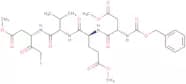
Z-Asp(OMe)-Glu(OMe)-Val-DL-Asp(OMe)-fluoromethylketone
CAS:<p>Z-Asp(OMe)-Glu(OMe)-Val-DL-Asp(OMe)-fluoromethylketone is a small molecule that has been shown to induce apoptosis in cultured cells. It is a caspase-3 inhibitor, which prevents the activation of the caspase cascade and protects cells from oxidative injury. Low doses of Z-Asp(OMe)-Glu(OMe)-Val-DL-Asp(OMe)-fluoromethylketone have been shown to induce apoptosis in cultured cells, with no significant cytotoxicity at high doses. The mechanism of action for this agent is not yet known, but it may promote mitochondrial membrane potential loss and neuronal death by binding to DNA, or induce cell death through a caspase-independent pathway.</p>Formula:C30H41FN4O12Purity:Min. 95%Molecular weight:668.66 g/molZ-Asp(OtBu)-bromomethylketone
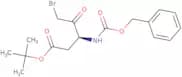
CAS:<p>Please enquire for more information about Z-Asp(OtBu)-bromomethylketone including the price, delivery time and more detailed product information at the technical inquiry form on this page</p>Formula:C17H22BrNO5Purity:Min. 95%Molecular weight:400.26 g/molZ-Phe-Lys-2,4,6-trimethylbenzoyloxy-methylketone trifluoroacetate salt
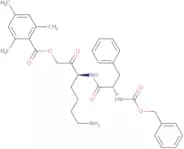
CAS:Z-Phe-Lys-2,4,6-trimethylbenzoyloxy-methylketone trifluoroacetate salt is a proteolytic enzyme that has been shown to have bone resorption and tissue destructive properties. It is active against porphyromonas and bactericidal against fibrinogen. Z-Phe-Lys-2,4,6-trimethylbenzoyloxy-methylketone trifluoroacetate salt also inhibits the formation of osteoclasts by inhibiting the uptake and protease activity of extracellular matrix proteins such as fibrinogen. This drug is currently being researched for possible use in the treatment of Alzheimer's Disease.Formula:C34H41N3O6Purity:Min. 95%Molecular weight:587.71 g/mol7-Hydroxy-3,4-dihydro-1H-naphthalen-2-one
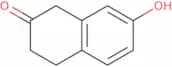
CAS:<p>7-Hydroxy-3,4-dihydro-1H-naphthalen-2-one is an organic solvent that can be used as a pharmaceutical intermediate. It is a white crystalline solid that has been shown to bind to β-cyclodextrin, chloride, and aluminium. 7-Hydroxy-3,4-dihydro-1H-naphthalen-2-one has been shown to form stable complexes with these ions by binding to the oxygens on their surfaces. The binding constants for this compound have been determined using dichromism and fluorescence experiments. This organic solvent has also been found to have enantioselective properties.</p>Formula:C10H10O2Purity:Min. 95%Molecular weight:162.19 g/molMeOSuc-Ala-Ala-Pro-Val-chloromethylketone
CAS:<p>MeOSuc-Ala-Ala-Pro-Val-chloromethylketone is a serine protease inhibitor that has been shown to be effective against influenza virus and HIV. It was found to be active against a number of serine proteases, such as trypsin, chymotrypsin, and elastase. MeOSuc-Ala-Ala-Pro-Val-chloromethylketone also has chemotactic activity in thp1 cells and lung fibroblasts. It is activated by the addition of water and has been shown to inhibit the growth of soybean trypsin. However, it does not have any effect on human trypsin.</p>Formula:C22H35ClN4O7Purity:Min. 95%Molecular weight:502.99 g/molBoc-Asp(OBzl)-chloromethylketone
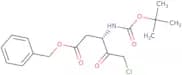
CAS:<p>Boc-Asp(OBzl)-chloromethylketone is a synthetic molecule that is immunoreactive with gp120, the virus protein. It has been shown to inhibit the proliferation of human neuroblastoma cells and induce cell death. This compound also has an effect on cytokine production in vitro. This drug is currently being studied as a potential treatment for HIV infection. Boc-Asp(OBzl)-chloromethylketone binds to the receptor type and viral type, which are essential for the virus life cycle and induces antibody production in vivo.</p>Formula:C17H22ClNO5Purity:Min. 95%Molecular weight:355.81 g/molPhenyl-N-propyl ketone
CAS:<p>Phenyl-N-propyl ketone is a butyrophenone that has been shown to inhibit the 5-HT2 receptors in vitro. It has been used to study the mechanism of action of dopamine, and it was found that this drug blocks the binding of dopamine at the receptor site by competing with it for access. This drug also has an effect on locomotor activity in mice. The hydroxy derivative of phenyl-N-propyl ketone has been shown to have a sedative effect in humans. Phenyl-N-propyl ketone is a side effect profile with symptoms including headache, dizziness, nausea, and vomiting.</p>Formula:C10H12OPurity:Min. 95%Color and Shape:Clear LiquidMolecular weight:148.2 g/mol(2S)-2-Amino-4-methyl-1-[(2R)-2-methyloxiranyl]-1-pentanone trifluoroacetate
CAS:Controlled Product<p>Please enquire for more information about (2S)-2-Amino-4-methyl-1-[(2R)-2-methyloxiranyl]-1-pentanone trifluoroacetate including the price, delivery time and more detailed product information at the technical inquiry form on this page</p>Formula:C9H17NO2•C2HF3O2Purity:Min. 95%Color and Shape:PowderMolecular weight:285.26 g/molZ-Ile-Glu(OMe)-Thr-DL-Asp(OMe)-fluoromethylketone
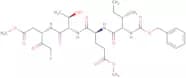
CAS:<p>Z-Ile-Glu(OMe)-Thr-DL-Asp(OMe)-fluoromethylketone is an apoptosis inducer that belongs to the category of small molecules. It has been shown to induce apoptosis in cells by binding to DNA and inhibiting transcription, leading to DNA fragmentation and the activation of caspase-8. Z-Ile-Glu(OMe)-Thr-DL-Asp(OMe)-fluoromethylketone has also been shown to have a synergistic effect on cells when combined with other potent inducers of apoptosis. This drug binds to toll receptors (TLR) and IL2 receptors, which are important for cell signaling pathways.</p>Formula:C30H43FN4O11Purity:Min. 95%Molecular weight:654.68 g/molZ-Tyr-Val-Ala-DL-Asp-fluoromethylketone
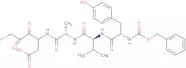
CAS:<p>Please enquire for more information about Z-Tyr-Val-Ala-DL-Asp-fluoromethylketone including the price, delivery time and more detailed product information at the technical inquiry form on this page</p>Formula:C30H37FN4O9Purity:Min. 95%Molecular weight:616.63 g/mol1-(5-Chloro-2-hydoxyphenyl)ethanone
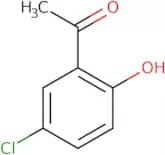
CAS:1-(5-Chloro-2-hydoxyphenyl)ethanone is a potent inhibitor of the antiapoptotic protein survivin. It binds to the carbonyl group of the molecule, which is located on the intramolecular hydrogen bond surface. This leads to conformational changes in the molecule and ternary complex formation, which eventually leads to apoptosis protein aggregation and activation. 1-(5-Chloro-2-hydoxyphenyl)ethanone has been shown to inhibit prostate cancer cells and has also been studied in clinical trials for its anticancer properties.Formula:C8H7ClO2Purity:Min. 95%Color and Shape:White PowderMolecular weight:170.59 g/mol2-Amino-5,6-dihydro-4H-benzothiazol-7-one
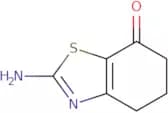
CAS:<p>2-Amino-5,6-dihydro-4H-benzothiazol-7-one is a thiourea that is used as a reactant in the synthesis of brominated compounds. It reacts with ethanol to form 2,5,6-triaminopyrimidine and hydrogen bromide. This reaction occurs in the presence of acid such as hydrochloric acid or acetic acid. The reflux reaction is commonly conducted at elevated temperatures and pressures.</p>Purity:Min. 95%H-D-Pro-Phe-Arg-chloromethylketone trifluoroacetate salt
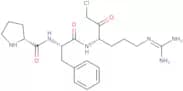
CAS:<p>H-D-Pro-Phe-Arg-chloromethylketone trifluoroacetate salt is a polyvalent antivenom that is used in the treatment of snakebites and insect stings. It has been shown to be effective in the treatment of life-threatening envenomations, including bites from cobras and other rattlesnakes. This drug is not active against nonactivated venom, such as those from bees or spiders. H-D-Pro-Phe-Arg-chloromethylketone trifluoroacetate salt binds to the cytolysin, which prevents its activity by inactivating it. The drug also has a vasoconstrictive effect, which limits blood flow to tissues and may reduce tissue damage caused by venom toxins.</p>Formula:C21H31ClN6O3Purity:Min. 95%Molecular weight:450.96 g/mol3-Methylcyclohex-2-en-1-one
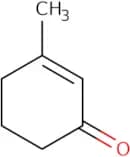
CAS:<p>3-Methylcyclohex-2-en-1-one is a chemical compound that is used in the synthesis of pharmaceuticals, pesticides, and other organic compounds. It has been shown to be effective against Dendroctonus species and other pests. 3-Methylcyclohex-2-en-1-one is synthesized from cyclohexanone by hydrogenation of the double bond at the 3 position. The reaction can be catalyzed by palladium complexes with acid complexing ligands, such as phosphines or amines. The product is then purified by distillation, crystallization, or recrystallization.</p>Formula:C7H10OPurity:Min. 95%Molecular weight:110.15 g/molZ-Asp-Glu-Val-Asp-chloromethylketone
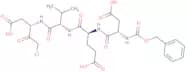
CAS:<p>Z-Asp-Glu-Val-Asp-chloromethylketone is a reactive compound that inhibits the activity of proteases and induces neuronal death. Z-Asp-Glu-Val-Asp-chloromethylketone has been shown to induce necrotic cell death in malignant brain cells and has neurotrophic properties. It also causes mitochondrial membrane depolarization, which leads to mitochondrial cytochrome c release and subsequent apoptosis. The reaction mechanism is still unclear but it may involve hydrogen bonding between the ketone group and the amide nitrogen atom of the aspartate residue.</p>Formula:C27H35ClN4O12Purity:Min. 95%Molecular weight:643.04 g/mol5-Fluoro-2-methoxyphenylacetone
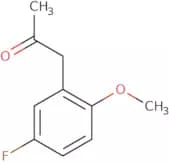
CAS:<p>5-Fluoro-2-methoxyphenylacetone is a chemical with a wide array of applications in research and industry. It is a versatile building block, useful intermediate, and reagent for organic synthesis. This compound has been used as a starting material in the synthesis of other compounds. CAS No. 1017082-10-8</p>Formula:C10H11FO2Color and Shape:PowderMolecular weight:182.19 g/mol1-(2,4-Dihydroxy-5-methoxyphenyl)-2-(4-hydroxyphenyl)-3,3-dimethoxy-1-propanone
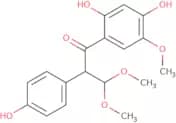
CAS:<p>Please enquire for more information about 1-(2,4-Dihydroxy-5-methoxyphenyl)-2-(4-hydroxyphenyl)-3,3-dimethoxy-1-propanone including the price, delivery time and more detailed product information at the technical inquiry form on this page</p>Formula:C18H20O7Purity:Min. 95%Molecular weight:348.35 g/mol4-{[4-(4-Methyloxyphenyl)-piperazin-1-yl]-phenyl}-2,4-dihydro-[1,2,4]-triazol-3-one
CAS:<p>Please enquire for more information about 4-{[4-(4-Methyloxyphenyl)-piperazin-1-yl]-phenyl}-2,4-dihydro-[1,2,4]-triazol-3-one including the price, delivery time and more detailed product information at the technical inquiry form on this page</p>Formula:C19H21N5O2Purity:Min. 95%Molecular weight:351.4 g/molZ-Val-Asp(OMe)-Val-Ala-DL-Asp(OMe)-fluoromethylketone
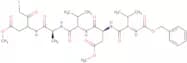
<p>Please enquire for more information about Z-Val-Asp(OMe)-Val-Ala-DL-Asp(OMe)-fluoromethylketone including the price, delivery time and more detailed product information at the technical inquiry form on this page</p>Formula:C32H46FN5O11Purity:Min. 95%Molecular weight:695.73 g/molH-Ala-Ala-Pro-Val-chloromethylketone
CAS:<p>H-Ala-Ala-Pro-Val-chloromethylketone is a hydrogen peroxide prodrug that is activated by the enzyme chloromethyl ketone. This drug has been shown to be active against schistosoma and pancreatic cancer cells, as well as in activating peroxide. HAPV may also have an effect on immunity and leukocytes, which could be due to its ability to sensitize these cells to damage caused by other agents, or through the hydrolytic enzymes it generates.</p>Formula:C17H29ClN4O4Purity:Min. 95%Molecular weight:388.89 g/mol



![(2S)-2-Amino-4-methyl-1-[(2R)-2-methyloxiranyl]-1-pentanone trifluoroacetate](/_next/image/?url=https%3A%2Fstatic.cymitquimica.com%2Fproducts%2F3D%2Fthumb-webp%2FFA100028.webp&w=3840&q=75)
![4-{[4-(4-Methyloxyphenyl)-piperazin-1-yl]-phenyl}-2,4-dihydro-[1,2,4]-triazol-3-one](/_next/image/?url=https%3A%2Fstatic.cymitquimica.com%2Fproducts%2F3D%2Fthumb-webp%2FFM25920.webp&w=3840&q=75)