Amides
Amides are a wide range of chemical compounds that contain at least one heterocyclic ring, which has atoms of at least two different elements in the ring structure, and at least one amide group (-CONH2). These compounds are crucial in the synthesis of pharmaceuticals, polymers, and agrochemicals. Amides exhibit unique properties and reactivity, making them valuable intermediates in organic synthesis. At CymitQuimica, we offer a comprehensive selection of high-quality amides to support your research and industrial needs.
Found 16393 products of "Amides"
Sort by
Purity (%)
0
100
|
0
|
50
|
90
|
95
|
100
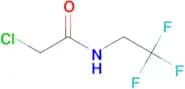
2-Chloro-N-(2,2,2-trifluoroethyl)acetamide
CAS:Formula:C4H5ClF3NOPurity:98%Color and Shape:SolidMolecular weight:175.54TERT-BUTYL 5-OXO-2,6-DIAZASPIRO[3.4]OCTANE-2-CARBOXYLATE
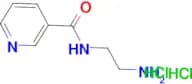
CAS:Formula:C11H18N2O3Purity:97%Color and Shape:SolidMolecular weight:226.276N-(2-aminoethyl)nicotinamide dihydrochloride
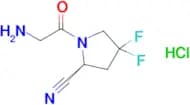
CAS:Formula:C8H13Cl2N3OPurity:98%Molecular weight:238.11(S)-1-(2-Aminoacetyl)-4,4-difluoropyrrolidine-2-carbonitrile hydrochloride
CAS:Purity:98%Molecular weight:225.6199951(4-Ethynylphenyl)(morpholino)methanone
CAS:Formula:C13H13NO2Purity:98%Color and Shape:SolidMolecular weight:215.2523-[(2,2-dimethylpropanoyl)amino]-2-methylbenzoic acid
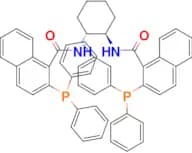
CAS:Formula:C13H17NO3Purity:98%Molecular weight:235.283N,N’-((1R,2R)-Cyclohexane-1,2-diyl)bis(2-(diphenylphosphino)-1-naphthamide)
CAS:Purity:94%Color and Shape:SolidMolecular weight:790.8839722Ref: 10-F661363
1g339.00€5g942.00€10g1,595.00€2.5g564.00€50mg89.00€100mg98.00€250mg156.00€500mg256.00€2-((3-Fluoro-4-(methylcarbamoyl)phenyl)amino)-2-methylpropanoic acid
CAS:Formula:C12H15FN2O3Purity:98%Molecular weight:254.2613-methyl-1-(4-methylbenzyl)piperazin-2-one
CAS:Formula:C13H18N2OPurity:95%Color and Shape:SolidMolecular weight:218.3tert-Butyl (S)-2-(4-(methoxy(methyl)carbamoyl)thiazol-2-yl)pyrrolidine-1-carboxylate
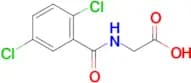
CAS:Purity:97%Molecular weight:341.4299927N-(2,5-dichlorobenzoyl)glycine
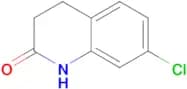
CAS:Formula:C9H7Cl2NO3Purity:97%Color and Shape:SolidMolecular weight:248.067-Chloro-3,4-dihydroquinolin-2(1H)-one
CAS:Formula:C9H8ClNOPurity:97%Color and Shape:White powderMolecular weight:181.621-(4-Methoxybenzyl)piperidine-2,4-dione
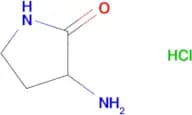
CAS:Formula:C13H15NO3Purity:98%Color and Shape:SolidMolecular weight:233.2673-AMINOPYRROLIDIN-2-ONE HYDROCHLORIDE
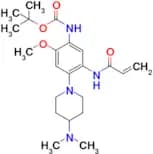
CAS:Formula:C4H9ClN2OPurity:95%Color and Shape:SolidMolecular weight:136.58tert-Butyl N-(4-(4-(dimethylamino)piperidine-1-yl)-2-methoxy-5-(prop-2-enamido)phenyl)carbamate
CAS:Purity:98%Molecular weight:418.5379944tert-Butyl 8-oxo-2,7-diazaspiro[4.4]nonane-2-carboxylate
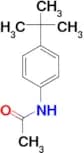
CAS:Formula:C12H20N2O3Purity:95%Color and Shape:SolidMolecular weight:240.3034′-(tert-Butyl)acetanilide
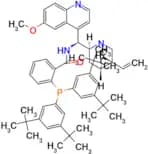
CAS:Formula:C12H17NOPurity:98%Color and Shape:SolidMolecular weight:191.2742-(Bis(3,5-di-tert-butylphenyl)phosphino)-N-((S)-(6-methoxyquinolin-4-yl)((1S,2S,4S,5R)-5-vinylquinuclidin-2-yl)methyl)benzamide
CAS:Purity:98%Molecular weight:836.158tert-Butyl 5-oxo-1-oxa-4,9-diazaspiro[5.5]undecane-9-carboxylate
CAS:Purity:97%Molecular weight:270.329017-Bromo-4,5-dihydro-1H-benzo[b][1,4]diazepin-2(3H)-one
CAS:Formula:C9H9BrN2OPurity:97%Molecular weight:241.0886-Bromo-1H-pyrido[2,3-b][1,4]oxazin-2(3H)-one
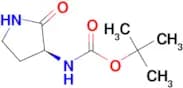
CAS:Formula:C7H5BrN2O2Purity:96%Color and Shape:SolidMolecular weight:229.033(S)-tert-Butyl (2-oxopyrrolidin-3-yl)carbamate
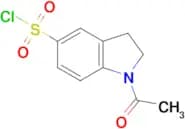
CAS:Formula:C9H16N2O3Purity:95%Color and Shape:SolidMolecular weight:200.2381-Acetyl-2,3-dihydro-1H-indole-5-sulfonyl chloride
CAS:Formula:C10H10ClNO3SPurity:95%Color and Shape:SolidMolecular weight:259.7(S)-N-(2,6-Dimethylphenyl)piperidine-2-carboxamide
CAS:Formula:C14H20N2OPurity:98%Color and Shape:SolidMolecular weight:232.3272,7-Diazaspiro[4.5]decan-3-one
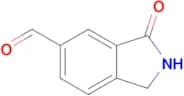
CAS:Formula:C8H14N2OPurity:97%Color and Shape:SolidMolecular weight:154.2133-Oxoisoindoline-5-carbaldehyde
CAS:Formula:C9H5NO2Purity:98%Color and Shape:LiquidMolecular weight:159.1442-Azacyclotridecanone
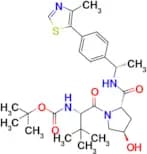
CAS:Formula:C12H23NOPurity:98%Color and Shape:Liquid, SolidMolecular weight:197.322tert-Butyl ((S)-1-((2S,4R)-4-hydroxy-2-(((S)-1-(4-(4-methylthiazol-5-yl)phenyl)ethyl)carbamoyl)pyrrolidin-1-yl)-3,3-dimethyl-1-oxobutan-2-yl)carbamate
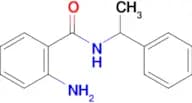
CAS:Purity:95%Color and Shape:SolidMolecular weight:544.7100222-Amino-N-(1-phenylethyl)benzamide
CAS:Formula:C15H16N2OPurity:95%Color and Shape:SolidMolecular weight:240.3066-BROMO-2-METHYL-2H-BENZO[B][1,4]OXAZIN-3(4H)-ONE
CAS:Formula:C9H8BrNO2Purity:95%Molecular weight:242.0722-CHLORO-5-[(2,2-DIMETHYLPROPANOYLAMINO)-METHYL]-BENZOIC ACID
CAS:Formula:C13H16ClNO3Purity:97%Molecular weight:269.735,5-Dimethyl-2-thioxoimidazolidin-4-one
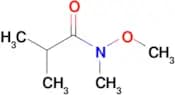
CAS:Purity:97%Color and Shape:SolidMolecular weight:144.1900024N-Methoxy-N-methylisobutyramide
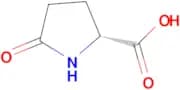
CAS:Formula:C6H13NO2Purity:95%Color and Shape:LiquidMolecular weight:131.175(R)-(+)-2-Pyrrolidone-5-carboxylic acid
CAS:Formula:C5H7NO3Purity:98%Color and Shape:CrystallineMolecular weight:129.1152-METHYLSPIRO[ISOINDOLINE-3,4′-PIPERIDINE]-1-ONE HCL
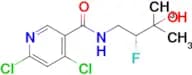
CAS:Formula:C13H17ClN2OPurity:98%Molecular weight:252.74(R)-4,6-Dichloro-N-(2-fluoro-3-hydroxy-3-methylbutyl)nicotinamide
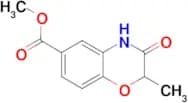
CAS:Purity:98%Molecular weight:295.14METHYL 2-METHYL-3-OXO-3,4-DIHYDRO-2H-1,4-BENZOXAZINE-6-CARBOXYLATE
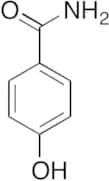
CAS:Purity:98%Molecular weight:221.21200564-Hydroxybenzamide
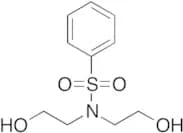
CAS:Controlled Product<p>Applications 4-Hydroxybenzamide is a secondary metabolite from marine sponge Phakellia fusca.<br>References Deng, Z., et. al.: Zhongyaocai, 36, 919 (2013)<br></p>Formula:C7H7NO2Color and Shape:NeatMolecular weight:137.14N,N-Bis(2-hydroxyethyl)benzenesulfonamide
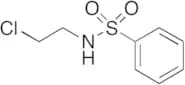
CAS:Controlled Product<p>Applications N,N-Bis(2-hydroxyethyl)benzenesulfonamide is used in the synthesis of N,N-Bis(2-chloroethyl)benzenesulfonamide (B418910), which is a novel intermediate in the synthesis of Cetirizine (C281100).<br></p>Formula:C10H15NO4SColor and Shape:NeatMolecular weight:245.3N-(2-Chloroethyl)benzenesulfonamide
CAS:Controlled Product<p>Applications N-(2-Chloroethyl)benzenesulfonamide is an intermediate for the synthesis of Bensulide (B166000), which is an organophosphate acetylcholinesterase inhibitor used as an herbicide (1) in the protection of crops through pesticides (2). Drinking water contaminant candidate list 3 (CCL 3) compound as per United States Environmental Protection Agency (EPA), environmental, and food contaminants.<br></p>Formula:C8H10ClNO2SColor and Shape:NeatMolecular weight:219.69rac-trans-[3-Hydroxycyclohexyl]benzamide
CAS:Controlled Product<p>Applications rac-trans-[3-Hydroxycyclohexyl]benzamide (cas# 177366-90-4) is a compound useful in organic synthesis.<br></p>Formula:C13H17NO2Color and Shape:NeatMolecular weight:219.28N-(3-Acetylphenyl)-N-ethylacetamide
CAS:Controlled Product<p>Applications N-(3-Acetylphenyl)-N-ethylacetamide is a reactant used in the preparation of 5-Oxo-Zaleplon (O870470), a metabolite of Zaleplon (Z145000).<br></p>Formula:C12H15NO2Color and Shape:NeatMolecular weight:205.25N-(2,6-Dimethylphenyl)-2-oxo-acetamide
CAS:Controlled ProductFormula:C10H11NO2Color and Shape:NeatMolecular weight:177.2N-Trimethylsilylacetamide
CAS:Controlled Product<p>Stability Moisture Sensitive<br>Applications N-Trimethylsilylacetamide is a silylating agent used in organic synthesis. N-Trimethylsilylacetamide is used in the preparation of the antibacterial agent Cefdinir (C242670).<br>References Takano, R. et al.: J. Carb. Chem., 14, 885 (1995); Rao, K. et al.: Synth. Comm., 37, 2275 (2007);<br></p>Formula:C5H13NOSiColor and Shape:NeatMolecular weight:131.25p-Vinylguaiacol-d3
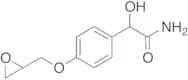
CAS:Controlled Product<p>Applications p-Vinylguaiacol-d3 is the isotope labelled analog of p-Vinylguaiacol (V424960); an aromatic substance, one of the compounds responsible for the natural aroma of buckwheat, and also one of the major pyrolytic products of (E)-N-[(4-hydroxy-3-methoxy)-phenethyl]-3-[(3-methoxy-4-O-β-D-glucopyranosyloxy) phenyl] acrylamide; a new gycloside in tobacco.<br>References Janes, Damjan., et al.: Food Chem., 112(1), 120-124 (2009); Zhou, Rong., et al.: Yancao Keji, (7), 34-36, 42 (2013)<br></p>Formula:C9H7D3O2Color and Shape:Clear ColourlessMolecular weight:153.19a-Hydroxy-4-(2-oxiranylmethoxy)-benzeneacetamide
CAS:Controlled Product<p>Applications α-Hydroxy-4-(2-oxiranylmethoxy)-benzeneacetamide is an intermediate in the synthesis of hydroxyatenolol (H802480), which is a metabolite of Atenolol (A790075); a cardioselective β-adrenergic blocker, antihypertensive, antianginal, and antiarrhythmic (class II).<br>References Escher, B., et al.: Environ. Sci. Technol., 40, 7402 (2006); Caplar, V., et al.: Anal. Profiles Drug Subs., 13, 1 (1984)<br></p>Formula:C11H13NO4Color and Shape:Off-WhiteMolecular weight:223.232-Cyano-N-((furan-2-ylmethyl)carbamoyl)acetamide
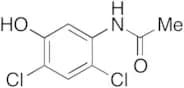
CAS:Controlled Product<p>Applications 2-Cyano-N-((furan-2-ylmethyl)carbamoyl)acetamide is an intermediate in the synthesis of novel 1- and 8-substituted-3-furfuryl xanthines as adenosine receptor antagonists.<br>References Balo, M. C., et al.: Bioorg. Med. Chem., 17, 6755 (2009);<br></p>Formula:C7H14O6·C3H8OColor and Shape:NeatMolecular weight:254.278N-(2,4-Dichloro-5-hydroxyphenyl)acetamide
CAS:Controlled ProductFormula:C8H7Cl2NO2Color and Shape:NeatMolecular weight:220.053N-[2-[3,4-Bis(phenylmethoxy)phenyl]ethyl]-3,4,5-trimethoxybenzeneacetamide
CAS:Controlled Product<p>Applications N-[2-[3,4-Bis(phenylmethoxy)phenyl]ethyl]-3,4,5-trimethoxybenzeneacetamide is an intermediate used in the synthesis of S-(-)-Tretoquinol Hydrochloride (T798100), which belongs to the class of adrenergic inhalants, selective β-2-adrenoreceptor agonists. S-(-)-Tretoquinol is used in the treatment of obstructive airway diseases. S-(-)-Tretoquinol is a bronchodilator.<br>References Meshi, et al.: Biochem. Pharmacol., 19, 2937 (1970), Satoh, et al.: Chem. Pharm. Bull., 19, 667 (1971),<br></p>Formula:C33H35NO6Color and Shape:NeatMolecular weight:541.63(AlphaS)-α-Amino-4-nitrobenzenepropanamide
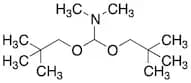
CAS:Controlled Product<p>Applications (αS)-α-Amino-4-nitrobenzenepropanamide (cas# 81677-61-4) is a compound useful in organic synthesis.<br></p>Formula:C9H11N3O3Color and Shape:NeatMolecular weight:209.2N,N-Dimethylformamide Dineopentyl Acetal
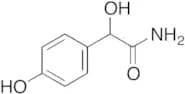
CAS:Controlled Product<p>Applications N,N-DIMETHYLFORMAMIDE DINEOPENTYL ACETAL (cas# 4909-78-8) is a useful research chemical.<br></p>Formula:C13H29NO2Color and Shape:NeatMolecular weight:231.37p-Hydroxymandelamide
CAS:Controlled Product<p>Applications p-Hydroxymandelamide is a useful synthetic intermediate in the synthesis of Hydroxyatenolol (H802480); a metabolite of Atenolol (A790075) which is a cardioselective β-adrenergic blocker, antihypertensive, antianginal, and antiarrhythmic (class II).<br>References Escher, B., et al.: Environ. Sci. Technol., 40, 7402 (2006); Caplar, V., et al.: Anal. Profiles Drug Subs., 13, 1 (1984)<br></p>Formula:C8H9NO3Color and Shape:NeatMolecular weight:167.16rac-cis-[3-Hydroxycyclohexyl]benzamide
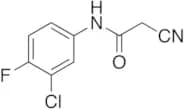
CAS:Controlled Product<p>Applications rac-cis-[3-Hydroxycyclohexyl]benzamide (cas# 177366-89-1) is a compound useful in organic synthesis.<br></p>Formula:C13H17NO2Color and Shape:NeatMolecular weight:219.28N-(3-Chloro-4-fluorophenyl)-2-cyanoacetamide
CAS:Controlled Product<p>Applications N-(3-Chloro-4-fluorophenyl)-2-cyanoacetamide (cas# 219529-31-4) is a compound useful in organic synthesis.<br></p>Formula:C9H6ClFN2OColor and Shape:NeatMolecular weight:212.61Erucamide
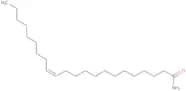
CAS:<p>Erucamide is a fatty acid amide that is a natural compound and part of the biochemical composition of microbial organisms. Erucamide has been shown to have antimicrobial activity against Gram-positive bacteria but not against Gram-negative bacteria. The mechanism by which erucamide kills bacteria is unknown, but it may be due to its hemolytic activity or its ability to inhibit protein synthesis. Erucamide is resistant to hydrolysis by trifluoroacetic acid and glycol ester, which makes it difficult for microbes to metabolize it.</p>Formula:C22H43NOPurity:Min. 95%Color and Shape:PowderMolecular weight:337.58 g/mol2,5-Dihydroxy-N-(2-hydroxyethyl)benzamide
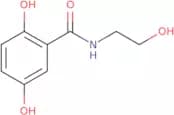
CAS:<p>Sodium citrate is a specific antibody that is used in the treatment of inflammatory bowel disease, such as Crohn's disease. It may be effective in the prevention and treatment of infectious diseases, such as HIV and hepatitis C. Sodium citrate has been shown to be an analog of sodium bicarbonate, which can be used for the prevention and treatment of acid complex diseases. The drug also has anti-inflammatory properties, which can help with symptoms associated with bowel disease or other inflammatory conditions. It is available for intravenous injection as a sterile solution containing benzalkonium chloride and water for injection.</p>Formula:C9H11NO4Purity:Min. 95%Color and Shape:PowderMolecular weight:197.19 g/mol3-Hydroxy-N,N-dimethylpropanamide
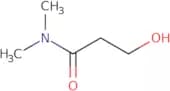
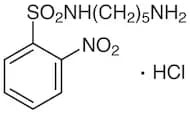
CAS:<p>3-Hydroxy-N,N-dimethylpropanamide is a versatile chemical compound. The compound has been used as an intermediate in research and industrial processes, including the synthesis of various pharmaceuticals. 3-Hydroxy-N,N-dimethylpropanamide is also a reagent and building block for many other compounds. It has been shown to have high quality properties that make it useful for research purposes.</p>Formula:C5H11NO2Purity:Min. 95%Color and Shape:PowderMolecular weight:117.15 g/molN-(5-Aminopentyl)-2-nitrobenzenesulfonamide Hydrochloride
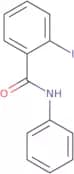
CAS:Formula:C11H17N3O4S·HClPurity:>98.0%(T)Color and Shape:Light orange to Yellow to Green powder to crystalMolecular weight:323.792-Iodo-N-phenylbenzamide
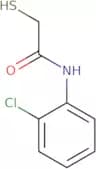
CAS:<p>2-Iodo-N-phenylbenzamide is a palladium compound that inhibits bacterial growth by binding to DNA and preventing transcription. The drug binds to the DNA as a monomer, but also forms polymeric matrixes with other drugs. 2-Iodo-N-phenylbenzamide has been shown to have genotoxic effects on subtilis and methicillin resistant Staphylococcus aureus (MRSA) in vitro, which may be due to its ability to form crosslinks between adjacent strands of DNA. 2-Iodo-N-phenylbenzamide has been shown to be an effective anti-bacterial agent against MRSA, methicillin resistant coagulase negative staphylococci and erythromycin resistant strains of Streptococcus pyogenes.</p>Formula:C13H10INOPurity:Min. 95%Molecular weight:323.13 g/molN-(2-Chlorophenyl)-2-mercaptoacetamide
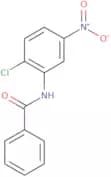
CAS:<p>2-Chloroacetamide is a useful building block that can be used to synthesize a variety of compounds. This chemical is also a versatile intermediate and can be used in the preparation of fine chemicals, research chemicals, and speciality chemicals. It is also a reaction component that can be used in the synthesis of complex compounds. 2-Chloroacetamide has been shown to have high quality properties and is often used as a reagent.</p>Formula:C8H8ClNOSPurity:Min. 95%Color and Shape:White PowderMolecular weight:201.67 g/molN-(2-Chloro-5-Nitrophenyl)Benzamide
CAS:<p>Please enquire for more information about N-(2-Chloro-5-Nitrophenyl)Benzamide including the price, delivery time and more detailed product information at the technical inquiry form on this page</p>Formula:C13H9ClN2O3Purity:Min. 95%Color and Shape:PowderMolecular weight:276.67 g/mol4-Iodo-N-(4-methoxyphenyl)-N-methylbenzamide
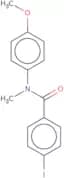
CAS:<p>4-Iodo-N-(4-methoxyphenyl)-N-methylbenzamide is a useful scaffold that can be used in the synthesis of complex compounds. It is also a versatile building block and has been found to be useful as an intermediate and building block. 4-Iodo-N-(4-methoxyphenyl)-N-methylbenzamide is a fine chemical with CAS No. 320734-40-5. This reagent is high quality, research chemicals, and can be used in the synthesis of speciality chemicals.</p>Formula:C15H14INO2Purity:Min. 95%Molecular weight:367.18 g/molβ-Naphthamide
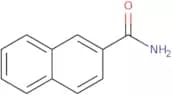
CAS:<p>Beta-naphthamide is an inhibitor binding to the dinucleotide phosphate (DNP) in bacterial cells. This binding prevents the enzyme from carrying out its normal function, which is the production of ATP, and it also inhibits various other enzymes. Beta-naphthamide inhibits the growth of Gram-positive bacteria by inhibiting their cell wall assembly and also has a bactericidal effect on Gram-negative bacteria. Beta-naphthamide has been shown to be active against multidrug efflux pump proteins that are present in Gram-negative bacteria, such as Escherichia coli. DNP is a receptor for dopamine and beta-naphthamide inhibits dopamine receptors in mammalian cells, which may lead to Parkinson's disease. Beta-naphthamide has been shown to inhibit the polymerase chain reaction (PCR) mechanism by binding to DNA polymerase. Beta-naphthamide binds to receptors on trigeminal nerve endings, which leads to paralysis of</p>Formula:C11H9NOPurity:Min. 95%Molecular weight:171.2 g/molN-[(4-Methylphenyl)sulfonyl]acetamide
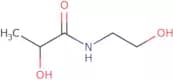
CAS:Formula:C9H11NO3SPurity:>98.0%(T)(HPLC)Color and Shape:White to Almost white powder to crystalMolecular weight:213.252-Hydroxy-N-(2-hydroxyethyl)propanamide
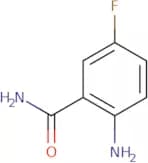
CAS:<p>2-Hydroxy-N-(2-hydroxyethyl)propanamide is a cationic surfactant that has been shown to inhibit the activity of tyrosinase and tnf-α. 2-Hydroxy-N-(2-hydroxyethyl)propanamide is used as a skin conditioning agent in cosmetic formulations and also has antimicrobial properties. It has been shown to be effective against a range of microorganisms, including gram positive bacteria, gram negative bacteria, yeast, and fungi. 2-Hydoxy-N-(2-hydroxyethyl)propanamide does not damage the skin but may cause dryness if it is left on for an extended period of time. It is also an antioxidant compound with a phase transition temperature of -19 degrees Celsius.</p>Formula:C5H11NO3Purity:Min. 95%Color and Shape:Colorless Clear LiquidMolecular weight:133.15 g/mol2-Amino-5-fluorobenzamide
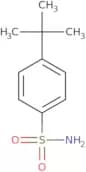
CAS:<p>2-Amino-5-fluorobenzamide (2AFB) is a compound that has been shown to have neurotoxic properties. 2AFB is a ring-opening agent, which means it can open the six-membered ring of aromatic compounds such as benzene or pyridine. 2AFB also has affinity for metal ions and therefore can be used in magnetic separations. The reaction system of 2AFB includes an enzyme, pentylenetetrazole (PTZ), that catalyzes the reaction between 2AFB and its substrate, 4-nitrophenol (4NP). This reaction produces free radicals that react with oxygen to produce peroxides. These peroxides are then detected by a chemiluminescence assay. In this way, the amount of 2AFB and 4NP can be measured quantitatively.<br>2AFB also has antioxidant properties, which may be due to its ability to scavenge free radicals from</p>Formula:C7H7FN2OPurity:Min. 95%Color and Shape:PowderMolecular weight:154.14 g/mol4-(tert-Butyl)benzenesulfonamide
CAS:<p>4-(tert-Butyl)benzenesulfonamide is a pyrimidine derivative that has an affinity for metal ions and can be used as a catalyst. It is insoluble in water but soluble in acetonitrile and other organic solvents. This compound is a strong oxidant when it reacts with ethylene, styrene, or propyl gallate. 4-(tert-Butyl)benzenesulfonamide has been shown to be highly reactive with the oxygen in air, leading to the formation of 4-dimethylaminobenzoic acid, formyl group, and phosphorus oxychloride.</p>Formula:C10H15NO2SPurity:Min. 95%Color and Shape:PowderMolecular weight:213.3 g/mol4-Chloro-3-pyridinesulfonamide
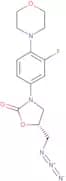
CAS:<p>4-Chloro-3-pyridinesulfonamide is an antibacterial sulfonamide that inhibits the enzyme carbonic anhydrase. It has been shown to inhibit the growth of cancer cells in vitro and in vivo. The anticancer effect may be due to its ability to block the growth of cancer cells by interfering with DNA synthesis and inducing apoptosis, which causes cell death. 4-Chloro-3-pyridinesulfonamide also inhibits tuberculosis and tuberculostatic activity may be due to its inhibition of mycobacterium tuberculosis ribosomes. 4-Chloro-3-pyridinesulfonamide binds to the active site of bacterial anhydrase as well as human carbonic anhydrase II, blocking the conversion of CO2 into bicarbonate ions, which leads to a decrease in pH. This drug also binds to DNA and RNA, inhibiting DNA synthesis and RNA synthesis respectively, leading to cell</p>Formula:C5H5ClN2O2SPurity:Min. 95%Color and Shape:SolidMolecular weight:192.62 g/molDeacetamide linezolid azide
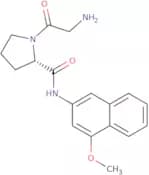
CAS:<p>Deacetamide linezolid azide is a molecule that binds to the regulatory domain of TNF-α, inhibiting its activation. This drug has been shown to have anticancer activity against cells that produce TNF-α. Deacetamide linezolid azide has been shown to be effective in the treatment of pancreatitis and neurodegenerative diseases such as Parkinson's disease, Alzheimer's disease, and Huntington's disease. Deacetamide linezolid azide is also used in the diagnosis of cancer by identifying the presence of tumour necrosis factor-α (TNF-α) induced hallmarks in cancer cells.</p>Formula:C14H16FN5O3Purity:Min. 95%Color and Shape:PowderMolecular weight:321.31 g/molGly-pro-4-methoxy-β-naphthylamide
CAS:<p>Gly-pro-4-methoxy-beta-naphthylamide is a synthetic substrate that is used to measure the activity of human plasma phosphatases. Gly-pro-4-methoxy-beta-naphthylamide is synthesized in an organic solvent and then reacted with diazonium salt to form a glycosylated aminophosphonic acid. The product is purified by chromatography and identified by mass spectrometry. Gly-pro-4-methoxy beta naphthylamide has been shown to inhibit the growth of cancer cells in vitro, as well as having antiinflammatory properties. This drug also has been shown to be effective in treating patients with severe hyperbilirubinemia who are undergoing hematopoietic stem cell transplantation.</p>Formula:C18H21N3O3Purity:Min. 95%Molecular weight:327.38 g/mol

![TERT-BUTYL 5-OXO-2,6-DIAZASPIRO[3.4]OCTANE-2-CARBOXYLATE](/_next/image/?url=https%3A%2Fstatic.cymitquimica.com%2Fproducts%2F10%2Fthumb-webp%2FF513513.webp&w=3840&q=75)
![1-[(4S)-4-Phenyl-2-thioxo-3-oxazolidinyl]-1-propanone](/_next/image/?url=https%3A%2Fstatic.cymitquimica.com%2Fproducts%2F10%2Fthumb-webp%2FF616461.webp&w=3840&q=75)


![3-[(2,2-dimethylpropanoyl)amino]-2-methylbenzoic acid](/_next/image/?url=https%3A%2Fstatic.cymitquimica.com%2Fproducts%2F10%2Fthumb-webp%2FF314540.webp&w=3840&q=75)


![tert-Butyl 8-oxo-2,7-diazaspiro[4.4]nonane-2-carboxylate](/_next/image/?url=https%3A%2Fstatic.cymitquimica.com%2Fproducts%2F10%2Fthumb-webp%2FF214490.webp&w=3840&q=75)
![tert-Butyl 5-oxo-1-oxa-4,9-diazaspiro[5.5]undecane-9-carboxylate](/_next/image/?url=https%3A%2Fstatic.cymitquimica.com%2Fproducts%2F10%2Fthumb-webp%2FF615706.webp&w=3840&q=75)
![7-Bromo-4,5-dihydro-1H-benzo[b][1,4]diazepin-2(3H)-one](/_next/image/?url=https%3A%2Fstatic.cymitquimica.com%2Fproducts%2F10%2Fthumb-webp%2FF323985.webp&w=3840&q=75)

![6-Bromo-1H-pyrido[2,3-b][1,4]oxazin-2(3H)-one](/_next/image/?url=https%3A%2Fstatic.cymitquimica.com%2Fproducts%2F10%2Fthumb-webp%2FF244011.webp&w=3840&q=75)

![6′-Bromospiro[cyclohexane-1,3′-indolin]-2′-one](/_next/image/?url=https%3A%2Fstatic.cymitquimica.com%2Fproducts%2F10%2Fthumb-webp%2FF617336.webp&w=3840&q=75)
![2,7-Diazaspiro[4.5]decan-3-one](/_next/image/?url=https%3A%2Fstatic.cymitquimica.com%2Fproducts%2F10%2Fthumb-webp%2FF230007.webp&w=3840&q=75)

![1H-Pyrido[2,3-b][1,4]oxazin-2(3H)-one](/_next/image/?url=https%3A%2Fstatic.cymitquimica.com%2Fproducts%2F10%2Fthumb-webp%2FF329246.webp&w=3840&q=75)
![6-BROMO-2-METHYL-2H-BENZO[B][1,4]OXAZIN-3(4H)-ONE](/_next/image/?url=https%3A%2Fstatic.cymitquimica.com%2Fproducts%2F10%2Fthumb-webp%2FF304966.webp&w=3840&q=75)
![2-CHLORO-5-[(2,2-DIMETHYLPROPANOYLAMINO)-METHYL]-BENZOIC ACID](/_next/image/?url=https%3A%2Fstatic.cymitquimica.com%2Fproducts%2F10%2Fthumb-webp%2FF330896.webp&w=3840&q=75)


![5-METHYL-2H-BENZO[B][1,4]OXAZIN-3(4H)-ONE](/_next/image/?url=https%3A%2Fstatic.cymitquimica.com%2Fproducts%2F10%2Fthumb-webp%2FF831819.webp&w=3840&q=75)
![2-METHYLSPIRO[ISOINDOLINE-3,4′-PIPERIDINE]-1-ONE HCL](/_next/image/?url=https%3A%2Fstatic.cymitquimica.com%2Fproducts%2F10%2Fthumb-webp%2FF470747.webp&w=3840&q=75)

![rac-trans-[3-Hydroxycyclohexyl]benzamide](/_next/image/?url=https%3A%2Fstatic.cymitquimica.com%2Fproducts%2FTR%2Fthumb-webp%2FH827010.webp&w=3840&q=75)



![N-[2-[3,4-Bis(phenylmethoxy)phenyl]ethyl]-3,4,5-trimethoxybenzeneacetamide](/_next/image/?url=https%3A%2Fstatic.cymitquimica.com%2Fproducts%2FTR%2Fthumb-webp%2FB521325.webp&w=3840&q=75)

![rac-cis-[3-Hydroxycyclohexyl]benzamide](/_next/image/?url=https%3A%2Fstatic.cymitquimica.com%2Fproducts%2FTR%2Fthumb-webp%2FH827000.webp&w=3840&q=75)


![N-[(4-Methylphenyl)sulfonyl]acetamide](/_next/image/?url=https%3A%2Fstatic.cymitquimica.com%2Fproducts%2F3B%2Fthumb-webp%2FM3123.webp&w=3840&q=75)