Amides
Amides are a wide range of chemical compounds that contain at least one heterocyclic ring, which has atoms of at least two different elements in the ring structure, and at least one amide group (-CONH2). These compounds are crucial in the synthesis of pharmaceuticals, polymers, and agrochemicals. Amides exhibit unique properties and reactivity, making them valuable intermediates in organic synthesis. At CymitQuimica, we offer a comprehensive selection of high-quality amides to support your research and industrial needs.
Found 16485 products of "Amides"
Sort by
Purity (%)
0
100
|
0
|
50
|
90
|
95
|
100
Quinfamide
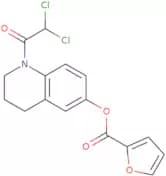
CAS:Quinfamide is a polyunsaturated compound that contains a cevimeline hydrochloride molecule. It is used to treat bowel disease, usually in combination with other drugs. Quinfamide has been shown to have specific treatment effects on the symptoms of inflammatory bowel disease (IBD) when given at doses of 400-800 mg per day for up to 12 weeks. This drug can also be used as an analog for 5-membered heteroaryl compounds, such as benzalkonium chloride, which are also used to treat bowel disease. Quinfamide has been shown to have anti-inflammatory properties and may work by inhibiting fatty acid synthesis or by reducing the number of neutrophils in the gut.Formula:C16H13Cl2NO4Purity:Min. 95%Color and Shape:White PowderMolecular weight:354.18 g/molNilutamide
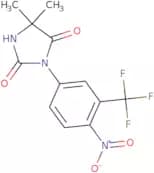
CAS:<p>Nonsteroidal androgen receptor antagonist</p>Formula:C12H10F3N3O4Purity:Min. 95%Color and Shape:PowderMolecular weight:317.22 g/mol3-Chlorobenzamide
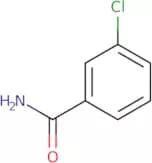
CAS:<p>3-Chlorobenzamide is an analytical reagent that is used for the separation and purification of organic compounds. It has been shown to be a catalyst for the reaction system in the dehydration of amides, amido, and halides. 3-Chlorobenzamide has also been suggested as a possible environmental pollutant due to its catalytic properties and ability to react with monoxide. The correlations between 3-chlorobenzamide concentrations in air and soil have also been studied extensively.</p>Formula:C7H6ClNOPurity:Min. 95%Color and Shape:PowderMolecular weight:155.58 g/mol4-Sulfonamidephenylhydrazine hydrochloride
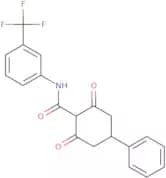
CAS:4-Sulfonamidephenylhydrazine HCl is a sulfonamide that inhibits the enzyme Cox-2, which is involved in inflammation. It also has anti-inflammatory activity and has been shown to inhibit the growth of fungi. 4-Sulfonamidephenylhydrazine HCl is an antifungal agent used for the treatment of dermatophytic infections such as tinea pedis and tinea cruris. The chemical structure of 4-Sulfonamidephenylhydrazine HCl consists of a methyl sulfone group linked with a pyrazole ring and a hydrazine hydrate group. The carbonic acid moiety in this compound stabilizes the pyrazole ring by forming hydrogen bonds with the nitrogen atom and oxygen atom on either side of it. This allows for the formation of two resonance structures to be maintained, which make it more stable than other similar compounds without this moiety.Formula:C6H9N3O2S•(HCl)xPurity:Min. 95%Color and Shape:PowderMolecular weight:223.68 g/mol(2,6-dioxo-4-phenylcyclohexyl)-N-(3-(trifluoromethyl)phenyl)formamide
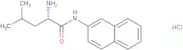
CAS:<p>Please enquire for more information about (2,6-dioxo-4-phenylcyclohexyl)-N-(3-(trifluoromethyl)phenyl)formamide including the price, delivery time and more detailed product information at the technical inquiry form on this page</p>Purity:Min. 95%L-Leucine b-naphthylamide hydrochloride
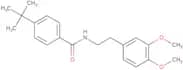
CAS:<p>Please enquire for more information about L-Leucine b-naphthylamide hydrochloride including the price, delivery time and more detailed product information at the technical inquiry form on this page</p>Formula:C16H20N2O·HClPurity:Min. 95%Color and Shape:PowderMolecular weight:292.8 g/molN-(2-(3,4-dimethoxyphenyl)ethyl)(4-(tert-butyl)phenyl)formamide
CAS:Controlled Product<p>Please enquire for more information about N-(2-(3,4-dimethoxyphenyl)ethyl)(4-(tert-butyl)phenyl)formamide including the price, delivery time and more detailed product information at the technical inquiry form on this page</p>Purity:Min. 95%Picotamide
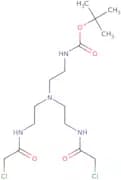
CAS:Picotamide is a drug that belongs to the class of drugs that inhibit platelet aggregation. This drug is used in the treatment of coronary artery disease and other cardiovascular diseases. Picotamide has been shown to have pharmacological effects on the heart, such as lowering blood pressure and reducing heart rate. It also has a covalent linkage with proteins, which may be due to its ability to activate receptors for biological properties like cell proliferation or differentiation. Picotamide has been shown to prevent infectious diseases, such as septicemia, by inhibiting bacterial growth. The chemical stability of picotamide makes it an attractive candidate for use in gene therapy because it can be stored at room temperature without losing its activity.Formula:C21H20N4O3Purity:Min. 95%Color and Shape:PowderMolecular weight:376.41 g/mol2N-Boc-2',2''-triaminotriethylamine-bis(chloroacetamide)
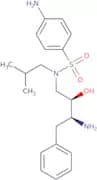
CAS:<p>2N-Boc-2',2''-triaminotriethylamine-bis(chloroacetamide) is a fine chemical and reagent for the synthesis of pharmaceuticals. It is also a useful building block for the synthesis of complex compounds. This product can be used as a reaction component in organic chemistry, or it can be used as a reagent in research or development laboratories.</p>Formula:C15H28Cl2N4O4Purity:Min. 95%Molecular weight:399.31 g/mol4-Amino-N-((2R,3S)-3-amino-2-hydroxy-4-phenylbutyl)-N-ispobutylbenzenesulfonamide
CAS:<p>4-Amino-N-((2R,3S)-3-amino-2-hydroxy-4-phenylbutyl)-N-isobutylbenzenesulfonamide is an amide that is used to treat HIV infections. It has been shown to have potent anti-viral activity against HIV infected cells in the laboratory and can inhibit the replication of HIV by interfering with the virus's ability to use the reverse transcriptase enzyme. 4ABAB has been shown to bind to the enzyme ribonuclease H (crth2), which is responsible for breaking down viral RNA. This binding prevents crth2 from cleaving viral RNA, thus inhibiting DNA synthesis and preventing cell death. 4ABAB also interferes with a hydrogen bond between ethyl group and the hydroxyl group on crth2, leading to a decrease in activity.</p>Formula:C20H29N3O3SPurity:Min. 95%Color and Shape:White PowderMolecular weight:391.53 g/mol2-Amino-3-chlorobenzamide
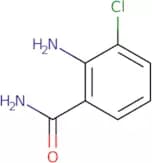
CAS:This compound is a benzamide derivative that is oxidized by nature. It has been shown to undergo ring-opening in the presence of reducing agents, such as sodium borohydride, and yields 2-amino-4-chlorobenzaldehyde. This reaction system uses an efficient catalyst such as manganese dioxide to help speed up the rate of this reaction. The product of this reaction is then converted into a variety of isatins depending on the conditions used.Formula:C7H7ClN2OPurity:Min. 95%Color and Shape:Off-White PowderMolecular weight:170.6 g/mol2-(4,5-dichloroimidazolyl)-N-(2-indol-3-ylethyl)ethanamide
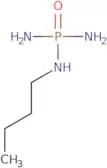
CAS:Please enquire for more information about 2-(4,5-dichloroimidazolyl)-N-(2-indol-3-ylethyl)ethanamide including the price, delivery time and more detailed product information at the technical inquiry form on this pagePurity:Min. 95%N-(n-Butyl)phosphoric triamide
CAS:N-(n-Butyl)phosphoric triamide is an analog of phosphoric acid that has a matrix effect on the uptake of water molecules by cells. N-(n-Butyl)phosphoric triamide is used as a sample preparation agent in microbiological analysis and as an antimicrobial agent to inhibit the growth of bacteria. This compound inhibits the growth rate of triticum aestivum, which may be due to its ability to inhibit nitrous oxide, a key intermediate in bacterial metabolism. N-(n-Butyl)phosphoric triamide has been shown to have an inhibitory effect on water molecule formation and growth rate in bacteria.Formula:C4H14N3OPPurity:Min. 98 Area-%Color and Shape:White Off-White PowderMolecular weight:151.15 g/mol4-Amino-5-chloro-2,3-dihydro-N-[1-(3-methoxypropyl)-4-piperidinyl]-7-benzofurancarboxamide
CAS:The drug 4-Amino-5-chloro-2,3-dihydro-N-[1-(3-methoxypropyl)-4-piperidinyl]-7-benzofurancarboxamide (BZP) is a histamine H2 receptor antagonist. It binds to the histamine H2 receptor in the stomach and duodenum, thereby blocking stomach acid production. BZP has been shown to be effective for treating symptoms of constipation or diarrhoea caused by inflammatory bowel disease or abdominal surgery. BZP also reduces the risk of relapse after surgery but does not affect long term efficacy. This drug is not available in the United States and has significant interactions with other drugs and symptoms including constipation, bowel disease, long term efficacy, and analytical method.Formula:C18H26ClN3O3Purity:Min. 95%Color and Shape:White PowderMolecular weight:367.87 g/molN-Cyclohexyl-2-benzothiazolylsulfenamide
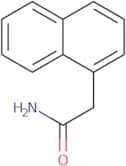
CAS:<p>N-Cyclohexyl-2-benzothiazolylsulfenamide is a cross-linking agent that is used in the production of polymeric matrices. It is a multi-walled carbon molecule with an aromatic hydrocarbon cross-linker. N-Cyclohexyl-2-benzothiazolylsulfenamide reacts with fatty acids to form cationic surfactants, which can be used as antimicrobial agents. The reaction mechanism for this type of chemical reaction has been studied under constant pressure conditions and it was found that sulfur transfer occurs in the first step, followed by activation energies for the second and third steps. The diameter of the product depends on the degree of polymerization (DP).</p>Formula:C13H16N2S2Purity:Min. 95%Color and Shape:PowderMolecular weight:264.41 g/mol1-Naphthaleneacetamide
CAS:<p>1-Naphthaleneacetamide is a plant growth regulator that belongs to the class of compounds known as auxins. It inhibits the production of chlorophyll and reduces photosynthetic activity in plants, thereby causing a decrease in chlorophyll content. 1-Naphthaleneacetamide has been shown to have genotoxic effects on human cells in tissue culture. This agent also has an effect on DNA damage and repair and can be used as an analytical method for determining the presence of surfactant sodium dodecyl (SDS) in urine samples by fluorescence spectrometry.</p>Formula:C12H11NOPurity:Min. 98 Area-%Color and Shape:PowderMolecular weight:185.22 g/molTolbutamide
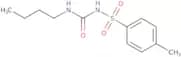
CAS:Tolbutamide is a drug that is used to treat diabetes mellitus type 2. It is an inhibitor of the enzyme glucokinase and thus blocks the phosphorylation of glucose, which prevents its utilization by cells. This results in a decrease of blood glucose levels, which can be useful in the treatment of diabetes mellitus type 2. Tolbutamide has shown potent apoptosis-inducing effects on human breast cancer cells and endothelial cells. These effects are thought to be due to inhibition of protein kinase C (PKC) activity by tolbutamide. Additionally, this drug inhibits insulin secretion from pancreatic beta cells and induces cytochrome P450 enzymes, which may lead to increased metabolism of other drugs.Formula:C12H18N2O3SPurity:Min. 95%Molecular weight:270.35 g/molL-Histidine amide dihydrochloride
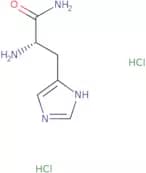
CAS:Please enquire for more information about L-Histidine amide dihydrochloride including the price, delivery time and more detailed product information at the technical inquiry form on this pageFormula:C6H10N4O•(HCl)2Purity:Min. 95%Color and Shape:PowderMolecular weight:227.09 g/mol2-Cyano-N-[2-(3,4-dimethoxyphenyl)ethyl]acetamide
CAS:<p>Please enquire for more information about 2-Cyano-N-[2-(3,4-dimethoxyphenyl)ethyl]acetamide including the price, delivery time and more detailed product information at the technical inquiry form on this page</p>Formula:C13H16N2O3Purity:Min. 95%Molecular weight:248.28 g/molN-Allyl-n-(4-cyano-2-chlorophenyl)acetamide
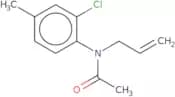
CAS:<p>N-Allyl-N-(4-cyano-2-chlorophenyl)acetamide is a high quality reagent that has been used as an intermediate in the synthesis of fine chemicals, useful scaffolds and building blocks. It is also a versatile building block that can be used to synthesize high quality compounds with a wide range of functionalities. N-Allyl-N-(4-cyano-2-chlorophenyl)acetamide is a speciality chemical that can be used for research purposes. This compound has been shown to produce reactions with other compounds, such as nitrobenzene, to generate useful products.</p>Formula:C12H11ClN2OPurity:Min. 95%Molecular weight:234.68 g/mol




![4-Amino-5-chloro-2,3-dihydro-N-[1-(3-methoxypropyl)-4-piperidinyl]-7-benzofurancarboxamide](/_next/image/?url=https%3A%2Fstatic.cymitquimica.com%2Fproducts%2F3D%2Fthumb-webp%2FFA27248.webp&w=3840&q=75)

![2-Cyano-N-[2-(3,4-dimethoxyphenyl)ethyl]acetamide](/_next/image/?url=https%3A%2Fstatic.cymitquimica.com%2Fproducts%2F3D%2Fthumb-webp%2FFC131318.webp&w=3840&q=75)