Amides
Amides are a wide range of chemical compounds that contain at least one heterocyclic ring, which has atoms of at least two different elements in the ring structure, and at least one amide group (-CONH2). These compounds are crucial in the synthesis of pharmaceuticals, polymers, and agrochemicals. Amides exhibit unique properties and reactivity, making them valuable intermediates in organic synthesis. At CymitQuimica, we offer a comprehensive selection of high-quality amides to support your research and industrial needs.
Found 16399 products of "Amides"
Sort by
Purity (%)
0
100
|
0
|
50
|
90
|
95
|
100
WAY 316606
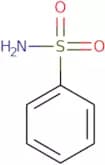
CAS:<p>WAY 316606 is a potent, orally administered small molecule that inhibits the Wnt signaling pathway by blocking the action of β-catenin. It has been shown to have potential for treating eye disorders, including age-related macular degeneration. This drug also has potential for treatment of cell and nervous system diseases such as Alzheimer's disease and Huntington's disease. WAY 316606 inhibits the transcriptional activity of the β-catenin/Tcf4 complex by binding to it and preventing its translocation into the nucleus. In addition, WAY 316606 prevents downstream activation of genes regulated by β-catenin signaling, including c-myc and cyclin D1. This drug also blocks growth factor receptor tyrosine kinases and monoclonal antibodies that activate these receptors.</p>Formula:C18H19F3N2O4S2Purity:Min. 95%Molecular weight:448.48 g/molBenzenesulphonamide
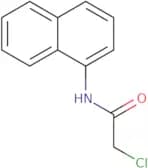
CAS:<p>Benzenesulphonamide is a biologically active compound that has been shown to bind to an integrin receptor, which mediates the attachment of leukocytes to the endothelium. It also binds to a basic protein found in human immunoglobulin. Benzenesulphonamide has been shown to have cytotoxic effects on synchronous fluorescence cells and can be used for the treatment of bowel disease. This drug has also been shown to be toxic in vitro and in vivo, with a moderate acute oral toxicity and low chronic oral toxicity. Benzenesulphonamide has been shown to act as a surfactant by binding with sodium dodecyl sulfate (SDS), which is commonly used in detergents, disinfectants, shampoos, soaps, and other household products. The biological properties of benzenesulphonamide are not well-known due to its low solubility in water.</p>Formula:C6H7NO2SPurity:Min. 95%Molecular weight:157.19 g/mol2-Chloro-N-1-naphthylacetamide
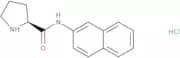
CAS:<p>2-Chloro-N-1-naphthylacetamide is a synthetic organic compound that belongs to the class of sulfur compounds. It is used in the synthesis of other compounds and has been shown to be a potent inhibitor of hydroxylapatite and sulfate hydrolysis. The reaction mechanism for this compound’s inhibition of sulfate hydrolysis is not known, but it may be due to its ability to act as an electron donor or acceptor. 2-Chloro-N-1-naphthylacetamide also has carcinogenic properties, with some studies suggesting that it can cause liver cancer in rodents.</p>Formula:C12H10ClNOPurity:Min. 95%Molecular weight:219.67 g/molL-Proline-β-naphthylamide hydrochloride
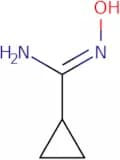
CAS:<p>L-proline analogue</p>Formula:C15H16N2O·HClPurity:Min. 95%Molecular weight:276.76 g/molN'-Hydroxycyclopropanecarboximidamide
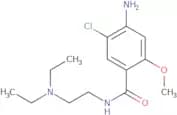
CAS:<p>N'-Hydroxycyclopropanecarboximidamide (N-HCPC) is an alkoxycarbonyl-containing heterocycle that is structurally related to the benzodiazepine class of drugs. It has been shown to have depressant activity in animal models and may be useful as a treatment for epilepsy, but it also has psychoactive properties. N-HCPC can cause epileptic seizures in humans, although this effect appears to be dose dependent. It may also have potential use as a treatment for Alzheimer's disease and depression due to its ability to bind to the benzodiazepine receptor. The drug binds with high affinity to muscle tissue, which may explain its effects on muscle control and movement.</p>Formula:C4H8N2OPurity:Min. 95%Molecular weight:100.12 g/molMetoclopramide base
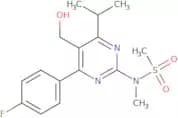
CAS:<p>Dopamine (D2) receptor antagonist</p>Formula:C14H22ClN3O2Purity:Min. 95%Color and Shape:White PowderMolecular weight:299.8 g/molN-(4-(4-Fluorophenyl)-5-(hydroxymethyl)-6-isopropylpyrimidin-2-yl)-Nmethylmethanesulfonamide
CAS:<p>Please enquire for more information about N-(4-(4-Fluorophenyl)-5-(hydroxymethyl)-6-isopropylpyrimidin-2-yl)-Nmethylmethanesulfonamide including the price, delivery time and more detailed product information at the technical inquiry form on this page</p>Formula:C16H20FN3O3SPurity:Min. 95%Molecular weight:353.41 g/mol4-(3-Amino-2-hydroxypropoxy)phenylacetamide
CAS:<p>4-(3-Amino-2-hydroxypropoxy)phenylacetamide is a sweetener that is used as an artificial sweetener. It can be found in many foods and drinks and is often used to replace sucralose due to its lower cost. 4-(3-Amino-2-hydroxypropoxy)phenylacetamide is a white powder with a melting point of 133°C. This product has been shown to be safe for human consumption, although it may cause headaches, drowsiness, or dizziness in some people.</p>Formula:C11H16N2O3Purity:Min. 95%Molecular weight:224.26 g/molN-(tert-Butoxycarbonyl)glycine N'-methoxy-N'-methylamide
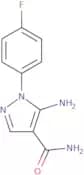
CAS:<p>Please enquire for more information about N-(tert-Butoxycarbonyl)glycine N'-methoxy-N'-methylamide including the price, delivery time and more detailed product information at the technical inquiry form on this page</p>Formula:C9H18N2O4Purity:Min. 95%Molecular weight:218.25 g/mol5-Amino-1-(4-Fluorophenyl)-1H-Pyrazole-4-Carboxamide
CAS:<p>Please enquire for more information about 5-Amino-1-(4-Fluorophenyl)-1H-Pyrazole-4-Carboxamide including the price, delivery time and more detailed product information at the technical inquiry form on this page</p>Formula:C10H9FN4OPurity:Min. 95%Molecular weight:220.2 g/molDorzolamide hydrochloride related compound A
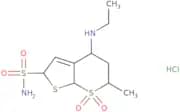
CAS:<p>Please enquire for more information about Dorzolamide hydrochloride related compound A including the price, delivery time and more detailed product information at the technical inquiry form on this page</p>Formula:C10H16N2O4S3·HClPurity:Min. 95%Molecular weight:360.9 g/mol5[(R)-(2-Aminopropyl)]-2-methoxybenzenesulfonamide hydrochloride
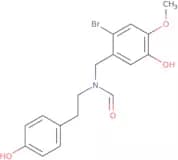
CAS:Controlled Product<p>Please enquire for more information about 5[(R)-(2-Aminopropyl)]-2-methoxybenzenesulfonamide hydrochloride including the price, delivery time and more detailed product information at the technical inquiry form on this page</p>Formula:C10H17ClN2O3SPurity:Min. 95%Molecular weight:280.77 g/molN-(p-Hydroxyphenethyl)-N-(2-bromo-5-hydroxy-4-methoxybenzyl)formamide
CAS:Controlled Product<p>N-(p-Hydroxyphenethyl)-N-(2-bromo-5-hydroxy-4-methoxybenzyl)formamide is an anticancer drug that belongs to the class of phenethyl derivatives. It is a radiosensitizer that inhibits DNA and RNA synthesis, leading to cancer cell death. The drug has been shown to have a chiral center and two enantiomers, with the (S)-enantiomer being more active than the (R)-enantiomer. N-(p-Hydroxyphenethyl)-N-(2-bromo-5-hydroxy-4-methoxybenzyl)formamide has been shown to be effective in animal models for brain tumors and breast cancer cells. It has also been shown to be effective against leukemia cells, which are resistant to other treatments. N-(p-Hydroxyphenethyl)-N-(2-bromo-5-hydroxy-4</p>Formula:C17H18BrNO4Purity:Min. 95%Molecular weight:380.23 g/molAcetohexamide
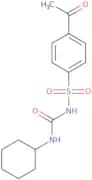
CAS:<p>Acetohexamide is a hypoglycemic drug that binds to the sulfonylurea receptor on pancreatic beta-cells and stimulates insulin release. It has been shown to have an oral hypoglycemic effect in humans, as well as in rats. Acetohexamide has been shown to inhibit the action of nonsteroidal anti-inflammatory drugs, such as indomethacin, through competitive inhibition. Acetohexamide also inhibits the enzyme activity of estradiol benzoate and acetohexamide hydrolase. This drug is not active against bacteria or fungi, but has been shown to be effective against some viruses. Acetohexamide is absorbed by the gastrointestinal tract and excreted unchanged in urine and feces. The drug does not bind to proteins and does not cross the blood-brain barrier.</p>Formula:C15H20N2O4SPurity:Min. 95%Color and Shape:PowderMolecular weight:324.4 g/mol3-(2-Aminoethyl)-N-methyl-1H-indole-5-methanesulfonamide
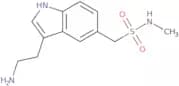
CAS:<p>3-(2-Aminoethyl)-N-methyl-1H-indole-5-methanesulfonamide (AMIS) is an intermediate in the preparation of medicaments. It is a stable process and can be used as an intermediate for other compounds. AMIS is prepared by reacting methanesulfonic acid with methanol and ammonium carbonate, which produces methanesulfonamide, succinic acid and ammonium hydroxide. The reaction liquid is then heated to produce a crystalline solid. The crystals are then recrystallized to yield AMIS as a white solid.</p>Formula:C12H17N3O2SPurity:Min. 95%Color and Shape:Off-White To Beige To Light Brown SolidMolecular weight:267.35 g/mol5-Diazoimidazole-4-carboxamide
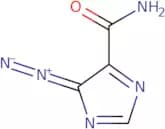
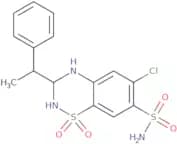
CAS:<p>5-Diazoimidazole-4-carboxamide is an inhibitor of energy metabolism. It was found that dacarbazine, a drug used to treat cancer, and 5-diazoimidazole-4-carboxamide form a reversible complex. The formation of this complex leads to the irreversible inhibition of cellular respiration and cell lysis. This drug has been shown to be effective against malignant melanoma cells in animals and can be used as a photoinitiator for polymerization. 5-Diazoimidazole-4-carboxamide has also been shown to have an inhibitory effect on blood pressure in animals.</p>Formula:C4H3N5OPurity:Min. 95 Area-%Color and Shape:PowderMolecular weight:137.1 g/mol6-Chloro-3,4-dihydro-3-(a-methylbenzyl)-2H-1,2,4-benzothiadiazine-7-sulfonamide 1,1-dioxide
CAS:<p>6-Chloro-3,4-dihydro-3-(a-methylbenzyl)-2H-1,2,4-benzothiadiazine-7-sulfonamide 1,1-dioxide is an active metabolite of the drug benzbromarone. It is primarily administered as a diuretic to treat high blood pressure and congestive heart failure. The pharmacodynamics of this drug are related to its ability to inhibit the activity of sodium channels in vascular smooth muscle cells and thereby reduce the force of contraction and relax the vessel wall. 6CBDMTD has shown an increase in glomerular filtration rate in patients with congestive heart failure. This drug also decreases the plasma concentration of fatty acids by inhibiting the formation of lipoprotein particles. 6CBDMTD has been shown to be effective at lowering diastolic and systolic blood pressure levels in patients with hypertension.</p>Formula:C15H16ClN3O4S2Purity:Min. 95%Molecular weight:401.89 g/mol7-Phenylacetamide-3-chloromethyl-3-cephem-4-carboxylic acid diphenylmethyl ester
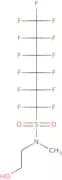
CAS:<p>7-Phenylacetamide-3-chloromethyl-3-cephem-4-carboxylic acid diphenylmethyl ester is an organic solution that is used in the detoxification of chemical substances. It has a hydroxyl group and is soluble in nonpolar solvents. 7PAMC has been shown to be effective against bone lesions caused by acylation reactions. This drug also binds to the enzyme called cytochrome P450, which is involved in the metabolism of many drugs. It also inhibits bacterial growth by binding to DNA gyrase and topoisomerase IV, enzymes that maintain bacterial DNA integrity. The particle size of this drug is small, with a diameter of less than 10 microns. 7PAMC has a viscosity of 1 cps at 25°C and a melting point of 129°C.</p>Formula:C29H25ClN2O4SPurity:Min. 95%Molecular weight:533.04 g/molTridecafluoro-N-(2-Hydroxyethyl)-N-Methylhexanesulphonamide
CAS:<p>Please enquire for more information about Tridecafluoro-N-(2-Hydroxyethyl)-N-Methylhexanesulphonamide including the price, delivery time and more detailed product information at the technical inquiry form on this page</p>Formula:C9H8F13NO3SPurity:Min. 95%Molecular weight:457.21 g/mol(2R)-2-Amino-3-phenylpropionyl amide
CAS:<p>(2R)-2-Amino-3-phenylpropionyl amide is a synthetic cannabinoid that has been shown to bind to the CB2 receptor. It has been found to be an effective analgesic in rat models of inflammatory and neuropathic pain. This drug is also a serine protease inhibitor, with activity against ochrobactrum, an antibiotic-resistant bacteria. (2R)-2-Amino-3-phenylpropionyl amide is also used as a substrate for d-alanine synthesis and has been sequenced. It can form hydrogen bonds with water molecules and chloride ions. (2R)-2-Amino-3-phenylpropionyl amide has been synthesized by Clostridium coli K12 cells and is expected to have similar effects on human cells.</p>Formula:C9H12N2OPurity:Min. 95%Molecular weight:164.2 g/mol




![5[(R)-(2-Aminopropyl)]-2-methoxybenzenesulfonamide hydrochloride](/_next/image/?url=https%3A%2Fstatic.cymitquimica.com%2Fproducts%2F3D%2Fthumb-webp%2FFA17834.webp&w=3840&q=75)