Amides
Amides are a wide range of chemical compounds that contain at least one heterocyclic ring, which has atoms of at least two different elements in the ring structure, and at least one amide group (-CONH2). These compounds are crucial in the synthesis of pharmaceuticals, polymers, and agrochemicals. Amides exhibit unique properties and reactivity, making them valuable intermediates in organic synthesis. At CymitQuimica, we offer a comprehensive selection of high-quality amides to support your research and industrial needs.
Found 16399 products of "Amides"
Sort by
Purity (%)
0
100
|
0
|
50
|
90
|
95
|
100
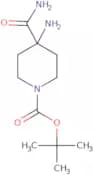
4-Amino-1-Boc-piperidine-4-carboxamide
CAS:<p>Please enquire for more information about 4-Amino-1-Boc-piperidine-4-carboxamide including the price, delivery time and more detailed product information at the technical inquiry form on this page</p>Formula:C11H21N3O3Purity:Min. 95%Molecular weight:243.3 g/molN-[(1S)-1-(Aminocarbonyl)propyl]-4-chlorobutanamide
CAS:<p>Please enquire for more information about N-[(1S)-1-(Aminocarbonyl)propyl]-4-chlorobutanamide including the price, delivery time and more detailed product information at the technical inquiry form on this page</p>Formula:C8H15ClN2O2Purity:Min. 95%Color and Shape:PowderMolecular weight:206.67 g/molpTH-Related Protein (67-86) amide (human, bovine, dog, mouse, ovine, rat) trifluoroacetate salt
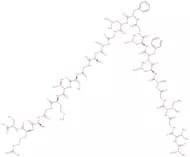
CAS:<p>Please enquire for more information about pTH-Related Protein (67-86) amide (human, bovine, dog, mouse, ovine, rat) trifluoroacetate salt including the price, delivery time and more detailed product information at the technical inquiry form on this page</p>Formula:C108H173N27O35Purity:Min. 95%Molecular weight:2,409.69 g/molN,N-Bis(2-hydroxyethyl)dodecanamide
CAS:<p>N,N-Bis(2-hydroxyethyl)dodecanamide is a surfactant that is used in the treatment of wastewater. It has been shown to be effective at removing p-hydroxybenzoic acid from water and at reducing the concentration of this compound in the environment. N,N-Bis(2-hydroxyethyl)dodecanamide also has antimicrobial properties and synergizes with other antimicrobial agents to provide a more potent effect than when it is used alone. This surfactant has been shown to have an effect on congestive heart failure by blocking the action of angiotensin II receptors.</p>Formula:C16H33NO3Color and Shape:Clear LiquidMolecular weight:287.44 g/molGastric Inhibitory Polypeptide (1-30) amide (porcine)
CAS:<p>Please enquire for more information about Gastric Inhibitory Polypeptide (1-30) amide (porcine) including the price, delivery time and more detailed product information at the technical inquiry form on this page</p>Formula:C162H245N41O47SPurity:Min. 95%Molecular weight:3,550.99 g/molGlycinamide hydrochloride
CAS:<p>Glycinamide hydrochloride is an inhibitor that binds to the glycine-binding site of the protein synthetase and inhibits the formation of glycinamide ribonucleotide. It has been shown to inhibit human glycinamide ribonucleotide synthetase in vitro. Glycinamide hydrochloride is also a glycinamide amide, which was synthesized by linking two molecules of glycine with an amide bond. This molecule is cross-linked with a macrogel, forming a hydrogel. The hydrogel can be used in biomedical applications, such as tissue engineering and drug delivery systems.</p>Formula:C2H7ClN2OColor and Shape:White PowderMolecular weight:110.54 g/molL-trans-Epoxysuccinyl-Ile-Pro-OMe propylamide
CAS:<p>L-trans-Epoxysuccinyl-Ile-Pro-OMe propylamide is a pharmacological agent that inhibits the toll-like receptor 4 signaling pathway. L-trans-Epoxysuccinyl-Ile-Pro-OMe propylamide has been shown to cause caspase independent cell death by inducing cathepsin and iron homeostasis. The drug also causes polymerase chain reaction inhibition and neuronal death in vivo.</p>Formula:C19H31N3O6Purity:Min. 95%Molecular weight:397.47 g/molHe-LWamide II
CAS:<p>He-LWamide II is a neuropeptide that is found in the hydrozoa, cnidarians, and anthozoa. It is an endogenous hormone that is produced by the planula stage of development. He-LWamide II inhibits muscle contractions and can be used as a model system for studying the effects of neuropeptides on invertebrate development. The developmental effects of this peptide have been studied in animals and humans, including its role in regulating the maturation of eggs and spermatozoa. He-LWamide II also has inhibitory effects on the nervous system and muscles.</p>Formula:C35H53N9O6Purity:Min. 95%Molecular weight:695.85 g/molC18-Ceramide
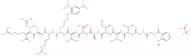
CAS:<p>Inducer of apoptosis; down-regulated in tumors</p>Formula:C36H71NO3Purity:Min. 95%Color and Shape:White/Off-White SolidMolecular weight:565.95 g/molN-Me-Abz-Amyloid β/A4 Protein Precursor770 (708-715)-Lys(Dnp)-D-Arg-D-Arg-D-Arg amide trifluoroacetate salt
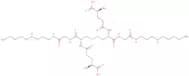
CAS:<p>Please enquire for more information about N-Me-Abz-Amyloid beta/A4 Protein Precursor770 (708-715)-Lys(Dnp)-D-Arg-D-Arg-D-Arg amide trifluoroacetate salt including the price, delivery time and more detailed product information at the technical inquiry form on this page</p>Formula:C70H116N26O18Purity:Min. 95%Molecular weight:1,609.83 g/molN1-Glutathionyl-spermidine disulfide [
CAS:<p>N1-Glutathionyl-spermidine disulfide (N1-GS) is a molecule that has been shown to have clinical use in the treatment of chronic hepatitis C infection. The N1-GS molecule is composed of a glutathione (GSH) scaffold with two sulfhydryl groups and an amino acid side chain. N1-GS has a hydrophobic nature, which allows it to penetrate the cellular membrane and enter cells. It is also able to form hydrogen bonds and act as a catalyst for reactions. Fluorescence analysis revealed that this molecule is selective for disulfides over thiols, amines, or alcohols. Disulfides are very important in biological systems since they can be found in enzymes, proteins, and cellular membranes. The insolubility of the N1-GS molecule makes it difficult to analyze its structure using traditional methods such as gas chromatography or nuclear magnetic resonance spectroscopy. However, fluorescence</p>Formula:C34H66N12O10S2Purity:Min. 95%Molecular weight:867.09 g/molN,N'-Methylenediacrylamide
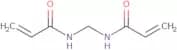
CAS:<p>N,N'-Methylenediacrylamide is a water-soluble compound that has been used as a fluorescent probe for hydrogen bonding. It has been shown to have different phase transition temperatures in different solvents and can be used as an experimental model for studying the effects of temperature on the behavior of water molecules. N,N'-Methylenediacrylamide reacts with hydrochloric acid to form the fatty acid N,N'-methylenebis(3-chloroacrylic acid) under acidic conditions. This reaction is reversible, and the reverse process can be catalyzed by sodium citrate or human serum. When exposed to radiation or surface methodology, it emits light at a wavelength of 350 nm.</p>Formula:C7H10N2O2Purity:Min. 95%Color and Shape:White Clear LiquidMolecular weight:154.17 g/molHexahydroisonicotinamide
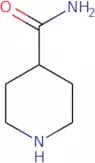
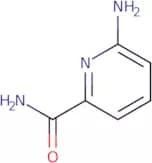
CAS:<p>Hexahydroisonicotinamide (HNI) is a potent amyloid protein inhibitor that is structurally related to picolinic acid. HNI has been shown to be effective in the treatment of infectious diseases caused by bacteria, such as diazonium salt-resistant strains of Pseudomonas aeruginosa and Enterobacter cloacae. Hexahydroisonicotinamide is also active against methicillin-resistant Staphylococcus aureus (MRSA), which may be due to its structural similarity to picolinic acid. The molecular weight of HNI is 587.6, with a molecular formula of C9H11N3O2. It has been shown that hexahydroisonicotinamide inhibits the transfer reaction between an amide and piperidinium, as well as the phosphorylation of proteins by enzyme kinases. This drug binds to hydrated biphenyl molecules and inhibits their</p>Formula:C6H12N2OPurity:Min. 95%Color and Shape:White To Yellow SolidMolecular weight:128.17 g/mol6-Aminopicolinamide
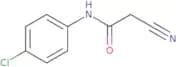
CAS:<p>6-Aminopicolinamide is a metabolite of nicotinamide, which can be found in the urine of humans and animals. 6-Aminopicolinamide has been shown to have anti-leukemic activity against experimental leukemias in animals. The mechanism of action is not well understood but may involve inhibition of nucleotide synthesis or the inhibition of dehydrogenase activity. Clinical trials are underway to determine its efficacy as an anti-tumor agent.</p>Formula:C6H7N3OPurity:Min. 95%Molecular weight:137.14 g/molN-(4-Chlorophenyl)-2-cyanoacetamide
CAS:<p>N-(4-Chlorophenyl)-2-cyanoacetamide is a pyridine compound that can be synthesized from chloroacetonitrile and acetamide. It has been shown to react with an active methylene group in benzene or pyridine to produce a heterocycle. This reaction is reversible and can be used as a preparative method for the synthesis of heterocycles. The 1,3-dipolar cycloaddition of N-(4-chlorophenyl)-2-cyanoacetamide with nitro groups in nitrobenzene produces the corresponding 2-nitropyridines, which are important intermediates in the synthesis of other heterocycles. N-(4-Chlorophenyl)-2-cyanoacetamide has been used as an efficient method for the preparation of nitrogen nucleophiles that are useful for catalysis.</p>Formula:C9H7ClN2OPurity:Min. 95%Molecular weight:194.62 g/molPAR-4 (1-6) amide (human) trifluoroacetate salt
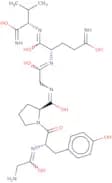
CAS:<p>Please enquire for more information about PAR-4 (1-6) amide (human) trifluoroacetate salt including the price, delivery time and more detailed product information at the technical inquiry form on this page</p>Formula:C28H42N8O8Purity:Min. 95%Molecular weight:618.68 g/mol(Tyr34)-pTH (7-34) amide (bovine) trifluoroacetate salt
CAS:<p>Please enquire for more information about (Tyr34)-pTH (7-34) amide (bovine) trifluoroacetate salt including the price, delivery time and more detailed product information at the technical inquiry form on this page</p>Formula:C156H244N48O40S2Purity:Min. 95%Molecular weight:3,496.04 g/molHIV-1 env Protein gp41 (1-23) amide (isolates BRU/JRCSF)
CAS:<p>Please enquire for more information about HIV-1 env Protein gp41 (1-23) amide (isolates BRU/JRCSF) including the price, delivery time and more detailed product information at the technical inquiry form on this page</p>Formula:C95H155N27O26SPurity:Min. 95%Molecular weight:2,123.48 g/molL-Glutamic acid α-amide
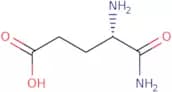
CAS:<p>L-Glutamic acid alpha-amide is an ester hydrochloride that is a tissue culture amide. It is a cyclic peptide analog and a hydroxyl group. L-glutamic acid alpha-amide has been shown to inhibit the inflammatory response in the bowel disease, Crohn's disease, by blocking the toll-like receptor 4 and 5. This drug also inhibits protein synthesis, which may be due to its ability to bind to fatty acids, thereby inhibiting the production of proteins vital for cell division.</p>Formula:C5H10N2O3Purity:Min. 95%Color and Shape:White PowderMolecular weight:146.14 g/molGalanin (1-13)-Neuropeptide Y (25-36) amide
CAS:<p>Please enquire for more information about Galanin (1-13)-Neuropeptide Y (25-36) amide including the price, delivery time and more detailed product information at the technical inquiry form on this page</p>Formula:C136H209N41O34Purity:Min. 95%Molecular weight:2,962.37 g/mol4-Amino-6-(trifluoromethyl)benzene-1,3-disulfonamide
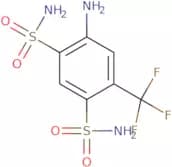
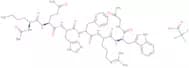
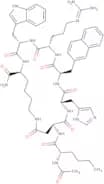
CAS:<p>4-Amino-6-(trifluoromethyl)benzene-1,3-disulfonamide (4AFBDS) is a chemical compound that can be used for the treatment of wastewater. It has shown to be effective against anhydrase, which is an enzyme that catalyzes the conversion of water to hydrogen peroxide and hydroxide ion. 4AFBDS also attenuates oxidative stress in cardiac cells and inhibits the production of active oxygen species by inhibiting the activity of carbonic anhydrase. The chromatographic method used to detect 4AFBDS was found to be more sensitive than a standard colorimetric assay, making it a better tool for detecting this compound in wastewater samples. br> br> br> br> br> This compound has been shown to have inhibitory effects on e3 ubiquitin ligase, which plays a role in protein degradation via aut</p>Formula:C7H8F3N3O4S2Purity:Min. 95%Molecular weight:319.28 g/molN-Acetyl-L-norleucyl-L-glutaminyl-L-histidyl-D-phenylalanyl-L-arginyl-D-tryptophylglycinamide
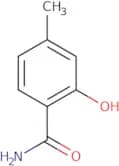
CAS:<p>Please enquire for more information about N-Acetyl-L-norleucyl-L-glutaminyl-L-histidyl-D-phenylalanyl-L-arginyl-D-tryptophylglycinamide including the price, delivery time and more detailed product information at the technical inquiry form on this page</p>Formula:C47H65N15O9Purity:Min. 95%Molecular weight:984.11 g/mol4-Methylsalicylamide
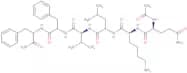
CAS:<p>4-Methylsalicylamide is a chemical compound that belongs to the class of isonicotinic amides. It is a potent anti-inflammatory agent with minimal inhibitory concentration (MIC) values of 4 µg/mL for gram-positive bacteria and 8 µg/mL for gram-negative bacteria. This compound has been shown to be effective against methicillin-resistant Staphylococcus aureus (MRSA) and Clostridium perfringens, although is not active against acid-fast bacteria such as Mycobacterium tuberculosis or Mycobacterium avium complex. 4-Methylsalicylamide has been shown to have an inhibitory effect on ring-opening, which may be due to its ability to acetylate mitochondrial membranes, altering the membrane potential. The molecular modeling studies also showed that 4MSAM binds at the same site as antibiotics such as penicillin and erythromycin in bacterial ribos</p>Formula:C8H9NO2Purity:Min. 95%Color and Shape:PowderMolecular weight:151.16 g/molAcetyl-Amyloid b-Protein (15-20) amide trifluoroacetate salt
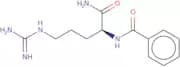
CAS:<p>Please enquire for more information about Acetyl-Amyloid b-Protein (15-20) amide trifluoroacetate salt including the price, delivery time and more detailed product information at the technical inquiry form on this page</p>Formula:C42H63N9O8Purity:Min. 95%Molecular weight:822.01 g/molN-α-Benzoyl-L-argininamide
CAS:<p>N-alpha-Benzoyl-L-argininamide is a synthetic compound that is used as an enzyme inhibitor. It binds to the active site of proteases, thereby inhibiting their activity. This drug has been shown to inhibit the activities of phosphodiesterase and phosphatase enzymes in vitro. N-alpha-Benzoyl-L-argininamide also inhibits the proteolytic degradation of hippuric acid and casein in vitro. The binding affinity for this drug is due to its structural similarity with substrates such as glutamate and rhizosphere exudates.</p>Formula:C13H19N5O2Purity:Min 98%Color and Shape:White PowderMolecular weight:277.32 g/molAcetyl-(Pro18,Asp21)-Amyloid b-Protein (17-21) amide
CAS:<p>Acetyl-(Pro18,Asp21)-Amyloid b-Protein (17-21) amide is a peptide that was generated by incubating β-amyloid with the protease papain. This peptide has been shown to induce population and biochemical changes in cells, including focusing of β-amyloid aggregates. It also induces reactive oxygen species and promotes extracellular protofibril formation. Acetyl-(Pro18,Asp21)-Amyloid b-Protein (17-21) amide is a conjugate of acetylated lysine residues and amyloid β-protein that can be used as an anti-amyloid therapeutic. The peptide is characterized by dichroism spectroscopy, which has revealed its specific binding to the fibrils' surface.</p>Formula:C35H46N6O8Purity:Min. 95%Molecular weight:678.78 g/molHSV-1-amide UL 26 Open Reading Frame (242-255)
CAS:<p>Please enquire for more information about HSV-1-amide UL 26 Open Reading Frame (242-255) including the price, delivery time and more detailed product information at the technical inquiry form on this page</p>Formula:C80H117N21O20SPurity:Min. 95%Molecular weight:1,724.98 g/molGLP-1 (7-36)-Lys(6-FAM) amide (human, bovine, guinea pig, mouse, rat) trifluoroacetate salt
CAS:<p>Please enquire for more information about GLP-1 (7-36)-Lys(6-FAM) amide (human, bovine, guinea pig, mouse, rat) trifluoroacetate salt including the price, delivery time and more detailed product information at the technical inquiry form on this page</p>Formula:C176H248N42O52Purity:Min. 95%Molecular weight:3,784.1 g/molGRF (1-29) amide (human) acetate salt
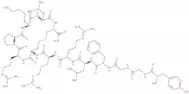
CAS:<p>Growth hormone-releasing factor (GRF) is a peptide fragment of amino acids 1–2 from GHRH (growth hormone-releasing hormone). This 1-29 region is the shortest fully functional fragment of GHRH. GRF is also known as sermorelin. Sermorelin binds to the growth hormone-releasing hormone receptor (GHRH-R), and acts as a surrogate for GHRH, causing growth hormone secretion.human: H-YADAIFTNSYRKVLGQLSARKLLQDIMSR-NH2rat: H-HADAIFTSSYRR I LGQLYARKLLHEIMNR-NH2</p>Formula:C149H246N44O42SPurity:Min. 95%Molecular weight:3,357.88 g/molpTH (1-31) amide (human)
CAS:<p>pTH (1-31) amide is a polymer conjugate that is used to treat osteoporosis. It has been shown to be effective in reducing the risk of fracture and increasing bone mineral density in animals. The compound binds to the extracellular domain of the estrogen receptor, altering its conformation and preventing it from interacting with other proteins in the nucleus. pTH (1-31) amide has also been shown to reduce blood pressure in animals by inhibiting angiotensin-converting enzyme. Clinical data on this drug are limited, but it has been well tolerated so far.</p>Formula:C162H270N50O46S2Purity:Min. 95%Molecular weight:3,718.32 g/molBiotinyl-5-aminopentanoyl-Antennapedia Homeobox (43-58) amide trifluoroacetate salt
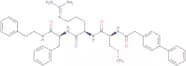
CAS:<p>Please enquire for more information about Biotinyl-5-aminopentanoyl-Antennapedia Homeobox (43-58) amide trifluoroacetate salt including the price, delivery time and more detailed product information at the technical inquiry form on this page</p>Formula:C119H192N38O22S2Purity:Min. 95%Molecular weight:2,571.17 g/mol4-Biphenylac-Cys(Me)-D-Arg-Phe-(2-phenylethyl)amide
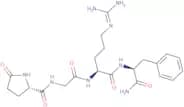
CAS:<p>4-Biphenylac-Cys(Me)-D-Arg-Phe-(2-phenylethyl)amide is a tetrapeptide that has been shown to have antihypertensive properties. This drug binds to the regulatory proteins of the renin angiotensin system and blocks the production of angiotensin II, which decreases blood pressure. 4-Biphenylac-Cys(Me)-D-Arg-Phe-(2-phenylethyl)amide has also shown to be an effective treatment for skin care products, especially those used for inflammatory skin diseases. 4-Biphenylac-Cys(Me)-D-Arg-Phe-(2-phenylethyl)amide has been shown to be a potent inhibitor of serine proteases and can inhibit cellular proliferation and induce apoptosis in cancer cells.</p>Formula:C41H49N7O4SPurity:Min. 95%Molecular weight:735.94 g/molAntho-RFamide Pyr-Gly-Arg-Phe-NH2
CAS:<p>Antho-RFamide Pyr-Gly-Arg-Phe-NH2 is an acidic amino acid. It has been shown to be a precursor of dopamine β-hydroxylase, which is a key enzyme in the synthesis of epinephrine and norepinephrine. This compound has a diameter of 0.8 nm, and it's been observed in cnidarians and multicellular animals. The biological function of Antho-RFamide Pyr-Gly-Arg-Phe-NH2 is not yet known, but it has been sequenced and identified as fatty acid with a sequence that is identical to serotonin. Analysis shows that this molecule contains an acidic environment with an alkaline pH.</p>Formula:C22H32N8O5Purity:Min. 95%Molecular weight:488.54 g/molPAR-2 (6-1) amide (mouse, rat) trifluoroacetate salt
CAS:<p>PAR-2 (6-1) amide is a proteolytic enzyme that is activated by inflammatory stimuli. It has been shown to be a major contributor to the pathogenesis of inflammatory bowel disease, and is found in neurons, the bowel, and pancreatic acinar cells. PAR-2 (6-1) amide activates proteases such as trypsin and chymotrypsin and also functions as an antimicrobial peptide. Activation of PAR-2 (6-1) amide leads to the cleavage of proteins at specific sites on their amino acid chains. This cleavage can lead to changes in protein conformation or function. PAR-2 (6-1) amide has been shown to increase endothelial cell proliferation and inhibit bacterial growth, but does not have any effect on cultured normal human skin fibroblasts.</p>Formula:C29H56N10O7Purity:Min. 95%Molecular weight:656.82 g/molN-Allyl-n-(2-chloro-5-cyanophenyl)acetamide
CAS:<p>N-Allyl-n-(2-chloro-5-cyanophenyl)acetamide is a fine chemical that is used as a building block in the synthesis of other compounds. It is also used in research and as a reagent or speciality chemical. N-Allyl-n-(2-chloro-5-cyanophenyl)acetamide has been shown to be an excellent intermediate for complex organic reactions, such as coupling reactions with amines, alcohols, and thiols. In addition, this compound can be used to form new scaffolds for biological studies.</p>Formula:C12H11ClN2OPurity:Min. 95%Color and Shape:PowderMolecular weight:234.68 g/mol(Cys8·13)-Dynorphin A (1-13) amide
CAS:<p>Please enquire for more information about (Cys8·13)-Dynorphin A (1-13) amide including the price, delivery time and more detailed product information at the technical inquiry form on this page</p>Formula:C69H112N24O14S2Purity:Min. 95%Molecular weight:1,565.91 g/molN,N-Dimethylformamide dibenzyl acetal
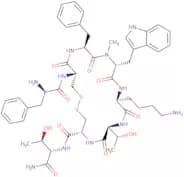
CAS:<p>N,N-Dimethylformamide dibenzyl acetal is an organic solvent that has a low volatility and high solubility in water. It is used as a cosolvent for reactions involving carboxylic acids, formamides, and epoxides. N,N-Dimethylformamide dibenzyl acetal can be used to produce peroxide as a reagent for oxidation reactions. Hydrogen peroxide can be produced from this compound by treatment with thionyl chloride or alkanoic acid. This chemical is also derivatized by the mesoporous method to provide mesoporous silica nanoparticles with enhanced surface area.</p>Purity:Min. 95%(D-Phe5,Cys6·11,N-Me-D-Trp8)-Somatostatin-14 (5-12) amide
CAS:<p>Please enquire for more information about (D-Phe5,Cys6·11,N-Me-D-Trp8)-Somatostatin-14 (5-12) amide including the price, delivery time and more detailed product information at the technical inquiry form on this page</p>Formula:C50H67N11O10S2Purity:Min. 95%Molecular weight:1,046.27 g/molPAR-2 (1-6) amide (mouse, rat) trifluoroacetate salt
CAS:<p>PAR-2 agonist is a synthetic peptide that activates PAR-2. It binds to PAR-2 receptors, which are present in the mesenteric vasculature and in various other tissues. Activation of PAR-2 leads to an increase in intracellular calcium concentration, activation of protein kinase C, cytosolic calcium ion release, phosphorylation of myosin light chain, muscle cell proliferation, transcription and translation initiation, and increased production of vasoactive intestinal peptide. This drug also has anti-inflammatory effects and stimulates epidermal growth factor (EGF) and thrombin receptor expression as well as growth factor production.</p>Formula:C29H56N10O7Purity:Min. 95%Molecular weight:656.82 g/mol(Phe1-psi(CH2NH)Gly2)-Nociceptin (1-13) amide
<p>Please enquire for more information about (Phe1-psi(CH2NH)Gly2)-Nociceptin (1-13) amide including the price, delivery time and more detailed product information at the technical inquiry form on this page</p>Formula:C61H102N22O14Purity:Min. 95%Molecular weight:1,367.6 g/molGalanin (2-11) amide trifluoroacetate salt
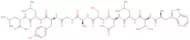
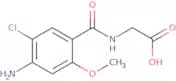
CAS:<p>Galanin (2-11) amide trifluoroacetate salt H-Trp-Thr-Leu-Asn-Ser-Ala-Gly-Tyr-Leu-Leu is a galanin analog and a ligand for the galanin receptor 1. It has affinity for the receptors in the brain, which are involved in cognition, and is used to study Alzheimer's disease. Galanin (2-11) amide trifluoroacetate salt H-Trp-Thr-Leu-Asn-Ser -Ala -Gly -Tyr -Leu -Leu is a member of the family of neuropeptides and neuromodulators that regulate nerve injury and alzheimer's disease.</p>Formula:C54H81N13O14Purity:Min. 95%Molecular weight:1,136.3 g/molN-Des(2-diethylamino) metoclopramide acetic acid
CAS:<p>N-Des(2-diethylamino) metoclopramide acetic acid is a benzyl ester of metoclopramide, a prodrug that is metabolized to the active form in the body. It has been shown to be effective against healthy human subjects and hplc analyses of biological samples have shown it to be a metabolite of metoclopramide. N-Des(2-diethylamino) metoclopramide acetic acid is used as a catalyst for catalytic hydrogenation reactions, such as the conversion of methyl esters into ethyl or butyl esters. It can also be used for catalytic hydrogenation reactions with diazomethane, such as those required for the synthesis of quinolones.</p>Formula:C10H11ClN2O4Purity:Min. 95%Molecular weight:258.66 g/mol(Ser8)-GLP-1 (7-36) amide (human, bovine, guinea pig, mouse, rat) trifluoroacetate salt
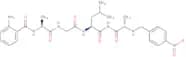
CAS:<p>Please enquire for more information about (Ser8)-GLP-1 (7-36) amide (human, bovine, guinea pig, mouse, rat) trifluoroacetate salt including the price, delivery time and more detailed product information at the technical inquiry form on this page</p>Formula:C149H226N40O46Purity:Min. 95%Molecular weight:3,313.63 g/molAbz-Ala-Gly-Leu-Ala-p-nitrobenzylamide
CAS:<p>Benzamidine is a benzamidase inhibitor that competitively binds to bacterial enzymes such as metalloendopeptidases and matrix metalloproteinases. It inhibits the degradation of collagen, resulting in a higher concentration of soluble extract. This drug also has an effect on spermatozoa, which may be due to its ability to inhibit bacterial enzymes that are involved with uptake and preload. Benzamidine has been shown to have a pH optimum of 8-9 and is most active at this pH range.</p>Formula:C28H37N7O7Purity:Min. 95%Molecular weight:583.64 g/molOsteostatin (1-5) amide (human, bovine, dog, horse, mouse, rabbit, rat) trifluoroacetate salt
CAS:<p>Please enquire for more information about Osteostatin (1-5) amide (human, bovine, dog, horse, mouse, rabbit, rat) trifluoroacetate salt including the price, delivery time and more detailed product information at the technical inquiry form on this page</p>Formula:C27H42N10O7Purity:Min. 95%Molecular weight:618.69 g/molN-Acetyl-L-norleucyl-L-a-aspartyl-L-histidyl-3-(2-naphthalenyl)-D-alanyl-L-arginyl-L-tryptophyl-L-lysinamide-(2,7) -lactam
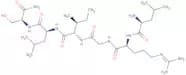
CAS:<p>Please enquire for more information about N-Acetyl-L-norleucyl-L-a-aspartyl-L-histidyl-3-(2-naphthalenyl)-D-alanyl-L-arginyl-L-tryptophyl-L-lysinamide-(2,7) -lactam including the price, delivery time and more detailed product information at the technical inquiry form on this page</p>Formula:C54H71N15O9Purity:Min. 95%Molecular weight:1,074.24 g/molPAR-2 (1-6) amide (human) trifluoroacetate salt
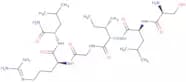
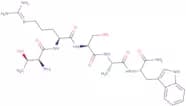
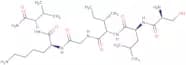
CAS:<p>PAR-2 (1-6) amide (human) trifluoroacetate salt H-Ser-Leu-Ile-Gly-Lys-Val-NH2 trifluoroacetate salt is a protease inhibitor that inhibits the activity of PAR2, a protein receptor. PAR2 is implicated in cancer and inflammation. It has been shown to inhibit growth factor signaling, as well as activate toll-like receptor 4 and other inflammatory pathways. PAR2 inhibition has also been studied in vivo and found to be effective in treating wild type mice with melanoma cells. In vitro studies have shown that PAR2 inhibition by PAR 2 (1-6) amide (human) trifluoroacetate salt H-Ser-Leu-Ile-Gly-Lys-Val NH2 trifluoroacetate salt blocks the production of tumour necrosis factor alpha and interleukin 6.</p>Formula:C28H54N8O7Purity:Min. 95%Molecular weight:614.78 g/molAmyloid β-Protein (25-35) amide trifluoroacetate salt
CAS:Please enquire for more information about Amyloid beta-Protein (25-35) amide trifluoroacetate salt including the price, delivery time and more detailed product information at the technical inquiry form on this pageFormula:C45H82N14O13SPurity:Min. 95%Molecular weight:1,059.29 g/mol(Nle 8·18,Tyr34)-pTH (3-34) amide (bovine)
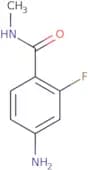
CAS:<p>Please enquire for more information about (Nle 8·18,Tyr34)-pTH (3-34) amide (bovine) including the price, delivery time and more detailed product information at the technical inquiry form on this page</p>Formula:C177H279N53O48Purity:Min. 95%Molecular weight:3,917.44 g/molN-Methyl-2-fluoro-4-aminobenzamide
CAS:<p>N-Methyl-2-fluoro-4-aminobenzamide is a toxic compound that is commonly used as a reagent in chemical synthesis and research. It has been studied for its potential use in medicine, particularly in the treatment of castration-resistant prostate cancer. N-Methyl-2-fluoro-4-aminobenzamide acts as a nucleophilic agent, participating in reactions that involve the addition of an acyl group to a target molecule. Its stable formyl group allows for efficient reaction yields and reliable results. However, due to its toxic nature, caution must be exercised when handling this compound.</p>Formula:C8H9FN2OPurity:Min. 95%Molecular weight:168.17 g/mol

![N-[(1S)-1-(Aminocarbonyl)propyl]-4-chlorobutanamide](/_next/image/?url=https%3A%2Fstatic.cymitquimica.com%2Fproducts%2F3D%2Fthumb-webp%2FFA171302.webp&w=3840&q=75)