Carboxylic Acids
Carboxylic acids are organic molecules characterized by having a carboxyl-type functional group (-COOH). These acids are fundamental in various chemical reactions, including esterification, amidation, and decarboxylation. Carboxylic acids are widely used in the production of pharmaceuticals, polymers, and agrochemicals. In this section, you can find a large number of carboxylic acids ready to be used. At CymitQuimica, we provide a broad range of high-quality carboxylic acids to support your research and industrial applications.
Found 12453 products of "Carboxylic Acids"
Sort by
Purity (%)
0
100
|
0
|
50
|
90
|
95
|
100
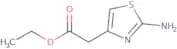
Ethyl 2-amino-4-thiazoleacetate
CAS:<p>Ethyl 2-amino-4-thiazoleacetate is a supramolecular molecule that has the potential to be an anticancer agent. It inhibits the growth of tumor cells by binding to tyrosinase and hydrogen-bonding with chloride ions in solution. Ethyl 2-amino-4-thiazoleacetate also binds to a metal ion, such as zinc, which is important for biological functions. When it binds to these metals, it inhibits the enzyme hepg2 cell, which is involved in the synthesis of protein from RNA. Inhibition of this enzyme leads to decreased production of cytokines, which are molecules that regulate immune responses. This drug also has inhibitory activities against oral cephalosporins when used in combination with other drugs.</p>Formula:C7H10N2O2SPurity:Min. 95%Molecular weight:186.23 g/mol1-(4-Isopropylphenyl)-5-oxopyrrolidine-3-carboxylic acid
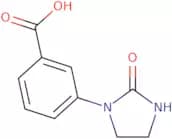
CAS:<p>Please enquire for more information about 1-(4-Isopropylphenyl)-5-oxopyrrolidine-3-carboxylic acid including the price, delivery time and more detailed product information at the technical inquiry form on this page</p>Formula:C14H17NO3Purity:Min. 95%Molecular weight:247.29 g/mol3-(2-Oxo-imidazolidin-1-yl)benzoic acid
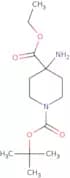
CAS:<p>Please enquire for more information about 3-(2-Oxo-imidazolidin-1-yl)benzoic acid including the price, delivery time and more detailed product information at the technical inquiry form on this page</p>Formula:C10H10N2O3Purity:Min. 95%Molecular weight:206.2 g/mol1,4-Piperidinedicarboxylic acid, 4-aMino-, 1-(1,1-diMethylethyl) 4-ethyl ester
CAS:Please enquire for more information about 1,4-Piperidinedicarboxylic acid, 4-aMino-, 1-(1,1-diMethylethyl) 4-ethyl ester including the price, delivery time and more detailed product information at the technical inquiry form on this pageFormula:C13H25N2O4Purity:Min. 95%Molecular weight:273.35 g/molDL-Malic acid - food grade
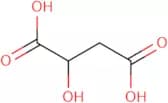
CAS:<p>DL-Malic acid is an organic acid that plays a role in the citric acid cycle. It is also used as an antimicrobial agent, and has been shown to be effective against fungi and bacteria. DL-Malic acid binds to the active site of complex enzymes involved in energy metabolism and has been shown to inhibit transcriptional regulation of numerous genes. DL-Malic acid has also shown to have a positive effect on metabolic disorders such as diabetes mellitus and hypoglycemia. DL-Malic acid may be synthesized with sodium salts or sodium citrate, depending on the desired end product. This compound can also be produced by laser ablation of malonic acid or by enzymatic oxidation of tartaric acid, which is a natural source of this chemical.</p>Formula:C4H6O5Purity:Min. 95%Molecular weight:134.09 g/mol3,5,7-Trimethyladamantane-1-carboxylic acid
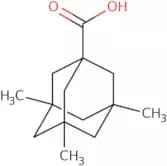
CAS:<p>Please enquire for more information about 3,5,7-Trimethyladamantane-1-carboxylic acid including the price, delivery time and more detailed product information at the technical inquiry form on this page</p>Formula:C14H22O2Purity:Min. 95%Molecular weight:222.32 g/mol2-Methyl-3-(4-methyl-1H-pyrazol-1-yl)propanoic acid
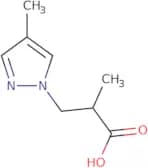
CAS:Controlled Product<p>Please enquire for more information about 2-Methyl-3-(4-methyl-1H-pyrazol-1-yl)propanoic acid including the price, delivery time and more detailed product information at the technical inquiry form on this page</p>Formula:C8H12N2O2Purity:Min. 95%Molecular weight:168.19 g/mol(-)-trans-1,2-Cyclohexanedicarboxylic Anhydride
CAS:Controlled Product<p>(-)-trans-1,2-Cyclohexanedicarboxylic Anhydride is a macrocyclic molecule that can be used to synthesize glutaric anhydride. This compound is an analogue of the succinic anhydride and 1,2-cyclohexanedicarboxylic anhydride. (-)-trans-1,2-Cyclohexanedicarboxylic Anhydride has been shown to catalyze the hydrogenation of epoxides. It also has been shown to be a potential precursor for the synthesis of pyrrolizidine alkaloids.</p>Formula:C8H10O3Purity:Min. 95%Molecular weight:154.16 g/molTetrakis[N-phthaloyl-(S)-phenylalaninato]dirhodium Ethyl Acetate Adduct
CAS:<p>Please enquire for more information about Tetrakis[N-phthaloyl-(S)-phenylalaninato]dirhodium Ethyl Acetate Adduct including the price, delivery time and more detailed product information at the technical inquiry form on this page</p>Formula:C68H48N4O16Rh2·C4H8O2Purity:Min. 95%Molecular weight:1,471.04 g/mol1-[2-(Methoxycarbonyl)phenyl]-5-oxopyrrolidine-3-carboxylic acid
CAS:<p>Please enquire for more information about 1-[2-(Methoxycarbonyl)phenyl]-5-oxopyrrolidine-3-carboxylic acid including the price, delivery time and more detailed product information at the technical inquiry form on this page</p>Formula:C13H13NO5Purity:Min. 95%Molecular weight:263.25 g/molIsopentylboronic acid
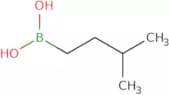
CAS:<p>Isopentylboronic acid is a boron-containing organic compound that is used for the catalysis of cross-coupling reactions, such as the Suzuki reaction. It reacts with aryl halides to form an alkylboronic ester and a metal salt. Isopentylboronic acid is also used to produce trimers in the presence of formyl or nitro groups. Isopentylboronic acid may also be used as a reagent to convert alcohols into chlorides or bromides. This compound has been shown to react with alkali metal ions on one side and alkyl substituents on the other side, leading to deuterium incorporation at the carbon atom adjacent to the carboxylic acid group. Isopentylboronic acid can also be used for dehydrating alcohols and converting alkynes into alkenes when heated in the presence of an alkali metal chloride.</p>Formula:C5H13BO2Purity:Min. 95%Molecular weight:115.97 g/molBoc-Gln-Arg-Arg-AMC acetate salt
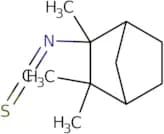
CAS:<p>Please enquire for more information about Boc-Gln-Arg-Arg-AMC acetate salt including the price, delivery time and more detailed product information at the technical inquiry form on this page</p>Formula:C32H49N11O8Purity:Min. 95%Molecular weight:715.8 g/mol2,3,3-Trimethyl-2-norbornyl isothiocyanic acid ester
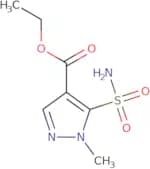
CAS:<p>Please enquire for more information about 2,3,3-Trimethyl-2-norbornyl isothiocyanic acid ester including the price, delivery time and more detailed product information at the technical inquiry form on this page</p>Formula:C11H17NSPurity:Min. 95%Molecular weight:195.33 g/molEthyl 1-methyl-5-sulfamoylpyrazole-4-carboxylate
CAS:<p>Ethyl 1-methyl-5-sulfamoylpyrazole-4-carboxylate (EMS) is a fluorescent dye that is used as a reagent for identification of bacterial strains and in sequencing techniques. EMS reacts with dioxane, triazine, and alkylating agents to form yellow compounds. It can be synthesized from 5-aminopyrazole and ethyl chloroformate in basic ph buffers.</p>Purity:Min. 95%[2-(Difluoromethyl)phenyl]boronic acid
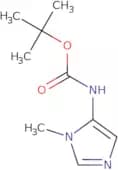
CAS:<p>Please enquire for more information about [2-(Difluoromethyl)phenyl]boronic acid including the price, delivery time and more detailed product information at the technical inquiry form on this page</p>Formula:C7H7BF2O2Purity:Min. 95%Molecular weight:171.94 g/moltert-Butyl (1-methyl-1H-imidazol-5-yl)carbamate
CAS:<p>Please enquire for more information about tert-Butyl (1-methyl-1H-imidazol-5-yl)carbamate including the price, delivery time and more detailed product information at the technical inquiry form on this page</p>Formula:C9H15N3O2Purity:Min. 95%Molecular weight:197.23 g/mol2-Hydroxyquinoline-4-carboxylic acid
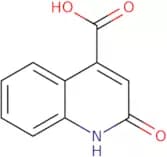
CAS:<p>2-Hydroxyquinoline-4-carboxylic acid is a carboxylate that is structurally classified as a multidrug. It has been shown to inhibit bacterial efflux pumps and target enzymes, such as cancer cells and multidrug resistant bacteria. 2-Hydroxyquinoline-4-carboxylic acid also has potent antibacterial activity against Streptococcus faecalis, an opportunistic pathogen that causes infections in the urinary tract and on skin wounds. The fluorescence properties of this compound can be used for fluorescent labeling of biomolecules or for sensing applications.</p>Formula:C10H7NO3Purity:Min. 95%Color and Shape:PowderMolecular weight:189.17 g/molBromoacetic acid
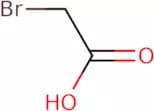
CAS:<p>Bromoacetic acid is a brominated carboxylic acid that has been shown to bind to response elements and inhibit the synthesis of proteins. It has been shown to inhibit the growth of bacteria in human serum at concentrations of 1-5 mM. Bromoacetic acid also binds to metals, such as copper and zinc, and inhibits their activity. This compound has also been shown to have anti-inflammatory properties in experimental models. Bromoacetic acid is not toxic in rats, but it may cause myocardial infarction in humans.</p>Formula:C2H3BrO2Purity:Min. 95%Color and Shape:Clear LiquidMolecular weight:138.95 g/mol7b-Hydroxy cholesterol 3b-acetate
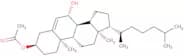
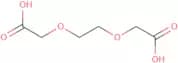
CAS:Controlled Product7b-Hydroxy cholesterol 3b-acetate is an allylic compound that is catalyzed by molybdenum, which eliminates the acetyl group at position 7 to form a double bond with the 3-position. The reaction temperature of 7b-hydroxy cholesterol 3b-acetate can be increased to high temperatures (i.e., >100°C) for the elimination process, and allylic acetates are obtained as products. The reaction starts with the addition of hexacarbonyl, which leads to a diene intermediate. This is then eliminated by adding acetamide in presence of high concentration of acetic acid and catalytic amounts of molybdenum. The low yield and efficiency, however, are major drawbacks of this process.Formula:C29H48O3Purity:Min. 95%Molecular weight:444.69 g/mol3,6-Dioxaoctanedioic acid
CAS:<p>3,6-Dioxaoctanedioic acid is a functional group that can be found in nature and has been studied for its potential to inhibit cancer cell growth. 3,6-Dioxaoctanedioic acid is a magnesium salt that is used as an experimental drug to treat bronchial asthma. It works by interfering with the function of serine protease enzymes. In addition, this compound has been shown to have particle size and transport properties that are suitable for inhalation therapy. These properties make it an effective drug for treatment of respiratory diseases such as asthma or chronic obstructive pulmonary disease.</p>Formula:C6H10O6Purity:90%MinMolecular weight:178.14 g/mol



![Tetrakis[N-phthaloyl-(S)-phenylalaninato]dirhodium Ethyl Acetate Adduct](/_next/image/?url=https%3A%2Fstatic.cymitquimica.com%2Fproducts%2F3D%2Fthumb-webp%2FFT60014.webp&w=3840&q=75)
![1-[2-(Methoxycarbonyl)phenyl]-5-oxopyrrolidine-3-carboxylic acid](/_next/image/?url=https%3A%2Fstatic.cymitquimica.com%2Fproducts%2F3D%2Fthumb-webp%2FFM123736.webp&w=3840&q=75)

![[2-(Difluoromethyl)phenyl]boronic acid](/_next/image/?url=https%3A%2Fstatic.cymitquimica.com%2Fproducts%2F3D%2Fthumb-webp%2FFD84620.webp&w=3840&q=75)