Carboxylic Acids
Carboxylic acids are organic molecules characterized by having a carboxyl-type functional group (-COOH). These acids are fundamental in various chemical reactions, including esterification, amidation, and decarboxylation. Carboxylic acids are widely used in the production of pharmaceuticals, polymers, and agrochemicals. In this section, you can find a large number of carboxylic acids ready to be used. At CymitQuimica, we provide a broad range of high-quality carboxylic acids to support your research and industrial applications.
Found 12453 products of "Carboxylic Acids"
Sort by
Purity (%)
0
100
|
0
|
50
|
90
|
95
|
100
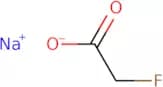
Sodium fluoroacetate
CAS:<p>Sodium fluoroacetate is a salt that is synthesized by the reaction of methyl ethyl and sodium trifluoroacetate. It has been used as an insecticide, but also has been used to treat metabolic disorders such as bowel disease and eye disorders. Sodium fluoroacetate also has been used in natural products for the treatment of autoimmune diseases. The toxicological studies of sodium fluoroacetate have shown that it can cause eye disorders and x-ray crystal structures have revealed its mechanism of action.</p>Formula:C2H2FNaO2Color and Shape:White PowderMolecular weight:100.02 g/molHepcidin-1 (mouse) trifluoroacetate salt
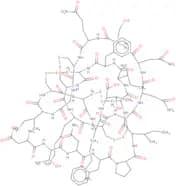
CAS:<p>Please enquire for more information about Hepcidin-1 (mouse) trifluoroacetate salt including the price, delivery time and more detailed product information at the technical inquiry form on this page</p>Formula:C111H169N31O35S8Purity:Min. 95%Molecular weight:2,754.25 g/mol2-Chloro-3,4-dihydroxybenzoic acid
CAS:<p>Cefepime is a broad-spectrum antibiotic that is used to treat bacterial infections. It inhibits cell wall synthesis by binding to the penicillin-binding proteins and interfering with the cross-linking of peptidoglycan. Cefepime has been shown to be active against gram-negative pathogens such as Aeruginosa, Stenotrophomonas maltophilia, and P. aeruginosa. Cefepime also inhibits the growth of gram-positive bacteria such as Staphylococcus aureus, Enterococcus faecalis, and Streptococcus pneumoniae. The chemical structure of cefepime is similar to that of other beta-lactam antibiotics like methicillin, oxacillin, cloxacillin, ampicillin, and amoxicillin. Cefepime has been shown to be effective in treating resistant gram-negative organisms such as Pseudomonas aeruginosa (P.</p>Formula:C7H5ClO4Purity:Min. 95%Color and Shape:White To Yellow To Light Brown SolidMolecular weight:188.56 g/molNeuroendocrine Regulatory Peptide-4 (human, mouse, rat) trifluoroacetate salt
CAS:<p>Please enquire for more information about Neuroendocrine Regulatory Peptide-4 (human, mouse, rat) trifluoroacetate salt including the price, delivery time and more detailed product information at the technical inquiry form on this page</p>Formula:C87H135N25O24Purity:Min. 95%Molecular weight:1,915.16 g/molNeuropeptide Y (2-36) (human, rat) trifluoroacetate salt
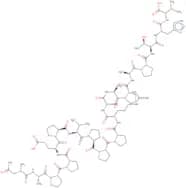
CAS:<p>Please enquire for more information about Neuropeptide Y (2-36) (human, rat) trifluoroacetate salt including the price, delivery time and more detailed product information at the technical inquiry form on this page</p>Formula:C180H276N54O55SPurity:Min. 95%Molecular weight:4,108.51 g/molDansyl-Ala-Arg-OH trifluoroacetate salt
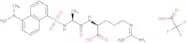
CAS:<p>Please enquire for more information about Dansyl-Ala-Arg-OH trifluoroacetate salt including the price, delivery time and more detailed product information at the technical inquiry form on this page</p>Formula:C21H30N6O5SPurity:Min. 95%Molecular weight:478.57 g/molPAR-2 (6-1) amide (mouse, rat) trifluoroacetate salt
CAS:<p>PAR-2 (6-1) amide is a proteolytic enzyme that is activated by inflammatory stimuli. It has been shown to be a major contributor to the pathogenesis of inflammatory bowel disease, and is found in neurons, the bowel, and pancreatic acinar cells. PAR-2 (6-1) amide activates proteases such as trypsin and chymotrypsin and also functions as an antimicrobial peptide. Activation of PAR-2 (6-1) amide leads to the cleavage of proteins at specific sites on their amino acid chains. This cleavage can lead to changes in protein conformation or function. PAR-2 (6-1) amide has been shown to increase endothelial cell proliferation and inhibit bacterial growth, but does not have any effect on cultured normal human skin fibroblasts.</p>Formula:C29H56N10O7Purity:Min. 95%Molecular weight:656.82 g/molMca-Amyloid β/A4 Protein Precursor770 (667-676)-Lys(Dnp)-Arg-Arg amide trifluoroacetate salt
CAS:<p>Please enquire for more information about Mca-Amyloid beta/A4 Protein Precursor770 (667-676)-Lys(Dnp)-Arg-Arg amide trifluoroacetate salt including the price, delivery time and more detailed product information at the technical inquiry form on this page</p>Formula:C87H129N27O28SPurity:Min. 95%Molecular weight:2,033.19 g/mol2-Hydroxyethanesulfonic acid sodium salt
CAS:<p>2-Hydroxyethanesulfonic acid sodium salt is a drug that is used to treat metabolic disorders such as cystinuria and hyperchloremic metabolic acidosis. It is also used for the treatment of water-vapor related respiratory problems and cataracts, as well as for the prevention of renal stone formation. This drug is made through electrochemical impedance spectroscopy of taurine in reaction solution with phosphorus pentoxide. 2-Hydroxyethanesulfonic acid sodium salt has been shown to increase locomotor activity in rats by improving their biochemical properties. This compound binds to the chloride ion receptor site on the Na+/K+ ATPase, causing an inhibition of the enzyme's function.</p>Formula:C2H5O4S·NaPurity:Min. 95%Color and Shape:White PowderMolecular weight:148.11 g/mol...(Ala13)-Apelin-13 (human, bovine, mouse, rat) trifluoroacetate salt
CAS:<p>Apelin-13 is a peptide hormone that is involved in the regulation of cardiovascular, respiratory and gastrointestinal functions. It has been shown to stimulate receptor activity and pain sensitivity in animal models. Apelin-13 has been shown to act as an opioid receptor agonist, meaning that it binds to the opioid receptors and activates them. This activation leads to an increase in the production of growth factors and matrix metalloproteinases, which are proteins that break down collagen and other substances in the body. The increased production of these substances can lead to inflammation and tissue destruction. Apelin-13 also interacts with several other receptors including CB2 (a cannabinoid receptor), GPCR (a G protein-coupled receptor), CRHR1 (a corticotropin releasing hormone receptor 1) and Naloxone (an opioid antagonist).</p>Formula:C63H107N23O16S·xC2HF3O2Purity:Min. 95%Molecular weight:1,474.74 g/molEndothelin-1 (human, bovine, dog, mouse, porcine, rat) acetate
CAS:<p>Endothelin-1 (ET-1) is a peptide that is produced by the endothelium. ET-1 is involved in numerous biological processes, including vasoconstriction, inflammation, and cell proliferation. Endothelin-1 (human ET-1) acetate salt H-Cys-Ser-Cys-Ser-Ser-Leu-Met-Asp-Lys-(Glu)-Cys-(Val)-Tyr-(Phe)-Cys-(His)-Leu -Asp(-Ile)-Ile(-Trp)) acetate salt is a recombinant protein that has been shown to significantly upregulate the production of endothelin in primary pulmonary hypertension. It also plays an important role in bowel disease, where it may be involved in the development of chronic inflammatory bowel disease.</p>Formula:C109H159N25O32S5•(C2H4O2)xPurity:Min. 95%Molecular weight:2,491.91 g/molH-Val-Ile-His-Thr-EDANS acetate salt
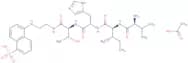
CAS:Controlled Product<p>Please enquire for more information about H-Val-Ile-His-Thr-EDANS acetate salt including the price, delivery time and more detailed product information at the technical inquiry form on this page</p>Formula:C33H48N8O8SPurity:Min. 95%Molecular weight:716.85 g/molNeuromedin U-25 (human) trifluoroacetate salt
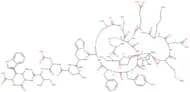
CAS:<p>Please enquire for more information about Neuromedin U-25 (human) trifluoroacetate salt including the price, delivery time and more detailed product information at the technical inquiry form on this page</p>Formula:C141H203N41O38Purity:Min. 95%Molecular weight:3,080.37 g/mol2-Chloropyridine-4-boronic acid
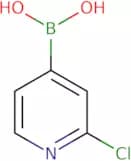
CAS:<p>2-Chloropyridine-4-boronic acid is a nicotinic acetylcholine receptor antagonist that has been shown to be effective against trypanosomiasis. It blocks the binding of acetylcholine to its receptor, which prevents the propagation of an action potential in the postsynaptic cell. 2-Chloropyridine-4-boronic acid inhibits the enzymes cyclooxygenase and prostaglandin synthase, which are involved in inflammation. 2-Chloropyridine-4-boronic acid is potent and selective for nicotinic acetylcholine receptors, but it also binds to other sites on the enzyme. The molecular modeling studies have shown that this compound has a pharmacophore that can be used as a guide for drug design.</p>Formula:C5H5BClNO2Purity:Min. 95%Molecular weight:157.36 g/molNeuromedin U-8 (porcine) trifluoroacetate salt
CAS:<p>Neuromedin U-8 (porcine) trifluoroacetate salt H-Tyr-Phe-Leu-Phe-Arg-Pro-Arg-Asn-NH2 trifluoroacetate salt is a molecule that inhibits the action of vasoactive intestinal peptide. It is a peptide hormone that has been shown to be involved in the regulation of bowel function and blood pressure. Neuromedin U-8 (porcine) trifluoroacetate salt H-Tyr-Phe-Leu-Phe-Arg-Pro-Arg-Asn NH2 trifluoroacetate salt has also been shown to inhibit cell proliferation, cancer, and inflammatory bowel disease. Neuromedin U 8 (porcine) trifluoroacetate salt H Tyr Phe Leu Phe Arg Pro Arg Asn NH2 trifluoroacetate salt binds to the receptor for</p>Formula:C54H78N16O10Purity:Min. 95%Molecular weight:1,111.3 g/mol3-Hydroxy-4-methyl-2-nitro-benzoic acid
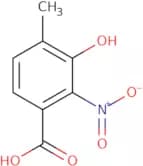
CAS:<p>3-Hydroxy-4-methyl-2-nitrobenzoic acid is an analog of the natural substrate for the enzyme nitroreductase. It can be used in oxidative coupling reactions to generate a covalently bonded product, which is immobilized on sepharose. 3-Hydroxy-4-methyl-2-nitrobenzoic acid has a high affinity for nucleic acids and can be used in biospecific assays. The chromophore of 3-hydroxy-4-methyl-2-nitrobenzoic acid is easily oxidized, leading to its use in nitroreduction reactions in which a nitro group is reduced to an amino group.</p>Purity:Min. 95%CART (55-102) (human) trifluoroacetate salt
CAS:<p>CART (55-102) is a specific amino acid that has been shown to bind to the CART receptor. It has been found in human and rat tissue, including the brain, pituitary gland, and pancreas. This compound is thought to be involved in regulating appetite and energy expenditure. The CART (55-102) trifluoroacetate salt has been shown to be active in a variety of animal models for obesity and diabetes, as well as for reducing food intake.</p>Formula:C225H365N65O65S7Purity:Min. 95%Molecular weight:5,245.17 g/mol(Pro3)-Gastric Inhibitory Polypeptide (human) trifluoroacetate salt
CAS:<p>Please enquire for more information about (Pro3)-Gastric Inhibitory Polypeptide (human) trifluoroacetate salt including the price, delivery time and more detailed product information at the technical inquiry form on this page</p>Formula:C226H338N60O64SPurity:Min. 95%Molecular weight:4,951.53 g/mol(Des-Bromo)-Neuropeptide B (1-23) (human) trifluoroacetate salt
CAS:<p>Please enquire for more information about (Des-Bromo)-Neuropeptide B (1-23) (human) trifluoroacetate salt including the price, delivery time and more detailed product information at the technical inquiry form on this page</p>Formula:C107H162N30O30Purity:Min. 95%Molecular weight:2,348.62 g/mol(Gln11)-Amyloid b-Protein (1-28) trifluoroacetate salt
CAS:<p>Please enquire for more information about (Gln11)-Amyloid b-Protein (1-28) trifluoroacetate salt including the price, delivery time and more detailed product information at the technical inquiry form on this page</p>Formula:C145H210N42O45Purity:Min. 95%Molecular weight:3,261.47 g/mol