


Carboxylic Acids
Carboxylic acids are organic molecules characterized by having a carboxyl-type functional group (-COOH). These acids are fundamental in various chemical reactions, including esterification, amidation, and decarboxylation. Carboxylic acids are widely used in the production of pharmaceuticals, polymers, and agrochemicals. In this section, you can find a large number of carboxylic acids ready to be used. At CymitQuimica, we provide a broad range of high-quality carboxylic acids to support your research and industrial applications.
Found 12453 products of "Carboxylic Acids"
Sort by
Purity (%)
0
100
|
0
|
50
|
90
|
95
|
100
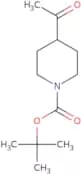
4-Acetyl-piperidine-1-carboxylic acid tert-butyl ester
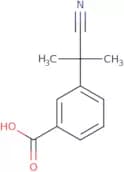
CAS:<p>4-Acetylpiperidine-1-carboxylic acid tert-butyl ester is a tert-butyl ester of 4-acetylpiperidine. It can be prepared by the reaction of sodium azide with chloroform and tert-butyl alcohol. The resulting product is a white solid that can be used as an intermediate in organic synthesis.</p>Formula:C12H21NO3Purity:Min. 95%Molecular weight:227.3 g/mol3-(2-Cyanopropan-2-yl)benzoic acid
CAS:<p>Please enquire for more information about 3-(2-Cyanopropan-2-yl)benzoic acid including the price, delivery time and more detailed product information at the technical inquiry form on this page</p>Formula:C11H11NO2Purity:Min. 95%Molecular weight:189.21 g/molAmyloid Bri Protein (1-34) trifluoroacetate salt
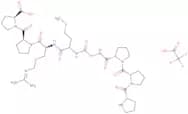
CAS:<p>Please enquire for more information about Amyloid Bri Protein (1-34) trifluoroacetate salt including the price, delivery time and more detailed product information at the technical inquiry form on this page</p>Formula:C173H273N49O52S2Purity:Min. 95%Molecular weight:3,935.45 g/molH-Pro-Pro-Pro-Gly-Met-Arg-Pro-Pro-OH trifluoroacetate salt
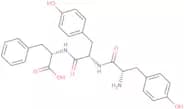
CAS:<p>Please enquire for more information about H-Pro-Pro-Pro-Gly-Met-Arg-Pro-Pro-OH trifluoroacetate salt including the price, delivery time and more detailed product information at the technical inquiry form on this page</p>Formula:C38H61N11O9SPurity:Min. 95%Molecular weight:848.03 g/molH-Tyr-Tyr-Phe-OH acetate salt
CAS:<p>H-Tyr-Tyr-Phe-OH acetate salt is a reaction product of the matrix-assisted laser desorption ionization (MALDI) technique. It is an analog of tyrosine, with a hydroxyl group substituted for the amino group. The protonation state of this molecule has been determined by the hydration constant and the centroid to be a neutral pH. Using hydrogen bonding, H-Tyr-Tyr-Phe-OH acetate salt binds to the mitochondria in cells, which may lead to a higher rate of reaction.</p>Formula:C27H29N3O6Purity:Min. 95%Molecular weight:491.54 g/mol(Pen 5)-Urotensin II (4-11) (human) trifluoroacetate salt
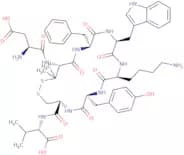
CAS:<p>Please enquire for more information about (Pen 5)-Urotensin II (4-11) (human) trifluoroacetate salt including the price, delivery time and more detailed product information at the technical inquiry form on this page</p>Formula:C52H68N10O12S2Purity:Min. 95%Molecular weight:1,089.29 g/molPAR-2 (1-6) (mouse, rat) trifluoroacetate salt
CAS:<p>Please enquire for more information about PAR-2 (1-6) (mouse, rat) trifluoroacetate salt including the price, delivery time and more detailed product information at the technical inquiry form on this page</p>Formula:C29H55N9O8Purity:Min. 95%Molecular weight:657.8 g/mol3-(Difluoromethyl)-1-methyl-1H-pyrazole-4-carboxylic acid
CAS:<p>3-(Difluoromethyl)-1-methyl-1H-pyrazole-4-carboxylic acid is a synthetic chemical that is used as a pesticide. This chemical has been found to be more effective than other pesticides because it can inhibit the synthesis of fatty acids, which are necessary for the growth of insect larvae. 3-(Difluoromethyl)-1-methyl-1H-pyrazole-4-carboxylic acid is synthesized by reacting sodium hydroxide solution with triethyl orthoformate in the presence of hexamethylenetetramine. This reaction produces a mixture of diethyl ester and carboxylate esters, which are then separated from each other. The resulting carboxylate ester is then oxidized to produce 3-(difluoromethyl)-1-methyl-1H pyrazole 4 carboxylic acid.</p>Formula:C6H6F2N2O2Purity:Min. 95%Color and Shape:White Off-White PowderMolecular weight:176.12 g/molOsteostatin amide trifluoroacetate
CAS:<p>Please enquire for more information about Osteostatin amide trifluoroacetate including the price, delivery time and more detailed product information at the technical inquiry form on this page</p>Formula:C142H229N43O57•(C2HF3O2)xPurity:Min. 95%Molecular weight:3,450.59 g/mol3,4,5-Trichlorobenzoic acid
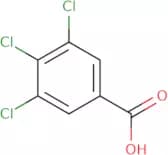
CAS:<p>Trichlorobenzoic acid is a chemical compound that is found in plants, such as Trifolium pratense L. and other legumes. It has been shown to inhibit the growth of bacteria by competitive inhibition of the enzyme ribonucleotide reductase, which catalyzes the conversion of ribonucleotides to deoxyribonucleotides. This prevents the production of RNA, which is necessary for protein synthesis and cell division. Inhibition of this enzyme can be achieved by either conjugating trichlorobenzoic acid with a sugar or using ion-exchange resins to remove it from water. The concentration required for this type of inhibition varies depending on the type of organism, but generally ranges between 5-10 ppm.END></p>Purity:Min. 95%Fmoc-L-glutamic acid γ-methyl ester
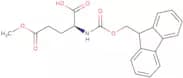
CAS:<p>Please enquire for more information about Fmoc-L-glutamic acid gamma-methyl ester including the price, delivery time and more detailed product information at the technical inquiry form on this page</p>Formula:C21H21NO6Purity:Min. 95%Molecular weight:383.39 g/molN-Fmoc-L-γ-carboxyglutamic acid γ,γ-di-t-butyl ester
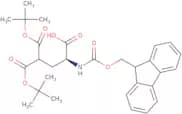
CAS:<p>Please enquire for more information about N-Fmoc-L-gamma-carboxyglutamic acid gamma,gamma-di-t-butyl ester including the price, delivery time and more detailed product information at the technical inquiry form on this page</p>Formula:C29H35NO8Purity:Min. 95%Molecular weight:525.59 g/molH-D-Pro-Phe-Arg-chloromethylketone trifluoroacetate salt
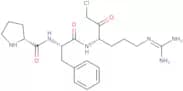
CAS:<p>H-D-Pro-Phe-Arg-chloromethylketone trifluoroacetate salt is a polyvalent antivenom that is used in the treatment of snakebites and insect stings. It has been shown to be effective in the treatment of life-threatening envenomations, including bites from cobras and other rattlesnakes. This drug is not active against nonactivated venom, such as those from bees or spiders. H-D-Pro-Phe-Arg-chloromethylketone trifluoroacetate salt binds to the cytolysin, which prevents its activity by inactivating it. The drug also has a vasoconstrictive effect, which limits blood flow to tissues and may reduce tissue damage caused by venom toxins.</p>Formula:C21H31ClN6O3Purity:Min. 95%Molecular weight:450.96 g/mol(D-Leu6)-LHRH (1-8) (free acid) trifluoroacetate salt
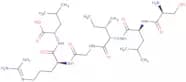
CAS:<p>Please enquire for more information about (D-Leu6)-LHRH (1-8) (free acid) trifluoroacetate salt including the price, delivery time and more detailed product information at the technical inquiry form on this page</p>Formula:C52H72N14O12Purity:Min. 95%Molecular weight:1,085.22 g/molAbz-(Asn670,Leu671)-Amyloid β/A4 Protein Precursor770 (669-674)-EDDnp trifluoroacetate salt
CAS:<p>Please enquire for more information about Abz-(Asn670,Leu671)-Amyloid beta/A4 Protein Precursor770 (669-674)-EDDnp trifluoroacetate salt including the price, delivery time and more detailed product information at the technical inquiry form on this page</p>Formula:C42H58N12O16Purity:Min. 95%Molecular weight:986.98 g/molEndothelin-3 (human, mouse, rabbit, rat) acetate
CAS:<p>Acetate salt</p>Formula:C121H168N26O33S4•(C2H4O2)xPurity:Min. 95%Molecular weight:2,643.05 g/molVIP (6-28) (human, mouse, rat) trifluoroacetate salt
CAS:<p>VIP (6-28) (human, mouse, rat) trifluoroacetate salt H-Phe-Thr-Asp-Asn-Tyr-Thr-Arg-Leu-Arg-Lys-Gln-Met-Ala-Val-Lys -Lys-Tyr-Leu is a prophylactic agent that is used to prevent the development of intestinal peptide induced myocardial fibrosis. It has been shown to reduce the incidence and severity of cardiovascular diseases. VIP (6/28) has a vasoactive effect on the intestines and may also have an effect on the cardiovascular system.</p>Formula:C126H207N37O34SPurity:Min. 95%Molecular weight:2,816.29 g/mol1H-Pyrrole-2,5-dicarboxylic acid
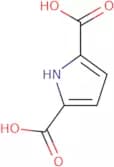
CAS:<p>1H-Pyrrole-2,5-dicarboxylic acid is a biosynthetic precursor of the amide functional group. It is synthesized from the carboxylic acid functional group and ferrocene. It has been shown to be a putative precursor of pyrrole-2-carboxylic acid in the pyrrole system. 1H-Pyrrole-2,5-dicarboxylic acid reacts with carbon tetrachloride and diethyl iminodiacetate in refluxing chloroform to produce coelicolor. The reaction mechanism for this transformation is unknown, but it is hypothesized that it involves a radical mechanism.</p>Formula:C6H5NO4Purity:Min. 95%Molecular weight:155.11 g/mol2-Fluoro-6-methylbenzoic acid
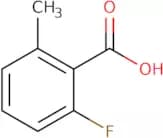
CAS:<p>Please enquire for more information about 2-Fluoro-6-methylbenzoic acid including the price, delivery time and more detailed product information at the technical inquiry form on this page</p>Formula:C8H7FO2Purity:Min. 98 Area-%Color and Shape:White PowderMolecular weight:154.14 g/mol[p-Terphenyl]-4,4''-dicarboxylic acid
CAS:<p>4,4’-Dicarboxy-p-terphenyl is a disulfide amide with the molecular formula C14H10N2O2S. It is a chemical compound that has been shown to have antimicrobial activity. The antibacterial activity of 4,4’-Dicarboxy-p-terphenyl was evaluated by preparing a series of in vitro assays. The results showed that 4,4’-Dicarboxy-p-terphenyl inhibited the growth of bacteria and fungi at concentrations above 10 μg/mL. This drug also has been demonstrated to be effective against trifluoroacetic acid (TFA) induced congestive heart failure in experimental models. 4,4’-Dicarboxy-p-terphenyl has been found to have therapeutic potential for the treatment of metabolic disorders such as diabetes and hypertension. Structural analysis revealed that this drug contains a redox</p>Formula:C20H14O4Purity:Min. 95%Molecular weight:318.32 g/mol






![[p-Terphenyl]-4,4''-dicarboxylic acid](/_next/image/?url=https%3A%2Fstatic.cymitquimica.com%2Fproducts%2F3D%2Fthumb-webp%2FFT28045.webp&w=3840&q=75)