Carboxylic Acids
Carboxylic acids are organic molecules characterized by having a carboxyl-type functional group (-COOH). These acids are fundamental in various chemical reactions, including esterification, amidation, and decarboxylation. Carboxylic acids are widely used in the production of pharmaceuticals, polymers, and agrochemicals. In this section, you can find a large number of carboxylic acids ready to be used. At CymitQuimica, we provide a broad range of high-quality carboxylic acids to support your research and industrial applications.
Found 12453 products of "Carboxylic Acids"
Sort by
Purity (%)
0
100
|
0
|
50
|
90
|
95
|
100
NMDA
CAS:<p>N-Methyl-D-aspartic acid is an amino acid that, as the D-isomer, is the defining agonist for the NMDA (N-Methyl-D-aspartic acid) receptor subtype of glutamate</p>Formula:C5H9NO4Purity:99.21% - 99.90%Color and Shape:White SolidMolecular weight:147.13Sarcosine
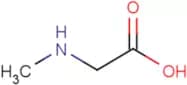
CAS:<p>Sarcosine (Methylglycine) is a competitive inhibitor of the type I glycine transporter (GlyT1) and an N-methyl-D-aspartate receptor (NMDAR) co-agonist.</p>Formula:C3H7NO2Purity:99.90%Color and Shape:Deliquescent Water Soluble Physical Description Deliquescent Crystals Or Powder Has A Sweetish Taste (Ntp 1992)Molecular weight:89.09L-Dihydroorotic acid
CAS:<p>L-Dihydroorotic acid, found in eukaryotes, is involved in pyrimidine metabolism and several disorders including orotic aciduria.</p>Formula:C5H6N2O4Purity:99.88% - 99.93%Color and Shape:White To Off-White Crystalline PowderMolecular weight:158.11Hydrocinnamic acid
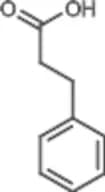
CAS:<p>Hydrocinnamic acid: white, sweet-smelling crystalline solid; used in cosmetics, food, and pharma.</p>Formula:C9H10O2Purity:99.52% - 99.973%Color and Shape:Off-White Solid PowderMolecular weight:150.17DL-5-Hydroxylysine hydrochloride
CAS:<p>DL-5-Hydroxylysine hydrochloride is a racemic mix of 5-hydroxylysine enantiomers, used as markers for protein oxidation.</p>Formula:C6H15ClN2O3Purity:99.62% - 99.67%Color and Shape:White Crystalline PowderMolecular weight:198.655-Aminolevulinic acid hydrochloride
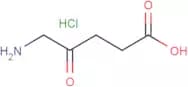
CAS:<p>5-Aminolevulinic acid hydrochloride (5-ALA) serves as an intermediate in the body's heme biosynthesis and is the universal precursor of tetrapyrroles.</p>Formula:C5H10ClNO3Purity:98% - 99.97%Color and Shape:White To Pale Yellow Crystals OrMolecular weight:167.59(S)-Malic acid
CAS:(S)-Malic acid ((S)-2-Hydroxysuccinic acid) is a naturally occurring dicarboxylic acid that is the source of the sweet and sour flavour of fruits.Formula:C4H6O5Purity:99.41% - 99.72%Color and Shape:SolidMolecular weight:134.092-Hydroxyisobutyric acid
CAS:<p>2-Hydroxyisobutyric acid, a MTBE metabolite, is excreted in air & breaks down into TBA, formaldehyde, and others; used as a bactericide.</p>Formula:C4H8O3Purity:98.66%Color and Shape:SolidMolecular weight:104.1D-glutamine
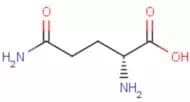
CAS:<p>D-glutamine, an D type stereoisomer of glutamine, is one of the 20 amino acids which is encoded by the standard genetic code.</p>Formula:C5H10N2O3Purity:99.99%Color and Shape:White Or Off-White PowderMolecular weight:146.145-Aminovaleric acid
CAS:<p>5-Aminovalerate, a lysine metabolite, can form endogenously or from bacterial lysine catabolism; indicates bacterial overgrowth or tissue necrosis.</p>Formula:C5H11NO2Purity:99.86%Color and Shape:SolidMolecular weight:117.15L-Pipecolic acid
CAS:<p>L-Pipecolic acid, a lysine metabolite, builds up in infants with peroxisomal genetic disorders like Zellweger syndrome.</p>Formula:C6H11NO2Purity:99.75%Color and Shape:SolidMolecular weight:129.164,4'-Disulfanediylbis(2-aminobutanoic acid)
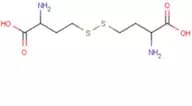
CAS:<p>4,4'-Disulfanediylbis(2-aminobutanoic acid) (DL-Homocystine) is one of the endogenous metabolites, is the double-bonded form of homocysteine.</p>Formula:C8H16N2O4S2Purity:99.96%Color and Shape:SolidMolecular weight:268.35L-Lactic acid
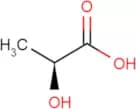
CAS:<p>L-Lactic acid: organic, chiral, prevalent in organisms, vital in biochemistry, forms in muscles during exertion.</p>Formula:C3H6O3Purity:95.05% - 99.85%Color and Shape:Colourless Liquid ViscousMolecular weight:90.08D-(+)-Phenyllactic acid
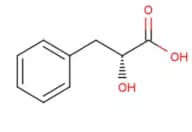
CAS:<p>D-(+)-Phenyllactic acid (D-3-Phenyllactic acid) is an anti-bacterial agent, excreted by Geotrichum candidum, inhibits Gram-positive and Gram-negative bacteria.</p>Formula:C9H10O3Purity:98.99%Color and Shape:SolidMolecular weight:166.17Ammonium formate
CAS:<p>Ammonium formate disrupts metabolism, causes acidosis, inhibits electron transport and ATP production, leading to cell death and increased ROS.</p>Formula:CH5NO2Purity:≥95%Color and Shape:White Monoclinic Crystals Water (Uscg 1999)Molecular weight:63.06Nystose
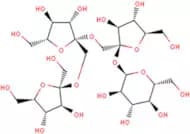
CAS:<p>Nystose (1,1-Kestotetraose) is a tetrasaccharide composed of two fructose molecules linked via beta (1→2) bonds to the fructosyl moiety of sucrose.</p>Formula:C24H42O21Purity:98% - 99.93%Color and Shape:SolidMolecular weight:666.58rosmarinate acid
CAS:<p>Rosmarinate acid(Rosemary acid) inhibits MAO-A, MAO-B and COMT enzymes with IC50s of 50.1, 184.6 and 26.7 μM, respectively</p>Formula:C18H16O8Purity:99.69%Color and Shape:SolidMolecular weight:360.31Creatine
CAS:<p>Creatine, an amino acid in vertebrates, forms phosphocreatine in muscle, aids energy transfer, is made in the liver, and mainly stored in muscles.</p>Formula:C4H9N3O2Purity:99.63% - 99.83%Color and Shape:Colourless To Light Yellow SolidMolecular weight:131.13Acetoacetic acid lithium salt
CAS:<p>Lithium acetoacetate is a weak organic acid from the liver during fatty acid breakdown in conditions like diabetic ketoacidosis.</p>Formula:C4H5LiO3Purity:99.83%Color and Shape:SolidMolecular weight:108.02L-Alloisoleucine
CAS:<p>L-Alloisoleucine (L-allo-Isoleucine) is a branched chain amino acid and a stereoisomer of L-isoleucine, is produced as a byproduct of isoleucine transamination.</p>Formula:C6H13NO2Purity:99.88% - ≥95%Color and Shape:SolidMolecular weight:131.172,6-Diaminoheptanedioic acid
CAS:<p>Diaminopimelic acid or DAPA is a lysine-like amino acid derivative that is a key component of the bacterial cell wall.</p>Formula:C7H14N2O4Purity:99.79% - 99.95%Color and Shape:SolidMolecular weight:190.2(R)-5-Oxopyrrolidine-2-carboxylic acid
CAS:<p>(R)-5-Oxopyrrolidine-2-carboxylic acid (D-Pyroglutamic acid) is a cyclic derivative of glutamic acid, physiologically present in mammalian tissues.</p>Formula:C5H7NO3Purity:99.88%Color and Shape:SolidMolecular weight:129.11N-Acetyl-DL-methionine
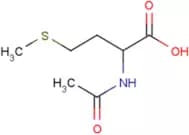
CAS:<p>N-acetyl-L-methionine equals L-methionine in diet & metabolism, essential for growth and methyl group transfers.</p>Formula:C7H13NO3SPurity:98.94%Color and Shape:White Crystalline PowderMolecular weight:191.25Ac-Ala-OH
CAS:<p>Ac-Ala-OH is a substrate for multiple proteins, including G protein gamma-2, Myelin protein, Ran, Tropomyosin alpha 4, and others.</p>Formula:C5H9NO3Purity:97.03% - 99.77%Color and Shape:SolidMolecular weight:131.13D-Isoleucine
CAS:<p>D-Isoleucine ((2R,3R)-2-Amino-3-methylpentanoic acid) is a selective activator of Asc-1 antiporter, which enhances long-term potentiation at the hippocampal CA1</p>Formula:C6H13NO2Purity:99.16%Color and Shape:White To Light Yellow PowderMolecular weight:131.17D-Galacturonic acid hydrate
CAS:<p>D-Galacturonic acid hydrate is used in the synthesis of N-(D-galacturonoyl) amino acids and dipeptides.</p>Formula:C6H12O8Purity:97% - 99.97%Color and Shape:White To Light Beige Fine PowderMolecular weight:212.15(S)-2-acetamido-4-amino-4-oxobutanoic acid
CAS:<p>(S)-2-acetamido-4-amino-4-oxobutanoic acid (Nα-Acetyl-L-asparagine), also known as acasn, is an endogenous metabolite.</p>Formula:C6H10N2O4Purity:99.73%Color and Shape:SolidMolecular weight:174.15D(-)-2-Aminobutyric acid
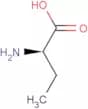
CAS:<p>D(-)-2-Aminobutyric acid is the substrate of D-amino acid oxidase.</p>Formula:C4H9NO2Purity:99.89%Color and Shape:SolidMolecular weight:103.123,4-(Methylenedioxy)cinnamic acid
CAS:<p>3,4-(Methylenedioxy)cinnamic acid (3-(Benzo[d][1,3]dioxol-5-yl)acrylic acid) is a plant-derived compound first extracted from roots of Asparagus officinalis and</p>Formula:C10H8O4Purity:98.95%Color and Shape:SolidMolecular weight:192.17N-Acetylglycine
CAS:<p>N-Acetylglycine, non-toxic, found in foods, used in peptidomimetic research.</p>Formula:C4H7NO3Purity:99.82%Color and Shape:SolidMolecular weight:117.13-Hydroxybutyric acid
CAS:<p>Butanoic acid is an endogenous histone deacetylase (HDAC) inhibitor,IC50 for HDAC3, HDAC4, and HDAC1 is 2.4 mM, 4.5 mM, and 5.3 mM. High-Quality, Low-Cost!</p>Formula:C4H8O3Purity:97.31% - 99.77%Color and Shape:SolidMolecular weight:104.1L-Methionine sulfoxide
CAS:<p>L-Methionine sulfoxide (H-Met(O)-OH) is a methionine metabolite affecting oxidative stress, purinergic signaling, and M1 macrophage polarization.</p>Formula:C5H11NO3SPurity:99.47% - 99.60%Color and Shape:SolidMolecular weight:165.21α,α-Dimethylglycine
CAS:<p>NSC-16590 (2-Aminoisobutyric acid) is a nonprotein amino acid (is an end product of pyrimidine Metabolism) excreted in the urine of about 5% of healthy</p>Formula:C4H9NO2Purity:99.65%Color and Shape:SolidMolecular weight:103.12DL-Valine
CAS:<p>DL-Valine (H-DL-Val-OH) is 2-amino-3-methylbutanoic acid.It is synthesized in plants via several steps starting from pyruvic acid.</p>Formula:C5H11NO2Purity:99.84%Color and Shape:Leaflets From Water + Alcohol White CrystalsMolecular weight:117.15D-Leucine
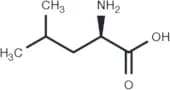
CAS:<p>D-Leucine stops seizures post-onset and lessens long-term potentiation without affecting basal synaptic transmission.</p>Formula:C6H13NO2Purity:99.67%Color and Shape:SolidMolecular weight:131.17DSPS
CAS:<p>DSPS (Dioctadecanoylphosphatidylserine) is an important phospholipid membrane component, plays a key role in cell cycle signaling, specifically in apoptosis.</p>Formula:C42H82NO10PPurity:mixture - mixtureColor and Shape:SolidMolecular weight:792.08N-Isovaleroylglycine
CAS:<p>N-Isovaleroylglycine, a leucine catabolism byproduct, is an acyl glycine elevated in some metabolic disorders and indicates IVA when accumulated.</p>Formula:C7H13NO3Purity:99.95%Color and Shape:SolidMolecular weight:159.18(R)-3-Hydroxybutanoic acid
CAS:<p>Beta-hydroxybutyrate aids in ketone body metabolism and is elevated in ketosis; it's a byproduct of valine from muscles.</p>Formula:C4H8O3Purity:98% - ≥95%Color and Shape:SolidMolecular weight:104.1D-Alanine
CAS:<p>Alanine, a nonessential amino acid, is formed from pyruvate or DNA/dipeptides breakdown. D-Alanine stimulates GlyR with an EC50 of 9 mM.</p>Formula:C3H7NO2Purity:99.81%Color and Shape:Orthorhombic Crystals From Water SolidMolecular weight:89.09trans-Aconitic acid
CAS:<p>Trans-Aconitic acid: found in urine, links to Reye's syndrome, organic aciduria, EC 2.1.1.144 substrate, soy biomarker, inhibits Leishmania transformation.</p>Formula:C6H6O6Purity:98.7%Color and Shape:Leaflets & Plates From Water SolidMolecular weight:174.11Methyl acetylacetate
CAS:<p>Methyl acetylacetate found in urine indicates propionyl-CoA carboxylase or 2-methylacetoacetyl-CoA thiolase deficiency.</p>Formula:C5H8O3Purity:99.14%Color and Shape:Less LiquidMolecular weight:116.12Phenylacetylglutamine
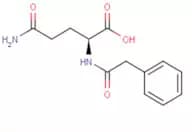
CAS:<p>Phenylacetylglutamine (NSC 203800)is a normal constituent of human urine, but other mammals such as the dog, cat, rat, and horse do not excrete this compound.</p>Formula:C13H16N2O4Purity:96.64% - 99.37%Color and Shape:SolidMolecular weight:264.282,2-Dihydroxyacetic acid
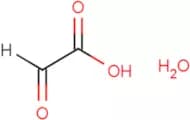
CAS:<p>2,2-Dihydroxyacetic acid (Formylformic acid) is an organic compound that is both an aldehyde and a carboxylic acid, is associated with primary hyperoxaluria.</p>Formula:C2H4O4Purity:99.25%Color and Shape:White To Light Yellow Crystalline PowderMolecular weight:92.05Dihydroxyfumaric acid hydrate
CAS:<p>Dihydroxyfumaric acid produces superoxide anions, hydroxyl radicals, can inhibit insulin, and converts to hydroxypyruvate or oxaloglycolate.</p>Formula:C4H6O7Purity:98% - 99.09%Color and Shape:SolidMolecular weight:166.09Diethyl oxalpropionate
CAS:<p>Diethyl oxalpropionate, a slightly soluble beta-keto acid derivative, is weakly acidic, mainly found in the cytoplasm.</p>Formula:C9H14O5Purity:97.42%Color and Shape:SolidMolecular weight:202.2For-Met-OH
CAS:<p>For-Met-OH (N-Formyl-L-methionine) is a type of endogenous metabolite, effective in the initiation of protein synthesis.</p>Formula:C6H11NO3SPurity:99.298% - 99.72%Color and Shape:SolidMolecular weight:177.22Sodium 2-hydroxybutanoate
CAS:<p>Sodium 2-hydroxybutanoate, a by-product of alpha-ketobutyrate, is formed via LDH or alphaHBDH-catalyzed reactions.</p>Formula:C4H7NaO3Purity:98.92% - 99.96%Color and Shape:SolidMolecular weight:126.093-(3-Methoxyphenyl)propionic acid
CAS:<p>3-(3-Methoxyphenyl)propionic acid (3-Methoxyhydrocinnamic acid) is a naturally occurring human metabolite, It is an organic acid and excreted in human urine.</p>Formula:C10H12O3Purity:97.34%Color and Shape:SolidMolecular weight:180.23-Ethoxy-3-oxopropanoic acid
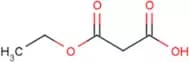
CAS:<p>3-Ethoxy-3-oxopropanoic acid (Monoethyl malonic acid) belongs to the class of organic compounds known as dicarboxylic acids and derivatives.</p>Formula:C5H8O4Purity:99.72%Color and Shape:SolidMolecular weight:132.11L-Norleucine
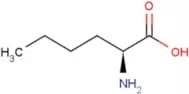
CAS:<p>L-Norleucine ((S)-Norleucine) is an isomer of leucine, specifically affects protein synthesis in skeletal muscle, and has antivirus activity.</p>Formula:C6H13NO2Purity:98.35%Color and Shape:SolidMolecular weight:131.17