Carboxylic Acids
Carboxylic acids are organic molecules characterized by having a carboxyl-type functional group (-COOH). These acids are fundamental in various chemical reactions, including esterification, amidation, and decarboxylation. Carboxylic acids are widely used in the production of pharmaceuticals, polymers, and agrochemicals. In this section, you can find a large number of carboxylic acids ready to be used. At CymitQuimica, we provide a broad range of high-quality carboxylic acids to support your research and industrial applications.
Found 12453 products of "Carboxylic Acids"
Sort by
Purity (%)
0
100
|
0
|
50
|
90
|
95
|
100
trans-Vaccenic acid
CAS:<p>Trans-Vaccenic acid, a trans-fat in dairy, may inhibit tumor growth by affecting CD8+ T cell growth via GPCR-CREB.</p>Formula:C18H34O2Purity:99.9%Color and Shape:SolidMolecular weight:282.46N-(3-Phenylpropionyl)glycine
CAS:<p>N-(3-Phenylpropionyl)glycine, an acyl glycine, indicates medium-chain acyl-CoA dehydrogenase deficiency when detected in urine.</p>Formula:C11H13NO3Purity:97.25%Color and Shape:SolidMolecular weight:207.232-Hydroxy-4-methoxybenzoic acid
CAS:<p>2-Hydroxy-4-methoxybenzoic acid (2-Hydroxy-p-anisic Acid) is a predicted metabolite generated by BioTransformer1.</p>Formula:C8H8O4Purity:99.86%Color and Shape:White Crystalline PowderMolecular weight:168.15Ammonium formate
CAS:<p>Ammonium formate disrupts metabolism, causes acidosis, inhibits electron transport and ATP production, leading to cell death and increased ROS.</p>Formula:CH5NO2Purity:≥95%Color and Shape:White Monoclinic Crystals Water (Uscg 1999)Molecular weight:63.06Malonic acid
CAS:<p>Malonic acid inhibits succinate dehydrogenase; linked to malonyl-CoA decarboxylase deficiency.</p>Formula:C3H4O4Purity:99.53%Color and Shape:SoildMolecular weight:104.06β-N-methylamino-L-alanine hydrochloride
CAS:<p>β-N-methylamino-L-alanine hydrochloride (L-BMAA hydrochloride) is a neurotoxin produced by cyanobacteria, could cause ALS and other neurodegenerative diseases.</p>Formula:C4H11ClN2O2Purity:95.00% - 99.67%Color and Shape:SolidMolecular weight:154.6H-Gly-Pro-OH
CAS:<p>H-Gly-Pro-OH (Glycyl proline) is a dipeptide composed of glycine and proline, and is an end product of collagen metabolism</p>Formula:C7H12N2O3Purity:≥95%Color and Shape:SolidMolecular weight:172.18N-Acetyl-L-leucine
CAS:<p>N-Acetylleucine, a water-soluble, weakly acidic derivative of leucine, is found in biofluids like feces and saliva.</p>Formula:C8H15NO3Purity:99.89%Color and Shape:SolidMolecular weight:173.21N-Acetyl-L-tryptophan
CAS:<p>N-Acetyl-L-tryptophan (N-acetyltryptophan) is an inhibitor of neurokinin 1 receptor (NK1-receptor, NK1R).</p>Formula:C13H14N2O3Purity:99.93%Color and Shape:SolidMolecular weight:246.26Nicotinuric acid
CAS:<p>Nicotinuric acid: a minor acyl glycine metabolite of fatty acids, synthesized by glycine N-acyltransferase.</p>Formula:C8H8N2O3Purity:99.58%Color and Shape:SolidMolecular weight:180.16(-)-Aspartic acid
CAS:<p>L-Homoproline, an endogenous amino acid in animals, regulates testosterone and activates NMDA receptors.</p>Formula:C4H7NO4Purity:99.89%Color and Shape:White Crystalline Solid SolidMolecular weight:133.1Oxalic acid dihydrate
CAS:<p>Oxalic acid dihydrate is a plant-derived strong dicarboxylic acid, excreted in urine, used as a reagent and reducing agent.</p>Formula:C2H6O6Purity:98.04% - 99.39%Color and Shape:White Solid CrystallineMolecular weight:126.07Glutaric acid
CAS:<p>Glutaric acid: five-carbon dicarboxylic acid, byproduct of lysine and tryptophan metabolism.</p>Formula:C5H8O4Purity:98.83%Color and Shape:White Solid Solid CrystallineMolecular weight:132.11H-D-cis-Hyp-OH
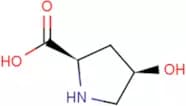
CAS:<p>H-D-cis-Hyp-OH (D-allo-Hydroxyproline) belongs to the class of organic compounds known as proline and derivatives.</p>Formula:C5H9NO3Purity:99.92%Color and Shape:White Crystalline PowderMolecular weight:131.132-(2-Phenylacetamido)acetic acid
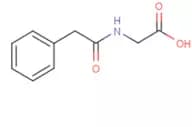
CAS:<p>2-(2-Phenylacetamido)acetic acid (Phenyl-ac-Gly-OH) is an acyl glycine. Acyl glycines are normally minor metabolites of fatty acids.</p>Formula:C10H11NO3Purity:99.43%Color and Shape:SolidMolecular weight:193.2Hydrocinnamic acid
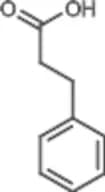
CAS:<p>Hydrocinnamic acid: white, sweet-smelling crystalline solid; used in cosmetics, food, and pharma.</p>Formula:C9H10O2Purity:99.52% - 99.973%Color and Shape:Off-White Solid PowderMolecular weight:150.17NMDA
CAS:<p>N-Methyl-D-aspartic acid is an amino acid that, as the D-isomer, is the defining agonist for the NMDA (N-Methyl-D-aspartic acid) receptor subtype of glutamate</p>Formula:C5H9NO4Purity:99.21% - 99.90%Color and Shape:White SolidMolecular weight:147.13(S)-2-acetamido-4-amino-4-oxobutanoic acid
CAS:<p>(S)-2-acetamido-4-amino-4-oxobutanoic acid (Nα-Acetyl-L-asparagine), also known as acasn, is an endogenous metabolite.</p>Formula:C6H10N2O4Purity:99.73%Color and Shape:SolidMolecular weight:174.15Ac-Ala-OH
CAS:<p>Ac-Ala-OH is a substrate for multiple proteins, including G protein gamma-2, Myelin protein, Ran, Tropomyosin alpha 4, and others.</p>Formula:C5H9NO3Purity:97.03% - 99.77%Color and Shape:SolidMolecular weight:131.13(R)-5-Oxopyrrolidine-2-carboxylic acid
CAS:<p>(R)-5-Oxopyrrolidine-2-carboxylic acid (D-Pyroglutamic acid) is a cyclic derivative of glutamic acid, physiologically present in mammalian tissues.</p>Formula:C5H7NO3Purity:99.88%Color and Shape:SolidMolecular weight:129.112,6-Diaminoheptanedioic acid
CAS:<p>Diaminopimelic acid or DAPA is a lysine-like amino acid derivative that is a key component of the bacterial cell wall.</p>Formula:C7H14N2O4Purity:99.79% - 99.95%Color and Shape:SolidMolecular weight:190.24-Guanidinobutanoic acid
CAS:<p>4-Guanidinobutanoic acid (4-GBA) is an L-arginine metabolite that has been used in the intestinal transport tranport studies. It has been use to hPAT1.</p>Formula:C5H11N3O2Purity:>99.99%Color and Shape:SolidMolecular weight:145.16L-Homocitrulline
CAS:<p>L-Homocitrulline rises in urea cycle disorders, linked to ornithine shortage and carbamyl phosphate buildup.</p>Formula:C7H15N3O3Purity:99.94%Color and Shape:SolidMolecular weight:189.21H-Abu-OH
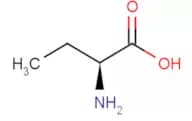
CAS:<p>H-Abu-OH, or (S)-2-aminobutanoic acid, is a non-proteogenic L-alpha-amino acid found in human kidneys, liver, and bodily fluids.</p>Formula:C4H9NO2Purity:99.96%Color and Shape:SolidMolecular weight:103.12Phosphocreatine disodium hydrate
CAS:<p>Phosphocreatine disodium hydrate ishigh-energy phosphate reservoir in vertebrate and some invertebrate muscle; provides phosphate for ADP-ATP conversion</p>Formula:C4H10N3Na2O6PPurity:99.587% - >99.99%Color and Shape:SolidMolecular weight:273.09NADH disodium salt
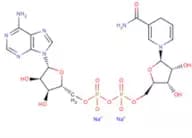
CAS:<p>NADH disodium salt hydrate, a reduced NAD form, donates electrons and gets oxidized to NAD+ in reduction reactions.</p>Formula:C21H27N7Na2O14P2Purity:98.05% - 99.85%Color and Shape:Odorless Yellowish PowderMolecular weight:709.4N-Acetyl-L-arginine dihydrate
CAS:<p>N-Acetyl-L-arginine dihydrate (N-Ac-L-arg-OH) is one of the guanidino compounds found elevated in the serum of a hemodialyzed renal insufficient (uremic)</p>Formula:C8H20N4O5Purity:99.95%Color and Shape:SolidMolecular weight:252.27Pyruvic acid
CAS:<p>Pyruvic acid, key in metabolizing carbs, proteins, and fats, builds up in tissue, notably nerves, if thiamine is deficient.</p>Formula:C3H4O3Purity:95.31%Color and Shape:LiquidMolecular weight:88.06(S)-2-Hydroxy-3-phenylpropanoic acid
CAS:<p>(S)-2-Hydroxy-3-phenylpropanoic acid (L-(−)-3-Phenyllactic acid) is a chiral aromatic compound involved in phenylalanine metabolism.</p>Formula:C9H10O3Purity:99.73% - 99.86%Color and Shape:SolidMolecular weight:166.17Maleic acid
CAS:<p>Maleic Acid is a Glutamate Decarboxylase (GAD) inhibitor of L. monocytogenes and E. coli.</p>Formula:C4H4O4Purity:97.44%Color and Shape:White Solid CrystallineMolecular weight:116.07Selenomethionine
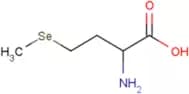
CAS:<p>DL-Selenomethionine (SeMet) is a selenium analog of methionine, substituting sulfur with selenium, and can replace methionine in proteins.</p>Formula:C5H11NO2SePurity:98% - 99.95%Color and Shape:Transparent Hexagonal Sheets Or Plates; Metallic Luster Of Crystals SolidMolecular weight:196.11Spaglumic acid
CAS:<p>Spaglumic acid (N-Acetylaspartylglutamic acid) is a neuropeptide found in millimolar concentrations in the brain.</p>Formula:C11H16N2O8Purity:99.92%Color and Shape:White PowderMolecular weight:304.25DL-Pyroglutamic acid
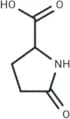
CAS:<p>DL-Pyroglutamic acid exhibited a strong inactivating effect on hepatitis B surface antigen. </p>Formula:C5H7NO3Purity:99.88%Color and Shape:White PowderMolecular weight:129.11α-Lactose
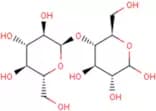
CAS:<p>α-Lactose is the major sugar present in milk and the main source of energy supplied to the newborn mammalian in its mother's milk.</p>Formula:C12H22O11Purity:98.96%Color and Shape:White Hard Crystalline Mass Of White Powder Physical Description White Hard Crystalline Powder (Ntp 1992)Molecular weight:342.3DSPS
CAS:<p>DSPS (Dioctadecanoylphosphatidylserine) is an important phospholipid membrane component, plays a key role in cell cycle signaling, specifically in apoptosis.</p>Formula:C42H82NO10PPurity:mixture - mixtureColor and Shape:SolidMolecular weight:792.08trans-Aconitic acid
CAS:<p>Trans-Aconitic acid: found in urine, links to Reye's syndrome, organic aciduria, EC 2.1.1.144 substrate, soy biomarker, inhibits Leishmania transformation.</p>Formula:C6H6O6Purity:98.7%Color and Shape:Leaflets & Plates From Water SolidMolecular weight:174.11(R)-pyrrolidine-2-carboxylic acid
CAS:<p>D-Proline, (R)-pyrrolidine-2-carboxylic acid, is L-Proline's isomer, found in human plasma/saliva, possibly from bacteria or racemase activity.</p>Formula:C5H9NO2Purity:99.88%Color and Shape:Flat Needles From Alcohol + Ether; Prisms From Water SolidMolecular weight:115.13DL-O-Tyrosine
CAS:<p>DL-o-Tyrosine: metabolite of Phenylalanine, precursor to catecholamines, marker of protein damage in β-thalassemia.</p>Formula:C9H11NO3Purity:97.11% - 99.86%Color and Shape:SolidMolecular weight:181.19N-Acetyl-L-glutamic acid
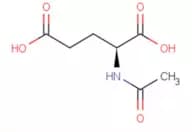
CAS:<p>NAcGlu, made from glutamic acid & acetyl-CoA by NAGS, activates urea cycle enzyme. NAGS deficiency causes Type I hyperammonemia.</p>Formula:C7H11NO5Purity:99.64% - 99.95%Color and Shape:SolidMolecular weight:189.17Oxaloacetic acid
CAS:<p>Oxaloacetic acid: a four-carbon dicarboxylic acid, an intermediate in the citric acid cycle, forms aspartic acid.</p>Formula:C4H4O5Purity:98.27% - 99.93%Color and Shape:SolidMolecular weight:132.07L-Cysteic acid monohydrate
CAS:<p>L-Cysteic acid monohydrate inhibits bacterial AspT, used in surfactants, brain studies, and as an mGluRs agonist.</p>Formula:C3H9NO6SPurity:99.82%Color and Shape:White PowderMolecular weight:187.17D-Alanine
CAS:<p>Alanine, a nonessential amino acid, is formed from pyruvate or DNA/dipeptides breakdown. D-Alanine stimulates GlyR with an EC50 of 9 mM.</p>Formula:C3H7NO2Purity:99.81%Color and Shape:Orthorhombic Crystals From Water SolidMolecular weight:89.093-Amino-2-methylpropanoic acid
CAS:<p>3-Amino-2-methylpropanoic acid forms by enzyme EC 3.5.1.6 in pyrimidine breakdown; its deficiency causes neurological issues.</p>Formula:C4H9NO2Purity:99.43%Color and Shape:SolidMolecular weight:103.12DL-Homocysteine
CAS:<p>DL-Homocysteine (2-Amino-4-mercaptobutyric acid) is a potential marker for tumor cell growth.</p>Formula:C4H9NO2SPurity:99.57% - ≥98%Color and Shape:SolidMolecular weight:135.184-Methyl-2-oxopentanoic acid
CAS:<p>4-Methyl-2-oxopentanoic acid, an abnormal metabolite and neurotoxin, results from improper branched-chain amino acid metabolism.</p>Formula:C6H10O3Purity:99.09%Color and Shape:LiquidMolecular weight:130.14N-Acetylornithine
CAS:<p>N-Acetylornithine is found in human blood plasma (avg. 1.1±0.4 μmol/L) and urine (~1 μmol/day).</p>Formula:C7H14N2O3Purity:99.86% - ≥95%Color and Shape:SolidMolecular weight:174.2(R)-3-Hydroxybutanoic acid
CAS:<p>Beta-hydroxybutyrate aids in ketone body metabolism and is elevated in ketosis; it's a byproduct of valine from muscles.</p>Formula:C4H8O3Purity:98% - ≥95%Color and Shape:SolidMolecular weight:104.1D-Leucine
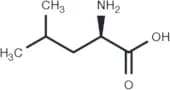
CAS:<p>D-Leucine stops seizures post-onset and lessens long-term potentiation without affecting basal synaptic transmission.</p>Formula:C6H13NO2Purity:99.67%Color and Shape:SolidMolecular weight:131.17L-Methionine sulfoxide
CAS:<p>L-Methionine sulfoxide (H-Met(O)-OH) is a methionine metabolite affecting oxidative stress, purinergic signaling, and M1 macrophage polarization.</p>Formula:C5H11NO3SPurity:99.47% - 99.60%Color and Shape:SolidMolecular weight:165.213-Hydroxybutyric acid
CAS:<p>Butanoic acid is an endogenous histone deacetylase (HDAC) inhibitor,IC50 for HDAC3, HDAC4, and HDAC1 is 2.4 mM, 4.5 mM, and 5.3 mM. High-Quality, Low-Cost!</p>Formula:C4H8O3Purity:97.31% - 99.77%Color and Shape:SolidMolecular weight:104.1