Carboxylic Acids
Carboxylic acids are organic molecules characterized by having a carboxyl-type functional group (-COOH). These acids are fundamental in various chemical reactions, including esterification, amidation, and decarboxylation. Carboxylic acids are widely used in the production of pharmaceuticals, polymers, and agrochemicals. In this section, you can find a large number of carboxylic acids ready to be used. At CymitQuimica, we provide a broad range of high-quality carboxylic acids to support your research and industrial applications.
Found 12453 products of "Carboxylic Acids"
Sort by
Purity (%)
0
100
|
0
|
50
|
90
|
95
|
100
4-Methyl-2-oxopentanoic acid
CAS:<p>4-Methyl-2-oxopentanoic acid, an abnormal metabolite and neurotoxin, results from improper branched-chain amino acid metabolism.</p>Formula:C6H10O3Purity:99.09%Color and Shape:LiquidMolecular weight:130.14N-(3-Phenylpropionyl)glycine
CAS:<p>N-(3-Phenylpropionyl)glycine, an acyl glycine, indicates medium-chain acyl-CoA dehydrogenase deficiency when detected in urine.</p>Formula:C11H13NO3Purity:97.25%Color and Shape:SolidMolecular weight:207.23DL-5-Hydroxylysine hydrochloride
CAS:<p>DL-5-Hydroxylysine hydrochloride is a racemic mix of 5-hydroxylysine enantiomers, used as markers for protein oxidation.</p>Formula:C6H15ClN2O3Purity:99.62% - 99.67%Color and Shape:White Crystalline PowderMolecular weight:198.65L-Dihydroorotic acid
CAS:<p>L-Dihydroorotic acid, found in eukaryotes, is involved in pyrimidine metabolism and several disorders including orotic aciduria.</p>Formula:C5H6N2O4Purity:99.88% - 99.93%Color and Shape:White To Off-White Crystalline PowderMolecular weight:158.11(S)-Malic acid
CAS:(S)-Malic acid ((S)-2-Hydroxysuccinic acid) is a naturally occurring dicarboxylic acid that is the source of the sweet and sour flavour of fruits.Formula:C4H6O5Purity:99.41% - 99.72%Color and Shape:SolidMolecular weight:134.09L-Pipecolic acid
CAS:<p>L-Pipecolic acid, a lysine metabolite, builds up in infants with peroxisomal genetic disorders like Zellweger syndrome.</p>Formula:C6H11NO2Purity:99.75%Color and Shape:SolidMolecular weight:129.16L-Methionine sulfoxide
CAS:<p>L-Methionine sulfoxide (H-Met(O)-OH) is a methionine metabolite affecting oxidative stress, purinergic signaling, and M1 macrophage polarization.</p>Formula:C5H11NO3SPurity:99.47% - 99.60%Color and Shape:SolidMolecular weight:165.21D-Alanine
CAS:<p>Alanine, a nonessential amino acid, is formed from pyruvate or DNA/dipeptides breakdown. D-Alanine stimulates GlyR with an EC50 of 9 mM.</p>Formula:C3H7NO2Purity:99.81%Color and Shape:Orthorhombic Crystals From Water SolidMolecular weight:89.09L-Citrulline
CAS:L-Citrulline is an amino acid derived from ornithine in the catabolism of proline or glutamate and glutamine, or from l-arginine via arginine-citrulline pathwayFormula:C6H13N3O3Purity:99.70% - 99.79%Color and Shape:SolidMolecular weight:175.19Diethyl oxalpropionate
CAS:Diethyl oxalpropionate, a slightly soluble beta-keto acid derivative, is weakly acidic, mainly found in the cytoplasm.Formula:C9H14O5Purity:97.42%Color and Shape:SolidMolecular weight:202.2(R)-3-Hydroxybutanoic acid
CAS:<p>Beta-hydroxybutyrate aids in ketone body metabolism and is elevated in ketosis; it's a byproduct of valine from muscles.</p>Formula:C4H8O3Purity:98% - ≥95%Color and Shape:SolidMolecular weight:104.1Nystose
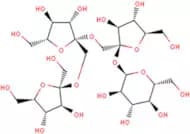
CAS:Nystose (1,1-Kestotetraose) is a tetrasaccharide composed of two fructose molecules linked via beta (1→2) bonds to the fructosyl moiety of sucrose.Formula:C24H42O21Purity:98% - 99.93%Color and Shape:SolidMolecular weight:666.58D-Isoleucine
CAS:D-Isoleucine ((2R,3R)-2-Amino-3-methylpentanoic acid) is a selective activator of Asc-1 antiporter, which enhances long-term potentiation at the hippocampal CA1Formula:C6H13NO2Purity:99.16%Color and Shape:White To Light Yellow PowderMolecular weight:131.17Phenylacetylglutamine
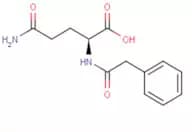
CAS:Phenylacetylglutamine (NSC 203800)is a normal constituent of human urine, but other mammals such as the dog, cat, rat, and horse do not excrete this compound.Formula:C13H16N2O4Purity:96.64% - 99.37%Color and Shape:SolidMolecular weight:264.28Sodium 2-hydroxybutanoate
CAS:<p>Sodium 2-hydroxybutanoate, a by-product of alpha-ketobutyrate, is formed via LDH or alphaHBDH-catalyzed reactions.</p>Formula:C4H7NaO3Purity:98.92% - 99.96%Color and Shape:SolidMolecular weight:126.093-Hydroxybutyric acid
CAS:<p>Butanoic acid is an endogenous histone deacetylase (HDAC) inhibitor,IC50 for HDAC3, HDAC4, and HDAC1 is 2.4 mM, 4.5 mM, and 5.3 mM. High-Quality, Low-Cost!</p>Formula:C4H8O3Purity:97.31% - 99.77%Color and Shape:SolidMolecular weight:104.1Glycylglycine
CAS:Glycylglycine (Diglycine) is a dipeptide used in biochemical research. It is the simplest and is used as a starting template for more complex peptides.Formula:C4H8N2O3Purity:≥95%Color and Shape:SolidMolecular weight:132.12For-Met-OH
CAS:<p>For-Met-OH (N-Formyl-L-methionine) is a type of endogenous metabolite, effective in the initiation of protein synthesis.</p>Formula:C6H11NO3SPurity:99.298% - 99.72%Color and Shape:SolidMolecular weight:177.22Methylmalonic acid
CAS:<p>Methylmalonic acid (Isosuccinic acid) is a dicarboxylic acid that can be derived from methylmalonyl-coenzyme A.</p>Formula:C4H6O4Purity:98%Color and Shape:SolidMolecular weight:118.09trans-Aconitic acid
CAS:<p>Trans-Aconitic acid: found in urine, links to Reye's syndrome, organic aciduria, EC 2.1.1.144 substrate, soy biomarker, inhibits Leishmania transformation.</p>Formula:C6H6O6Purity:98.7%Color and Shape:Leaflets & Plates From Water SolidMolecular weight:174.11D-Leucine
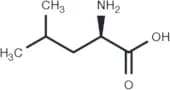
CAS:<p>D-Leucine stops seizures post-onset and lessens long-term potentiation without affecting basal synaptic transmission.</p>Formula:C6H13NO2Purity:99.67%Color and Shape:SolidMolecular weight:131.17Malonic acid
CAS:<p>Malonic acid inhibits succinate dehydrogenase; linked to malonyl-CoA decarboxylase deficiency.</p>Formula:C3H4O4Purity:99.53%Color and Shape:SoildMolecular weight:104.061-Aminocyclopropane-1-carboxylic acid
CAS:<p>1-Aminocyclopropane-1-carboxylic acid (ACC) is an intermediate in the synthesis of ethylene and protects against neuron cell death in vivo models of ischemia.</p>Formula:C4H7NO2Purity:97.91% - 99.76%Color and Shape:CrystallineMolecular weight:101.1D(-)-2-Aminobutyric acid
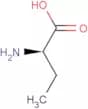
CAS:<p>D(-)-2-Aminobutyric acid is the substrate of D-amino acid oxidase.</p>Formula:C4H9NO2Purity:99.89%Color and Shape:SolidMolecular weight:103.12L-Norvaline
CAS:<p>L-Norvaline: arginase inhibitor, non-protein amino acid, in Bacillus peptide, used in E. coli proteins.</p>Formula:C5H11NO2Purity:99.84%Color and Shape:SolidMolecular weight:117.15L-Allothreonine
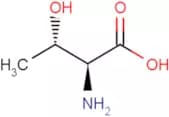
CAS:<p>L-Allothreonine (L-allo-Threonine) is an essential amino acid in humans. L-Allothreonine is abundant in human plasma, particularly in newborns.</p>Formula:C4H9NO3Purity:99.63%Color and Shape:SolidMolecular weight:119.1212-Hydroxydodecanoic acid
CAS:<p>12-Hydroxydodecanoic acid (12-hydroxylauric acid) is the substrate of the human glutathione-dependent formaldehyde dehydrogenase.</p>Formula:C12H24O3Purity:99.30%Color and Shape:SolidMolecular weight:216.32Spaglumic acid
CAS:<p>Spaglumic acid (N-Acetylaspartylglutamic acid) is a neuropeptide found in millimolar concentrations in the brain.</p>Formula:C11H16N2O8Purity:99.92%Color and Shape:White PowderMolecular weight:304.25Glycocyamine
CAS:<p>Glycocyamine, a creatine precursor and dietary arginine substitute, aids in bird energy balance and indicates renal health.</p>Formula:C3H7N3O2Purity:99.42%Color and Shape:SolidMolecular weight:117.114-Guanidinobutanoic acid
CAS:<p>4-Guanidinobutanoic acid (4-GBA) is an L-arginine metabolite that has been used in the intestinal transport tranport studies. It has been use to hPAT1.</p>Formula:C5H11N3O2Purity:>99.99%Color and Shape:SolidMolecular weight:145.16Oxoadipic acid
CAS:<p>Oxoadipic acid: metabolite from tryptophan and lysine, links TCA cycle to lysine synthesis, studied for mitochondrial transport.</p>Formula:C6H8O5Purity:96.61% - >99.99%Color and Shape:SolidMolecular weight:160.12(S)-2-acetamido-4-amino-4-oxobutanoic acid
CAS:<p>(S)-2-acetamido-4-amino-4-oxobutanoic acid (Nα-Acetyl-L-asparagine), also known as acasn, is an endogenous metabolite.</p>Formula:C6H10N2O4Purity:99.73%Color and Shape:SolidMolecular weight:174.15L-Alloisoleucine
CAS:<p>L-Alloisoleucine (L-allo-Isoleucine) is a branched chain amino acid and a stereoisomer of L-isoleucine, is produced as a byproduct of isoleucine transamination.</p>Formula:C6H13NO2Purity:99.88% - ≥95%Color and Shape:SolidMolecular weight:131.17N-Acetyl-L-phenylalanine
CAS:<p>N-Acetyl-L-phenylalanine is essential for medical use, found in phenylketonuria patients' urine, and made by phenylalanine N-acetyltransferase.</p>Formula:C11H13NO3Purity:99.74%Color and Shape:SolidMolecular weight:207.234-Acetamidobutanoic acid
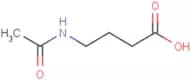
CAS:<p>4-Acetamidobutanoic acid, a GABA derivative in eukaryotes, found in blood, feces, urine, and human prostate.</p>Formula:C6H11NO3Purity:98.51%Color and Shape:SolidMolecular weight:145.16trans-Vaccenic acid
CAS:<p>Trans-Vaccenic acid, a trans-fat in dairy, may inhibit tumor growth by affecting CD8+ T cell growth via GPCR-CREB.</p>Formula:C18H34O2Purity:99.9%Color and Shape:SolidMolecular weight:282.46Acetyl-L-lysine
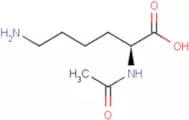
CAS:<p>Acetyl-L-lysine: N-acetylated amino acid, normally found in trace urine amounts, elevated in aminoacylase I deficiency.</p>Formula:C8H16N2O3Purity:99.40% - 99.83%Color and Shape:SolidMolecular weight:188.22N-Acetyl-L-glutamic acid
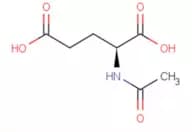
CAS:<p>NAcGlu, made from glutamic acid & acetyl-CoA by NAGS, activates urea cycle enzyme. NAGS deficiency causes Type I hyperammonemia.</p>Formula:C7H11NO5Purity:99.64% - 99.95%Color and Shape:SolidMolecular weight:189.17N-Acetyl-L-leucine
CAS:N-Acetylleucine, a water-soluble, weakly acidic derivative of leucine, is found in biofluids like feces and saliva.Formula:C8H15NO3Purity:99.89%Color and Shape:SolidMolecular weight:173.21DL-Valine
CAS:<p>DL-Valine (H-DL-Val-OH) is 2-amino-3-methylbutanoic acid.It is synthesized in plants via several steps starting from pyruvic acid.</p>Formula:C5H11NO2Purity:99.84%Color and Shape:Leaflets From Water + Alcohol White CrystalsMolecular weight:117.153-Ethoxy-3-oxopropanoic acid
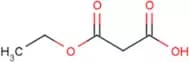
CAS:3-Ethoxy-3-oxopropanoic acid (Monoethyl malonic acid) belongs to the class of organic compounds known as dicarboxylic acids and derivatives.Formula:C5H8O4Purity:99.72%Color and Shape:SolidMolecular weight:132.11D-Galacturonic acid hydrate
CAS:<p>D-Galacturonic acid hydrate is used in the synthesis of N-(D-galacturonoyl) amino acids and dipeptides.</p>Formula:C6H12O8Purity:97% - 99.97%Color and Shape:White To Light Beige Fine PowderMolecular weight:212.15Pyruvic acid
CAS:<p>Pyruvic acid, key in metabolizing carbs, proteins, and fats, builds up in tissue, notably nerves, if thiamine is deficient.</p>Formula:C3H4O3Purity:95.31%Color and Shape:LiquidMolecular weight:88.06NADH disodium salt
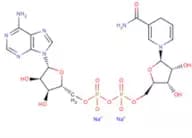
CAS:<p>NADH disodium salt hydrate, a reduced NAD form, donates electrons and gets oxidized to NAD+ in reduction reactions.</p>Formula:C21H27N7Na2O14P2Purity:98.05% - 99.85%Color and Shape:Odorless Yellowish PowderMolecular weight:709.4N-Isovaleroylglycine
CAS:<p>N-Isovaleroylglycine, a leucine catabolism byproduct, is an acyl glycine elevated in some metabolic disorders and indicates IVA when accumulated.</p>Formula:C7H13NO3Purity:99.95%Color and Shape:SolidMolecular weight:159.18L-Cysteic acid monohydrate
CAS:L-Cysteic acid monohydrate inhibits bacterial AspT, used in surfactants, brain studies, and as an mGluRs agonist.Formula:C3H9NO6SPurity:99.82%Color and Shape:White PowderMolecular weight:187.173-(3-Methoxyphenyl)propionic acid
CAS:<p>3-(3-Methoxyphenyl)propionic acid (3-Methoxyhydrocinnamic acid) is a naturally occurring human metabolite, It is an organic acid and excreted in human urine.</p>Formula:C10H12O3Purity:97.34%Color and Shape:SolidMolecular weight:180.2β-N-methylamino-L-alanine hydrochloride
CAS:<p>β-N-methylamino-L-alanine hydrochloride (L-BMAA hydrochloride) is a neurotoxin produced by cyanobacteria, could cause ALS and other neurodegenerative diseases.</p>Formula:C4H11ClN2O2Purity:95.00% - 99.67%Color and Shape:SolidMolecular weight:154.6Creatine
CAS:<p>Creatine, an amino acid in vertebrates, forms phosphocreatine in muscle, aids energy transfer, is made in the liver, and mainly stored in muscles.</p>Formula:C4H9N3O2Purity:99.63% - 99.83%Color and Shape:Colourless To Light Yellow SolidMolecular weight:131.13Methyl acetylacetate
CAS:<p>Methyl acetylacetate found in urine indicates propionyl-CoA carboxylase or 2-methylacetoacetyl-CoA thiolase deficiency.</p>Formula:C5H8O3Purity:99.14%Color and Shape:Less LiquidMolecular weight:116.12