Carboxylic Acids
Carboxylic acids are organic molecules characterized by having a carboxyl-type functional group (-COOH). These acids are fundamental in various chemical reactions, including esterification, amidation, and decarboxylation. Carboxylic acids are widely used in the production of pharmaceuticals, polymers, and agrochemicals. In this section, you can find a large number of carboxylic acids ready to be used. At CymitQuimica, we provide a broad range of high-quality carboxylic acids to support your research and industrial applications.
Found 12453 products of "Carboxylic Acids"
Sort by
Purity (%)
0
100
|
0
|
50
|
90
|
95
|
100
Glycocyamine
CAS:<p>Glycocyamine, a creatine precursor and dietary arginine substitute, aids in bird energy balance and indicates renal health.</p>Formula:C3H7N3O2Purity:99.42%Color and Shape:SolidMolecular weight:117.11L-Norvaline
CAS:<p>L-Norvaline: arginase inhibitor, non-protein amino acid, in Bacillus peptide, used in E. coli proteins.</p>Formula:C5H11NO2Purity:99.84%Color and Shape:SolidMolecular weight:117.15N-Acetyl-L-arginine dihydrate
CAS:<p>N-Acetyl-L-arginine dihydrate (N-Ac-L-arg-OH) is one of the guanidino compounds found elevated in the serum of a hemodialyzed renal insufficient (uremic)</p>Formula:C8H20N4O5Purity:99.95%Color and Shape:SolidMolecular weight:252.27NADH disodium salt
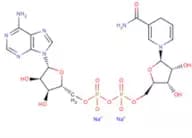
CAS:<p>NADH disodium salt hydrate, a reduced NAD form, donates electrons and gets oxidized to NAD+ in reduction reactions.</p>Formula:C21H27N7Na2O14P2Purity:98.05% - 99.85%Color and Shape:Odorless Yellowish PowderMolecular weight:709.4Spaglumic acid
CAS:<p>Spaglumic acid (N-Acetylaspartylglutamic acid) is a neuropeptide found in millimolar concentrations in the brain.</p>Formula:C11H16N2O8Purity:99.92%Color and Shape:White PowderMolecular weight:304.25L-Lactic acid
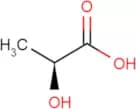
CAS:<p>L-Lactic acid: organic, chiral, prevalent in organisms, vital in biochemistry, forms in muscles during exertion.</p>Formula:C3H6O3Purity:95.05% - 99.85%Color and Shape:Colourless Liquid ViscousMolecular weight:90.08L-Pipecolic acid
CAS:<p>L-Pipecolic acid, a lysine metabolite, builds up in infants with peroxisomal genetic disorders like Zellweger syndrome.</p>Formula:C6H11NO2Purity:99.75%Color and Shape:SolidMolecular weight:129.16N-Isovaleroylglycine
CAS:<p>N-Isovaleroylglycine, a leucine catabolism byproduct, is an acyl glycine elevated in some metabolic disorders and indicates IVA when accumulated.</p>Formula:C7H13NO3Purity:99.95%Color and Shape:SolidMolecular weight:159.184-Guanidinobutanoic acid
CAS:<p>4-Guanidinobutanoic acid (4-GBA) is an L-arginine metabolite that has been used in the intestinal transport tranport studies. It has been use to hPAT1.</p>Formula:C5H11N3O2Purity:>99.99%Color and Shape:SolidMolecular weight:145.16Selenomethionine
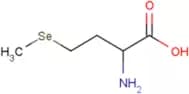
CAS:<p>DL-Selenomethionine (SeMet) is a selenium analog of methionine, substituting sulfur with selenium, and can replace methionine in proteins.</p>Formula:C5H11NO2SePurity:98% - 99.95%Color and Shape:Transparent Hexagonal Sheets Or Plates; Metallic Luster Of Crystals SolidMolecular weight:196.11Aminoadipic acid
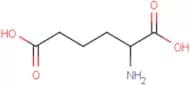
CAS:<p>Aminoadipic acid, a lysine metabolism intermediate, inhibits kynurenic acid production and antagonizes NMDA receptor activity.</p>Formula:C6H11NO4Purity:99.7% - 99.84%Color and Shape:SolidMolecular weight:161.163,5-Diiodo-L-thyronine
CAS:<p>NSC 90469 (Diiodothyronine) is an iodinated thyronine hormone that regulates gene activity affecting processes such as homeostasis and insulin resistance.</p>Formula:C15H13I2NO4Purity:99.64%Color and Shape:Off-White SolidMolecular weight:525.08NMDA
CAS:<p>N-Methyl-D-aspartic acid is an amino acid that, as the D-isomer, is the defining agonist for the NMDA (N-Methyl-D-aspartic acid) receptor subtype of glutamate</p>Formula:C5H9NO4Purity:99.21% - 99.90%Color and Shape:White SolidMolecular weight:147.13DL-Pyroglutamic acid
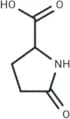
CAS:<p>DL-Pyroglutamic acid exhibited a strong inactivating effect on hepatitis B surface antigen. </p>Formula:C5H7NO3Purity:99.88%Color and Shape:White PowderMolecular weight:129.11D-Leucine
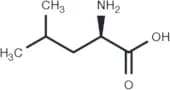
CAS:<p>D-Leucine stops seizures post-onset and lessens long-term potentiation without affecting basal synaptic transmission.</p>Formula:C6H13NO2Purity:99.67%Color and Shape:SolidMolecular weight:131.17L-Cysteic acid monohydrate
CAS:L-Cysteic acid monohydrate inhibits bacterial AspT, used in surfactants, brain studies, and as an mGluRs agonist.Formula:C3H9NO6SPurity:99.82%Color and Shape:White PowderMolecular weight:187.17N-Acetyl-L-leucine
CAS:<p>N-Acetylleucine, a water-soluble, weakly acidic derivative of leucine, is found in biofluids like feces and saliva.</p>Formula:C8H15NO3Purity:99.89%Color and Shape:SolidMolecular weight:173.212-Hydroxyisobutyric acid
CAS:<p>2-Hydroxyisobutyric acid, a MTBE metabolite, is excreted in air & breaks down into TBA, formaldehyde, and others; used as a bactericide.</p>Formula:C4H8O3Purity:98.66%Color and Shape:SolidMolecular weight:104.1Phosphocreatine disodium hydrate
CAS:<p>Phosphocreatine disodium hydrate ishigh-energy phosphate reservoir in vertebrate and some invertebrate muscle; provides phosphate for ADP-ATP conversion</p>Formula:C4H10N3Na2O6PPurity:99.587% - >99.99%Color and Shape:SolidMolecular weight:273.09Hydrocinnamic acid
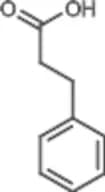
CAS:<p>Hydrocinnamic acid: white, sweet-smelling crystalline solid; used in cosmetics, food, and pharma.</p>Formula:C9H10O2Purity:99.52% - 99.973%Color and Shape:Off-White Solid PowderMolecular weight:150.17Sarcosine
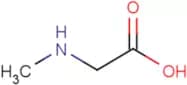
CAS:<p>Sarcosine (Methylglycine) is a competitive inhibitor of the type I glycine transporter (GlyT1) and an N-methyl-D-aspartate receptor (NMDAR) co-agonist.</p>Formula:C3H7NO2Purity:99.90%Color and Shape:Deliquescent Water Soluble Physical Description Deliquescent Crystals Or Powder Has A Sweetish Taste (Ntp 1992)Molecular weight:89.09N-Acetyl-L-glutamic acid
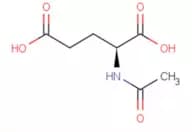
CAS:<p>NAcGlu, made from glutamic acid & acetyl-CoA by NAGS, activates urea cycle enzyme. NAGS deficiency causes Type I hyperammonemia.</p>Formula:C7H11NO5Purity:99.64% - 99.95%Color and Shape:SolidMolecular weight:189.17Acetyl-L-lysine
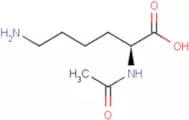
CAS:<p>Acetyl-L-lysine: N-acetylated amino acid, normally found in trace urine amounts, elevated in aminoacylase I deficiency.</p>Formula:C8H16N2O3Purity:99.40% - 99.83%Color and Shape:SolidMolecular weight:188.22Mesoxalate sodium (monohydrate)
CAS:<p>Mesoxalate sodium (monohydrate) is primarily located in the cytoplasm within the cell. Mesoxalic acid can be biosynthesized from malonic acid.</p>Formula:C3HNa2O6Purity:99.85%Color and Shape:SolidMolecular weight:180.02L-Methionine
CAS:<p>L-Methionine (L-Methionin) is the L-isomer of Methionine. Methionine is an essential amino acid for human development and acts as a hepatoprotectant.</p>Formula:C5H11NO2SPurity:99.58% - 99.84%Color and Shape:Colourless Solid CrystallineMolecular weight:149.212-(2-Phenylacetamido)acetic acid
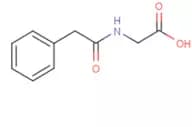
CAS:<p>2-(2-Phenylacetamido)acetic acid (Phenyl-ac-Gly-OH) is an acyl glycine. Acyl glycines are normally minor metabolites of fatty acids.</p>Formula:C10H11NO3Purity:99.43%Color and Shape:SolidMolecular weight:193.2(S)-Malic acid
CAS:(S)-Malic acid ((S)-2-Hydroxysuccinic acid) is a naturally occurring dicarboxylic acid that is the source of the sweet and sour flavour of fruits.Formula:C4H6O5Purity:99.41% - 99.72%Color and Shape:SolidMolecular weight:134.09O-Acetyl-L-serine hydrochloride
CAS:<p>O-Acetylserine (OASS), a cysteine precursor in bacteria/plants, enters humans via gut microbes or diet.</p>Formula:C5H10ClNO4Purity:99.79% - ≥95%Color and Shape:SolidMolecular weight:183.59L-Dihydroorotic acid
CAS:<p>L-Dihydroorotic acid, found in eukaryotes, is involved in pyrimidine metabolism and several disorders including orotic aciduria.</p>Formula:C5H6N2O4Purity:99.88% - 99.93%Color and Shape:White To Off-White Crystalline PowderMolecular weight:158.11Maleic acid
CAS:<p>Maleic Acid is a Glutamate Decarboxylase (GAD) inhibitor of L. monocytogenes and E. coli.</p>Formula:C4H4O4Purity:97.44%Color and Shape:White Solid CrystallineMolecular weight:116.07N-Acetyl-L-tyrosine
CAS:<p>N-Acetyl-L-tyrosine (Ac-Tyr-OH) evolves into tyrosine, aiding in catecholamine-based neurotransmitter therapy.</p>Formula:C11H13NO4Purity:99.4%Color and Shape:SolidMolecular weight:223.23L-Homoserine
CAS:<p>L-Homoserine is a reactive serine variant with an extra CH2, forms a 5-membered ring, not in proteins, and is made after cyanogen bromide cleavage.</p>Formula:C4H9NO3Purity:99.77%Color and Shape:SolidMolecular weight:119.12DL-O-Tyrosine
CAS:<p>DL-o-Tyrosine: metabolite of Phenylalanine, precursor to catecholamines, marker of protein damage in β-thalassemia.</p>Formula:C9H11NO3Purity:97.11% - 99.86%Color and Shape:SolidMolecular weight:181.19Oxalic acid
CAS:<p>Oxalic acid (Ethanedioic acid) is a strong dicarboxylic acid occurring in many plants and vegetables, produced in the body by metabolism of glyoxylic acid.</p>Formula:C2H2O4Purity:98.51% - 99.39%Color and Shape:White Solid CrystallineMolecular weight:90.03D(-)-2-Aminobutyric acid
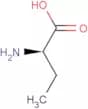
CAS:<p>D(-)-2-Aminobutyric acid is the substrate of D-amino acid oxidase.</p>Formula:C4H9NO2Purity:99.89%Color and Shape:SolidMolecular weight:103.12N-Acetyl-DL-methionine
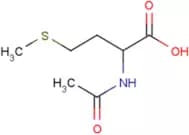
CAS:<p>N-acetyl-L-methionine equals L-methionine in diet & metabolism, essential for growth and methyl group transfers.</p>Formula:C7H13NO3SPurity:98.94%Color and Shape:White Crystalline PowderMolecular weight:191.25(R)-3-Hydroxybutanoic acid
CAS:<p>Beta-hydroxybutyrate aids in ketone body metabolism and is elevated in ketosis; it's a byproduct of valine from muscles.</p>Formula:C4H8O3Purity:98% - ≥95%Color and Shape:SolidMolecular weight:104.12-Ketoglutaric acid Sodium
CAS:2-Ketoglutaric acid Sodium (AKG) is a key molecule in the TCA cycle.Formula:C5H5NaO5Purity:97.77%Color and Shape:SolidMolecular weight:168.0812-Hydroxydodecanoic acid
CAS:<p>12-Hydroxydodecanoic acid (12-hydroxylauric acid) is the substrate of the human glutathione-dependent formaldehyde dehydrogenase.</p>Formula:C12H24O3Purity:99.30%Color and Shape:SolidMolecular weight:216.32N-(5-Aminopentyl)acetamide
CAS:<p>N-Acetylcadaverine, acetylated cadaverine, toxic in large doses, potential cancer/pathophysiology marker.</p>Formula:C7H16N2OPurity:99.87%Color and Shape:SolidMolecular weight:144.21DL-Valine
CAS:<p>DL-Valine (H-DL-Val-OH) is 2-amino-3-methylbutanoic acid.It is synthesized in plants via several steps starting from pyruvic acid.</p>Formula:C5H11NO2Purity:99.84%Color and Shape:Leaflets From Water + Alcohol White CrystalsMolecular weight:117.15rosmarinate acid
CAS:<p>Rosmarinate acid(Rosemary acid) inhibits MAO-A, MAO-B and COMT enzymes with IC50s of 50.1, 184.6 and 26.7 μM, respectively</p>Formula:C18H16O8Purity:99.69%Color and Shape:SolidMolecular weight:360.31Oxoadipic acid
CAS:<p>Oxoadipic acid: metabolite from tryptophan and lysine, links TCA cycle to lysine synthesis, studied for mitochondrial transport.</p>Formula:C6H8O5Purity:96.61% - >99.99%Color and Shape:SolidMolecular weight:160.12D-(-)-Lactic acid sodium
CAS:<p>Sodium D-lactate is a chiral organic acid, more common as L-isomer in organisms, and a microbial metabolite.</p>Formula:C3H5NaO3Purity:≥95%Color and Shape:SolidMolecular weight:112.063-Hydroxybutyric acid
CAS:<p>Butanoic acid is an endogenous histone deacetylase (HDAC) inhibitor,IC50 for HDAC3, HDAC4, and HDAC1 is 2.4 mM, 4.5 mM, and 5.3 mM. High-Quality, Low-Cost!</p>Formula:C4H8O3Purity:97.31% - 99.77%Color and Shape:SolidMolecular weight:104.1Creatine
CAS:<p>Creatine, an amino acid in vertebrates, forms phosphocreatine in muscle, aids energy transfer, is made in the liver, and mainly stored in muscles.</p>Formula:C4H9N3O2Purity:99.63% - 99.83%Color and Shape:Colourless To Light Yellow SolidMolecular weight:131.13H-Gly-Pro-OH
CAS:<p>H-Gly-Pro-OH (Glycyl proline) is a dipeptide composed of glycine and proline, and is an end product of collagen metabolism</p>Formula:C7H12N2O3Purity:≥95%Color and Shape:SolidMolecular weight:172.18N-Acetylglycine
CAS:<p>N-Acetylglycine, non-toxic, found in foods, used in peptidomimetic research.</p>Formula:C4H7NO3Purity:99.82%Color and Shape:SolidMolecular weight:117.1Diethyl oxalpropionate
CAS:Diethyl oxalpropionate, a slightly soluble beta-keto acid derivative, is weakly acidic, mainly found in the cytoplasm.Formula:C9H14O5Purity:97.42%Color and Shape:SolidMolecular weight:202.2L-Methionine sulfoxide
CAS:<p>L-Methionine sulfoxide (H-Met(O)-OH) is a methionine metabolite affecting oxidative stress, purinergic signaling, and M1 macrophage polarization.</p>Formula:C5H11NO3SPurity:99.47% - 99.60%Color and Shape:SolidMolecular weight:165.21