Carboxylic Acids
Carboxylic acids are organic molecules characterized by having a carboxyl-type functional group (-COOH). These acids are fundamental in various chemical reactions, including esterification, amidation, and decarboxylation. Carboxylic acids are widely used in the production of pharmaceuticals, polymers, and agrochemicals. In this section, you can find a large number of carboxylic acids ready to be used. At CymitQuimica, we provide a broad range of high-quality carboxylic acids to support your research and industrial applications.
Found 12453 products of "Carboxylic Acids"
Sort by
Purity (%)
0
100
|
0
|
50
|
90
|
95
|
100
4-Methyl-2-oxopentanoic acid
CAS:<p>4-Methyl-2-oxopentanoic acid, an abnormal metabolite and neurotoxin, results from improper branched-chain amino acid metabolism.</p>Formula:C6H10O3Purity:99.09%Color and Shape:LiquidMolecular weight:130.14N-Acetylornithine
CAS:<p>N-Acetylornithine is found in human blood plasma (avg. 1.1±0.4 μmol/L) and urine (~1 μmol/day).</p>Formula:C7H14N2O3Purity:99.86% - ≥95%Color and Shape:SolidMolecular weight:174.2DL-O-Phosphoserine
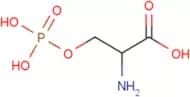
CAS:<p>DL-O-Phosphoserine (DL-SOP), a normal metabolite in human biofluid, is an ester of serine and phosphoric acid.</p>Formula:C3H8NO6PPurity:99.83%Color and Shape:SolidMolecular weight:185.072-(2-Phenylacetamido)acetic acid
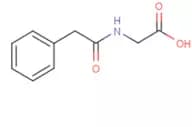
CAS:<p>2-(2-Phenylacetamido)acetic acid (Phenyl-ac-Gly-OH) is an acyl glycine. Acyl glycines are normally minor metabolites of fatty acids.</p>Formula:C10H11NO3Purity:99.43%Color and Shape:SolidMolecular weight:193.2(S)-2-Hydroxy-3-phenylpropanoic acid
CAS:<p>(S)-2-Hydroxy-3-phenylpropanoic acid (L-(−)-3-Phenyllactic acid) is a chiral aromatic compound involved in phenylalanine metabolism.</p>Formula:C9H10O3Purity:99.73% - 99.86%Color and Shape:SolidMolecular weight:166.17N-Acetyl-L-aspartic acid
CAS:<p>N-Acetyl-L-aspartic acid: second to glutamate in brain, from aspartate & acetyl CoA, roles in osmoregulation, lipid synthesis, and energy.</p>Formula:C6H9NO5Purity:99.52% - 99.79%Color and Shape:SolidMolecular weight:175.145-Aminovaleric acid
CAS:<p>5-Aminovalerate, a lysine metabolite, can form endogenously or from bacterial lysine catabolism; indicates bacterial overgrowth or tissue necrosis.</p>Formula:C5H11NO2Purity:99.86%Color and Shape:SolidMolecular weight:117.15D-glutamine
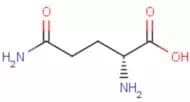
CAS:<p>D-glutamine, an D type stereoisomer of glutamine, is one of the 20 amino acids which is encoded by the standard genetic code.</p>Formula:C5H10N2O3Purity:99.99%Color and Shape:White Or Off-White PowderMolecular weight:146.14Sarcosine
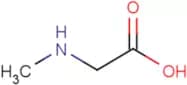
CAS:<p>Sarcosine (Methylglycine) is a competitive inhibitor of the type I glycine transporter (GlyT1) and an N-methyl-D-aspartate receptor (NMDAR) co-agonist.</p>Formula:C3H7NO2Purity:99.90%Color and Shape:Deliquescent Water Soluble Physical Description Deliquescent Crystals Or Powder Has A Sweetish Taste (Ntp 1992)Molecular weight:89.09L-Lactic acid
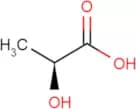
CAS:<p>L-Lactic acid: organic, chiral, prevalent in organisms, vital in biochemistry, forms in muscles during exertion.</p>Formula:C3H6O3Purity:95.05% - 99.85%Color and Shape:Colourless Liquid ViscousMolecular weight:90.082-Hydroxyisobutyric acid
CAS:<p>2-Hydroxyisobutyric acid, a MTBE metabolite, is excreted in air & breaks down into TBA, formaldehyde, and others; used as a bactericide.</p>Formula:C4H8O3Purity:98.66%Color and Shape:SolidMolecular weight:104.1Oxoadipic acid
CAS:<p>Oxoadipic acid: metabolite from tryptophan and lysine, links TCA cycle to lysine synthesis, studied for mitochondrial transport.</p>Formula:C6H8O5Purity:96.61% - >99.99%Color and Shape:SolidMolecular weight:160.12Acetoacetic acid lithium salt
CAS:<p>Lithium acetoacetate is a weak organic acid from the liver during fatty acid breakdown in conditions like diabetic ketoacidosis.</p>Formula:C4H5LiO3Purity:99.83%Color and Shape:SolidMolecular weight:108.0211-Mercaptoundecanoic Acid
CAS:Controlled Product<p>Applications 11-MERCAPTOUNDECANOIC ACID (cas# 71310-21-9) is a useful research chemical.<br> Not a dangerous good if item is equal to or less than 1g/ml and there is less than 100g/ml in the package<br></p>Formula:C11H22O2SColor and Shape:NeatMolecular weight:218.365-(3,4-dihydroxyphenyl)pentanoic Acid
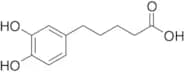
CAS:Controlled Product<p>Applications 5-(3,4-dihydroxyphenyl)pentanoic Acid (cas# 31129-94-9) is a useful research chemical.<br></p>Formula:C11H14O4Color and Shape:NeatMolecular weight:210.23Ethyl 2-Mercaptoacetate
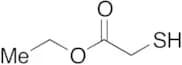
CAS:Controlled Product<p>Applications Ethyl 2-Mercaptoacetate is an off-odor compound in white wine and an eye irritant.<br> Not a dangerous good if item is equal to or less than 1g/ml and there is less than 100g/ml in the package<br>References Nikolantonaki, M., Darriet, P.: J. Agr. Food Chem., 59, 10191 (2011); Bagley, D.M., et. al.: Toxicol. in vitro, 13, 505 (1999)<br></p>Formula:C4H8O2SColor and Shape:NeatMolecular weight:120.172-Arsanilic Acid
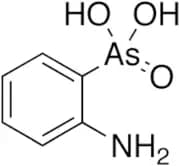
CAS:Controlled Product<p>Applications o-Arsanilic Acid is an organoarsenic compound. o-Arsanilic Acid is a highly toxic contaminant and can be found in plants growing in contaminated soil.<br> Not a dangerous good if item is equal to or less than 1g/ml and there is less than 100g/ml in the package<br>References Schmidt, A.-C. et al.: Chemosphere, 73, 1781 (2008);<br></p>Formula:C6H8AsNO3Color and Shape:NeatMolecular weight:217.052-Tetrahydrofuroic Acid
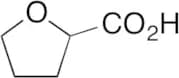
CAS:Controlled Product<p>Applications 2-Tetrahydrofuroic acid is used as a reagent to synthesize Alfuzosin (HCl: A532000), an unselective alpha-1 blocker that is used to treat lower urinary tract symptoms and benign prostatic hyperplasia.<br> Not a dangerous good if item is equal to or less than 1g/ml and there is less than 100g/ml in the package<br>References Grasso, M., et al.: Arch. Esp. Urol., 48, 97 (1994); Roehrborn, C., et al.: BJU Int., 92, 257 (2003)<br></p>Formula:C5H8O3Color and Shape:NeatMolecular weight:116.124-Sulfamoylbenzoic Acid
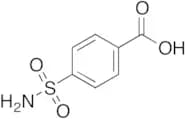
CAS:Controlled Product<p>Applications 4-Sulfamoylbenzoic Acid is used as a reagent in the synthesis of carbonic anhydrase inhibitors anticonvulsant agents.<br>References Singh, S. et al.: J. Enz. Inhib. Med. Chem., 31, 417 (2016);<br></p>Formula:C7H7NO4SColor and Shape:NeatMolecular weight:201.2Iodic Acid
CAS:<p>Applications Iodic Acid is used in the synthesis of silybin derivatives showing antiradical and antioxidant activities. Also used in the iodination of compounds.<br> Not a dangerous good if item is equal to or less than 1g/ml and there is less than 100g/ml in the package<br>References Gazak, R. et al.: Bioorg. Med. Chem., 12, 5677 (2004); Zangade, S. et al.: Eur. j. Chem., 3, 314 (2012);<br></p>Formula:HIO3Color and Shape:NeatMolecular weight:175.91Maleic Acid
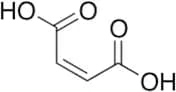
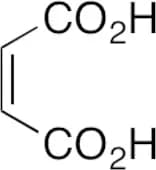
CAS:Controlled Product<p>Applications Maleic Acid is used in the synthesis of pyridoindolones as potent inhibitors of Aurora kinases. Also is a reagent in the preparation of TiO2/carbon nanotube composites.<br>References Le, L. et al.: ChemMedChem., 8, 289 (2013); Yao, Y. et al.: Env. Sci. Tech., 42, 4952 (2008)l<br></p>Formula:C4H4O4Color and Shape:WhiteMolecular weight:116.072-Ethoxybenzoic Acid
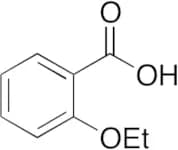
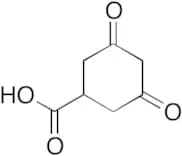
CAS:<p>Applications 2-Ethoxybenzoic Acid is a component of dental cement. Low concentrations of 2-Ethoxybenzoic Acid in combination with Eugenol (E938640), gives a stabilizing effect to liposomes to lower damages to cells.<br>References Fujisawa, S., et al.: J. Dent. Res., 82, 43(2003); Brauer, G.M., et al.: J. Dent. Res., 62, 366 (1983); Brauer, G.M., et al.: J. Dent. Res., 63, 137 (1984); Fujisawa, S., et al.: J. Biomed. Mater. Res., 21, 89 (1987)<br></p>Formula:C9H10O3Color and Shape:NeatMolecular weight:166.173,5-Dioxocyclohexanecarboxylic Acid
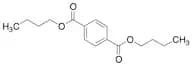
CAS:<p>Applications Dihydroresorcylic Acid is a useful reagent in detecting proteins in living cells.<br>References Reddie, K., et al.: Mol. Biosys., 4, 521-531 (2008); Seo, Y., et al.: Bioorg. Med. Chem. Lett., 19, 356-359 (2009);<br></p>Formula:C7H8O4Color and Shape:NeatMolecular weight:156.141,4-Dibutyl Benzene-1,4-dicarboxylate
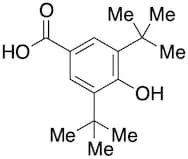
CAS:<p>Applications 1,4-dibutyl benzene-1,4-dicarboxylate (cas# 1962-75-0) is a useful research chemical.<br></p>Formula:C16H22O4Color and Shape:NeatMolecular weight:278.343,5-Di-tert-butyl-4-hydroxybenzoic Acid
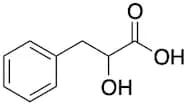
CAS:Controlled Product<p>Applications 3,5-Di-tert-butyl-4-hydroxybenzoic acid<br></p>Formula:C15H22O3Color and Shape:NeatMolecular weight:250.33DL-3-phenyllactic acid
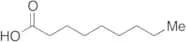
CAS:Controlled Product<p>Applications DL-3-phenyllactic acid had been identified as a urinary food intake biomarker for milk, cheese and soy-based drinks.<br>References Munger, L.H.; et al.: J. Proteome Res., 16, 3321 (2017)<br></p>Formula:C9H10O3Color and Shape:NeatMolecular weight:166.17n-Nonanoic Acid
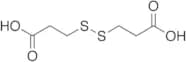
CAS:Controlled Product<p>Applications n-Nonanoic Acid is commonly used in conjunction with glyphosate, a non-selective herbicide, for a quick burn-down effect in the control of weeds in turfgrass. It is also used in the preparation of plasticizers and lacquers.<br>References Pline, W., et al.: Weed Technol., 14, 667 (2000); Frade, J., et al.: Anal. Bioanal. Chem., 395, 2167 (2009);<br></p>Formula:C9H18O2Color and Shape:ColourlessMolecular weight:158.24Dithiobis-propanoic Acid
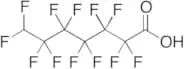
CAS:Controlled ProductFormula:C6H10O4S2Color and Shape:White To Off-WhiteMolecular weight:210.077H-Dodecafluoroheptanoic Acid
CAS:<p>Applications 7H-Dodecafluoroheptanoic Acid is a derivative of Heptanoic Acid (H998455) which can be used as an organic building blocks for the synthesis of variety of chemical compounds. Heptanoic Acid is used in the synthesis of 17-epi-Testosterone Enanthate (T155095). It is used in the preparation of esters, such as ethyl heptanoate, which are used in fragrances and as artificial flavors. It is also one of many additives in cigarettes.<br> Not a dangerous good if item is equal to or less than 1g/ml and there is less than 100g/ml in the package<br>References Anneken, D. et al.: Fatty Acids, Ullmann's Encyclopedia of Industrial Chemistry (2006); Wudy, S., et al.: Steroids, 66, 759 (2001); Kootstra, P., et al.: Anal. Chim. Acta., 586, 82 (2007); Sten, T., et al.: Drug Metab. Dispos., 37, 417 (2009)<br></p>Formula:C7H2F12O2Color and Shape:WhiteMolecular weight:346.07trans-2-Octenoic Acid
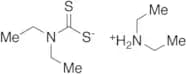
CAS:Controlled Product<p>Stability Light Sensitive<br>Applications TRANS-2-OCTENOIC ACID (cas# 1871-67-6) is a useful research chemical.<br> Not a dangerous good if item is equal to or less than 1g/ml and there is less than 100g/ml in the package<br></p>Formula:C8H14O2Color and Shape:NeatMolecular weight:142.2Diethylammonium N,N-Diethyldithiocarbamate
CAS:Controlled Product<p>Applications Dithiocarbamate complexes serve as hosts for the specific binding of various metal cations.<br>References Bourson, J., et al.: J. Phys. Chem., 97, 4552 (1993), Lai, S., et al.: Inorg. Chem., 38, 4262 (1999),<br></p>Formula:C9H22N2S2Color and Shape:NeatMolecular weight:222.415,6-Dibromonicotinic Acid
CAS:Controlled Product<p>Applications 5,6-dibromonicotinic acid (cas# 29241-64-3) is a useful research chemical.<br></p>Formula:C6H3Br2NO2Color and Shape:NeatMolecular weight:280.901Crotonic Acid
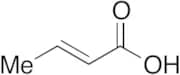
CAS:<p>Applications Crotonic Acid is found in water extracts from carrot seeds (Daucus carota L.) and is shown to have strong herbicidal properties.<br> Not a dangerous good if item is equal to or less than 1g/ml and there is less than 100g/ml in the package<br>References Jasicka-Misiak, I., et al.: Phytochemistry, 66, 1485 (2005)<br></p>Formula:C4H6O2Color and Shape:WhiteMolecular weight:86.09Fendizoic Acid
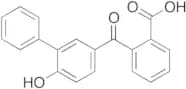
CAS:Controlled Product<p>Applications Fendizoic Acid is a reagent in the synthesis of fluorinated polyphthalazinone ethers containing perfluorophenylene moieties.<br>References Lu, Z., et al.: J. Polym. Sci. A1, 42, 925 (2004)<br></p>Formula:C20H14O4Color and Shape:NeatMolecular weight:318.323-(9H-Carbazol-9-yl)propanoic Acid
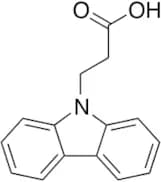
CAS:Controlled Product<p>Applications 3-(9H-carbazol-9-yl)propanoic acid (cas# 6622-54-4) is a useful research chemical.<br></p>Formula:C15H13NO2Color and Shape:NeatMolecular weight:239.269Nicametate
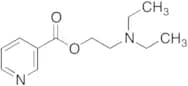
CAS:Controlled Product<p>Applications Nicotinic Acid 2-Diethylamino-Ethyl Ester (cas# 3099-52-3) is a useful research chemical.<br></p>Formula:C12H18N2O2Color and Shape:NeatMolecular weight:222.284-Ethoxycarbonyl-3-ethoxyphenylacetic Acid
CAS:Controlled Product<p>Applications Repaglinide intermediate.<br>References Wolfenbuttel, B., et al.: Eur. J. Clin. Pharmacol., 45, 113 (1993), Grell, W., et al.: J. Med. Chem., 41, 5219 (1998), Anon., et al.: Drugs Future, 24, 815 (1999),<br></p>Formula:C13H16O5Color and Shape:NeatMolecular weight:252.262-[(Phenylsulfanyl)methyl]benzenecarboxylic Acid
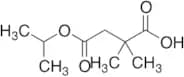
CAS:<p>Applications 2-[(phenylsulfanyl)methyl]benzenecarboxylic acid (cas# 1699-03-2) is a useful research chemical.<br></p>Formula:C14H12O2SColor and Shape:NeatMolecular weight:244.312,2-dimethyl-4-oxo-4-(propan-2-yloxy)butanoic acid
CAS:Controlled Product<p>Applications 2,2-dimethyl-4-oxo-4-(propan-2-yloxy)butanoic acid (cas# 1803601-41-3) is a useful research chemical.<br></p>Formula:C9H16O4Color and Shape:NeatMolecular weight:188.22Ethyl Hydrazinoacetate Hydrochloride
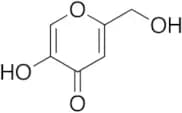
CAS:Controlled Product<p>Applications Ethyl hydrazinoacetate, HCl<br></p>Formula:C4H10N2O2•HClColor and Shape:NeatMolecular weight:118.13 + 36.46Kojic Acid
CAS:<p>Applications A naturally occurring chelation agent.<br>References Boonme, P., et al.: J. Biomed. Nanotechnol., 5, 373 (2009), Noh, J., et al.: Bioorg. Med. Chem., Lett., 19, 5586 (2009), Gohil, V., et al.: Nat. Biotechnol., 28, 249 (2010),<br></p>Formula:C6H6O4Color and Shape:NeatMolecular weight:142.11tert-Butyl N-[3-(Chlorosulfonyl)propyl]carbamate
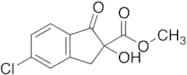
CAS:Controlled Product<p>Applications tert-butyl N-[3-(chlorosulfonyl)propyl]carbamate (cas# 1196153-59-9) is a useful research chemical.<br></p>Formula:C8H16ClNO4SColor and Shape:NeatMolecular weight:257.735Methyl 5-chloro-2-hydroxy-1-oxo-2,3-dihydro-1H-indene-2-carboxylate
CAS:Controlled Product<p>Applications Methyl 5-chloro-2-hydroxy-1-oxo-2,3-dihydro-1H-indene-2-carboxylate (cas# 144172-24-7) is a useful research chemical. It is an intermediate in the synthesis of IN-KG 433 (I627995). IN-KG 433 is an impurity of Indoxacarb (I654000), an oxadiazine pesticide that acts against lepidopteran larvae and is the active ingredient in a number of household insecticides including cockroach baits.<br>References Wang, H., et al.: Water. Sci. Technol., 61, 2733 (2010); Shono, T., et al.: Pesticide. Biochem. Physiol., 75, 1 (2003);<br></p>Formula:C11H9O4ClColor and Shape:NeatMolecular weight:240.634-Acetamidobenzenesulfonic Acid
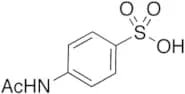
CAS:Controlled Product<p>Impurity Sulfadimethoxine EP Impurity C<br>Stability Hygroscopic<br>Applications 4-Acetamidobenzenesulfonic Acid (Sulfadimethoxine EP Impurity C) is a metabolite of Sulfanilic acid.<br>References Saab, N., et al.: Eur. J. Med. Chem., 34, 745 (1999), Kim, H., et al.: J. Pharm. Biomed. Anal., 27, 51 (2002), Santelli-Rouvier, C., et al.: Eur. J. Med. Chem., 39, 735 (2004),<br></p>Formula:C8H9NO4SColor and Shape:NeatMolecular weight:215.234-Acetyl-3-nitrobenzoic Acid
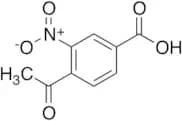
CAS:Controlled ProductFormula:C9H7NO5Color and Shape:NeatMolecular weight:209.156Phosphoric Acid Ammonium Salt (1:1)
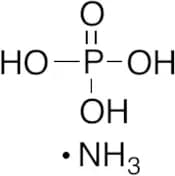
CAS:<p>Applications Phosphoric acid, ammonium salt (1:1) is a useful reagent for organic synthesis.<br></p>Formula:H3N·H3O4PColor and Shape:NeatMolecular weight:115.026(-)-α-Kainic Acid Monohydrate
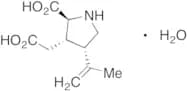
CAS:Controlled Product<p>Applications (-)-α-Kainic Acid Monohydrate is the monohydrated form of (-)-α-Kainic Acid (K135010); a naturally occurring neuroexcitatory chemical that is a selective agonist for a subtype of ionotropic glutamate receptor. Administration of (-)-α-Kainic Acid has been shown to increase production of reactive oxygen species, mitochondrial dysfunction, and apoptosis in neurons in many regions of the brain, particularly in the hippocampal subregions and in the hilus of dentate gyrus.<br>References Wacker, D.A., et al.: Synlett, 503 (1997); Dunleavy, M., et al.: J. Molec. Neurosci., 49, 202 (2013); Zhang, J., et al.: Neuron., 76, 1133 (2012); Yamada, J., et al.: Neurosci., 226, 119 (2012); Wang,Q., et al.: Mol. Neurobiol., 31, 3 (2005)<br></p>Formula:C10H15NO4·H2OColor and Shape:NeatMolecular weight:231.246Polymaleic Acid (Aqueous Solution)
CAS:Controlled Product<p>Applications Polymaleic acid (cas# 26099-09-2) is a useful research chemical.<br></p>Formula:(C4H4O4)nColor and Shape:ColourlessMolecular weight:146.141Benzyl (4-Hydroxyphenyl)acetate
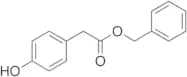
CAS:Controlled Product<p>Applications Intermediate in the preparation of Camostat metabolites.<br>References Bodor, N., et al.: Pharm. Res., 3, 120 (1984), Han, L., et al.: Biochem., 46, 1432 (2007),<br></p>Formula:C15H14O3Color and Shape:NeatMolecular weight:242.27Cyanoacetic Acid
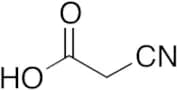
CAS:Controlled Product<p>Applications Cyanoacetic acid is a dangerous compound that is commonly used as a synthetic intermediate. Cyanoacetic acid has also been found to have teratogenic effects on rat embryos.<br> Not a dangerous good if item is equal to or less than 1g/ml and there is less than 100g/ml in the package<br>References Simpson, M., et al.: Food Chem. Toxicol., 24, 634 (1986)<br></p>Formula:C3H3NO2Color and Shape:NeatMolecular weight:85.06










![2-[(Phenylsulfanyl)methyl]benzenecarboxylic Acid](/_next/image/?url=https%3A%2Fstatic.cymitquimica.com%2Fproducts%2FTR%2Fthumb-webp%2FB481480.webp&w=3840&q=75)

![tert-Butyl N-[3-(Chlorosulfonyl)propyl]carbamate](/_next/image/?url=https%3A%2Fstatic.cymitquimica.com%2Fproducts%2FTR%2Fthumb-webp%2FB811700.webp&w=3840&q=75)