Carboxylic Acids
Carboxylic acids are organic molecules characterized by having a carboxyl-type functional group (-COOH). These acids are fundamental in various chemical reactions, including esterification, amidation, and decarboxylation. Carboxylic acids are widely used in the production of pharmaceuticals, polymers, and agrochemicals. In this section, you can find a large number of carboxylic acids ready to be used. At CymitQuimica, we provide a broad range of high-quality carboxylic acids to support your research and industrial applications.
Found 12453 products of "Carboxylic Acids"
Sort by
Purity (%)
0
100
|
0
|
50
|
90
|
95
|
100
12-Hydroxydodecanoic acid
CAS:<p>12-Hydroxydodecanoic acid (12-hydroxylauric acid) is the substrate of the human glutathione-dependent formaldehyde dehydrogenase.</p>Formula:C12H24O3Purity:99.30%Color and Shape:SolidMolecular weight:216.32(S)-2-acetamido-4-amino-4-oxobutanoic acid
CAS:<p>(S)-2-acetamido-4-amino-4-oxobutanoic acid (Nα-Acetyl-L-asparagine), also known as acasn, is an endogenous metabolite.</p>Formula:C6H10N2O4Purity:99.73%Color and Shape:SolidMolecular weight:174.152-(2-Phenylacetamido)acetic acid
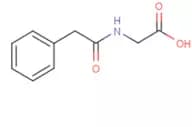
CAS:<p>2-(2-Phenylacetamido)acetic acid (Phenyl-ac-Gly-OH) is an acyl glycine. Acyl glycines are normally minor metabolites of fatty acids.</p>Formula:C10H11NO3Purity:99.43%Color and Shape:SolidMolecular weight:193.2α-Lactose
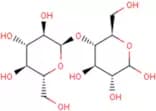
CAS:<p>α-Lactose is the major sugar present in milk and the main source of energy supplied to the newborn mammalian in its mother's milk.</p>Formula:C12H22O11Purity:98.96%Color and Shape:White Hard Crystalline Mass Of White Powder Physical Description White Hard Crystalline Powder (Ntp 1992)Molecular weight:342.3L-Cysteic acid monohydrate
CAS:<p>L-Cysteic acid monohydrate inhibits bacterial AspT, used in surfactants, brain studies, and as an mGluRs agonist.</p>Formula:C3H9NO6SPurity:99.82%Color and Shape:White PowderMolecular weight:187.17Oxaloacetic acid
CAS:<p>Oxaloacetic acid: a four-carbon dicarboxylic acid, an intermediate in the citric acid cycle, forms aspartic acid.</p>Formula:C4H4O5Purity:98.27% - 99.93%Color and Shape:SolidMolecular weight:132.07L-Alloisoleucine
CAS:<p>L-Alloisoleucine (L-allo-Isoleucine) is a branched chain amino acid and a stereoisomer of L-isoleucine, is produced as a byproduct of isoleucine transamination.</p>Formula:C6H13NO2Purity:99.88% - ≥95%Color and Shape:SolidMolecular weight:131.173-Ethoxy-3-oxopropanoic acid
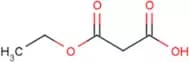
CAS:<p>3-Ethoxy-3-oxopropanoic acid (Monoethyl malonic acid) belongs to the class of organic compounds known as dicarboxylic acids and derivatives.</p>Formula:C5H8O4Purity:99.72%Color and Shape:SolidMolecular weight:132.11L-Norleucine
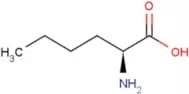
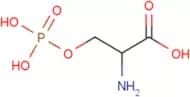
CAS:<p>L-Norleucine ((S)-Norleucine) is an isomer of leucine, specifically affects protein synthesis in skeletal muscle, and has antivirus activity.</p>Formula:C6H13NO2Purity:98.35%Color and Shape:SolidMolecular weight:131.17DL-O-Phosphoserine
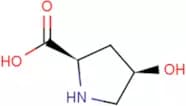
CAS:<p>DL-O-Phosphoserine (DL-SOP), a normal metabolite in human biofluid, is an ester of serine and phosphoric acid.</p>Formula:C3H8NO6PPurity:99.83%Color and Shape:SolidMolecular weight:185.07H-D-cis-Hyp-OH
CAS:<p>H-D-cis-Hyp-OH (D-allo-Hydroxyproline) belongs to the class of organic compounds known as proline and derivatives.</p>Formula:C5H9NO3Purity:99.92%Color and Shape:White Crystalline PowderMolecular weight:131.13Ac-Ala-OH
CAS:<p>Ac-Ala-OH is a substrate for multiple proteins, including G protein gamma-2, Myelin protein, Ran, Tropomyosin alpha 4, and others.</p>Formula:C5H9NO3Purity:97.03% - 99.77%Color and Shape:SolidMolecular weight:131.13N-Acetyl-L-aspartic acid
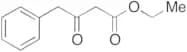
CAS:<p>N-Acetyl-L-aspartic acid: second to glutamate in brain, from aspartate & acetyl CoA, roles in osmoregulation, lipid synthesis, and energy.</p>Formula:C6H9NO5Purity:99.52% - 99.79%Color and Shape:SolidMolecular weight:175.14Ethyl 4-Phenylacetoacetate
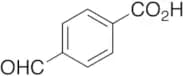
CAS:Controlled Product<p>Applications Ethyl 4-Phenylacetoacetate is a useful synthetic intermediate. It is used to prepare pyrazolone derivatives as antiprion compounds. It is also used to prepare pyrrolinylaminopyrimidine analogs as inhibitors of AP-1 and NF-κB mediated gene expression.<br>References Kimata, A., et al.: J. Med. Chem., 50, 5053 (2007); Palanki, M., et al.: Bioorg. Med. Chme. Lett., 12, 2573 (2002)<br></p>Formula:C12H14O3Color and Shape:NeatMolecular weight:206.237764-Formylbenzoic Acid
CAS:Controlled Product<p>Applications A metabolite of aldehydes.<br>References Shiobara, Y., et al.: Xenobiotica, 9, 157 (1979),<br></p>Formula:C8H6O3Color and Shape:NeatMolecular weight:150.131,4-Dibutyl Benzene-1,4-dicarboxylate
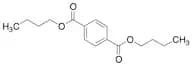
CAS:<p>Applications 1,4-dibutyl benzene-1,4-dicarboxylate (cas# 1962-75-0) is a useful research chemical.<br></p>Formula:C16H22O4Color and Shape:NeatMolecular weight:278.34Tauroursodeoxycholic Acid
CAS:<p>Stability Hygroscopic<br>Applications TAUROURSODEOXYCHOLIC ACID (cas# 14605-22-2) is a useful research chemical.<br></p>Formula:C26H45NO6SColor and Shape:Off-WhiteMolecular weight:499.70DL-3-phenyllactic acid
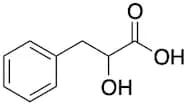
CAS:Controlled Product<p>Applications DL-3-phenyllactic acid had been identified as a urinary food intake biomarker for milk, cheese and soy-based drinks.<br>References Munger, L.H.; et al.: J. Proteome Res., 16, 3321 (2017)<br></p>Formula:C9H10O3Color and Shape:NeatMolecular weight:166.172,2-dimethyl-4-oxo-4-(propan-2-yloxy)butanoic acid
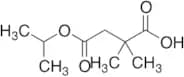
CAS:Controlled Product<p>Applications 2,2-dimethyl-4-oxo-4-(propan-2-yloxy)butanoic acid (cas# 1803601-41-3) is a useful research chemical.<br></p>Formula:C9H16O4Color and Shape:NeatMolecular weight:188.22Acetoacetic Acid Isoamyl Ester
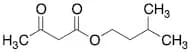
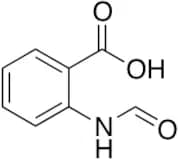
CAS:Controlled Product<p>Applications ACETOACETIC ACID ISOAMYL ESTER (cas# 2308-18-1) is a useful research chemical.<br></p>Formula:C9H16O3Color and Shape:NeatMolecular weight:172.222-(Formylamino)benzoic Acid (>90%)
CAS:Controlled Product<p>Applications 2-(formylamino)benzoic acid (cas# 3342-77-6) is a useful research chemical.<br></p>Formula:C8H7NO3Purity:>90%Color and Shape:NeatMolecular weight:165.154-Hydrazinobenzoic Acid Hydrochloride
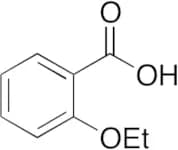
CAS:Controlled Product<p>Applications 4-Hydrazinobenzoic acid hydrochloride (cas# 24589-77-3) is a useful research chemical.<br></p>Formula:C7H8N2O2·HClColor and Shape:NeatMolecular weight:188.6122-Ethoxybenzoic Acid
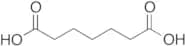
CAS:<p>Applications 2-Ethoxybenzoic Acid is a component of dental cement. Low concentrations of 2-Ethoxybenzoic Acid in combination with Eugenol (E938640), gives a stabilizing effect to liposomes to lower damages to cells.<br>References Fujisawa, S., et al.: J. Dent. Res., 82, 43(2003); Brauer, G.M., et al.: J. Dent. Res., 62, 366 (1983); Brauer, G.M., et al.: J. Dent. Res., 63, 137 (1984); Fujisawa, S., et al.: J. Biomed. Mater. Res., 21, 89 (1987)<br></p>Formula:C9H10O3Color and Shape:NeatMolecular weight:166.17Pimelic Acid
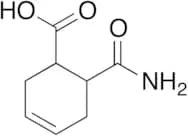
CAS:Controlled Product<p>Applications Pimelic Acid is a metabolite found in four biofluids from dairy cows that may be used as biomarkers of milk.<br>References Sun, H., et. al.: J. Proteome Res., 14, 1287 (2015)<br></p>Formula:C7H12O4Color and Shape:NeatMolecular weight:160.176-(Aminocarbonyl)-3-cyclohexene-1-carboxylic Acid
CAS:Controlled Product<p>Applications 6-(Aminocarbonyl)-3-cyclohexene-1-carboxylic Acid is a useful building block for organic synthesis.<br></p>Formula:C8H11NO3Color and Shape:NeatMolecular weight:169.178Ethyl Hydrazinoacetate Hydrochloride
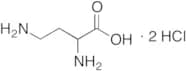
CAS:Controlled Product<p>Applications Ethyl hydrazinoacetate, HCl<br></p>Formula:C4H10N2O2•HClColor and Shape:NeatMolecular weight:118.13 + 36.46DL-2,4-Diaminobutyric Acid Dihydrochloride
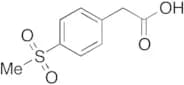
CAS:Controlled Product<p>Applications DL-2,4-Diaminobutyric Acid Dihydrochloride (cas# 65427-54-5) is a useful research chemical.<br></p>Formula:C4H10N2O2·2HClColor and Shape:NeatMolecular weight:118.13 + 2(36.46)4-(Methylsulfonyl)phenylacetic Acid
CAS:Controlled Product<p>Applications 4-(Methylsulfonyl)phenylacetic Acid is an intermediate used to prepare heterocyclic diaryl compounds as selective COX-2 inhibitors. It is also used to synthesize hydroxyfuranones as antioxidants and antiinflammatory agents.<br>References Eren, G., et al.: Bioorg. Med. Chem., 18, 6467 (2010); Weber, V., et al.: Bioorg. Med. Chem., 13, 4552 (2005)<br></p>Formula:C9H10O4SColor and Shape:NeatMolecular weight:214.241-Dodecanol Acetate
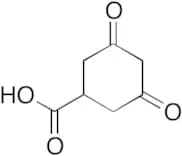
CAS:Controlled Product<p>Applications 1-Dodecanol Acetate can be used as a foaming agent in the purification process of quartz sand. Furthermore, it is a main component of the essential oil from the flowers of Etlingera elatior (Jack) R. M. Smith, which is found to be active against Staphylococcus aureus, Bacillus cereus, Candida albicans and Cryptococcus neoformans.<br>References Wang, W., et al.: Faming Zhuanli Shenqing, CN 103663469 A 20140326 (2014); Susanti, D., et al.: Journal of Essential Oil-Bearing Plants, 16, 294 (2013)<br></p>Formula:C14H28O2Color and Shape:NeatMolecular weight:228.373,5-Dioxocyclohexanecarboxylic Acid
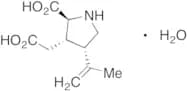
CAS:<p>Applications Dihydroresorcylic Acid is a useful reagent in detecting proteins in living cells.<br>References Reddie, K., et al.: Mol. Biosys., 4, 521-531 (2008); Seo, Y., et al.: Bioorg. Med. Chem. Lett., 19, 356-359 (2009);<br></p>Formula:C7H8O4Color and Shape:NeatMolecular weight:156.14(-)-α-Kainic Acid Monohydrate
CAS:Controlled Product<p>Applications (-)-α-Kainic Acid Monohydrate is the monohydrated form of (-)-α-Kainic Acid (K135010); a naturally occurring neuroexcitatory chemical that is a selective agonist for a subtype of ionotropic glutamate receptor. Administration of (-)-α-Kainic Acid has been shown to increase production of reactive oxygen species, mitochondrial dysfunction, and apoptosis in neurons in many regions of the brain, particularly in the hippocampal subregions and in the hilus of dentate gyrus.<br>References Wacker, D.A., et al.: Synlett, 503 (1997); Dunleavy, M., et al.: J. Molec. Neurosci., 49, 202 (2013); Zhang, J., et al.: Neuron., 76, 1133 (2012); Yamada, J., et al.: Neurosci., 226, 119 (2012); Wang,Q., et al.: Mol. Neurobiol., 31, 3 (2005)<br></p>Formula:C10H15NO4·H2OColor and Shape:NeatMolecular weight:231.2464-Octylbenzoic Acid
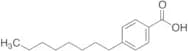
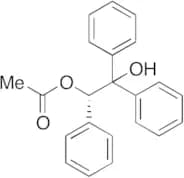
CAS:Controlled Product<p>Applications 4-octylbenzoic acid (cas# 3575-31-3) is a useful research chemical.<br></p>Formula:C15H22O2Color and Shape:NeatMolecular weight:234.34(S)-2-Hydroxy-1,2,2-triphenylethyl Acetate
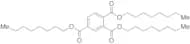
CAS:Controlled ProductFormula:C22H20O3Color and Shape:NeatMolecular weight:332.3921,2,4-Trioctyl Ester 1,2,4-Benzenetricarboxylic Acid
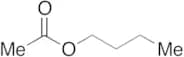
CAS:Controlled Product<p>Applications Isotope labelled 1,2,4-Trioctyl Ester 1,2,4-Benzenetricarboxylic Acid is a widely used and often incorporated in plasticizer for PVC for a higher molecular weight.<br>References Jones, C., et al.: Int. J. Artificial. Organs., 12, 466 (1989); Khang, G., et al.: Bio-Med. Mater. Engineer., 12, 135 (2002);<br></p>Formula:C33H54O6Color and Shape:NeatMolecular weight:546.78Butyl Acetate
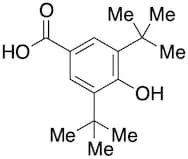
CAS:Controlled Product<p>Applications Butyl Acetate, can be used as a synthetic fruit flavoring in foods such as candy, ice cream, cheeses, and baked goods.<br> Not a dangerous good if item is equal to or less than 1g/ml and there is less than 100g/ml in the package<br>References Ullman's encyclopedia of industrial chemistry, 6th Ed., 1, 170 (2003);<br></p>Formula:C6H12O2Color and Shape:NeatMolecular weight:116.163,5-Di-tert-butyl-4-hydroxybenzoic Acid
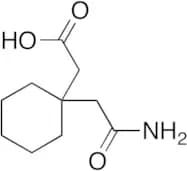
CAS:Controlled Product<p>Applications 3,5-Di-tert-butyl-4-hydroxybenzoic acid<br></p>Formula:C15H22O3Color and Shape:NeatMolecular weight:250.331,1-Cyclohexanediacetic Acid Monoamide
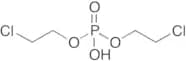
CAS:Controlled Product<p>Applications 1,1-Cyclohexanediacetic acid monoamide is an impurity of Gabapentin (G117250), an amino acid structurally related to γ-Aminobutyric Acid (GABA), designed to cross the blood brain barrier. Gabapentin is used as an anticonvulsant.<br>References Vollmer, K.-O. et al.: Arzneimittel-Forshc., 36, 830 (1986), Saletu, B., et al.: Int. J. Clin. Pharmacol. Ther. Toxicol., 24, 362 (1986)<br></p>Formula:C10H17NO3Color and Shape:White To Off-WhiteMolecular weight:199.247Di-β,β'-Chloroethylphosphoric Acid
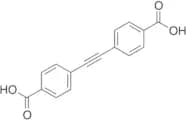
CAS:<p>Applications Di-β,β'-Chloroethylphosphoric Acid, is a dialkyl hydrogen phosphates, that can undergo the electrophilic trifluor- omethylation to produce trifluoromethyl phosphates in order to increase the lipophilicity of functional groups.<br>References Santschi, N., et al.: J. Fluorine Chem., 135, 83 (2012);<br></p>Formula:C4H9Cl2O4PColor and Shape:NeatMolecular weight:222.994,4'-(Ethyne-1,2-Diyl)Dibenzoic Acid
CAS:Controlled Product<p>Applications 4,4'-(ETHYNE-1,2-DIYL)DIBENZOIC ACID (cas# 16819-43-5) is a useful research chemical.<br></p>Formula:C16H10O4Color and Shape:NeatMolecular weight:266.252-Arsanilic Acid
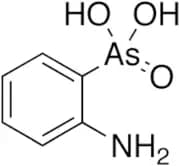
CAS:Controlled Product<p>Applications o-Arsanilic Acid is an organoarsenic compound. o-Arsanilic Acid is a highly toxic contaminant and can be found in plants growing in contaminated soil.<br> Not a dangerous good if item is equal to or less than 1g/ml and there is less than 100g/ml in the package<br>References Schmidt, A.-C. et al.: Chemosphere, 73, 1781 (2008);<br></p>Formula:C6H8AsNO3Color and Shape:NeatMolecular weight:217.053-Isopropoxybenzoic Acid
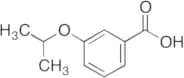
CAS:Controlled Product<p>Applications 3-Isopropoxybenzoic acid is a useful reagent for organic synthesis and other chemical processes.<br>References Chiong, H. A., et al.: J. Am. Chem. Soc., 129, 9879 (2007); Kingston, D. G. I., et al.: J. Med. Chem., 41, 3715 (1998)<br></p>Formula:C10H12O3Color and Shape:White To Off-WhiteMolecular weight:180.22-(4-Hydroxybenzoyl)benzoic acid
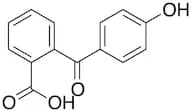
CAS:<p>Applications 2-(4-Hydroxybenzoyl)benzoic acid<br></p>Formula:C14H10O4Color and Shape:Off-WhiteMolecular weight:242.227Glutaconic Acid
CAS:Controlled Product<p>Applications Glutaconic Acid is used in the synthesis of dialkyltin derivatives of dicarboxylic acids which display antitumor properties. Also used in the synthesis of novel tetracyclic compounds as peripheral benzodiazepine receptor ligands with potential use for CNS illness treatments.<br>References Gielen, M. et al.: Hetero. Chem., 3, 449 (1992); Okubo, T. et al.: Bioorg. Med. Chem. Lett., 12, 3569 (2004);<br></p>Formula:C5H6O4Color and Shape:NeatMolecular weight:130.1Vinyl Acetate(Stabilized with 8-12 ppm Hydroquinone)
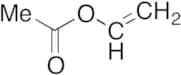
CAS:Controlled Product<p>Applications Vinyl Acetate used in the preparation of bis(heterocycles) with pyrazoline, used in the preparation of anti-inflammatory and analgesic activities. Also used in the synthesis of antimalarial compounds.<br> Not a dangerous good if item is equal to or less than 1g/ml and there is less than 100g/ml in the package<br>References Sreenivasa, S. et al.: Open. J. Med. Chem., 3, 50 (2013); Verbrugghen, T. et al.: J. Med. Chem., 56, 376 (2013);<br></p>Formula:C4H6O2Color and Shape:ColourlessMolecular weight:86.095-Aminolevulinic Acid Hydrochloride
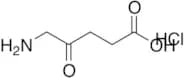
CAS:<p>Applications 5-Aminolevulinic Acid Hydrochloride (cas# CAS:5451-09-2) is a useful research chemical.<br></p>Formula:C5H9NO3·ClHColor and Shape:NeatMolecular weight:167.593-Azidopropionic Acid
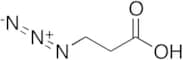
CAS:Controlled Product<p>Applications 3-Azidopropionic Acid is a mutagenic substance.<br>References LaVelle, J. M., et al.: Mutat. Res., 177, 27 (1987); Carlsson, L., et al.: J. Chem. Inf. Model., 49, 2551 (2009)<br></p>Formula:C3H5N3O2Color and Shape:NeatMolecular weight:115.091Tert-butyl Acetate
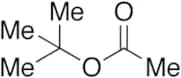
CAS:Controlled Product<p>Applications Tert-butyl Acetate is a common solvent used in the production of various industrial cleansers, thinners and adhesives and is also known as a VOC.Environmental contaminants; Food contaminants<br> Not a dangerous good if item is equal to or less than 1g/ml and there is less than 100g/ml in the package<br>References Mackay, D., et al.: SAR. QSAR. Enviro. Res., 23, 205 (2012); Yang, Y.S., et al.: Toxicol. Res., 26, 293 (2010);<br></p>Formula:C6H12O2Color and Shape:ColourlessMolecular weight:116.16Aminoiminomethanesulfonic Acid
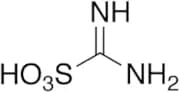
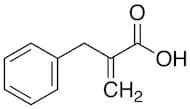
CAS:Controlled Product<p>Applications Reagent used to prepare Guanidine derivatives.<br>References Nozawa, D., et al.: Bioorg. Med. Chem. Lett., 11, 1481 (2001), Choudhury, A., et al.: Biochem., 46, 4066 (2007), Yuan, D., et al.: Bioorg. Med. Chem., 15, 265 (2007),<br></p>Formula:CH4N2O3SColor and Shape:NeatMolecular weight:124.122-Benzylacrylic Acid
CAS:Controlled Product<p>Stability Light Sensitive<br>Applications 2-Benzylacrylic Acid (cas# 5669-19-2) is a compound useful in organic synthesis.<br></p>Formula:C10H10O2Color and Shape:NeatMolecular weight:162.196-Chlorohexanoic Acid
CAS:Controlled Product<p>Applications 6-Chlorohexanoic Acid is used as the starting material in the synthesis of 2,6-Dichloro-N-(2,6-dimethylphenyl)hexanamide (D434225); an impurity of the local anesthetic Levobupivacaine (B689546). 6-Chlorohexanoic Acid is also used as a reagent in the synthesis of novel types of polyester glycodendrimers as potential inhibitors of urinary tract infections.<br> Not a dangerous good if item is equal to or less than 1g/ml and there is less than 100g/ml in the package<br>References Tullar, B., et al.: J. Med. Chem., 14, 891 (1971); Schmidt, A., et al.: Pharm. Res., 22, 2121 (2005); Twibanire, J.K., et al.: New J. Chem., 39, 4115 (2015)<br></p>Formula:C6H11ClO2Color and Shape:NeatMolecular weight:150.6