Carboxylic Acids
Carboxylic acids are organic molecules characterized by having a carboxyl-type functional group (-COOH). These acids are fundamental in various chemical reactions, including esterification, amidation, and decarboxylation. Carboxylic acids are widely used in the production of pharmaceuticals, polymers, and agrochemicals. In this section, you can find a large number of carboxylic acids ready to be used. At CymitQuimica, we provide a broad range of high-quality carboxylic acids to support your research and industrial applications.
Found 12453 products of "Carboxylic Acids"
Sort by
Purity (%)
0
100
|
0
|
50
|
90
|
95
|
100
N-Acetyl-L-leucine
CAS:N-Acetylleucine, a water-soluble, weakly acidic derivative of leucine, is found in biofluids like feces and saliva.Formula:C8H15NO3Purity:99.89%Color and Shape:SolidMolecular weight:173.21L-Methionine
CAS:<p>L-Methionine (L-Methionin) is the L-isomer of Methionine. Methionine is an essential amino acid for human development and acts as a hepatoprotectant.</p>Formula:C5H11NO2SPurity:99.58% - 99.84%Color and Shape:Colourless Solid CrystallineMolecular weight:149.21(±)-Leucine
CAS:<p>(±)-Leucine (DL-2-Aminmo-4-methylvalerianic acid) can be found in Green bell peppers, Green zucchinis, Italian sweet red peppers, and Red bell peppers.</p>Formula:C6H13NO2Purity:98.01%Color and Shape:White Glistening Hexagonal Plates From Aqueous Alcohol White CrystalsMolecular weight:131.17Methyl acetylacetate
CAS:<p>Methyl acetylacetate found in urine indicates propionyl-CoA carboxylase or 2-methylacetoacetyl-CoA thiolase deficiency.</p>Formula:C5H8O3Purity:99.14%Color and Shape:Less LiquidMolecular weight:116.12N-Methylsarcosine
CAS:<p>N-Methylsarcosine improves athletic performance, boosts immunity, treats autism/epilepsy, tracks COPD, and aids in ionic liquid development.</p>Formula:C4H9NO2Purity:98.17%Color and Shape:SolidMolecular weight:103.12Oxalic acid
CAS:<p>Oxalic acid (Ethanedioic acid) is a strong dicarboxylic acid occurring in many plants and vegetables, produced in the body by metabolism of glyoxylic acid.</p>Formula:C2H2O4Purity:98.51% - 99.39%Color and Shape:White Solid CrystallineMolecular weight:90.03D(-)-2-Aminobutyric acid
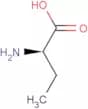
CAS:<p>D(-)-2-Aminobutyric acid is the substrate of D-amino acid oxidase.</p>Formula:C4H9NO2Purity:99.89%Color and Shape:SolidMolecular weight:103.12rosmarinate acid
CAS:<p>Rosmarinate acid(Rosemary acid) inhibits MAO-A, MAO-B and COMT enzymes with IC50s of 50.1, 184.6 and 26.7 μM, respectively</p>Formula:C18H16O8Purity:99.69%Color and Shape:SolidMolecular weight:360.31Creatine
CAS:<p>Creatine, an amino acid in vertebrates, forms phosphocreatine in muscle, aids energy transfer, is made in the liver, and mainly stored in muscles.</p>Formula:C4H9N3O2Purity:99.63% - 99.83%Color and Shape:Colourless To Light Yellow SolidMolecular weight:131.132,3-Diaminopropanoic acid hydrochloride
CAS:<p>2,3-Diaminopropanoic acid hydrochloride (3-Amino-DL-alanine monohydrochloride) is used as a substrate for studying the action of aminopeptidase enzyme.</p>Formula:C3H9ClN2O2Purity:99.63% - 99.84%Color and Shape:White To Slightly Beige Fine Crystalline PowderMolecular weight:140.571-Aminocyclopropane-1-carboxylic acid
CAS:<p>1-Aminocyclopropane-1-carboxylic acid (ACC) is an intermediate in the synthesis of ethylene and protects against neuron cell death in vivo models of ischemia.</p>Formula:C4H7NO2Purity:97.91% - 99.76%Color and Shape:CrystallineMolecular weight:101.1N-Acetyl-L-phenylalanine
CAS:<p>N-Acetyl-L-phenylalanine is essential for medical use, found in phenylketonuria patients' urine, and made by phenylalanine N-acetyltransferase.</p>Formula:C11H13NO3Purity:99.74%Color and Shape:SolidMolecular weight:207.23Phenylboronic Acid (95%)
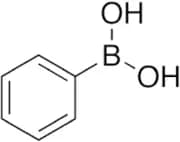
CAS:Controlled Product<p>Applications Phenylboronic Acid is a compound used in organic synthesis of various pharmaceutical goods.<br>References Ainley, A.D., et al.: J. Chem. Soc., 2171 (1930);<br></p>Formula:C6H7BO2Purity:95%Color and Shape:NeatMolecular weight:121.932-Ethylbutyric Acid
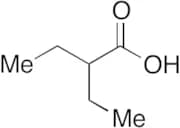
CAS:Controlled Product<p>Applications 2-Ethylbutyric Acid is used in biological studies as a possible descriptor for toxicity prediction through electrophilicity.<br> Not a dangerous good if item is equal to or less than 1g/ml and there is less than 100g/ml in the package<br>References Roy, D.R., et al.: Bioorg. Med. Chem., 13, 3405 (2005); Parthasarathi, R., et al.: J. Phys. Chem. A., 107, 10346 (2003)<br></p>Formula:C6H12O2Color and Shape:ColourlessMolecular weight:116.163-O-Ethyl-L-ascorbic Acid
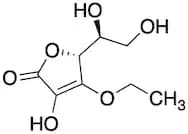
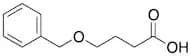
CAS:Controlled Product<p>Applications 3-O-Ethyl-L-ascorbic Acid could be a useful stabilizing agent for a para-hydroxyacetophenone solution.<br>References Zhang, H., et al.: Faming Zhuanli Shenqing (2020), CN 111937874 A<br></p>Formula:C8H12O6Color and Shape:NeatMolecular weight:204.184-(Benzyloxy)butanoic Acid
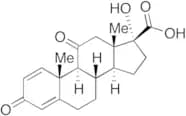
CAS:Controlled Product<p>Applications 4-(Benzyloxy)butanoic acid<br></p>Formula:C11H14O3Color and Shape:NeatMolecular weight:194.2317-Hydroxy-3,11-dioxo-androsta-1,4-diene-17β-carboxylic Acid
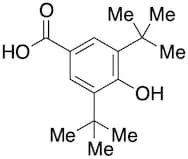
Controlled Product<p>Applications 17-Hydroxy-3,11-dioxo-androsta-1,4-diene-17β-carboxylic Acid is an intermediate used to prepare (11β,17α)-17-[(Ethoxycarbonyl)oxy]-11-hydroxy-3-oxo-androsta-1,4-diene-17-carboxylic acid (E890570) which is a derivative of Loteprednol Etabonate (L471400), an ophthalmic corticosteroid.<br>References Alberth, M., et al.: J. Biopharm.Sci., 2, 115 (1991), Bodor, N., et al.: Pharm. Res., 9, 1275 (1992), Bartlett, J.D., et al.: J. Ocul. Pharmacol., 9, 157 (1993)<br></p>Formula:C20H24O5Color and Shape:NeatMolecular weight:344.403,5-Di-tert-butyl-4-hydroxybenzoic Acid
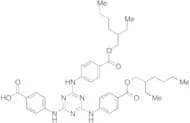
CAS:Controlled Product<p>Applications 3,5-Di-tert-butyl-4-hydroxybenzoic acid<br></p>Formula:C15H22O3Color and Shape:NeatMolecular weight:250.334-(4,6-Bis(4-((2-ethylhexyloxy)carbonyl)phenylamino)-1,3,5-triazin-2-ylamino)benzoic Acid
CAS:<p>Applications 4-(4,6-Bis(4-((2-ethylhexyloxy)carbonyl)phenylamino)-1,3,5-triazin-2-ylamino)benzoic Acid is an impurity in the synthesis of Ethylhexyl Triazone (E918810), used in sunscreen formulations as a UV filter to block out harmful ultraviolet light.<br>References Potard, G. et al.: Int. J. Pharm., 189, 249 (1999); Couteau, C. et al.: J. Pharm. Biomed. Anal., 44, 270 (2007);<br></p>Formula:C40H50N6O6Color and Shape:NeatMolecular weight:710.86163-Hydroxyphenylacetic Acid
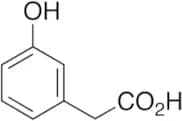
CAS:<p>Applications 3-Hydroxyphenylacetic Acid (cas# 621-37-4) is a compound useful in organic synthesis.<br></p>Formula:C8H8O3Color and Shape:NeatMolecular weight:152.15Formic Acid-D (<5% H2O)
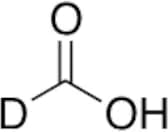
CAS:Controlled Product<p>Applications Formic Acid-d is labelled Formic Acid (F692900). Formic Acid (F692900) is used as a potential energy source in the preparation of fuel cells. Also used in chemical synthesis of various anti-inflammatory and anti-microbial agents.<br>References Yu, X. et al.: J. Power Source., 182, 124 (2008); Bekhit, A. et al.: Bioorg. Med. Chem., 12, 1935 (2004);<br></p>Formula:CDHO2Color and Shape:NeatMolecular weight:47.035-(3,4-dihydroxyphenyl)pentanoic Acid
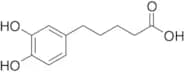
CAS:Controlled Product<p>Applications 5-(3,4-dihydroxyphenyl)pentanoic Acid (cas# 31129-94-9) is a useful research chemical.<br></p>Formula:C11H14O4Color and Shape:NeatMolecular weight:210.23Bis(2,4,4-trimethylpentyl)phosphinic Acid
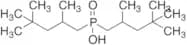
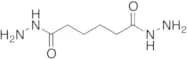
CAS:Controlled Product<p>Applications Bis(2,4,4-trimethylpentyl)phosphinic acid (cas# 83411-71-6) is a useful research chemical.<br> Not a dangerous good if item is equal to or less than 1g/ml and there is less than 100g/ml in the package<br></p>Formula:C16H35O2PColor and Shape:NeatMolecular weight:290.42Adipic Acid Dihydrazide
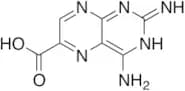
CAS:<p>Applications Adipic Acid Dihydrazide is used to functionalize magnetic nanoparticles for gylcopeptitde enrichment and identification. Adipic Acid Dihydrazide can also be used as a chain extension for liquid rubber.<br>References Cao, Q., et. al.: Analyst, 139, 603 (2014); Cutts, E.: Chem. Industry, 7, 280 (1974)<br></p>Formula:C6H14N4O2Color and Shape:NeatMolecular weight:174.22,4-Diaminopteridine-6-carboxylicAcid
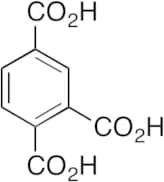
CAS:Controlled Product<p>Applications 2,4-DIAMINOPTERIDINE-6-CARBOXYLIC ACID (cas# 716-74-5) is a useful research chemical.<br></p>Formula:C7H6N6O2Color and Shape:Off-WhiteMolecular weight:206.162Trimellic Acid
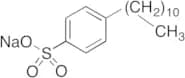
CAS:Controlled Product<p>Applications Trimellic Acid is a reagent used in the preparation of coordination polymers containing various luminescent properties.<br>References Zhang, Z. et al.: Crys. Grow. Des., 13, 4338 (2013); Qin, L. et al.: Trans. Met. Chem., 38, 627 (2013);<br></p>Formula:C9H6O6Color and Shape:NeatMolecular weight:210.144-Undecylbenzenesulfonic Acid Sodium Salt
CAS:Controlled Product<p>Applications N-Undecylbenzenesulfonic Acid is an anionic surfactant.<br>References Mottaleb, M. A.: Anal. Sci., 15, 1137 (1999), Kolb, M., et al.: LaborPraxis, 22, 56 (1998); Ferrer D., et al.: Tenside, Surfact., Det., 34, 278 (1997)<br></p>Formula:C17H27NaO3SColor and Shape:NeatMolecular weight:334.45Sebacic Acid
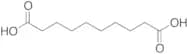
CAS:<p>Applications Sebacic Acid is a urinary metabolite that has been identified as an anti-fatigue biomarker.<br>References Ma, C. et. al.: J. Pharmaceut. Biomed. Anal. 105, 84 (2015)<br></p>Formula:C10H18O4Color and Shape:WhiteMolecular weight:202.252,2-Dimethylcyclopropylcarboxylic acid
CAS:Controlled Product<p>Stability Stench<br>Applications 2,2-Dimethylcyclopropylcarboxylic acid<br></p>Formula:C6H10O2Color and Shape:NeatMolecular weight:114.14Perfluorobutylphosphonic Acid
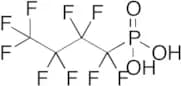
CAS:Controlled Product<p>Stability Hygroscopic<br>Applications Perfluorobutylphosphonic Acid, is a surfactant or antifoaming agent.<br></p>Formula:C4H2F9O3PColor and Shape:BrownMolecular weight:300.02Ethyl 2-Mercaptoacetate
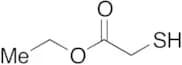
CAS:Controlled Product<p>Applications Ethyl 2-Mercaptoacetate is an off-odor compound in white wine and an eye irritant.<br> Not a dangerous good if item is equal to or less than 1g/ml and there is less than 100g/ml in the package<br>References Nikolantonaki, M., Darriet, P.: J. Agr. Food Chem., 59, 10191 (2011); Bagley, D.M., et. al.: Toxicol. in vitro, 13, 505 (1999)<br></p>Formula:C4H8O2SColor and Shape:NeatMolecular weight:120.17o-Carborane-1-carboxylic Acid
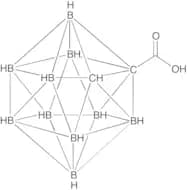
CAS:Controlled ProductFormula:C3H12B10O2Color and Shape:NeatMolecular weight:188.24Ethyl Nitroacetate
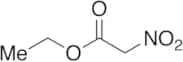
CAS:Controlled Product<p>Applications Ethyl Nitroacetate is an ester of nitrocarboxylic acid used as an intermediate in the preparation of unsubstituted amino acids.<br>References Sidorin, G.I.: Gig. Aspe. Okhr. Zdor. Nasel., 144 (1977);<br></p>Formula:C4H7NO4Color and Shape:NeatMolecular weight:133.1Olpadronic Acid Ammonium
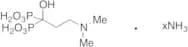
CAS:<p>Applications Used for the preparation of bisphosphonic acid derivatives as anti-osteoporosis agents.<br>References Amin, D., et al.: Drug Res., 46, 759 (1996), Martin, M., et al.: J. Med. Chem., 45, 2904 (2002),<br></p>Formula:C5H15NO7P2·x(NH3)Color and Shape:NeatMolecular weight:263.121703Crotonic Acid
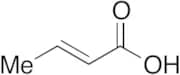
CAS:<p>Applications Crotonic Acid is found in water extracts from carrot seeds (Daucus carota L.) and is shown to have strong herbicidal properties.<br> Not a dangerous good if item is equal to or less than 1g/ml and there is less than 100g/ml in the package<br>References Jasicka-Misiak, I., et al.: Phytochemistry, 66, 1485 (2005)<br></p>Formula:C4H6O2Color and Shape:WhiteMolecular weight:86.09Syringic Acid
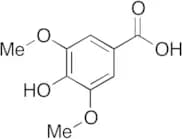
CAS:Controlled Product<p>Applications Syringic Acid is used in biological studies for electron transfer from plant phenolates to carotenoid radical cations with antioxidant interaction entering the Marcus theory inverted region.<br>References Cheng, H., et al.: J. Agric. Food Chem., 62, 942 (2014)<br></p>Formula:C9H10O5Color and Shape:Off-WhiteMolecular weight:198.17Tert-butyl Acetate
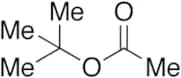
CAS:Controlled Product<p>Applications Tert-butyl Acetate is a common solvent used in the production of various industrial cleansers, thinners and adhesives and is also known as a VOC.Environmental contaminants; Food contaminants<br> Not a dangerous good if item is equal to or less than 1g/ml and there is less than 100g/ml in the package<br>References Mackay, D., et al.: SAR. QSAR. Enviro. Res., 23, 205 (2012); Yang, Y.S., et al.: Toxicol. Res., 26, 293 (2010);<br></p>Formula:C6H12O2Color and Shape:ColourlessMolecular weight:116.16Methyl Cyclopropane Carboxylate
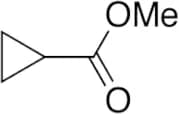
CAS:Controlled Product<p>Applications Methyl cyclopropane carboxylate is used as a reagent in the synthesis of N’-thiazole and N-pyrazole based inhibitors of MAP kinase p38α.<br>References Getlik, M. et al.: Eur. J. Med. Chem., 48, 1 (2012);<br></p>Formula:C5H8O2Color and Shape:NeatMolecular weight:100.116Levulinic Acid
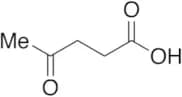
CAS:Controlled Product<p>Applications Levulinic Acid is derived from the degredation of cellulose and is a potential precursor to biofuels. Levulinic acid is also a photosensitizer for photodynamic therapy.<br>References Serrano-Ruiz, J.C., et al.: Catalysis., 195, 162 (2012); Liedtke, A.J. et al.: Tetrahedron., 68, 10049 (2012);<br></p>Formula:C5H8O3Color and Shape:Light Yellow MeltedMolecular weight:116.124,4'-(Ethyne-1,2-Diyl)Dibenzoic Acid
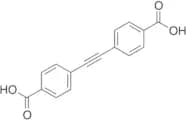
CAS:Controlled Product<p>Applications 4,4'-(ETHYNE-1,2-DIYL)DIBENZOIC ACID (cas# 16819-43-5) is a useful research chemical.<br></p>Formula:C16H10O4Color and Shape:NeatMolecular weight:266.253-Cyclohexenylcarboxylic Acid
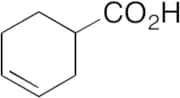
CAS:Controlled Product<p>Applications 3-Cyclohexenylcarboxylic Acid has been found to be an oxidizable, nongrowth substrate and induces the metabolism of cyclohexanecarboxylic acid and benzoic acid in a strain of Pseudomonas putida. 3-Cyclohexenylcarboxylic Acid has been used as food for cultures of Streptomyces sp. KCTC 11604BP fkbO deletion mutant to make 32-dehydroxy-FK506, a FK506 analogue containing a non-natural starter unit.<br> Not a dangerous good if item is equal to or less than 1g/ml and there is less than 100g/ml in the package<br>References Blakley, E.R., Papish, B.: Can. J. Microbiol., 28, 1324 (1982); Ban, Y.H., et. al.: Mol. bioSystems, 9, 944 (2013)<br></p>Formula:C7H10O2Color and Shape:NeatMolecular weight:126.15Acetyl Propionate
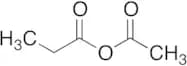
CAS:Controlled Product<p>Applications Acetic propionic anhydride<br></p>Formula:C5H8O3Color and Shape:NeatMolecular weight:116.115218-(tert-Butoxy)-18-oxooctadecanoic Acid
CAS:Controlled Product<p>Applications 18-(tert-Butoxy)-18-oxooctadecanoic Acid is used to engineer long-acting, potent exendin-4 based GLP-1 analog for microstructure-based transdermal delivery for glycemic control.<br>References Yang, P., et al.: Proc. Natl. Acad. Sci. USA, 113, 4140 (2016);<br></p>Formula:C22H42O4Color and Shape:NeatMolecular weight:370.572-(2-ethoxyethoxy)acetic acid
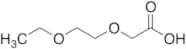
CAS:<p>Applications 2-(2-ethoxyethoxy)acetic acid (cas# 7743-94-4) is a useful research chemical.<br> Not a dangerous good if item is equal to or less than 1g/ml and there is less than 100g/ml in the package<br></p>Formula:C6H12O4Color and Shape:NeatMolecular weight:148.15Fumaric Acid
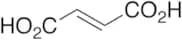
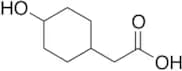
CAS:Controlled Product<p>Applications Fumaric Acid is a compound that occurs in many plants. It is essential to vegetable and tissue respiration and also used as an antioxidant. Fumaric Acid is also a metabolite of Dimethyl Fumarate (D464965), a compound used as a treatment for the relapsing forms of multiple sclerosis and psoriasis.<br>References Jelitto, T., et al.: Planta, 188, 238 (1992); Schimrigk, S., et al.: Eur. J. Neurol., 13, 604 (2006); Son, H., et al.: J. Agric. Food Chem., 56, 8007 (2008);<br></p>Formula:C4H4O4Color and Shape:NeatMolecular weight:116.072-(4-Hydroxycyclohexyl)acetic Acid
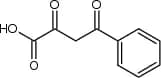
CAS:Controlled Product<p>Applications 2-(4-Hydroxycyclohexyl)acetic acid (cas# 99799-09-4) is a useful research chemical.<br></p>Formula:C8H14O3Color and Shape:Off-WhiteMolecular weight:158.22,4-Dioxo-4-phenylbutanoic acid
CAS:Controlled Product<p>Applications 2,4-Dioxo-4-phenylbutanoic acid<br></p>Formula:C10H8O4Color and Shape:NeatMolecular weight:192.171,3-Adamantanedicarboxylic acid
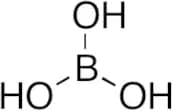
CAS:Controlled Product<p>Applications 1,3-Adamantanedicarboxylic acid, is a monomer that can be used in polymer science, self assembly and lithography.<br></p>Formula:C12H16O4Color and Shape:NeatMolecular weight:224.25Boric Acid
CAS:<p>Applications Boric Acid is a common chemical component in insecticides, specifically for flea erradication. Also has the properties of an effective flame retardant.<br>References Hinkle, N. et al.: J. Med. Entomol., 32, 424 (1995); Dogan, M. et al.: Polym. Degrad. Stab., 99, 12 (2014);<br></p>Formula:BH3O3Color and Shape:WhiteMolecular weight:61.83Phenylglyoxylic Acid
CAS:<p>Applications Phenylglyoxylic Acid (cas# 611-73-4) is a compound useful in organic synthesis.<br></p>Formula:C8H6O3Color and Shape:NeatMolecular weight:150.131