Carboxylic Acids
Carboxylic acids are organic molecules characterized by having a carboxyl-type functional group (-COOH). These acids are fundamental in various chemical reactions, including esterification, amidation, and decarboxylation. Carboxylic acids are widely used in the production of pharmaceuticals, polymers, and agrochemicals. In this section, you can find a large number of carboxylic acids ready to be used. At CymitQuimica, we provide a broad range of high-quality carboxylic acids to support your research and industrial applications.
Found 12453 products of "Carboxylic Acids"
Sort by
Purity (%)
0
100
|
0
|
50
|
90
|
95
|
100
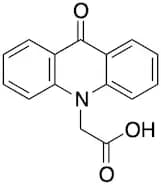
9-Oxo-10(9H)-acridineacetic Acid
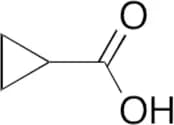
CAS:<p>Applications 9-Oxo-10(9H)-acridineacetic acid is a reagent for pre-column derivatization of amino acids for fluorescent determination in HPLC and it is also a building block in pharmaceutics.<br></p>Formula:C15H11NO3Color and Shape:NeatMolecular weight:253.25Cyclopropanecarboxylic Acid
CAS:<p>Applications Cyclopropanecarboxylic Acid is used as a reagent in the synthesis of substituted 4-(thiophen-2-ylmethyl)-2H-phthalazin-1-ones as potent PARP-1 inhibitors. Also used as a reagent in the synthesis of 2-alkyloxazoles as potent and selective PI4KIIIβ inhibitors demonstrating inhibition of HCV replication.<br> Not a dangerous good if item is equal to or less than 1g/ml and there is less than 100g/ml in the package<br>References Wang, L., et al.: Bioorg. Med. Chem. Lett., 24, 3739 (2014); Keaney, E.P., et al.: Bioorg. Med. Chem. Lett., 24, 3714 (2014)<br></p>Formula:C4H6O2Color and Shape:NeatMolecular weight:86.09Methyl Acetate
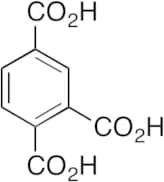
CAS:Controlled Product<p>Stability Volatile<br>Applications Methyl Acetate is used as an organic chemical solvent for a multitude of organic processes. Also used in the production of biodiesel.<br> Not a dangerous good if item is equal to or less than 1g/ml and there is less than 100g/ml in the package<br>References Xu, Y. et al.: J. mol. Cat., 32, 241 (2005); Ogino, H. et al.: J. Biosci. Bioeng., 89, 451 (2000);<br></p>Formula:C3H6O2Color and Shape:NeatMolecular weight:74.08Trimellic Acid
CAS:Controlled Product<p>Applications Trimellic Acid is a reagent used in the preparation of coordination polymers containing various luminescent properties.<br>References Zhang, Z. et al.: Crys. Grow. Des., 13, 4338 (2013); Qin, L. et al.: Trans. Met. Chem., 38, 627 (2013);<br></p>Formula:C9H6O6Color and Shape:NeatMolecular weight:210.143-Oxohexanedioic Acid
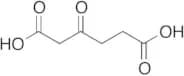
CAS:<p>Applications 3-Oxohexanedioic Acid is a degradation product of catechol in the presence of hydrogen peroxide; Also, it is derived from 3-Oxohexanedioic Acid Diethyl Ester (O856830), which is an intermediate used to prepare CMPF (C595000) which is a drug-binding inhibitor which is also a constituent of urine. CMPF can inhibit specific T4 binding in serum by increasing the free concentration of direct competitors.<br>References Gogoi, A., et al.: Chem. Eng. J., 311, 153-162 (2017); Mabuchi, H., Nakahashi, H.: Nephron, 44, 277 (1986); Lim, C.F., et. al.: Metabolism Clin. Exp., 42, 1468 (1993)<br></p>Formula:C6H8O5Color and Shape:Off White SolidMolecular weight:160.1252-Ethylbutyric Acid
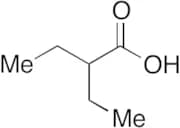
CAS:Controlled Product<p>Applications 2-Ethylbutyric Acid is used in biological studies as a possible descriptor for toxicity prediction through electrophilicity.<br> Not a dangerous good if item is equal to or less than 1g/ml and there is less than 100g/ml in the package<br>References Roy, D.R., et al.: Bioorg. Med. Chem., 13, 3405 (2005); Parthasarathi, R., et al.: J. Phys. Chem. A., 107, 10346 (2003)<br></p>Formula:C6H12O2Color and Shape:ColourlessMolecular weight:116.16(3E,7E)-4,8,12-Trimethyl-3,7,11-tridecatrienoic Acid
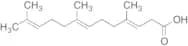
CAS:Controlled Product<p>Applications (3E,7E)-4,8,12-Trimethyl-3,7,11-tridecatrienoic Acid is a compound involved in a study on ligand-controlled regiodivergent Ni-catalyzed reductive carboxylation of allyl esters with CO2.<br>References Moragas, T., et al.: J. Am. Chem. Soc., 136, 17702-17705 (2014)<br></p>Formula:C16H26O2Color and Shape:NeatMolecular weight:250.38Sebacic Acid
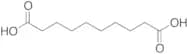
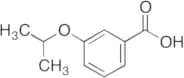
CAS:<p>Applications Sebacic Acid is a urinary metabolite that has been identified as an anti-fatigue biomarker.<br>References Ma, C. et. al.: J. Pharmaceut. Biomed. Anal. 105, 84 (2015)<br></p>Formula:C10H18O4Color and Shape:WhiteMolecular weight:202.253-Isopropoxybenzoic Acid
CAS:Controlled Product<p>Applications 3-Isopropoxybenzoic acid is a useful reagent for organic synthesis and other chemical processes.<br>References Chiong, H. A., et al.: J. Am. Chem. Soc., 129, 9879 (2007); Kingston, D. G. I., et al.: J. Med. Chem., 41, 3715 (1998)<br></p>Formula:C10H12O3Color and Shape:White To Off-WhiteMolecular weight:180.2Perfluorohexanoic Acid (>90%)
CAS:<p>Applications Perfluorohexanoic Acid is a perfluorinated compound (FPC) that can cause acute toxicity to humans and the environment. Perfluorohexanoic Acid is also used as a reagent in the synthesis of 3,3,4,4,5,5,6,6,7,7,7-Undecafluoro-2-heptanol (U787500).<br> Not a dangerous good if item is equal to or less than 1g/ml and there is less than 100g/ml in the package<br>References Latala, A., et al.: Environ. Toxicol. Phar., 28, 167 (2009); Mulkiewicz, E., et al.: Environ. Toxicol. Phar., 23, 279 (2007)<br></p>Formula:C6HF11O2Purity:>90%Color and Shape:ColourlessMolecular weight:314.052-Naphthoxyacetic acid
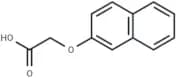
CAS:<p>2-Naphthoxyacetic acid is an endogenous metabolite that is an inhibitor of firefly luciferase (Potency=40 μm).</p>Formula:C12H10O3Purity:99.74%Color and Shape:SolidMolecular weight:202.21Decanoic Acid
CAS:Controlled Product<p>Applications Decanoic acid is used in manufacturing of esters for artificial fruit flavors and perfumes.<br>References Oro, L., et al.: Acta Pharmacol. Toxicol., 18, 141 (1961),<br></p>Formula:C10H20O2Color and Shape:White To YellowMolecular weight:172.26Benzyl Acetate
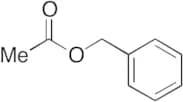
CAS:Controlled Product<p>Applications Benzyl Acetate, is found naturally in many flowers, It has pleasant sweet aroma reminiscent of jasmine, and thus is used widely in perfumery industry, and also as a flavouring agent. It is also used as a solvent.<br>References Schiestl, F. P., et al.: J. Chem. Ecology, 29 (2004); Qian-qian, M., et al.: Jingxi Huagong, 30, 442 (2013);<br></p>Formula:C9H10O2Color and Shape:NeatMolecular weight:150.173-Carboxyphenylboronic Acid
CAS:Controlled Product<p>Applications 3-Carboxyphenylboronic Acid is used in phenylboronic acid-decorated gelatin nanoparticles for enhanced tumor targeting and penetration.<br>References Wang, X., et al.: Nanotechnology, 27, 385101 (2016); Wang, X., et al.: Eur. J. Pharm. Biopharm., 113, 168 (2017)<br></p>Formula:C7H7BO4Color and Shape:Off WhiteMolecular weight:165.94Ethyl Nitroacetate
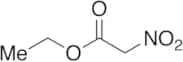
CAS:Controlled Product<p>Applications Ethyl Nitroacetate is an ester of nitrocarboxylic acid used as an intermediate in the preparation of unsubstituted amino acids.<br>References Sidorin, G.I.: Gig. Aspe. Okhr. Zdor. Nasel., 144 (1977);<br></p>Formula:C4H7NO4Color and Shape:NeatMolecular weight:133.1Propiolic Acid
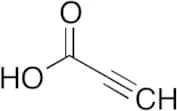
CAS:Controlled Product<p>Applications Propiolic Acid is a compound used in the synthesis of haloalkyl propiolates, halopropenoates, and transition metal complexes.<br> Not a dangerous good if item is equal to or less than 1g/ml and there is less than 100g/ml in the package<br>References J. Organomet. Chem., 456, 271 (1993); Tetrahedron, 49, 4229 (1993); Tetrahedron, 48, 3413 (1992); J. Org. Chem., 57, 709 (1992)<br></p>Formula:C3H2O2Color and Shape:YellowMolecular weight:70.057H-Dodecafluoroheptanoic Acid
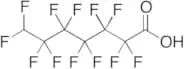
CAS:<p>Applications 7H-Dodecafluoroheptanoic Acid is a derivative of Heptanoic Acid (H998455) which can be used as an organic building blocks for the synthesis of variety of chemical compounds. Heptanoic Acid is used in the synthesis of 17-epi-Testosterone Enanthate (T155095). It is used in the preparation of esters, such as ethyl heptanoate, which are used in fragrances and as artificial flavors. It is also one of many additives in cigarettes.<br> Not a dangerous good if item is equal to or less than 1g/ml and there is less than 100g/ml in the package<br>References Anneken, D. et al.: Fatty Acids, Ullmann's Encyclopedia of Industrial Chemistry (2006); Wudy, S., et al.: Steroids, 66, 759 (2001); Kootstra, P., et al.: Anal. Chim. Acta., 586, 82 (2007); Sten, T., et al.: Drug Metab. Dispos., 37, 417 (2009)<br></p>Formula:C7H2F12O2Color and Shape:WhiteMolecular weight:346.073-(4-Hydroxyphenyl)propionic Acid
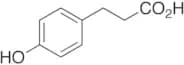
CAS:<p>Applications Antioxidant.<br>References Arnous, A., et al.: J. Agr. Food Chem., 49, 5736 (2001), Guendez, R., et al.: Food Chem., 89, 1 (2005), Proestos, C., et al.: Food Control,16, 319 (2005)<br></p>Formula:C9H10O3Color and Shape:NeatMolecular weight:166.172,6-Diaminopimelic Acid
CAS:Controlled Product<p>Applications 2,6-Diaminopimelic Acid is useful in biological studies involving amino acids and amino sugars as molecular indicators of the origins of organic matter in buried tephra soils.<br>References Hobara, S., et al.: Geoderma, 373, 114449 (2020)<br></p>Formula:C7H14N2O4Color and Shape:NeatMolecular weight:190.20Nonafluoro-1-butanesulfonic Acid
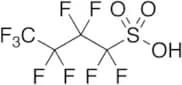
CAS:<p>Stability Moisture Sensitive<br>Applications Perfluorobutanesulfonic acid (PFBS) is a stable fluorosurfactant because of the strength of carbon–fluorine bonds. PFBS has served as a replacement for the persistent, toxic, and bioaccumulative perfluorooctanesulfonic acid (PFOS) in 3M's Scotchgard stain repellents. PFBS is neither toxic nor bioaccumulative.<br> Not a dangerous good if item is equal to or less than 1g/ml and there is less than 100g/ml in the package<br>References Renner R., et al.: Environ. Sci. Technol., 40, 12 (2006), Betts, K.S., et al.: Environ. Health Perspect., 115, 250 (2007),<br></p>Formula:C4HF9O3SColor and Shape:Colourless LiquidMolecular weight:300.105-Formylfuran-2-carboxylic Acid
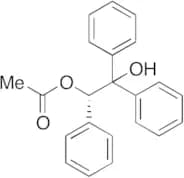
CAS:<p>Applications 5-Formylfuran-2-carboxylic Acid is a compound useful in organic synthesis.<br>References Nocito, F., et al.: ACS Omega, 3, 18724 (2018); Chen, G., et al.: Ind. Eng. Chem. Res., 57, 16172 (2018)<br></p>Formula:C6H4O4Color and Shape:NeatMolecular weight:140.09(S)-2-Hydroxy-1,2,2-triphenylethyl Acetate
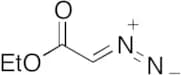
CAS:Controlled ProductFormula:C22H20O3Color and Shape:NeatMolecular weight:332.392Ethyl Diazoacetate (>90%)
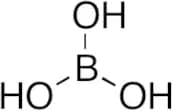
CAS:<p>Applications Ethyl Diazoacetate is used in the synthesis of Arteludovicinolide A as well as pyrimidoazepine analogs as seritonin 5-HT2A/C receptor ligands for treatment of obesity. This compound contains solvent for added stability.<br> E0<br>References Yang, H. et al.: Eur. J. Med. Chem., 63, 558 (2013); Kreuzer, A. et al.: Org. Lett., 15, 3420 (2013);<br></p>Formula:C4H6N2O2Purity:>90%Color and Shape:NeatMolecular weight:114.1Boric Acid
CAS:<p>Applications Boric Acid is a common chemical component in insecticides, specifically for flea erradication. Also has the properties of an effective flame retardant.<br>References Hinkle, N. et al.: J. Med. Entomol., 32, 424 (1995); Dogan, M. et al.: Polym. Degrad. Stab., 99, 12 (2014);<br></p>Formula:BH3O3Color and Shape:WhiteMolecular weight:61.83rac 2-Aminothiazoline-4-carboxylic Acid
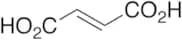
CAS:Controlled Product<p>Stability Hygroscopic<br>Applications Used in the manufacturing of L-tryptophan by enzymic reaction.<br>References Franke, L., et al.: J. Med. Chem., 48, 6997 (2005), Fox, T., et al.: Curr. Top Med. Chem., 6, 1579 (2006),<br></p>Formula:C4H6N2O2SColor and Shape:NeatMolecular weight:146.17Fumaric Acid
CAS:Controlled Product<p>Applications Fumaric Acid is a compound that occurs in many plants. It is essential to vegetable and tissue respiration and also used as an antioxidant. Fumaric Acid is also a metabolite of Dimethyl Fumarate (D464965), a compound used as a treatment for the relapsing forms of multiple sclerosis and psoriasis.<br>References Jelitto, T., et al.: Planta, 188, 238 (1992); Schimrigk, S., et al.: Eur. J. Neurol., 13, 604 (2006); Son, H., et al.: J. Agric. Food Chem., 56, 8007 (2008);<br></p>Formula:C4H4O4Color and Shape:NeatMolecular weight:116.072-Hydroxyphenylacetic Acid
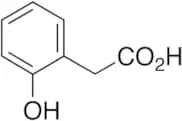
CAS:Controlled Product<p>Applications 2-Hydroxyphenylacetic Acid (cas# 614-75-5) is a compound useful in organic synthesis.<br></p>Formula:C8H8O3Color and Shape:NeatMolecular weight:152.155-Chloronicotinic Acid
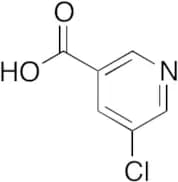
CAS:Controlled Product<p>Applications 5-Chloronicotinic Acid is used as reagent/reactant luminescence and hydrothermal preparation of cobalt/cadmium/lead chloronicotinate phenanthroline MOF.<br>References Gao, Z.Q., et al.: J. Solid State Chem., 241, 121-130 (2016)<br></p>Formula:C6H4ClNO2Color and Shape:NeatMolecular weight:157.554(2E)-3-Phenyl-2-propenoic Acid
CAS:<p>Applications (2E)-3-Phenyl-2-propenoic Acid is used in the synthesis of amides and esters through coupling reactions involving carboxylic acids and amines. Also used in the N-methylation of amides and O-methylation of carboxylic acids.<br>References Kunishima, M. et al.: Tetrahedron, 55, 13159 (1999); Xia, Q. et al.: Org. Lett., 15, 3326 (2013);<br></p>Formula:C9H8O2Color and Shape:NeatMolecular weight:148.16Perfluorobutylphosphonic Acid
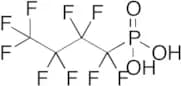
CAS:Controlled Product<p>Stability Hygroscopic<br>Applications Perfluorobutylphosphonic Acid, is a surfactant or antifoaming agent.<br></p>Formula:C4H2F9O3PColor and Shape:BrownMolecular weight:300.023-O-Ethyl-L-ascorbic Acid
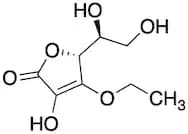
CAS:Controlled Product<p>Applications 3-O-Ethyl-L-ascorbic Acid could be a useful stabilizing agent for a para-hydroxyacetophenone solution.<br>References Zhang, H., et al.: Faming Zhuanli Shenqing (2020), CN 111937874 A<br></p>Formula:C8H12O6Color and Shape:NeatMolecular weight:204.18Nicametate
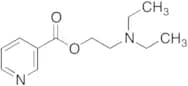
CAS:Controlled Product<p>Applications Nicotinic Acid 2-Diethylamino-Ethyl Ester (cas# 3099-52-3) is a useful research chemical.<br></p>Formula:C12H18N2O2Color and Shape:NeatMolecular weight:222.28Maleic Acid
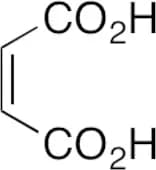
CAS:Controlled Product<p>Applications Maleic Acid is used in the synthesis of pyridoindolones as potent inhibitors of Aurora kinases. Also is a reagent in the preparation of TiO2/carbon nanotube composites.<br>References Le, L. et al.: ChemMedChem., 8, 289 (2013); Yao, Y. et al.: Env. Sci. Tech., 42, 4952 (2008)l<br></p>Formula:C4H4O4Color and Shape:WhiteMolecular weight:116.07Diethylammonium N,N-Diethyldithiocarbamate
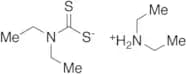
CAS:Controlled Product<p>Applications Dithiocarbamate complexes serve as hosts for the specific binding of various metal cations.<br>References Bourson, J., et al.: J. Phys. Chem., 97, 4552 (1993), Lai, S., et al.: Inorg. Chem., 38, 4262 (1999),<br></p>Formula:C9H22N2S2Color and Shape:NeatMolecular weight:222.4118-(tert-Butoxy)-18-oxooctadecanoic Acid
CAS:Controlled Product<p>Applications 18-(tert-Butoxy)-18-oxooctadecanoic Acid is used to engineer long-acting, potent exendin-4 based GLP-1 analog for microstructure-based transdermal delivery for glycemic control.<br>References Yang, P., et al.: Proc. Natl. Acad. Sci. USA, 113, 4140 (2016);<br></p>Formula:C22H42O4Color and Shape:NeatMolecular weight:370.572-Butoxyacetic Acid
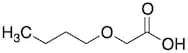
CAS:<p>Applications 2-butoxyacetic acid (cas# 2516-93-0) is a useful research chemical.<br></p>Formula:C6H12O3Color and Shape:NeatMolecular weight:132.163-Cyclohexenylcarboxylic Acid
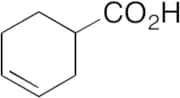
CAS:Controlled Product<p>Applications 3-Cyclohexenylcarboxylic Acid has been found to be an oxidizable, nongrowth substrate and induces the metabolism of cyclohexanecarboxylic acid and benzoic acid in a strain of Pseudomonas putida. 3-Cyclohexenylcarboxylic Acid has been used as food for cultures of Streptomyces sp. KCTC 11604BP fkbO deletion mutant to make 32-dehydroxy-FK506, a FK506 analogue containing a non-natural starter unit.<br> Not a dangerous good if item is equal to or less than 1g/ml and there is less than 100g/ml in the package<br>References Blakley, E.R., Papish, B.: Can. J. Microbiol., 28, 1324 (1982); Ban, Y.H., et. al.: Mol. bioSystems, 9, 944 (2013)<br></p>Formula:C7H10O2Color and Shape:NeatMolecular weight:126.152-Amino-4-(methylsulfonyl)benzoic Acid
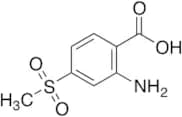
CAS:<p>Applications 2-Amino-4-(methylsulfonyl)benzoic Acid is a reagent used in the synthesis of anthranilic diamides containing fluorinated groups as potential ryanodine receptors activators.<br> Not a dangerous good if item is equal to or less than 1g/ml and there is less than 100g/ml in the package<br>References Wu, C. et al.: Chem. Lett., 28, 1248 (2017);<br></p>Formula:C8H9NO4SColor and Shape:NeatMolecular weight:215.233,4,9,10-Perylenetetracarboxylic Diimide (~85%)
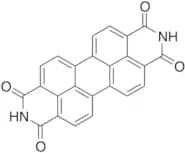
CAS:Controlled Product<p>Applications 3,4,9,10-Perylenetetracarboxylic diimide (cas# 81-33-4) is a useful research chemical.<br></p>Formula:C24H10N2O4Purity:~85%Color and Shape:NeatMolecular weight:390.353,4-Dimethoxybenzoic Acid (Veratric Acid)
CAS:Controlled Product<p>Applications Veratric Acid is a derivative of Protocatechuic Acid. Veratric Acid is a reagent used in the production of antimicrobial agents, antifeedants, and a variety of other biologically active compounds.<br>References Alissandrakis, E., et al.: Eur. Food Res. Technol., 229, 365 (2009), Spaccini, R., et al.: Soil Biol. Biochem., 41, 1164 (2009), Narasimhan, B., et al.: Eur. J. Med. Chem., 44, 689 (2009), Pereira, L., et al.: J. Biotechnol., 139, 68 (2009),<br></p>Formula:C9H10O4Color and Shape:NeatMolecular weight:182.17Adipic Acid Dihydrazide
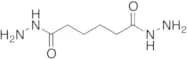
CAS:<p>Applications Adipic Acid Dihydrazide is used to functionalize magnetic nanoparticles for gylcopeptitde enrichment and identification. Adipic Acid Dihydrazide can also be used as a chain extension for liquid rubber.<br>References Cao, Q., et. al.: Analyst, 139, 603 (2014); Cutts, E.: Chem. Industry, 7, 280 (1974)<br></p>Formula:C6H14N4O2Color and Shape:NeatMolecular weight:174.23,5-Dinitro-4-hydroxybenzoic Acid
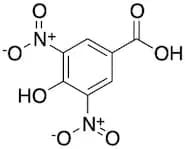
CAS:Controlled Product<p>Applications 3,5-DINITRO-4-HYDROXYBENZOIC ACID (cas# 1019-52-9) is a useful research chemical.<br></p>Formula:C7H4N2O7Color and Shape:NeatMolecular weight:228.116(1-acetyl-2,3-dihydro-1H-indol-5-yl)boronic Acid
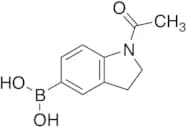
CAS:Controlled Product<p>Applications (1-acetyl-2,3-dihydro-1H-indol-5-yl)boronic acid (cas# 905971-97-3) is a useful research chemical.<br></p>Formula:C10H12BNO3Color and Shape:BeigeMolecular weight:205.02Monohydrazide Adipic Acid
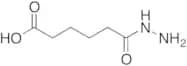
CAS:Controlled Product<p>Applications Monohydrazide Adipic Acid is a synthetic reagent and a plant growth retarding agent.<br>References Ye, W-L., et al.: J. Pharm. Sci, 104, 2293-2303 (2015);<br></p>Formula:C6H12N2O3Color and Shape:Off-WhiteMolecular weight:160.175-(3-hydroxyphenyl)pentanoic Acid
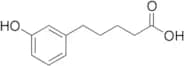
CAS:<p>Applications 5-(3-hydroxyphenyl)pentanoic acid (cas# 31129-95-0) is a useful research chemical.<br></p>Formula:C11H14O3Color and Shape:NeatMolecular weight:194.23Ethyl Acetate
CAS:<p>Applications Ethyl Acetate is generally used as a solvent in organic reactions.Environmental contaminants; Food contaminants<br> Not a dangerous good if item is equal to or less than 1g/ml and there is less than 100g/ml in the package<br>References Reyes L et al. J Org Chem. 2013 Mar 15;78(6):2327-35.<br></p>Formula:C4H8O2Color and Shape:ColourlessMolecular weight:88.114-Undecylbenzenesulfonic Acid Sodium Salt
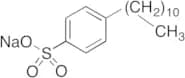
CAS:Controlled Product<p>Applications N-Undecylbenzenesulfonic Acid is an anionic surfactant.<br>References Mottaleb, M. A.: Anal. Sci., 15, 1137 (1999), Kolb, M., et al.: LaborPraxis, 22, 56 (1998); Ferrer D., et al.: Tenside, Surfact., Det., 34, 278 (1997)<br></p>Formula:C17H27NaO3SColor and Shape:NeatMolecular weight:334.45Citric Acid Monohydrate
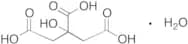
CAS:Controlled Product<p>Applications Citric Acid Monohydrate is a useful buffer component for antigen and epitope unmasking.<br></p>Formula:C6H8O7·H2OColor and Shape:White To Off-WhiteMolecular weight:210.143-(4'-Hydroxy)phenoxybenzoic Acid
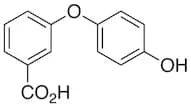
CAS:<p>Applications A metabolite of pyrethroid insecticides such as: Deltamethrin, Permethrin, Cypermethrin, Fenvalerate, Decamethrin.<br> Not a dangerous good if item is equal to or less than 1g/ml and there is less than 100g/ml in the package<br>References Woollen, B., et al.: Xenobiotica, 22, 983 (1992), Saito, K., et al.: Toxicol. Sci., 57, 54 (2000), Fang, H., et al.: Chem. Res. Toxicol., 14, 280 (2001), Andersen, H., et al.: Toxicol. Appl. Pharmacol., 179, 1 (2002),<br></p>Formula:C13H10O4Color and Shape:NeatMolecular weight:230.22