Carboxylic Acids
Found 12456 products of "Carboxylic Acids"
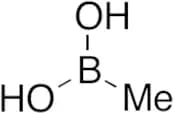
Methylboronic Acid
CAS:Controlled ProductApplications Methylboronic Acid is a methylated derivative of boronic acid, a building block towards various intermediates in suzuki coupling.
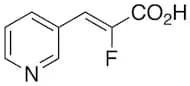
References Baker, J. O., et al.: Biochem.. 22, 2098 (1983); Garner, C.W., et al.: J. Biol. Chem., 255, 5064 (1980)Formula:CH5BO2Color and Shape:NeatMolecular weight:59.86Z-2-Fluoro-3-(3-pyridyl)acrylic Acid
CAS:Controlled ProductApplications Z-2-Fluoro-3-(3-pyridyl)acrylic Acid (cas# 359435-42-0) is a compound useful in organic synthesis.
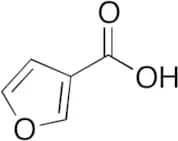
Formula:C8H6FNO2Color and Shape:NeatMolecular weight:167.143-Furoic Acid
CAS:Controlled ProductApplications 3-Furoic Acid, is metabolized by Corynebacterium fascians from soil, limonoid metabolism based on a biological studies.
References Hasegawa, S., et al.: J. Arg. Food Chem., 31, 807 (1983)Formula:C5H4O3Color and Shape:NeatMolecular weight:112.084,7-Dihydro Megestrol Acetate
CAS:Controlled ProductFormula:C24H34O4Color and Shape:NeatMolecular weight:386.5243-(2,3-Dihydroxyphenyl)propionic Acid
CAS:Controlled ProductApplications 3-(2,3-Dihydroxyphenyl)propionic acid is a degradation product of the aromatic compound Phenylpropionate (PP).
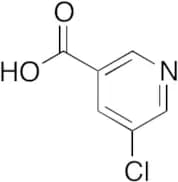
References Provencher, S., et al.: Biochemistry, 20, 33 (1981), Ferrandez, A., et al.: J. Bacteriol., 179, 2573 (1997), Torres, B., et al.: J. Biol. Chem., 278, 27575 (2003),Formula:C9H10O4Color and Shape:NeatMolecular weight:182.175-Chloronicotinic Acid
CAS:Controlled ProductApplications 5-Chloronicotinic Acid is used as reagent/reactant luminescence and hydrothermal preparation of cobalt/cadmium/lead chloronicotinate phenanthroline MOF.
References Gao, Z.Q., et al.: J. Solid State Chem., 241, 121-130 (2016)Formula:C6H4ClNO2Color and Shape:NeatMolecular weight:157.5544-Isopropylphenylacetic Acid
CAS:Controlled ProductApplications 4-Isopropylphenylacetic acid (cas# 4476-28-2) is a useful research chemical.
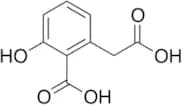
Formula:C11H14O2Color and Shape:NeatMolecular weight:178.223-Hydroxyhomophthalic Acid
CAS:Controlled ProductApplications 3-Hydroxyhomophthalic acid (cas# 42421-12-5) is a useful research chemical.
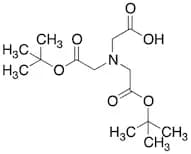
Formula:C9H8O5Color and Shape:NeatMolecular weight:196.162-(bis(2-(tert-Butoxy)-2-oxoethyl)amino)acetic Acid
CAS:Controlled ProductApplications 2-(bis(2-(tert-butoxy)-2-oxoethyl)amino)acetic acid (cas# 171557-31-6) is a useful research chemical.
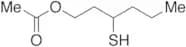
Formula:C14H25NO6Color and Shape:NeatMolecular weight:303.353-Sulfanylhexyl Acetate
CAS:Controlled ProductStability Hygroscopic
Applications 3-Sulfanylhexyl Acetate is a precursor of 3-mercaptohexan-1-ol (M225270) found in grape juice.
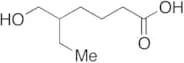
References Harsch, M.J., et al.: J. Agri. Food. Chem., 61, 3703 (2013); Makhotkina, O., et al.: Food. Chem., 135, 486 (2012);Formula:C8H16O2SColor and Shape:NeatMolecular weight:176.285-Ethyl-6-hydroxyhexanoic Acid
CAS:Controlled ProductApplications 5-Ethyl-6-hydroxyhexanoic Acid is an intermediate in the synthesis of metabolites of Bis(2-ethylhexyl) Phthalate (DEHP) (B433850).
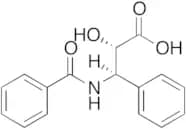
References Kaulen, J., et al.: Tetrahedron., 38, 3299 (1982);Formula:C8H16O3Color and Shape:NeatMolecular weight:160.21(2S,3R)-3-Benzamido-2-hydroxy-3-phenylpropanoic Acid
CAS:Controlled ProductFormula:C16H15NO4Color and Shape:NeatMolecular weight:285.2952-Cyclohexylideneacetic Acid
CAS:Controlled ProductApplications 2-Cyclohexylideneacetic acid (cas# 1552-91-6) is a useful research chemical.
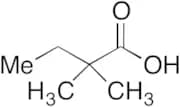
Formula:C8H12O2Color and Shape:NeatMolecular weight:140.182,2-Dimethylbutanoic Acid
CAS:Controlled ProductApplications 2,2-Dimethylbutyrate (DMB) is a potential treatment for thalassemia and hemoglobinopathies.
References Yeh, K., et al.: J. Pharmacokinet. Biopharm., 6, 79 (1978), Cunningham, M., et al.: Blood, 104, 34 (2004), Rund, D., et al.: N. Engl. J. Med., 353, 1135 (2005),Formula:C6H12O2Color and Shape:NeatMolecular weight:116.16(3S,7S,22S)-26-Amino-5,13,20-trioxo-4,6,12,21-tetraazahexacosane-1,3,7,22-tetracarboxylic Acid
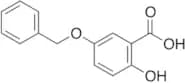
CAS:Controlled ProductFormula:C26H45N5O11Color and Shape:NeatMolecular weight:603.6625-(Benzyloxy)-2-Hydroxybenzoic Acid
CAS:Controlled ProductApplications 5-(Benzyloxy)-2-Hydroxybenzoic Acid (cas# 16094-44-3) is a useful research chemical.
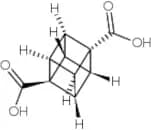
Formula:C14H12O4Color and Shape:NeatMolecular weight:244.241,4-Cubanedicarboxylic Acid
CAS:Controlled ProductApplications 1,4-Cubanedicarboxylic acid
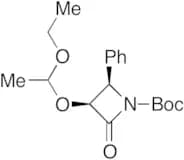
Formula:C10H8O4Color and Shape:NeatMolecular weight:192.168(3R,4S)-3-(1-Ethoxyethoxy)-2-oxo-4-phenyl-1-azetidinecarboxylic Acid 1,1-Dimethylethyl Ester
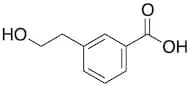
CAS:Controlled ProductFormula:C18H25NO5Color and Shape:NeatMolecular weight:335.3953-(2-Hydroxyethyl)benzoic Acid
CAS:Controlled ProductImpurity Ketoprofen EP Impurity G
Applications 3-(2-Hydroxyethyl)benzoic Acid (Ketoprofen EP Impurity G) is an impurity in the synthesis of Ketoprofen (K200800), anti-inflammatory (1,2); analgesic.
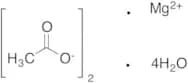
References 1. Ueno, K. et al.: J Med Chem. 1976 Jul;19(7):941-6. 2. Jamali, F. et al.: Clin Pharmacokinet. 1990 Sep;19(3):197-217.Formula:C9H10O3Color and Shape:Off White SolidMolecular weight:166.17Magnesium Acetate Tetrahydrate
CAS:Controlled ProductStability Hygroscopic
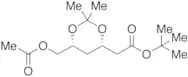
Applications Magnesium acetate tetrahydrate (cas# 16674-78-5) is a useful research chemical.Formula:C4H14MgO8Color and Shape:NeatMolecular weight:214.45(4S,6R)-6-(Acetoxymethyl)-2,2-dimethyl-1,3-dioxane-4-acetic Acid tert-Butyl Ester
CAS:Controlled ProductFormula:C15H26O6Color and Shape:NeatMolecular weight:302.3635-Hydroxy-3-phenylbenzoic Acid
CAS:Controlled ProductApplications 5-Hydroxy-3-phenylbenzoic Acid can be used in biological study of preparation and identification of hydroxybenzoic acids as lactate receptor agonists and antilipolytics. It can also be used in discovery of new series of BRD4(1) inhibitors using protein-ligand docking and structure-guided design.
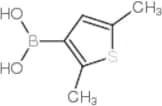
References Duffy, B. C., et al.: Bioorg Med Chem Lett, 25, 2818 (2015), Dvorak, C. A., et al.: ACS Med Chem Lett, 3, 637 (2012)Formula:C13H10O3Color and Shape:NeatMolecular weight:214.222,5-Dimethylthiophene-3-boronic Acid
CAS:Controlled ProductApplications 2,5-Dimethylthiophene-3-boronic acid
Formula:C6H9BO2SColor and Shape:NeatMolecular weight:156.014-[[2-(2-Amino-4,5-dihydro-4-oxo-5-thiazolyl)acetyl]amino]benzoic Acid
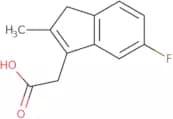
CAS:Controlled ProductFormula:C12H11N3O4SColor and Shape:NeatMolecular weight:293.3(5-Fluoro-2-methyl-1H-inden-3-yl)acetic acid
CAS:(5-Fluoro-2-methyl-1H-inden-3-yl)acetic acid (FMIAA) is a phase transfer catalyst that catalyses the condensation of alkyl esters. It can be used in the condensation of aromatic and aliphatic aldehydes in liquid phase with potassium as a reagent and organic solvent. The FMIAA is then removed by dehydrating the product, leaving it in solid form. FMIAA has been shown to be effective for the synthesis of a wide range of compounds, including pharmaceuticals such as cyclopentanone, aminomethylpiperidine, and 4-aminoquinoline.Formula:C12H11FO2Purity:Min. 95%Molecular weight:206.21 g/mol4-(4-Hydroxymethyl-3-methoxyphenoxy)-butyric acid
CAS:Controlled Product4-(4-Hydroxymethyl-3-methoxyphenoxy)-butyric acid (HMPA) is a synthetic compound that is used in the production of butyric acid. It is also used as a reagent in the preparation of enzymes and enzyme preparations, such as serine proteases. HMPA has been used as an intermediate in the synthesis of ribulose, which is a sugar molecule found in plants. The structure of this compound can be determined by FTIR spectroscopy and by X-ray crystallography. HMPA has been shown to have hydrogen bonding between its molecules, which may account for its stability. Hydrogen bonding accounts for the solidity of this compound and its resistance to heat and solvents.Formula:C12H16O5Purity:Min. 95%Molecular weight:240.25 g/mol2-Oxovaleric acid
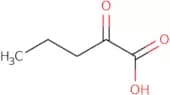
CAS:2-Oxovaleric acid is a monocarboxylic acid that is produced by the oxidation of 2-oxopentanoic acid. It was first discovered as an inhibitory compound for glutamate dehydrogenase, which catalyzes the conversion of glutamate to alpha-ketoglutarate. This inhibition leads to a buildup of glutamate in the cell, which can cause metabolic disorders. The importance of 2-oxovaleric acid was demonstrated using a chromatographic method on type strain cells. The electron microscopic images showed that 2-oxovaleric acid inhibited the growth of bacteria by binding to extracellular Ca2+, carbon source, and animals.Formula:C5H8O3Purity:Min. 95%Molecular weight:116.12 g/mol3'-Chloro-biphenyl-4-carboxylic acid
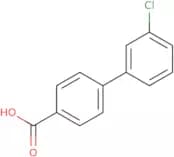
CAS:Please enquire for more information about 3'-Chloro-biphenyl-4-carboxylic acid including the price, delivery time and more detailed product information at the technical inquiry form on this pagePurity:Min. 95%3,3-Difluoro-1-methylcyclobutanecarboxylic acid
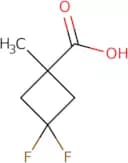
CAS:Please enquire for more information about 3,3-Difluoro-1-methylcyclobutanecarboxylic acid including the price, delivery time and more detailed product information at the technical inquiry form on this pageFormula:C6H8F2O2Purity:Min. 95%Molecular weight:150.12 g/mol[2-(4-Chlorophenyl)-1,3-thiazol-4-yl]acetic acid
CAS:[2-(4-Chlorophenyl)-1,3-thiazol-4-yl]acetic acid is a potent antimicrobial agent that inhibits the growth of bacteria by binding to the 50S ribosomal subunit. It has shown antiinflammatory properties in animal models of bowel disease, skin cancer, and autoimmune diseases. This drug has also been shown to have no observable toxicity in humans at doses up to 5000 mg/day for 28 days. The drug binds to a number of enzymes including reactive oxygen species (ROS) scavengers and metabolic enzymes. There are no known drug interactions with this drug and it can be used safely with other nonsteroidal antiinflammatory drugs (NSAIDs).
Formula:C11H8ClNO2SPurity:Min. 95%Molecular weight:253.71 g/mol4-(Methoxycarbonyl)bicyclo[2.1.1]hexane-1-carboxylic acid
CAS:Please enquire for more information about 4-(Methoxycarbonyl)bicyclo[2.1.1]hexane-1-carboxylic acid including the price, delivery time and more detailed product information at the technical inquiry form on this pageFormula:C9H12O4Purity:Min. 95%Molecular weight:184.19 g/molL-Cysteinesulfinic acid, monohydrate
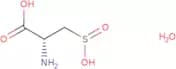
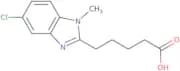
CAS:Please enquire for more information about L-Cysteinesulfinic acid, monohydrate including the price, delivery time and more detailed product information at the technical inquiry form on this pageFormula:C3H7NO4S·H2OPurity:Min. 95%Molecular weight:171.17 g/mol5-(5-Chloro-1-methyl-1H-benzimidazol-2-yl)pentanoic acid
CAS:Controlled ProductPlease enquire for more information about 5-(5-Chloro-1-methyl-1H-benzimidazol-2-yl)pentanoic acid including the price, delivery time and more detailed product information at the technical inquiry form on this page
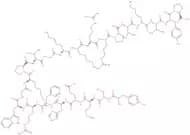
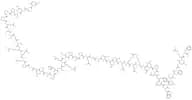
Formula:C13H15ClN2O2Purity:Min. 95%Molecular weight:266.72 g/molKisspeptin-54 (human) trifluoroacetate salt
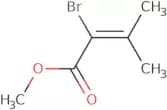
CAS:Kisspeptin-54 is a mammalian peptide hormone that regulates the release of gonadotropin-releasing hormone (GnRH) from the hypothalamus. Kisspeptin-54 has been shown to be potently immunogenic in humans and can be used as an antigen for the production of monoclonal antibodies. It is also a candidate drug for the treatment of obesity and may have neuroprotective effects. Kisspeptin-54 has been shown to reduce body mass index, which may be due to its ability to stimulate the immune system and promote antibody production against tumors. This peptide also has potent on-line binding properties that are useful in polymerase chain reactions.Formula:C258H401N79O78Purity:Min. 95%Molecular weight:5,857.43 g/mol2-Bromo-3-methylbutenoic acid methyl ester
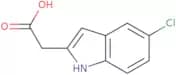
CAS:Please enquire for more information about 2-Bromo-3-methylbutenoic acid methyl ester including the price, delivery time and more detailed product information at the technical inquiry form on this pageFormula:C6H9BrO2Purity:Min. 95%Molecular weight:193.04 g/mol2-(5-Chloro-1H-indol-2-yl)acetic acid
CAS:Please enquire for more information about 2-(5-Chloro-1H-indol-2-yl)acetic acid including the price, delivery time and more detailed product information at the technical inquiry form on this pageFormula:C10H8CINO2Purity:Min. 95%Molecular weight:313.09 g/molDimethyl 7,7'-dimethoxy-[4,4'-bibenzo[d][1,3]dioxole]-5,5'-dicarboxylate
CAS:Dimethyl 7,7'-dimethoxy-[4,4'-bibenzo[d][1,3]dioxole]-5,5'-dicarboxylate is a biocompatible polymer that can be used in the treatment of liver injury. It has been shown to have an inhibitory effect on hepatic enzyme activities and synchronous fluorescence. Dimethyl 7,7'-dimethoxy-[4,4'-bibenzo[d][1,3]dioxole]-5,5'-dicarboxylate can be used as a matrix for curcuma aromatica to remove wastewater contaminants. This polymer also has the ability to inhibit monoethyl ether-induced liver injury in low-dose groups and reduce hepatitis B virus replication.Formula:C20H18O10Purity:Min. 95%Molecular weight:418.35 g/molTrifluoromethanesulfonic acid-D
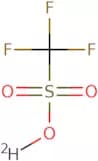
CAS:Controlled ProductTriflic acid is a strong acid that reacts with nucleophiles such as water, alcohols, and amines. It is used in organic synthesis for desulfurization reactions, for example to convert thiophene to benzothiophene. Triflic acid is a synthetic chemical that is prepared by the reaction of sulfur trioxide with chlorotrifluoroethanesulfonyl fluoride. The protonation of the triflic acid molecule generates a sulfide anion. This anion then reacts with a nucleophile (e.g., chloride ion) to generate a chloride anion and regenerate the triflic acid molecule, which can then react again with another nucleophile. The reaction mechanism is shown below: HSOClF + NH3 → HSOClF + NH2Cl HSOClF + Cl- → HSO-Cl- + Cl The reaction mechanism for this process is shown below: HSOCl
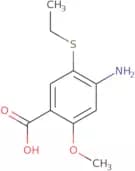
Formula:CDF3O3SPurity:Min. 95%Color and Shape:Clear LiquidMolecular weight:151.08 g/mol2-Methoxy-4-amino-5-ethylthiobenzoic acid
CAS:Please enquire for more information about 2-Methoxy-4-amino-5-ethylthiobenzoic acid including the price, delivery time and more detailed product information at the technical inquiry form on this page
Formula:C10H13NO3SPurity:Min. 95%Molecular weight:227.28 g/molBetamethasone 21-acetate-17-propionate
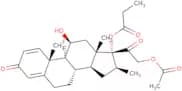
CAS:Controlled ProductBetamethasone 21-acetate-17-propionate is a drug product that is a mixture of betamethasone and betamethasone dipropionate. It is used to treat inflammatory skin conditions such as dermatitis, eczema, psoriasis, and other conditions. Betamethasone 21-acetate-17-propionate is one of the most potent corticosteroids available for topical use. The validation process has been completed on the acetonitrile phase and the reversed phase mobile phase. The validation was successful for both the acetonitrile and reversed phases. A validated HPLC method was developed for this drug product in order to monitor its production process.Formula:C27H35FO7Purity:Min. 95%Color and Shape:PowderMolecular weight:490.56 g/mol1-BOC-2,3-Dihydropyrrole-4-boronic acid, pinacol ester
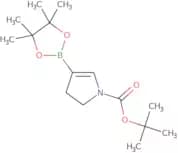
CAS:Please enquire for more information about 1-BOC-2,3-Dihydropyrrole-4-boronic acid, pinacol ester including the price, delivery time and more detailed product information at the technical inquiry form on this pageFormula:C15H26BNO4Purity:Min. 95%Molecular weight:295.18 g/mol5-Oxo-1-(pyridin-3-ylmethyl)pyrrolidine-3-carboxylic acid
CAS:Please enquire for more information about 5-Oxo-1-(pyridin-3-ylmethyl)pyrrolidine-3-carboxylic acid including the price, delivery time and more detailed product information at the technical inquiry form on this page
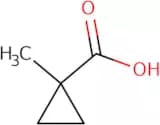
Formula:C11H12N2O3Purity:Min. 95%Molecular weight:220.22 g/mol1-Methylcyclopropane-1-carboxylic acid
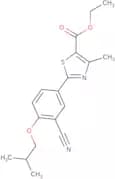
CAS:1-Methylcyclopropane-1-carboxylic acid is a reactive, stereoisomeric amide with an alkaline metal. It can be prepared by the reaction of methoxide and nitrobenzene in the presence of a base such as potassium hydroxide. 1-Methylcyclopropane-1-carboxylic acid has been shown to have potent antitumor activity against solid tumors in vivo. This compound was also shown to inhibit the growth of human prostate cancer cells in vitro. Additionally, 1-methylcyclopropane-1-carboxylic acid has been shown to inhibit the generation of reactive oxygen species (ROS) from xylene and other aromatic hydrocarbons, which may be due to its ability to nitrosylate these compounds and prevent them from reacting with oxygen.Formula:C5H8O2Purity:Min. 95%Molecular weight:100.12 g/molEthyl 2-(3-cyano-4-isobutoxyphenyl)-4-methyl-5-thiazolecarboxylate
CAS:Ethyl 2-(3-cyano-4-isobutoxyphenyl)-4-methyl-5-thiazolecarboxylate (ECIT) is a derivative of formyl that has been used as a solvent for industrial and laboratory purposes. ECIT is an amorphous substance with the chemical formula CH3COC6H2CH2COCH=N(C=O)C6H4CN. The compound has been quantified in various solvents, such as n-butyl alcohol and acetonitrile. ECIT is a colorless liquid that boils at 140° C. It has a formyl group and an alkynyl group, which are both reactive groups that can be used to synthesize other compounds. ECIT also contains two stereoisomers: the erythro isomer and the threo isomer. The erythro isomer has the structural formula of CH3COC6H2CHPurity:Min. 95%ACTH (2-24) (human, bovine, rat) trifluoroacetate salt
CAS:Please enquire for more information about ACTH (2-24) (human, bovine, rat) trifluoroacetate salt including the price, delivery time and more detailed product information at the technical inquiry form on this page
Formula:C133H205N39O29SPurity:Min. 95%Molecular weight:2,846.36 g/molHydroxymethanesulfinic acid monosodium salt dihydrate
CAS:Hydroxymethanesulfinic acid monosodium salt dihydrate (HMSD) is a chemical that can be used to remove sulfoxylate and formaldehyde in wastewater. It can also be used as a polymerization catalyst, an activator for epoxy resins, and as a stabilizer of glycol ethers. HMSD is formed by the reaction of methyl ethyl sulfoxide with copper chloride. This chemical has been shown to have thermal expansion properties and high chemical stability, making it useful for industrial processes involving polymerization or glycol esters.Formula:CH3NaO3S·2H2OPurity:Min. 95%Color and Shape:White/Off-White SolidMolecular weight:154.12 g/molMethyl 2-amino-4,6-dichloropyridine-3-carboxylate
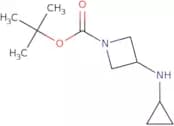
CAS:Please enquire for more information about Methyl 2-amino-4,6-dichloropyridine-3-carboxylate including the price, delivery time and more detailed product information at the technical inquiry form on this pageFormula:C7H6Cl2N2O2Purity:Min. 95%Molecular weight:221.04 g/moltert-Butyl 3-(cyclopropylamino)azetidine-1-carboxylate
CAS:Please enquire for more information about tert-Butyl 3-(cyclopropylamino)azetidine-1-carboxylate including the price, delivery time and more detailed product information at the technical inquiry form on this pageFormula:C11H20N2O2Purity:Min. 95%Molecular weight:212.29 g/mol






![4-[[2-(2-Amino-4,5-dihydro-4-oxo-5-thiazolyl)acetyl]amino]benzoic Acid](/_next/image/?url=https%3A%2Fstatic.cymitquimica.com%2Fproducts%2FTR%2Fthumb-webp%2FA629393.webp&w=3840&q=75)


![[2-(4-Chlorophenyl)-1,3-thiazol-4-yl]acetic acid](/_next/image/?url=https%3A%2Fstatic.cymitquimica.com%2Fproducts%2F3D%2Fthumb-webp%2FFC124498.webp&w=3840&q=75)
![4-(Methoxycarbonyl)bicyclo[2.1.1]hexane-1-carboxylic acid](/_next/image/?url=https%3A%2Fstatic.cymitquimica.com%2Fproducts%2F3D%2Fthumb-webp%2FFM76248.webp&w=3840&q=75)
![Dimethyl 7,7'-dimethoxy-[4,4'-bibenzo[d][1,3]dioxole]-5,5'-dicarboxylate](/_next/image/?url=https%3A%2Fstatic.cymitquimica.com%2Fproducts%2F3D%2Fthumb-webp%2FFD139796.webp&w=3840&q=75)