Carboxylic Acids
Carboxylic acids are organic molecules characterized by having a carboxyl-type functional group (-COOH). These acids are fundamental in various chemical reactions, including esterification, amidation, and decarboxylation. Carboxylic acids are widely used in the production of pharmaceuticals, polymers, and agrochemicals. In this section, you can find a large number of carboxylic acids ready to be used. At CymitQuimica, we provide a broad range of high-quality carboxylic acids to support your research and industrial applications.
Found 12454 products of "Carboxylic Acids"
Sort by
Purity (%)
0
100
|
0
|
50
|
90
|
95
|
100
3,5-Difluoromandelic acid
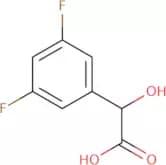
CAS:3,5-Difluoromandelic acid is a biomolecule that is synthesized in the laboratory. It has been shown to have anti-cancer properties by inhibiting the formation of amyloid plaques and inhibiting γ-secretase, which are substances involved in the development of Alzheimer's disease. 3,5-Difluoromandelic acid has been shown to be more potent than other ligands in its class with respect to inhibition of γ-secretase activity. This molecule also shows stereospecificity for the L- and D-isomers of lactam substrates. 3,5-Difluoromandelic acid may be used as a potential lead for development of new drugs for treatment of Alzheimer's disease.Formula:C8H6F2O3Purity:Min. 95%Color and Shape:White PowderMolecular weight:188.13 g/mol3-(6-Chloro-1-methyl-1H-benzimidazol-2-yl)propanoic acid
CAS:Controlled ProductPlease enquire for more information about 3-(6-Chloro-1-methyl-1H-benzimidazol-2-yl)propanoic acid including the price, delivery time and more detailed product information at the technical inquiry form on this pageFormula:C11H11ClN2O2Purity:Min. 95%Molecular weight:238.67 g/mol4-Isopropoxyphenylboronic acid
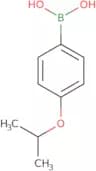
CAS:4-Isopropoxyphenylboronic acid is a boronic acid that can be used as a cross-coupling partner in palladium-catalyzed cross-coupling reactions. It is synthesized by reacting 4-hydroxyphenylacetic acid with 2 equivalents of naphthoquinone diazide. The addition of the 4-isopropoxy group to the phenyl substituent increases the reactivity of this boronic acid. This compound has been used in the synthesis of rofecoxib and cyclooxygenase inhibitors, such as aspirin and ibuprofen. The presence of an electron withdrawing group on one phenyl ring enhances the reactivity of this boronic acid towards nucleophiles, such as amines or alcohols.Formula:C9H13BO3Purity:Min. 95%Molecular weight:180.01 g/mol5-Oxo-1-(pyridin-3-ylmethyl)pyrrolidine-3-carboxylic acid
CAS:<p>Please enquire for more information about 5-Oxo-1-(pyridin-3-ylmethyl)pyrrolidine-3-carboxylic acid including the price, delivery time and more detailed product information at the technical inquiry form on this page</p>Formula:C11H12N2O3Purity:Min. 95%Molecular weight:220.22 g/mol3-Cyanoethylbenzoic acid
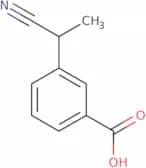
CAS:<p>3-Cyanoethylbenzoic acid is an anthropogenic compound that is produced by the Friedel-Crafts reaction between benzoyl chloride and acrylonitrile in the presence of a base. 3-Cyanoethylbenzoic acid is used as a solvent for chromatographic methods, such as gradient elution, ion exchange, and reversed phase. 3-Cyanoethylbenzoic acid has been used to determine the optical purity of benzoate salts and amides. This compound can be taken orally in solid oral dosage form or enterically in liquid oral dosage form. 3-Cyanoethylbenzoic acid interacts with other drugs that are metabolized by CYP3A4, such as erythromycin, to produce an active metabolite (N-desmethyldesipramide).</p>Formula:C10H9NO2Purity:Min. 95%Color and Shape:PowderMolecular weight:175.18 g/mol4-Diazobenzenesulfonic Acid
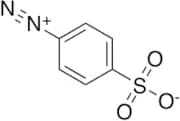
CAS:<p>Applications 4-Diazobenzenesulfonic acid (cas# 305-80-6) is a useful research chemical.<br></p>Formula:C6H4N2O3SMolecular weight:184.17Fmoc-4-(neopentyloxysulfonyl)-Abu-OH (S)-2-(Fmoc-amino)-4-neopentyloxysulfonyl-butyric acid
CAS:Please enquire for more information about Fmoc-4-(neopentyloxysulfonyl)-Abu-OH (S)-2-(Fmoc-amino)-4-neopentyloxysulfonyl-butyric acid including the price, delivery time and more detailed product information at the technical inquiry form on this pageFormula:C24H29NO7SPurity:Min. 95%Molecular weight:475.56 g/molRetrocyclin-1 trifluoroacetate salt
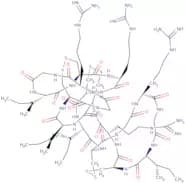
CAS:Retrocyclin-1 trifluoroacetate salt is a synthetic antimicrobial peptide, which is derived from humanized sequences based on the theta-defensin family, originally found in certain primates. Retrocyclin-1 is particularly notable for its circular structure which contributes to its stability and biological activity. The peptide is produced through a process of solid-phase peptide synthesis, designed to mimic the native cyclic conformation of natural theta-defensins.Formula:C74H128N30O18S6Purity:Min. 95%Molecular weight:1,918.4 g/molNFAT Inhibitor trifluoroacetate salt
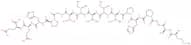
CAS:<p>NFAT Inhibitor trifluoroacetate salt H-Met-Ala-Gly-Pro-His-Pro-Val-Ile-Val-Ile-Thr-Gly-Pro-His-Glu-Glu (NFAT) is an inhibitor drug that has been shown to inhibit the nuclear factor of activated T cells (NFAT). NFAT is a transcriptional regulator that controls the expression of inflammatory genes in macrophages and other cell types. NFAT inhibitors have been shown to be effective for treating bowel diseases, such as ulcerative colitis and Crohn's disease, by inhibiting the activation of macrophages. NFAT inhibitors are also used in vitro as a tool for studying cellular signaling pathways. The most common type of NFAT inhibitor is fluconazole, which blocks calcineurin activity and prevents the activation of NFAT. However, other types of inhibitors are being developed, including mmp9 activity or</p>Formula:C75H118N20O22SPurity:Min. 95%Molecular weight:1,683.93 g/molα-Casein (90-96) trifluoroacetate salt
CAS:Please enquire for more information about Alpha-Casein (90-96) trifluoroacetate salt including the price, delivery time and more detailed product information at the technical inquiry form on this pageFormula:C43H64N10O12Purity:Min. 95%Molecular weight:913.03 g/molLIP1 (human) trifluoroacetate salt
<p>Please enquire for more information about LIP1 (human) trifluoroacetate salt including the price, delivery time and more detailed product information at the technical inquiry form on this page</p>Formula:C133H229N45O37Purity:Min. 95%Molecular weight:3,050.52 g/molH-Lys-Lys-Lys-Lys-OH acetate salt
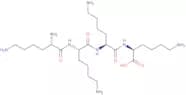
CAS:H-Lys-Lys-Lys-Lys-OH acetate salt is a fatty acid that has been shown to form stable complexes with DNA and act as an intercalator. It also provides a repair mechanism for DNA, which may be due to its ability to bind to stem cell factor (SCF) and increase the proliferation of stem cells. H-Lys-Lys-Lys-Lys-OH acetate salt has significant cytotoxicity against viruses, such as human immunodeficiency virus type 1 (HIV1) and human papilloma virus type 16. This drug can also be used as an adjuvant in monoclonal antibody production by stimulating the production of antibodies from mouse spleen cells. H-Lys-Lys-Lys-Lys-OH acetate salt has been shown to inhibit the growth of E. coli K12 and Bacteria Corynebacterium diphtheriae, both ofFormula:C24H50N8O5Purity:Min. 95%Molecular weight:530.7 g/mol7-Hydroxynaphthalene-1-sulfonic acid
CAS:<p>7-Hydroxynaphthalene-1-sulfonic acid is a chemical compound with the formula HNSO. It is an organic compound and a proton acceptor. The conjugate base of 7-hydroxynaphthalene-1-sulfonic acid has a strong absorption band in the ultraviolet region. In DMF solution, the reaction of 7-hydroxynaphthalene-1-sulfonic acid with formamide, hydroxy, and nitrogen atoms produces a product that has been characterized by photoexcitation and kinetic studies. The proton transfer process from formamide to 7-hydroxynaphthalene-1-sulfonic acid was found to be exponential and followed first order kinetics. The protonation constant for this process was determined to be 8.4 x 10 M/equivalent. 7HNSO can also act as an electron acceptor in dimethylsulphoxide (DMSO) solution</p>Purity:Min. 95%Endothelin-3 (human, mouse, rabbit, rat) trifluoroacetate salt
CAS:Trifluoroacetate saltFormula:C121H168N26O33S4Purity:Min. 95%Molecular weight:2,643.05 g/molThr-Ala-Pro-Arg-Atrial Natriuretic Factor (1-28) (human, bovine, porcine) trifluoroacetate salt
CAS:<p>Thr-Ala-Pro-Arg-Atrial Natriuretic Factor (1-28) (human, bovine, porcine) trifluoroacetate salt is a peptide hormone that regulates blood pressure by causing the kidneys to excrete sodium and water. It is used as a model system for studying the physiological effects of urodilatin and has been shown to inhibit the cyclase enzyme. Thr-Ala-Pro-Arg-Atrial Natriuretic Factor (1-28) (human, bovine, porcine) trifluoroacetate salt may also have an antihypertensive effect through its ability to reduce levels of natriuretic peptides in plasma. This drug is also being investigated as a possible treatment for congestive heart failure. The small molecular weight makes it suitable for use as a natriuretic or antihypertensive drug with minimal side effects.</p>Formula:C145H234N52O44S3Purity:Min. 95%Molecular weight:3,505.93 g/molZ-Gly-Pro-Arg-pNA acetate salt
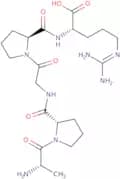
CAS:Controlled ProductPlease enquire for more information about Z-Gly-Pro-Arg-pNA acetate salt including the price, delivery time and more detailed product information at the technical inquiry form on this pageFormula:C27H34N8O7·C2H4O2Purity:Min. 98 Area-%Color and Shape:PowderMolecular weight:642.66 g/molH-Gly-Gly-Lys-Ala-Ala-OH acetate salt
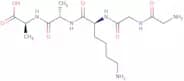
CAS:<p>Please enquire for more information about H-Gly-Gly-Lys-Ala-Ala-OH acetate salt including the price, delivery time and more detailed product information at the technical inquiry form on this page</p>Formula:C16H30N6O6Purity:Min. 95%Molecular weight:402.45 g/molH-Ala-His-Lys-OH acetate salt
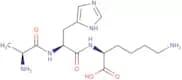
CAS:H-Ala-His-Lys-OH acetate salt is a copper complex that has been shown to have antioxidant properties in vitro. It has been studied for use as an analog of the vitamin C, which is a cofactor for collagen synthesis and follicular keratinization. Copper complexes with H-Ala-His-Lys-OH acetate salt have been shown to inhibit the formation of reactive oxygen species (ROS) and to stimulate collagen production by human dermal fibroblasts in vitro. This compound also stimulates the growth of human skin cells in vitro, which may be due to its ability to induce fibroblast proliferation.Formula:C15H26N6O4Purity:Min. 95%Molecular weight:354.4 g/mol(Des-Gly10,D-Tyr5,D-Ser(tBu)6,Pro-NHEt 9)-LHRH acetate salt
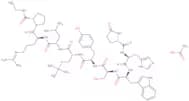
CAS:Controlled ProductPlease enquire for more information about (Des-Gly10,D-Tyr5,D-Ser(tBu)6,Pro-NHEt 9)-LHRH acetate salt including the price, delivery time and more detailed product information at the technical inquiry form on this pageFormula:C60H86N16O13Purity:Min. 95%Molecular weight:1,239.42 g/mol17-alpha,21-Dihydroxy-16-a-methylpregna-1,4,9(11)-triene-3,20-dione 21-acetate
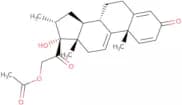
CAS:Controlled Product<p>Please enquire for more information about 17-alpha,21-Dihydroxy-16-a-methylpregna-1,4,9(11)-triene-3,20-dione 21-acetate including the price, delivery time and more detailed product information at the technical inquiry form on this page</p>Formula:C24H30O5Purity:Min. 95%Molecular weight:398.49 g/mol2-Bromo-3-methylbenzoic acid
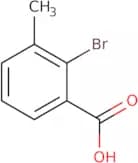
CAS:<p>2-Bromo-3-methylbenzoic acid is an alcohol that has been shown to be selective for the stereoselective synthesis of chiral secondary alcohols. It has been used in the reduction of 2-formylphenylboronic acid, yielding a mixture of the two possible diastereomers, and in the reductive elimination of carboxylic acids, which can be used as an alternative to the Baylis-Hillman reaction. The compound also has inhibitory activity against several bacteria, including methicillin resistant Staphylococcus aureus (MRSA) and Mycobacterium tuberculosis. 2-Bromo-3-methylbenzoic acid is photochromic and changes color from yellow to red when exposed to UV light.</p>Formula:C8H7BrO2Purity:Min. 95%Color and Shape:PowderMolecular weight:215.04 g/mol3,5-Diiodothyroformic acid
CAS:<p>3,5-Diiodothyroformic acid is a fine chemical that is used as a versatile building block in organic synthesis. It is also an intermediate for research chemicals and speciality chemicals. In addition to its use as a reagent, 3,5-Diiodothyroformic acid has been shown to be useful as a building block for the synthesis of pharmaceuticals and agricultural chemicals.</p>Formula:C13H8I2O4Purity:Min. 95%Molecular weight:482.01 g/mol2-Fluoro-6-(trifluoroMethyl)pyridine-3-boronic acid
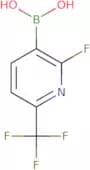
CAS:<p>Please enquire for more information about 2-Fluoro-6-(trifluoroMethyl)pyridine-3-boronic acid including the price, delivery time and more detailed product information at the technical inquiry form on this page</p>Formula:C6H4BF4NO2Purity:Min. 95%Molecular weight:208.91 g/molH-Lys-Tyr-OH acetate salt
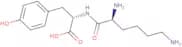
CAS:H-Lys-Tyr-OH acetate salt (HAT) is a synthetic nonsteroidal anti-inflammatory drug that has been used in the treatment of inflammatory diseases and cancer. HAT is an optical isomer of the naturally occurring amino acid L-lysine. It has been shown to have antioxidative properties and to be active against HIV infection and inflammatory diseases, including diabetes. HAT also has a molecular structure that makes it a potential therapeutic agent for cancer, as well as for women with osteoporosis and other chronic inflammatory conditions.Formula:C15H23N3O4Purity:Min. 95%Molecular weight:309.36 g/molH-Phe-D-Met-Arg-Phe-NH2 trifluoroacetate salt
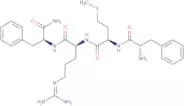
CAS:Please enquire for more information about H-Phe-D-Met-Arg-Phe-NH2 trifluoroacetate salt including the price, delivery time and more detailed product information at the technical inquiry form on this pageFormula:C29H42N8O4SPurity:Min. 95%Molecular weight:598.76 g/molCys-Gly-Lys-Lys-Gly-Amyloid b-Protein (35-40) trifluoroacetate salt
CAS:Please enquire for more information about Cys-Gly-Lys-Lys-Gly-Amyloid b-Protein (35-40) trifluoroacetate salt including the price, delivery time and more detailed product information at the technical inquiry form on this pageFormula:C43H79N13O12S2Purity:Min. 95%Molecular weight:1,034.3 g/molMyristoyl-(Lys12·27·28)-VIP-Gly-Gly-Thr (free acid) trifluoroacetate salt
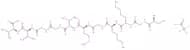
CAS:Please enquire for more information about Myristoyl-(Lys12·27·28)-VIP-Gly-Gly-Thr (free acid) trifluoroacetate salt including the price, delivery time and more detailed product information at the technical inquiry form on this pageFormula:C171H283N45O47SPurity:Min. 95%Molecular weight:3,753.42 g/mol(Des-Gly10,D-His2,D-Ser(tBu)6,Pro-NHEt 9)-LHRH acetate salt
<p>Please enquire for more information about (Des-Gly10,D-His2,D-Ser(tBu)6,Pro-NHEt 9)-LHRH acetate salt including the price, delivery time and more detailed product information at the technical inquiry form on this page</p>Formula:C60H86N16O13Purity:Min. 95%Molecular weight:1,239.42 g/mol3-Piperidin-1-ylpropanoic acid
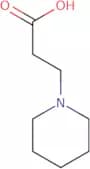
CAS:<p>3-Piperidin-1-ylpropanoic acid is a hydroxylated compound that belongs to the group of aromatic hydrocarbons. It has been shown to inhibit the activity of enzymes such as model studies and test compounds, which are used in biological samples. 3-Piperidin-1-ylpropanoic acid is not active against mouse tumor cells and does not show any locomotor activity. The terminal half life of this drug has been determined in urine samples from mice at 20 hours.</p>Formula:C8H15NO2Purity:Min. 95%Molecular weight:157.21 g/mol(Ile5,Trp23,Tyr36)-pTH-Related Protein (1-36) (human, mouse, rat) trifluoroacetate salt
CAS:<p>Please enquire for more information about (Ile5,Trp23,Tyr36)-pTH-Related Protein (1-36) (human, mouse, rat) trifluoroacetate salt including the price, delivery time and more detailed product information at the technical inquiry form on this page</p>Formula:C196H308N58O53Purity:Min. 95%Molecular weight:4,324.9 g/molH-Gly-Gly-Arg-Ala-OH acetate salt
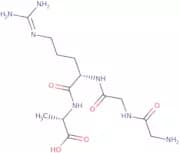
CAS:Please enquire for more information about H-Gly-Gly-Arg-Ala-OH acetate salt including the price, delivery time and more detailed product information at the technical inquiry form on this pageFormula:C13H25N7O5Purity:Min. 95%Molecular weight:359.38 g/mol(H-Cys-4MbNA)2 acetate salt (Disulfide bond)
CAS:Please enquire for more information about (H-Cys-4MbNA)2 acetate salt (Disulfide bond) including the price, delivery time and more detailed product information at the technical inquiry form on this pageFormula:C28H30N4O4S2Purity:Min. 95%Molecular weight:550.69 g/molFmoc-L-aspartic acid β-allyl ester
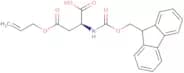
CAS:Fmoc-L-aspartic acid beta-allyl ester is a specific interaction between an amide and an enzyme target. It has been shown to have anti-inflammatory properties by inhibiting the activity of COX-2, which inhibits the production of prostaglandins. Fmoc-L-aspartic acid beta-allyl ester is a cyclic peptide with a lactam ring system that has been synthesized in a stepwise manner on a solid phase. This molecule interacts with cell line A549 and blocks the proliferation of cancer cells. Fmoc-L-aspartic acid beta-allyl ester also contains a disulfide bond that stabilizes its structure.Formula:C22H21NO6Purity:Min. 95%Molecular weight:395.41 g/mol(Cys26)-Amyloid b-Protein (1-40) trifluoroacetate salt
CAS:<p>Please enquire for more information about (Cys26)-Amyloid b-Protein (1-40) trifluoroacetate salt including the price, delivery time and more detailed product information at the technical inquiry form on this page</p>Formula:C194H295N53O57S2Purity:Min. 95%Molecular weight:4,345.87 g/molH-Ser-Leu-Ser-Leu-Ser-Pro-Gly-OH trifluoroacetate salt
CAS:<p>Please enquire for more information about H-Ser-Leu-Ser-Leu-Ser-Pro-Gly-OH trifluoroacetate salt including the price, delivery time and more detailed product information at the technical inquiry form on this page</p>Formula:C28H49N7O11Purity:Min. 95%Molecular weight:659.73 g/molDimethyl benzyl carbinol acetate
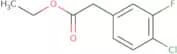
CAS:<p>Dimethyl benzyl carbinol acetate is a polymer that forms a film on the skin and prevents water loss. It has been shown to have enzyme-inhibiting properties, which may be due to its ability to prevent geranyl production. Dimethyl benzyl carbinol acetate has also been used as a sealant in microcapsules, which are then broken down by enzymes in order to release the contents of the capsule. Dimethyl benzyl carbinol acetate can also be used as an antimicrobial agent, where it inhibits bacterial cell growth by interfering with fatty acid synthesis.</p>Purity:Min. 95%(4-Chloro-3-fluorophenyl)acetic acid ethyl ester
CAS:Please enquire for more information about (4-Chloro-3-fluorophenyl)acetic acid ethyl ester including the price, delivery time and more detailed product information at the technical inquiry form on this pageFormula:C10H10ClFO2Purity:Min. 95%Molecular weight:216.64 g/molH-Cit-AMC trifluoroacetate salt
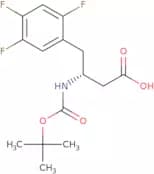
CAS:<p>Please enquire for more information about H-Cit-AMC trifluoroacetate salt including the price, delivery time and more detailed product information at the technical inquiry form on this page</p>Formula:C16H20N4O4Purity:Min. 95%Molecular weight:332.35 g/molBoc-(R)-3-Amino-4-(2,4,5-trifluorophenyl)butanoic acid
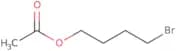
CAS:Intermediate in the synthesis of sitagliptinFormula:C15H18F3NO4Purity:Min. 95%Molecular weight:333.3 g/mol4-Bromobutyl acetate
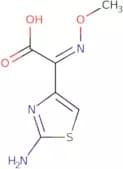
CAS:4-Bromobutyl acetate is a nucleic acid that contains a hydroxyl group, two nitrogen atoms, and four carbon atoms. It is the acetic ester of 4-bromobutyric acid. 4-Bromobutyl acetate can be found in the nucleus of cells and in mitochondria. It has been shown to bind to p2y receptors on the surface of cells and is thought to have tuberculostatic activity in vitro. 4-Bromobutyl acetate has also been shown to inhibit viral replication by binding to template or molecule. This nucleic acid can be used as a sequencing template because it will form complementary base pairs with other molecules that contain complementary sequences of nucleic acids.Formula:C6H11BrO2Purity:Min. 95%Molecular weight:195.05 g/mol2-Amino-a-(methoxyimino)-4-thiazoleacetic acid
CAS:<p>2-Amino-a-(methoxyimino)-4-thiazoleacetic acid is a reaction product of cefotaxime and n-dimethyl formamide. It has been shown to be an effective agent for the treatment of wastewater with a high organic content. 2-Amino-a-(methoxyimino)-4-thiazoleacetic acid also reacts with chloride ions to form cleavage products that are soluble in water, making it an ideal choice for wastewater treatment. This compound is not toxic and can be used as a drug to treat patients with infections caused by bacteria resistant to other antibiotics. 2-Amino-a-(methoxyimino)-4-thiazoleacetic acid binds to mismatched base pairs in DNA, inhibiting DNA synthesis and causing cell death by apoptosis.</p>Formula:C6H7N3O3SPurity:Min. 95%Molecular weight:201.2 g/molEnterostatin (human, mouse, rat) acetate salt
CAS:Enterostatin is a peptide hormone that inhibits the release of insulin, gastric acid and pancreatic juices. Enterostatin has been shown to have a number of biological properties, including an anti-obesity effect in humans. In mice, enterostatin has been shown to decrease food intake, increase energy expenditure and weight loss. Enterostatin also decreases the levels of serum cholesterol and triglycerides in rats. This drug has a number of pharmacological activities including inhibition of platelet aggregation and vasodilation. Enterostatin is related to peptide hormones such as ghrelin, which stimulates appetite, and cholecystokinin (CCK), which reduces appetite. It may be used as an alternative treatment for obesity or metabolic disorders like diabetes mellitus type 2 or hyperlipidaemia.Formula:C21H36N8O6Purity:Min. 95%Molecular weight:496.56 g/molNeuronostatin-13 (mouse, rat) trifluoroacetate salt
Please enquire for more information about Neuronostatin-13 (mouse, rat) trifluoroacetate salt including the price, delivery time and more detailed product information at the technical inquiry form on this pageFormula:C65H112N20O17Purity:Min. 95%Molecular weight:1,445.71 g/mol3,3'-Dithiodipropionic acid dimethyl ester
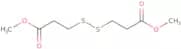
CAS:3,3'-Dithiodipropionic acid dimethyl ester is a reactive chemical that can be used as a cross-linking agent. When reacted with an amine group in a protein, the amine is converted to an amide bond and the amino acid becomes covalently attached to the protein. 3,3'-Dithiodipropionic acid dimethyl ester reacts with chloride ions or hydrochloric acid to form a disulfide bond between two proteins. This product is also used as a polymerization initiator for polymers and can be used in the synthesis of hyaluronic acid. 3,3'-Dithiodipropionic acid dimethyl ester has been shown to react with sodium citrate and osmosis to produce sodium hydroxide solution.Formula:C8H14O4S2Purity:Min. 97%Color and Shape:Colorless Clear LiquidMolecular weight:238.33 g/molAmyloid β-Protein (1-40) (scrambled) trifluoroacetate salt
CAS:Please enquire for more information about Amyloid beta-Protein (1-40) (scrambled) trifluoroacetate salt including the price, delivery time and more detailed product information at the technical inquiry form on this pageFormula:C194H295N53O58SPurity:Min. 95%Molecular weight:4,329.81 g/molH-Arg-Phe-Ala-OH acetate salt
CAS:Please enquire for more information about H-Arg-Phe-Ala-OH acetate salt including the price, delivery time and more detailed product information at the technical inquiry form on this pageFormula:C18H28N6O4Purity:Min. 95%Molecular weight:392.45 g/mol(Val5)-Angiotensin I trifluoroacetate salt
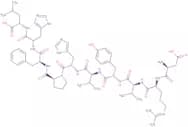
CAS:Angiotensin I is a peptide that belongs to the class of substances called angiotensins. This substance is found in many tissues and organs, including the brain, adrenal gland, and lung. Angiotensin I has been shown to be a pressor agent and also has biochemical effects on amino acid composition. The c-terminal sequence of this substance has been determined by incubating the molecule with pepsin at different pH values. The molecular weight of this substance is 938 Da and it has an amino acid composition of Asp-Arg-Val-Tyr-Val-His-Pro-Phe-His-Leu.Formula:C61H87N17O14Purity:Min. 95%Molecular weight:1,282.45 g/molNeuronostatin-19 (mouse, rat) trifluoroacetate salt
Please enquire for more information about Neuronostatin-19 (mouse, rat) trifluoroacetate salt including the price, delivery time and more detailed product information at the technical inquiry form on this pageFormula:C91H153N29O26Purity:Min. 95%Molecular weight:2,069.37 g/mol(7-Diethylaminocoumarin-3-yl)carbonyl-Amyloid b-Protein (1-40) trifluoroacetate salt
CAS:<p>Please enquire for more information about (7-Diethylaminocoumarin-3-yl)carbonyl-Amyloid b-Protein (1-40) trifluoroacetate salt including the price, delivery time and more detailed product information at the technical inquiry form on this page</p>Formula:C208H308N54O61SPurity:Min. 95%Molecular weight:4,573.06 g/molFmoc-L-glutamic acid gamma-methyl ester
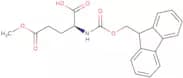
CAS:<p>Please enquire for more information about Fmoc-L-glutamic acid gamma-methyl ester including the price, delivery time and more detailed product information at the technical inquiry form on this page</p>Formula:C21H21NO6Purity:Min. 95%Molecular weight:383.39 g/mol