Carboxylic Acids
Carboxylic acids are organic molecules characterized by having a carboxyl-type functional group (-COOH). These acids are fundamental in various chemical reactions, including esterification, amidation, and decarboxylation. Carboxylic acids are widely used in the production of pharmaceuticals, polymers, and agrochemicals. In this section, you can find a large number of carboxylic acids ready to be used. At CymitQuimica, we provide a broad range of high-quality carboxylic acids to support your research and industrial applications.
Found 12453 products of "Carboxylic Acids"
Sort by
Purity (%)
0
100
|
0
|
50
|
90
|
95
|
100
[4-(1-Cyano-1-methylethyl)phenyl]boronic acid
CAS:<p>Please enquire for more information about [4-(1-Cyano-1-methylethyl)phenyl]boronic acid including the price, delivery time and more detailed product information at the technical inquiry form on this page</p>Formula:C10H12BNO2Purity:Min. 95%Molecular weight:189.02 g/molUroguanylin Topoisomer A (human) trifluoroacetate salt
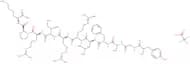
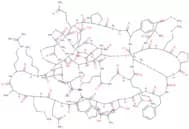
CAS:<p>Trifluoroacetate salt</p>Formula:C64H102N18O26S4Purity:Min. 95%Molecular weight:1,667.86 g/mol3-Fluoro-4-nitrobenzoic acid
CAS:<p>3-Fluoro-4-nitrobenzoic acid is an organic solvent that is used as a reagent in the synthesis of peptidomimetics. 3-Fluoro-4-nitrobenzoic acid has been shown to be a nucleophilic addition agent, which can react with serine proteases in the presence of benzamidine. This reaction results in the formation of an amide bond between the amino group and carboxylic acid moiety of the serine protease, thereby inhibiting its activity. 3-Fluoro-4-nitrobenzoic acid is also used as a synthetic intermediate for peptides and other organic compounds.</p>Formula:C7H4FNO4Purity:Min. 95%Color and Shape:PowderMolecular weight:185.11 g/mol(Des-Gly10,D-Trp3,D-Leu6,Pro-NHEt 9)-LHRH trifluoroacetate salt
<p>Please enquire for more information about (Des-Gly10,D-Trp3,D-Leu6,Pro-NHEt 9)-LHRH trifluoroacetate salt including the price, delivery time and more detailed product information at the technical inquiry form on this page</p>Formula:C59H84N16O12Purity:Min. 95%Molecular weight:1,209.4 g/mol4-Fluorobenzoic acid
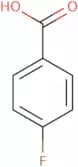
CAS:<p>4-Fluorobenzoic acid is a chemical compound with the molecular formula C6H4FO2 and is a member of the group of chemicals known as carboxylic acids. It has been shown to have high levels of antibacterial activity against Gram-positive bacteria, including methicillin-resistant Staphylococcus aureus (MRSA). 4-Fluorobenzoic acid can be used for wastewater treatment and also has the potential to be used in other applications such as an antimicrobial agent or an additive in food packaging. The mechanism of its antibacterial activity is not well understood but may be related to its ability to inhibit the enzyme diphenolase, which catalyzes the conversion of phenols into quinones.</p>Formula:C7H5FO2Purity:Min. 95%Color and Shape:White To Yellow SolidMolecular weight:140.11 g/mol(D-Arg0, Hyp 3,Igl5,D-Igl7, Oic 8)-Bradykinin trifluoroacetate salt
CAS:<p>Please enquire for more information about (D-Arg0, Hyp 3,Igl5,D-Igl7, Oic 8)-Bradykinin trifluoroacetate salt including the price, delivery time and more detailed product information at the technical inquiry form on this page</p>Formula:C64H95N19O13Purity:Min. 95%Molecular weight:1,338.56 g/molDL-4-Hydroxymandelic acid
CAS:<p>DL-4-Hydroxymandelic acid is a phenolic acid that belongs to the family of organic acids. It is synthesized from 4-hydroxyphenylpyruvate and p-hydroxybenzoic acid by an enzyme called hydroxylase in the liver. The frequency shift in DL-4-Hydroxymandelic acid is caused by the hydrogen bonding between its hydroxyl group and pyran ring. This reaction occurs spontaneously, with no need for a catalyst or a change in pH. The reaction mechanism starts with the addition of water to the molecule, which results in an intermediate that breaks down into two molecules of formaldehyde and one molecule of formate. The reaction solution was found to be acidic because it contained H+ ions (H+).</p>Formula:C8H8O4Purity:Min. 95%Color and Shape:PowderMolecular weight:168.15 g/mol(2-(2-Methoxyethoxy)ethoxy)acetic acid
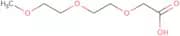
CAS:<p>2-(2-Methoxyethoxy)ethoxy)acetic acid (MEAA) is a cell stabilizer that can be used in the treatment of cancer, diabetes, and other diseases. MEAA has been shown to inhibit the growth of cells by binding to and stabilizing the cytoskeleton through inhibition of protein synthesis. It also prevents the activation of pro-inflammatory cytokines and reactive oxygen species. MEAA's magnetic resonance spectroscopy properties have been studied in detail and it has been shown to bind well with silver ions. MEAA has also been shown to have high cytotoxicity when combined with laser ablation therapy.</p>Formula:C7H14O5Purity:90%Color and Shape:Clear LiquidMolecular weight:178.18 g/molDynorphin A (1-8) acetate salt
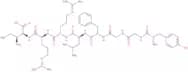
CAS:<p>Dynorphin A (1-8) acetate salt H-Tyr-Gly-Gly-Phe-Leu-Arg-Arg-Ile-OH acetate salt is a synthetic, nonpeptide opioid agonist. It binds to the delta receptor and inhibits nociception in the central nervous system. This compound has been shown to produce acute phase and subchronic toxicity in rats and has been shown to possess antinociceptive effects in mice. Dynorphin A (1-8) acetate salt H-Tyr-Gly-Gly-Phe-Leu-Arg-Arg-Ile-OH acetate salt has also been shown to antagonize the enzyme inhibitors of phospholipase A2, cyclooxygenase, and lipoxygenase.<br>MECHANISM OF ACTION: Dynorphin A (1–8) is an endogenous peptide that modulates neurotransmission at the</p>Formula:C46H72N14O10Purity:Min. 95%Molecular weight:981.15 g/molMca-(Ala7,Lys(Dnp)9)-Bradykinin trifluoroacetate salt
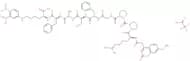
CAS:<p>Please enquire for more information about Mca-(Ala7,Lys(Dnp)9)-Bradykinin trifluoroacetate salt including the price, delivery time and more detailed product information at the technical inquiry form on this page</p>Formula:C66H81N15O19Purity:Min. 95%Molecular weight:1,388.44 g/molChlorotoxin trifluoroacetate salt
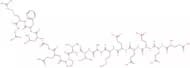
CAS:<p>Chlorotoxin trifluoroacetate salt is a chlorotoxin derivative that has been modified to be more soluble in aqueous solutions. It is used to identify skin cancer and other forms of cancer, as well as for the study of cellular function and structure. The molecule can be injected into tissue or cells, where it binds to nuclei and causes cell death. Chlorotoxin trifluoroacetate salt has minimal toxicity in humans and can be used on histological specimens with little disruption to the tissue. This reagent may also be used to target intracellular targets such as glioma cells.</p>Formula:C158H249N53O47S11Purity:Min. 95%Molecular weight:3,995.72 g/molH-Val-Lys-Lys-Arg-OH acetate salt
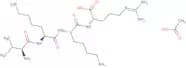
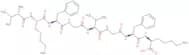
CAS:Controlled Product<p>Please enquire for more information about H-Val-Lys-Lys-Arg-OH acetate salt including the price, delivery time and more detailed product information at the technical inquiry form on this page</p>Formula:C23H47N9O5Purity:Min. 95%Molecular weight:529.68 g/molZ-Val-Arg-Pro-DL-Arg-fluoromethylketone trifluoroacetate salt
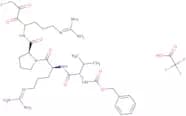
CAS:<p>Please enquire for more information about Z-Val-Arg-Pro-DL-Arg-fluoromethylketone trifluoroacetate salt including the price, delivery time and more detailed product information at the technical inquiry form on this page</p>Formula:C31H49FN10O6Purity:Min. 95%Molecular weight:676.78 g/molH1-7 acetate salt
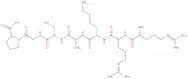
CAS:<p>H1-7 acetate salt H-Arg-Arg-Lys-Ala-Ser-Gly-Pro-OH acetate salt is a synthetic, ternary complex of the amino acid histidine, arginine and lysine. It has been shown to inhibit β lactamase enzymes that are responsible for the hydrolysis of penicillin, cephalosporin, and monobactam antibiotics. The inhibition is due to the hydrophobic nature of the substrate binding site on β lactamase. This binding prevents the enzyme from hydrolyzing its substrate and inactivates it. In addition, H1-7 acetate salt H-Arg-Arg-Lys-Ala-Ser-Gly-Pro-OH acetate salt binds to calcium ions and has been shown to have a kinetic effect on β lactamases.</p>Formula:C31H58N14O9Purity:Min. 95%Molecular weight:770.88 g/molSyntide 2 trifluoroacetate salt
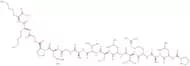
CAS:<p>Syntide 2 is a diacylglycerol, which has been found to have a number of biochemical properties. It is an activator of protein kinase C and has been shown to be reactive in vitro assays. Syntide 2 has also been found to activate the light chain kinase in plant physiology. This compound has also been shown to promote neuronal death and may have a role in transcriptional regulation. Syntide 2 is used as a model system for studying the physiological function of α subunit-containing proteins.</p>Formula:C68H122N20O18Purity:Min. 95%Molecular weight:1,507.82 g/molε-Maleimidocaproic acid-(2-nitro-4-sulfo)-phenyl ester·sodium salt
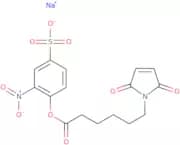
CAS:<p>Epsilon-Maleimidocaproic acid-(2-nitro-4-sulfo)-phenyl ester·sodium salt (EMAP) is a crosslinker that belongs to the group of heterobifunctional reagents. It has been used to conjugate monoclonal antibodies with other molecules, such as toxins. EMAP is activated by the dianion generated by protonation of the nitro groups on the phenyl ring and reacts with free amines or thiols in proteins. EMAP can be used for labeling immunotoxins for diagnostic use, maximizing detection sensitivity, and crosslinking DNA molecules for use in molecular cloning experiments.</p>Formula:C16H15N2NaO9SPurity:Min. 95%Molecular weight:434.35 g/mol3-Maleimidophenyl boronic acid
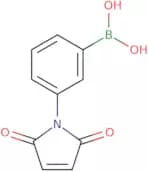
CAS:<p>Please enquire for more information about 3-Maleimidophenyl boronic acid including the price, delivery time and more detailed product information at the technical inquiry form on this page</p>Formula:C10H8NO4BPurity:Min. 95%Molecular weight:216.99 g/molp-Sulfophenylazochromotropic acid trisodium salt
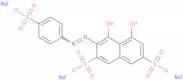
CAS:<p>p-Sulfophenylazochromotropic acid trisodium salt is a chemical that can be used as a building block for the synthesis of various organic compounds. It is an intermediate for the synthesis of other chemicals and can be used as a research chemical in laboratories. This compound has been shown to be useful in the production of pharmaceuticals, agrochemicals, and dyes. CAS No. 23647-14-5.</p>Formula:C16H9N2Na3O11S3Purity:Min. 95 Area-%Color and Shape:Yellow PowderMolecular weight:570.42 g/mol5,7-Dimethyl-[1,2,4]triazolo[1,5-a]pyrimidine-2-carboxylic acid
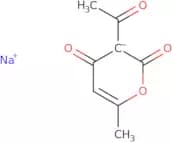
CAS:<p>Please enquire for more information about 5,7-Dimethyl-[1,2,4]triazolo[1,5-a]pyrimidine-2-carboxylic acid including the price, delivery time and more detailed product information at the technical inquiry form on this page</p>Formula:C8H8N4O2Purity:Min. 95%Molecular weight:192.17 g/molDehydroacetic acid sodium salt
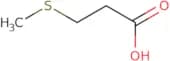
CAS:<p>Dehydroacetic acid sodium salt is a chemical compound with the formula CH3COOCH2NaO2. It is an ionic liquid that can be used as a preservative or stabilizer in foods and other products. Dehydroacetic acid sodium salt has been shown to inhibit the growth of bacteria and fungi in biological studies. The analytical method for dehydroacetic acid sodium salt is based on x-ray diffraction data, which is used to identify its purity and concentration. The reaction solution includes dehydroacetic acid, water vapor, sodium salts, phosphorus pentoxide, and control analysis.</p>Formula:C8H7O4NaPurity:Min. 95%Color and Shape:PowderMolecular weight:190.13 g/mol3-Methylthiopropionic acid
CAS:<p>3-Methylthiopropionic acid is a bacterial metabolite that can serve as an alternative carbon source for the production of amino acids. 3-Methylthiopropionic acid is used to study the effect of matrix on enzyme activities, and has been shown to have protein-binding properties. The compound also serves as a precursor in the synthesis of tiglic acid, which is a lysine precursor. 3-Methylthiopropionic acid has been found to be effective in slowing the growth of cancer cells. It has been shown to inhibit fatty acid synthesis, and may also inhibit methionine synthetase activity and cell proliferation.</p>Formula:C4H8O2SPurity:Min. 95%Color and Shape:Colourless To Pale Yellow LiquidMolecular weight:120.17 g/molα-Helical CRF (9-41) trifluoroacetate salt
CAS:<p>Please enquire for more information about Alpha-Helical CRF (9-41) trifluoroacetate salt including the price, delivery time and more detailed product information at the technical inquiry form on this page</p>Formula:C166H274N46O53S2Purity:Min. 95%Molecular weight:3,826.36 g/mol4-Hydroxy-1,3-benzenedisulfonic acid
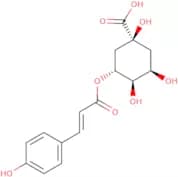
CAS:<p>4-Hydroxy-1,3-benzenedisulfonic acid (4HBDS) is a reactive molecule that is used as a model system for the study of chain reactions. 4HBDS does not undergo hydrolysis or oxidation and is stable in water. It can be prepared by the reaction of nitrate with acetate extract and has been shown to react with diazonium salts to form an analytical method for nitrite ion. 4HBDS reacts with hydrochloric acid to generate proton and significant interactions are observed at pH values between 1 and 3.</p>Purity:Min. 95%3-p-Coumaroylquinic acid
CAS:<p>3-p-Coumaroylquinic acid is a natural compound found in plants. It has been shown to have antibacterial properties and can be used as an alternative to antibiotics for the treatment of opportunistic fungal infections. 3-p-Coumaroylquinic acid exhibits hypoglycemic activity, which may be due to its ability to inhibit glucose absorption by the gut. This compound can also be analyzed using a surface methodology that involves analyzing the surface of an object with a chemical reagent.</p>Formula:C16H18O8Purity:Min. 95%Color and Shape:PowderMolecular weight:338.31 g/mol(Ala11,D-Leu15)-Orexin B (human) trifluoroacetate salt
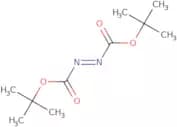
CAS:<p>Please enquire for more information about (Ala11,D-Leu15)-Orexin B (human) trifluoroacetate salt including the price, delivery time and more detailed product information at the technical inquiry form on this page</p>Formula:C120H206N44O35SPurity:Min. 95%Molecular weight:2,857.26 g/molDi-tert-butyl azodicarboxylate
CAS:<p>Di-tert-butyl azodicarboxylate (DTBA) is an organic compound that is used in organic synthesis as a dienophile. DTBA reacts with various electrophiles to form dihydro derivatives through a transfer mechanism, which can be monitored by the change in magnetic resonance spectroscopy signals. The reaction of DTBA with trifluoroacetic acid and hydrogen chloride forms the desired product, 3-amino-2,4,6-trichloropyridine. DTBA is also used for the synthesis of 1,4-dihydropyridines from 2-aminobenzene derivatives and bromoacetaldehyde diethyl acetal. This process is catalyzed by palladium on carbon. DTBA is asymmetric at position C5 and C6 because it has two chiral centers: one at C3 and one at C5 or C6. The use of this reagent allows for the scalable</p>Formula:C10H18N2O4Purity:Min. 98%Color and Shape:PowderMolecular weight:230.26 g/mol(D-Trp12,Tyr34)-pTH (7-34) amide (bovine) trifluoroacetate salt
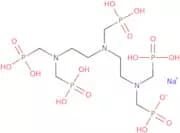
CAS:<p>Please enquire for more information about (D-Trp12,Tyr34)-pTH (7-34) amide (bovine) trifluoroacetate salt including the price, delivery time and more detailed product information at the technical inquiry form on this page</p>Formula:C165H251N49O40S2Purity:Min. 95%Molecular weight:3,625.2 g/molDiethylenetriaminepenta(methylenephosphonic acid) sodiumsalt
CAS:<p>Diethylenetriaminepenta(methylenephosphonic acid) sodium salt (DTPMP) is a substance that can be found in the environment. It is toxic to living organisms and may cause toxic effects if it is swallowed or inhaled. DTPMP has been classified as a toxic substance by the United States Environmental Protection Agency (EPA).</p>Formula:C9H18N3Na10O15P5Purity:Min. 95%Color and Shape:LiquidMolecular weight:793.02 g/mol4-(3-(Trifluoromethyl)-3H-diazirin-3-yl)benzoic acid
CAS:<p>4-(3-(Trifluoromethyl)-3H-diazirin-3-yl)benzoic acid is a diazirine that is used to form copper complexes. These complexes are then used as diagnostic agents for the detection of nucleic acids in biological samples, such as wheat germ and human tissue. 4-(3-(Trifluoromethyl)-3H-diazirin-3-yl)benzoic acid may also be used in the production of polymer films. It has been shown to have a dihedral angle (C), which is an important factor in the properties of surfactants. The properties of 4-(3-(Trifluoromethyl)-3H-diazirin-3-yl)benzoic acid depend on its functional groups, fatty acids, and dimethylformamide content.</p>Formula:C9H5F3N2O2Purity:Min. 95%Color and Shape:White/Off-White SolidMolecular weight:230.14 g/molH-Lys-Cys-Thr-Cys-Cys-Ala-OH trifluoroacetate salt
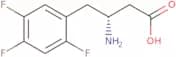
CAS:<p>H-Lys-Cys-Thr-Cys-Cys-Ala-OH trifluoroacetate salt (KCTA) is a peptide that belongs to the group of thioneins and is characterized by a high content of lysine, cysteine and histidine residues. This peptide has been shown to be effective in treating subcutaneous tumors in mice. KCTA binds to metallothionein and gamma amino butyric acid (GABA), which are proteins that regulate energy metabolism in cells. KCTA has also been shown to have antimicrobial effects against human serum, which may be due to its ability to bind with thionein.</p>Formula:C22H41N7O8S3Purity:Min. 95%Molecular weight:627.8 g/mol(R)-3-Amino-4-(2,4,5-trifluorophenyl)butyric acid
CAS:<p>(R)-3-Amino-4-(2,4,5-trifluorophenyl)butyric acid is an antibacterial agent that inhibits the enzyme acetylcholine esterase. This inhibition prevents the breakdown of acetylcholine, leading to increased levels of this neurotransmitter in the brain and an enhancement of cholinergic transmission. (R)-3-Amino-4-(2,4,5-trifluorophenyl)butyric acid has been shown to be effective against bacterial strains resistant to β-lactam antibiotics. The synthesis of taxol as well as other β-amino acids has been demonstrated using a variety of enzymatic methods. A reaction scheme for the synthesis of nicotinic acetylcholine has also been proposed. (R)-3-Amino-4-(2,4,5-trifluorophenyl)butyric acid is a dipept</p>Formula:C10H10F3NO2Purity:Min. 95%Color and Shape:PowderMolecular weight:233.19 g/molNeurokinin B trifluoroacetate salt
CAS:<p>Neurokinin B trifluoroacetate salt H-Asp-Met-His-Asp-Phe-Phe-Val-Gly-Leu-Met-NH2 trifluoroacetate salt is a synthetic peptide that is a potent and selective antagonist of the NMDA receptor. Neurokinin B trifluoroacetate salt H-Asp-Met-His-Asp-Phe-Phe-Val-Gly-Leu-Met NH2 trifluoroacetate salt has been shown to be effective in animal models of chronic pain, neuropathic pain, and bone age delay. This synthetic peptide has also been shown to be effective in the treatment of squamous cell carcinoma and acid lesions in human subjects. The molecular weight of this compound is 624.6 g/mol.br><br>Neurokinin B trifluoroacetate salt H Asp Met His Asp P</p>Formula:C55H79N13O14S2Purity:Min. 95%Molecular weight:1,210.43 g/molOsteostatin (1-5) (human, bovine, dog, horse, mouse, rabbit, rat) trifluoroacetate salt
CAS:<p>Please enquire for more information about Osteostatin (1-5) (human, bovine, dog, horse, mouse, rabbit, rat) trifluoroacetate salt including the price, delivery time and more detailed product information at the technical inquiry form on this page</p>Formula:C27H41N9O8Purity:Min. 95%Molecular weight:619.67 g/molCalcium-Like Peptide 3 trifluoroacetate salt
CAS:<p>Please enquire for more information about Calcium-Like Peptide 3 trifluoroacetate salt including the price, delivery time and more detailed product information at the technical inquiry form on this page</p>Formula:C44H68N10O9Purity:Min. 95%Molecular weight:881.07 g/molPancreastatin (33-48) (human) trifluoroacetate salt
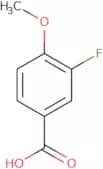
CAS:<p>Pancreastatin (33-48) is a synthetic, acidic, sulfated peptide that has been shown to have high activity against pancreatic cancer cells. Pancreastatin (33-48) has been synthesized by reacting an oligopeptide with glutamic acid and aspartic acid. The N-terminal of this peptide is amidated and contains a sulfate group. This molecule has been purified by SDS-polyacrylamide gel electrophoresis and the sulfate fractionation method. Pancreastatin (33-48) is able to inhibit the proliferation of pancreatic tumor cells in vitro, but it does not appear to be cytotoxic to normal pancreatic cells. In addition, pancreastatin (33-48) has also been shown to decrease tumor growth in vivo in mice bearing a transplanted human pancreatic tumor.</p>Formula:C78H123N21O27SPurity:Min. 95%Molecular weight:1,819 g/mol3-Fluoro-4-methoxybenzoic acid
CAS:<p>3-Fluoro-4-methoxybenzoic acid is a dipolar molecule with a fluorine atom. It has been synthesized experimentally and the yields are determined by the experimental conditions. 3-Fluoro-4-methoxybenzoic acid has two isomers, which can be differentiated by their resonances. The molecule also has an asymmetric C3(CF)2Cl group in the middle of its structure that can rotate freely.</p>Formula:C8H7FO3Purity:Min. 95%Color and Shape:PowderMolecular weight:170.14 g/mol3-Pyridineboronic acid
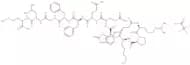
CAS:<p>3-Pyridineboronic acid is an antimicrobial agent that is used to treat bacterial and fungal infections. 3-Pyridineboronic acid is a prodrug that is metabolized to its active form, pyridinium boronate. This drug has been shown to be effective in the treatment of hypoxic tumors in mice, which are resistant to other anticancer drugs. 3-Pyridineboronic acid also has acidic properties and can be used as an antiseptic for the treatment of skin and eye infections. It can also be used as a hydrogen bonding partner when combined with halides, such as chloride or bromide ions. The drug binds to human serum proteins and forms an acidic complex that prevents bacterial growth by inhibiting protein synthesis. 3-Pyridineboronic acid also inhibits prostate cancer cells by competitively inhibiting the enzyme 4-pyridinylboronic acid reductase (4PBAR).</p>Formula:C5H6BNO2Purity:Min. 95%Molecular weight:122.92 g/molBiotinyl-Substance P trifluoroacetate salt
CAS:<p>Biotinyl-Substance P trifluoroacetate salt Biotinyl-Arg-Pro-Lys-Pro-Gln-Gln-Phe-Phe-Gly-Leu-Met-NH2 trifluoroacetate salt is a biotin conjugated Substance P analog. It is designed to bind to the amino acid sequences in the brain that are responsible for controlling and regulating pain. The drug's amino acid sequence was designed by accessing databases of amino acid sequences from all known organisms. The drug is administered as a sequence of cassettes, each containing an acid molecule that can be transferred to cells through nucleotide transfer.</p>Formula:C73H112N20O15S2Purity:Min. 95%Molecular weight:1,573.93 g/molDSP
CAS:<p>DSP is a widely used disulfide crosslinker in ADC synthesis. It forms reversible conjugates via intracellular reduction, enabling payload release.</p>Formula:C14H16N2O8S2Purity:Min. 95%Color and Shape:SolidMolecular weight:404.42 g/molMethyl diethylphosphonoacetate
CAS:<p>Methyl diethylphosphonoacetate is a chemical compound that contains a hydroxy group, an alkynyl group and a disulfide bond. It is used as a control agent in the production of polyurethane foams, and has also been shown to inhibit the growth of bladder cancer cells. The UV absorption peak at 220 nm can be used to identify this chemical compound. Methyl diethylphosphonoacetate reacts with proton to form diethylphosphonoacetate, which then undergoes an elimination reaction with fatty acids to form aliphatic hydrocarbons. This reaction mechanism was first proposed by Stork and co-workers in 1960. Methyl diethylphosphonoacetate also binds to thrombin receptor, which may lead to anti-inflammatory effects.</p>Formula:C7H15O5PPurity:Min. 95%Molecular weight:210.16 g/molMca-Gly-Lys-Pro-Ile-Leu-Phe-Phe-Arg-Leu-Lys(Dnp)-D-Arg-NH2 trifluoroacetate salt
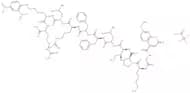
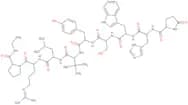
CAS:<p>Please enquire for more information about Mca-Gly-Lys-Pro-Ile-Leu-Phe-Phe-Arg-Leu-Lys(Dnp)-D-Arg-NH2 trifluoroacetate salt including the price, delivery time and more detailed product information at the technical inquiry form on this page</p>Formula:C85H122N22O19Purity:Min. 95%Molecular weight:1,756.02 g/mol(Des-Gly10,tBu-D-Gly6,Pro-NHEt 9)-LHRH trifluoroacetate
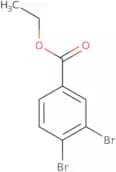
CAS:<p>(Des-Gly10, tBu-D-Gly6,Pro-NHEt 9)-LHRH trifluoroacetate salt Pyr-His-Trp-Ser-Tyr-tBu-D-Gly-Leu-Arg-Pro-NHEt trifluoroacetate salt is a synthetic hormone that is the active form of luteinizing hormone releasing hormone (LHRH), a gonadotropin releasing hormone (GnRH). It has been used in the diagnosis and treatment of prostate cancer. The drug is also used to treat endometriosis and other conditions. It can be administered by injection or as an intranasal spray. The drug inhibits follicular growth and fertility by downregulating estradiol benzoate production.</p>Formula:C59H84N16O12•(C2HF3O2)xPurity:Min. 95%Color and Shape:PowderMolecular weight:1,209.4 g/mol3,4-Dibromobenzoic acid ethyl ester
CAS:<p>3,4-Dibromobenzoic acid ethyl ester is a high quality reagent that can be used as an intermediate for the synthesis of complex compounds. It is also useful as a building block for the synthesis of speciality chemicals and research chemicals. 3,4-Dibromobenzoic acid ethyl ester can be used in reactions such as Friedel-Crafts reactions, reducing reactions, and condensations. This chemical is a versatile building block that can be used to construct organic molecules with diverse structures. 3,4-Dibromobenzoic acid ethyl ester is a fine chemical with CAS number 60469-88-7.</p>Formula:C9H8Br2O2Purity:Min. 95%Molecular weight:307.97 g/mol(Tyr9)-β-MSH (porcine) trifluoroacetate salt
CAS:<p>Please enquire for more information about (Tyr9)-beta-MSH (porcine) trifluoroacetate salt including the price, delivery time and more detailed product information at the technical inquiry form on this page</p>Formula:C101H140N24O30SPurity:Min. 95%Molecular weight:2,202.4 g/mol(His(3-Me)2)-TRH trifluoroacetate salt
CAS:<p>Please enquire for more information about (His(3-Me)2)-TRH trifluoroacetate salt including the price, delivery time and more detailed product information at the technical inquiry form on this page</p>Formula:C17H24N6O4Purity:Min. 95%Molecular weight:376.41 g/mol(R)-3-[((tert-Butoxy)carbonyl)amino]-4-(2,5-difluorophenyl)butanoic acid
CAS:<p>Please enquire for more information about (R)-3-[((tert-Butoxy)carbonyl)amino]-4-(2,5-difluorophenyl)butanoic acid including the price, delivery time and more detailed product information at the technical inquiry form on this page</p>Formula:C15H19F2NO4Purity:Min. 95%Molecular weight:315.31 g/mol(Des-Gly10,D-Ser4,D-Ser(tBu)6,Pro-NHEt 9)-LHRH acetate salt
<p>Please enquire for more information about (Des-Gly10,D-Ser4,D-Ser(tBu)6,Pro-NHEt 9)-LHRH acetate salt including the price, delivery time and more detailed product information at the technical inquiry form on this page</p>Formula:C60H86N16O13Purity:Min. 95%Molecular weight:1,239.42 g/mol(D-Ala3)-Dynorphin A (1-11) amide trifluoroacetate salt
CAS:<p>Please enquire for more information about (D-Ala3)-Dynorphin A (1-11) amide trifluoroacetate salt including the price, delivery time and more detailed product information at the technical inquiry form on this page</p>Formula:C64H106N22O12Purity:Min. 95%Molecular weight:1,375.67 g/mol2,7-Naphthalenedisulfonic acid disodium salt
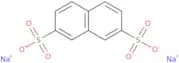
CAS:<p>2,7-Naphthalenedisulfonic acid disodium salt is a heteronuclear molecule that is synthesized by the reaction of 2,7-naphthalenedisulfonyl chloride with sodium sulfite in water. It has been used in the manufacture of dyes and pigments, as a corrosion inhibitor for steel and aluminum, and as an intermediate in the synthesis of pharmaceuticals. The compound has been detected in groundwater samples at concentrations up to 10 mg/L. The compound is also found in geothermal waters at concentrations up to 0.6 mg/L.</p>Formula:C10H6Na2O6S2Purity:Min. 95%Molecular weight:332.26 g/molChromone-2-carboxylic acid
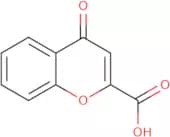
CAS:<p>Chromone-2-carboxylic acid is a hydrochloric acid analog that is a prodrug for the formation of the active metabolite chromone-2,4-dihydroxybenzoic acid. Chromone-2-carboxylic acid has been shown to have anti-inflammatory properties in vitro and in vivo. It has also been shown to inhibit leukotriene synthesis by blocking the binding of LTC4 to its receptor.</p>Formula:C10H6O4Purity:Min. 95%Molecular weight:190.15 g/mol
![[4-(1-Cyano-1-methylethyl)phenyl]boronic acid](/_next/image/?url=https%3A%2Fstatic.cymitquimica.com%2Fproducts%2F3D%2Fthumb-webp%2FFC121870.webp&w=3840&q=75)

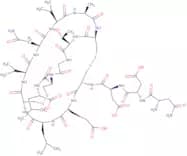




![5,7-Dimethyl-[1,2,4]triazolo[1,5-a]pyrimidine-2-carboxylic acid](/_next/image/?url=https%3A%2Fstatic.cymitquimica.com%2Fproducts%2F3D%2Fthumb-webp%2FFD12883.webp&w=3840&q=75)












![(R)-3-[((tert-Butoxy)carbonyl)amino]-4-(2,5-difluorophenyl)butanoic acid](/_next/image/?url=https%3A%2Fstatic.cymitquimica.com%2Fproducts%2F3D%2Fthumb-webp%2FFB103971.webp&w=3840&q=75)