Carboxylic Acids
Carboxylic acids are organic molecules characterized by having a carboxyl-type functional group (-COOH). These acids are fundamental in various chemical reactions, including esterification, amidation, and decarboxylation. Carboxylic acids are widely used in the production of pharmaceuticals, polymers, and agrochemicals. In this section, you can find a large number of carboxylic acids ready to be used. At CymitQuimica, we provide a broad range of high-quality carboxylic acids to support your research and industrial applications.
Found 12453 products of "Carboxylic Acids"
Sort by
Purity (%)
0
100
|
0
|
50
|
90
|
95
|
100
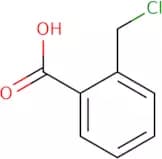
2-(Chloromethyl)benzoic acid
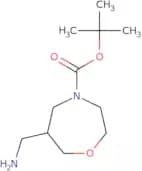
CAS:<p>2-(Chloromethyl)benzoic acid (CMBA) is a reactive chemical that can be used as an oxidant or a carbanion. CMBA is activated by sulfinyl, alicyclic, and sulfoxides, which are organic compounds with one or more sulfur atoms. These reactions may be either alkylation or condensation reactions. The activated CMBA can then react with chlorine to form chlorinated products. This reaction can be catalyzed by low energy sources, such as light or heat.</p>Formula:C8H7ClO2Purity:Min. 95%Color and Shape:PowderMolecular weight:170.59 g/moltert-Butyl 6-(aminomethyl)-1,4-oxazepane-4-carboxylate
CAS:<p>Please enquire for more information about tert-Butyl 6-(aminomethyl)-1,4-oxazepane-4-carboxylate including the price, delivery time and more detailed product information at the technical inquiry form on this page</p>Formula:C11H22N2O3Purity:Min. 95%Molecular weight:230.3 g/mol1,2,3,4-Tetrahydro-1-naphthoic acid
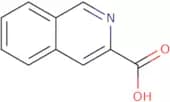
CAS:<p>Tetrahydro-1-naphthoic acid is a toxic chemical that is used in the synthesis of various organic compounds. It is an organic acid that has a pungent odor and can cause irritation of the nose and throat. When heated, it evolves toxic fumes of hydrogen chloride gas and phosgene. Tetrahydro-1-naphthoic acid reacts with metal hydroxides to form metal tetrahydro-1-naphthoates, which have useful properties as catalysts in organic reactions. Tetrahydro-1-naphthoic acid has been used as a growth regulator in plants and animals. It binds to DNA at the C–H site, preventing protein synthesis and cell division by inhibiting RNA synthesis.</p>Formula:C11H12O2Purity:Min. 95%Molecular weight:176.21 g/mol3-Isoquinolinecarboxylic acid
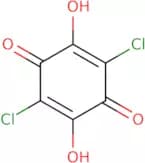
CAS:<p>3-Isoquinolinecarboxylic acid is a molecule with a reactive group that can form cyclic structures. It has been shown that 3-Isoquinolinecarboxylic acid is an apoptotic agent in human macrophages and induces the release of picolinic acid from these cells. This molecule also has a high affinity for α7 nicotinic acetylcholine receptors, which are present on the surface of nerve cells. 3-Isoquinolinecarboxylic acid can be synthesized by condensing picolinic acid, an aromatic aminoacid, with an appropriate amine. The synthesis of this heterocycle is catalyzed by an enzyme called quinolinate synthase. The product of this reaction is oxidized to form 3-isoquinolyl carboxylic acid. The final step in the synthesis involves the oxidative cleavage of a disulfide bond using hydrogen peroxide, yielding 3-isoquinoly</p>Formula:C10H7NO2Purity:Min. 95%Molecular weight:173.17 g/molChloranilic acid
CAS:<p>Chloranilic acid is a thermally unstable compound that undergoes a number of reactions with the addition of heat. It reacts with nitrogen atoms to form amides, nitriles, and nitro compounds. Chloranilic acid also reacts with polymerases to form stable complexes. The proton at the center of the chloranilic acid molecule is lost when it forms an acid complex. This reaction occurs in aqueous solution as well as in biological systems, where it is used for hydrogen bonding interactions. The stable complexes that are formed by chloranilic acid have been shown to have biological properties such as antimicrobial activity, antiviral activity, and antifungal activity.</p>Formula:C6H2Cl2O4Purity:Min. 95%Color and Shape:Orange To Red SolidMolecular weight:208.98 g/mol2-[2-(1H-Indol-3-yl)ethyl]-1,3-dioxoisoindoline-5-carboxylic acid
CAS:Controlled Product<p>Please enquire for more information about 2-[2-(1H-Indol-3-yl)ethyl]-1,3-dioxoisoindoline-5-carboxylic acid including the price, delivery time and more detailed product information at the technical inquiry form on this page</p>Formula:C19H14N2O4Purity:Min. 95%Molecular weight:334.33 g/mol(2,4-Dimethylphenyl)boronic acid
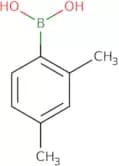
CAS:<p>(2,4-Dimethylphenyl)boronic acid is an arylboronic acid that is used in organic synthesis. The boron atom of the 2,4-dimethylphenyl group coordinates with the metal atom in the catalyst to form a stable complex. This allows for a multilayer reaction and fluorescence to occur. The activated fluorine atoms can be used to boost the reaction by adding them to the substrate and increasing the rate of oxidation. Astragalus membranaceus and rapeseed extracts have been shown to increase the rate of oxidation as well as inhibiting the formation of disaccharides. These extracts also have shown anti-inflammatory effects when tested on rats. (2,4-Dimethylphenyl)boronic acid has also been found to interact with dihydroisoquinolines, which are compounds that are structurally similar to morphine and codeine.</p>Formula:C8H11BO2Purity:Min. 95%Molecular weight:149.98 g/mol2-Ethoxyphenylboronic acid
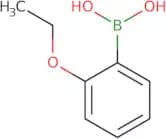
CAS:<p>Ethoxyphenylboronic acid is a triazine compound which inhibits inflammation by inhibiting the kinase that catalyzes the phosphorylation of arachidonic acid. It also inhibits lipid kinase, which is involved in the metabolism of lipids, and it has been shown to inhibit cancer cell growth through hydrogen bond interactions with DNA. Ethoxyphenylboronic acid has been shown to have anti-inflammatory properties and may be useful for the treatment of inflammatory diseases such as arthritis. The compound can also inhibit hydrogen peroxide-induced oxidative damage in cells, due to its ability to release intracellular glutathione.</p>Formula:C8H11BO3Purity:Min. 95%Molecular weight:165.98 g/mol4-Methyloctanoic acid
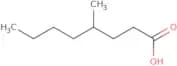
CAS:<p>4-Methyloctanoic acid is a fatty acid that is synthesized from adipose tissue in animals. It can be used as a matrix effect for the production of enantiopure chemical compounds by chemical ionization, and it has been used in magnetic resonance spectroscopy to analyze kinetic data. 4-Methyloctanoic acid has been shown to have a number of biological effects, including an ability to inhibit the growth of type strain bacteria such as Escherichia coli and Staphylococcus aureus. The synthesis pathway for 4-methyloctanoic acid is not known, but it may be derived from hydrogenated octanoic acid.</p>Formula:C9H18O2Purity:Min. 95%Color and Shape:Clear LiquidMolecular weight:158.24 g/molTricosafluorododecanoic Acid
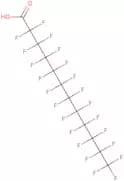
CAS:<p>Tricosafluorododecanoic Acid (TCDA) is a potent cytotoxic agent that has been shown to be effective in killing cancer cells. TCDA is a strong inducer of apoptosis and necrosis, which are processes that cause the death of cells. TCDA also induces cell cycle arrest by binding to mitochondrial membranes and inhibiting the flow of ions across the membrane, leading to a loss of mitochondrial membrane potential. This leads to an accumulation of intracellular calcium and activates signal pathways that activate the cell's death program. TCDA has been shown to have significant cytotoxicity against human breast cancer cells, with little toxicity against healthy human erythrocytes. TCDA is not active against bacteria or fungi, but it is highly toxic to certain protozoans such as Plasmodium falciparum. TCDA can be used as an effective treatment for cancer in combination with radiation therapy because it enhances the therapeutic effects of radiation on tum</p>Formula:C12HF23O2Purity:Min. 95%Molecular weight:614.1 g/moltert-Butyl 4-hydroxy-1-oxa-9-azaspiro[5.5]undecane-9-carboxylate
CAS:<p>Please enquire for more information about tert-Butyl 4-hydroxy-1-oxa-9-azaspiro[5.5]undecane-9-carboxylate including the price, delivery time and more detailed product information at the technical inquiry form on this page</p>Formula:C14H25NO4Purity:Min. 95%Molecular weight:271.35 g/molEthyl bromodifluoroacetate
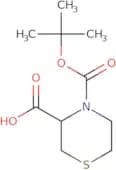
CAS:<p>Ethyl bromodifluoroacetate is a chemical substance that reacts with amines in the presence of copper to form a copper complex. It is used as an intermediate in the synthesis of organic compounds, such as pharmaceuticals. Ethyl bromodifluoroacetate is also used as a catalyst for cross-coupling reactions of organic molecules. This reaction requires low energy and can be performed under mild conditions. The asymmetric synthesis of ethyl bromodifluoroacetate requires few steps and only uses inexpensive starting materials. The carbonyl group is chemically stable, making it difficult to decompose or oxidize. However, hydrogen fluoride will react with ethyl bromodifluoroacetate and cause it to decompose into its elements, fluorine and carbon dioxide gas. In addition, nucleophilic attack by halides can lead to the formation of ethyl bromodifluoroacetate from other substances. Control agents are necessary</p>Formula:C4H5BrF2O2Purity:Min. 95%Color and Shape:Colourless LiquidMolecular weight:202.98 g/mol4-(tert-Butoxycarbonyl)thiomorpholine-3-carboxylic acid
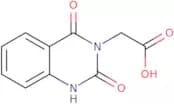
CAS:<p>Please enquire for more information about 4-(tert-Butoxycarbonyl)thiomorpholine-3-carboxylic acid including the price, delivery time and more detailed product information at the technical inquiry form on this page</p>Formula:C10H17NO4SPurity:95%NmrMolecular weight:247.31 g/mol(2,4-Dioxo-1,4-dihydroquinazolin-3(2H)-yl)acetic acid
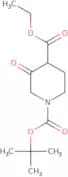
CAS:<p>Please enquire for more information about (2,4-Dioxo-1,4-dihydroquinazolin-3(2H)-yl)acetic acid including the price, delivery time and more detailed product information at the technical inquiry form on this page</p>Formula:C10H8N2O4Purity:Min. 95%Molecular weight:220.18 g/molEthyl 1-N-Boc-3-oxopiperidine-4-carboxylate
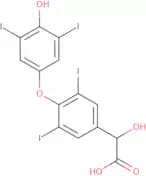
CAS:<p>Please enquire for more information about Ethyl 1-N-Boc-3-oxopiperidine-4-carboxylate including the price, delivery time and more detailed product information at the technical inquiry form on this page</p>Formula:C13H21NO5Purity:Min. 95%Molecular weight:271.31 g/mol3,5,3',5' -Tetraiodo thyromandelic acid
CAS:<p>Please enquire for more information about 3,5,3',5' -Tetraiodo thyromandelic acid including the price, delivery time and more detailed product information at the technical inquiry form on this page</p>Formula:C14H8I4O5Purity:Min. 95%Color and Shape:PowderMolecular weight:763.83 g/mol4-(Difluoromethoxy)phenylboronic acid
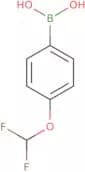
CAS:<p>Please enquire for more information about 4-(Difluoromethoxy)phenylboronic acid including the price, delivery time and more detailed product information at the technical inquiry form on this page</p>Formula:C7H7BF2O3Purity:Min. 95%Molecular weight:187.94 g/molIsopentylboronic acid
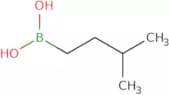
CAS:<p>Isopentylboronic acid is a boron-containing organic compound that is used for the catalysis of cross-coupling reactions, such as the Suzuki reaction. It reacts with aryl halides to form an alkylboronic ester and a metal salt. Isopentylboronic acid is also used to produce trimers in the presence of formyl or nitro groups. Isopentylboronic acid may also be used as a reagent to convert alcohols into chlorides or bromides. This compound has been shown to react with alkali metal ions on one side and alkyl substituents on the other side, leading to deuterium incorporation at the carbon atom adjacent to the carboxylic acid group. Isopentylboronic acid can also be used for dehydrating alcohols and converting alkynes into alkenes when heated in the presence of an alkali metal chloride.</p>Formula:C5H13BO2Purity:Min. 95%Molecular weight:115.97 g/molDL-Lactic acid
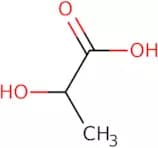
CAS:<p>DL-lactic acid is a metabolic intermediate that is produced in the muscle cells during anaerobic glycolysis. It is used to treat cancer and has been shown to be effective against squamous cell carcinoma. DL-lactic acid also inhibits mitochondrial membrane potential, which may be one of the mechanisms by which it causes cell death. DL-lactic acid has been found to have antibacterial efficacy against a number of bacteria, including Staphylococcus aureus, Enterococcus faecalis, Escherichia coli, Proteus mirabilis, Pseudomonas aeruginosa, and Streptococcus pyogenes. DL-lactic acid also inhibits enzyme activities that are necessary for bacterial growth such as phosphotransferase enzymes and urease. DL-lactic acid is a metabolic intermediate that can be used to inhibit tumor growth and metastasis. DL-lactic acid also inhibits transcriptional regulation in human serum</p>Formula:C3H6O3Color and Shape:Colorless Clear LiquidMolecular weight:90.08 g/mol4-bromo-2,5-difluorobenzoic Acid
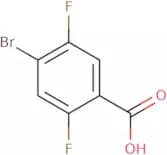
CAS:<p>4-Bromo-2,5-difluorobenzoic acid is a potent inhibitor of isoforms CYP2C9 and CYP2D6. It is an acidic drug with a pKa of 3.8, which makes it ionizable in biological fluids. 4-Bromo-2,5-difluorobenzoic acid inhibits the activity of CYP2C9 and CYP2D6 by binding to the pharmacophore region of these enzymes. 4-Bromo-2,5-difluorobenzoic acid also has an isosteric functionality that increases its selectivity for CYP2C9 and CYP2D6 over other cytochrome P450 isoforms. The functional groups on 4-bromo-2,5-difluorobenzoic acid are part of the inhibitor's nature that make it selective for these two cytochrome</p>Formula:C7H3BrF2O2Purity:Min. 95%Molecular weight:237 g/mol


![2-[2-(1H-Indol-3-yl)ethyl]-1,3-dioxoisoindoline-5-carboxylic acid](/_next/image/?url=https%3A%2Fstatic.cymitquimica.com%2Fproducts%2F3D%2Fthumb-webp%2FFI124769.webp&w=3840&q=75)
![tert-Butyl 4-hydroxy-1-oxa-9-azaspiro[5.5]undecane-9-carboxylate](/_next/image/?url=https%3A%2Fstatic.cymitquimica.com%2Fproducts%2F3D%2Fthumb-webp%2FFB125443.webp&w=3840&q=75)