Carboxylic Acids
Carboxylic acids are organic molecules characterized by having a carboxyl-type functional group (-COOH). These acids are fundamental in various chemical reactions, including esterification, amidation, and decarboxylation. Carboxylic acids are widely used in the production of pharmaceuticals, polymers, and agrochemicals. In this section, you can find a large number of carboxylic acids ready to be used. At CymitQuimica, we provide a broad range of high-quality carboxylic acids to support your research and industrial applications.
Found 12454 products of "Carboxylic Acids"
Sort by
Purity (%)
0
100
|
0
|
50
|
90
|
95
|
100
Ethoxyiminoacetic acid ethyl ester
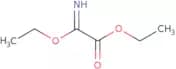
CAS:Ethoxyiminoacetic acid ethyl ester is an annulated, lactam-containing compound that is synthesized via the condensation of ethyl thiooxamate and carboxylic acid. This drug has been shown to be efficient in inhibiting the growth of bacteria that are resistant to antibiotics such as polycyclic, triazoles, and condensates. It also inhibits protein synthesis by binding to bacterial DNA gyrase and topoisomerase IV. Ethoxyiminoacetic acid ethyl ester has shown significant antimicrobial activity against Gram-positive bacteria such as streptococci and staphylococci.Formula:C6H11NO3Purity:Min. 95%Molecular weight:145.16 g/mol(Lys15,Arg16,Leu27)-VIP (1-7)-GRF (8-27) trifluoroacetate salt
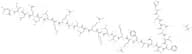
CAS:Please enquire for more information about (Lys15,Arg16,Leu27)-VIP (1-7)-GRF (8-27) trifluoroacetate salt including the price, delivery time and more detailed product information at the technical inquiry form on this pageFormula:C142H240N44O38Purity:Min. 95%Molecular weight:3,171.7 g/molAlarin (rat) trifluoroacetate salt
CAS:<p>Please enquire for more information about Alarin (rat) trifluoroacetate salt including the price, delivery time and more detailed product information at the technical inquiry form on this page</p>Formula:C119H199N45O35Purity:Min. 95%Molecular weight:2,820.14 g/molα-Helical CRF (12-41) trifluoroacetate salt
CAS:Please enquire for more information about Alpha-Helical CRF (12-41) trifluoroacetate salt including the price, delivery time and more detailed product information at the technical inquiry form on this pageFormula:C152H251N43O47S2Purity:Min. 95%Molecular weight:3,497.01 g/mol1-(Mercaptomethyl)cyclopropaneacetic acid
CAS:1-(Mercaptomethyl)cyclopropaneacetic acid is a reaction product of hydrolysis, transfer, and industrialization. It is used in the synthesis of organic compounds such as quinolinediols and thioureas. 1-(Mercaptomethyl)cyclopropaneacetic acid is typically prepared by the reaction of an alkylsulfonyl chloride with an inorganic base such as lithium or sodium carbonate in an organic solvent such as acetonitrile. The compound is also used to produce other organosulfur compounds, including imino sulfides and disulfides.Formula:C6H10O2SPurity:Min. 95%Color and Shape:PowderMolecular weight:146.21 g/molBombesin trifluoroacetate salt
CAS:<p>Trifluoroacetate salt</p>Formula:C71H110N24O18SPurity:Min. 95%Molecular weight:1,619.85 g/mol2-Chloropyridine-4-boronic acid
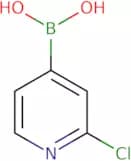
CAS:<p>2-Chloropyridine-4-boronic acid is a nicotinic acetylcholine receptor antagonist that has been shown to be effective against trypanosomiasis. It blocks the binding of acetylcholine to its receptor, which prevents the propagation of an action potential in the postsynaptic cell. 2-Chloropyridine-4-boronic acid inhibits the enzymes cyclooxygenase and prostaglandin synthase, which are involved in inflammation. 2-Chloropyridine-4-boronic acid is potent and selective for nicotinic acetylcholine receptors, but it also binds to other sites on the enzyme. The molecular modeling studies have shown that this compound has a pharmacophore that can be used as a guide for drug design.</p>Formula:C5H5BClNO2Purity:Min. 95%Molecular weight:157.36 g/molA-VI-5 acetate salt
CAS:Please enquire for more information about A-VI-5 acetate salt including the price, delivery time and more detailed product information at the technical inquiry form on this pageFormula:C22H40N6O10Purity:Min. 95%Molecular weight:548.59 g/molH-Arg-Met-OH acetate salt
CAS:<p>H-Arg-Met-OH acetate salt is a reactive chemical that is used in the treatment of hepatitis. It has been shown to be effective against virus and heart disease, as well as being active in the prevention of insulin resistance. H-Arg-Met-OH acetate salt is also used to determine if a person has had an allergic reaction by testing for elevated serum levels of this chemical. H-Arg-Met-OH acetate salt can be found in the blood, urine, and liver cells. This chemical is also present in mouse spleen cells and has been shown to react with specific antibodies.</p>Formula:C11H23N5O3SPurity:Min. 95%Molecular weight:305.4 g/mol3-[(2-Aminoethyl)dithio]propionic acid
CAS:<p>Dithiobis(3-mercaptopropionate) is an analog of 3-[(2-Aminoethyl)dithio]propionic acid (DTA). It has been used as a cross-linking agent for the synthesis of polymers with acidic pH. Dithiobis(3-mercaptopropionate) is also used for the synthesis of conjugates and bifunctional molecules. Dithiobis(3-mercaptopropionate) can be synthesized by reacting bis(sulfanylmethyl)amine with sodium azide in an acidic solution. The cross-linking reaction will produce a disulfide bond, which is a covalent linkage between two cysteine residues in two different polypeptides or proteins. This crosslink is irreversible, so it cannot be broken down by chemical processes, but can be broken down by enzymatic digestion.</p>Formula:C5H11NO2S2Purity:(%) Min. 95%Color and Shape:PowderMolecular weight:181.28 g/molTetrahydro-3-furoic acid
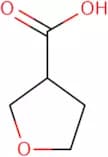
CAS:<p>Tetrahydro-3-furoic acid is an organic acid that can be found in the form of its tautomers, alpha-methylene-gamma-butyrolactone and 3-hydroxy-2,4-pentadienoic acid. It is a proapoptotic compound that induces cell death in cancer cells by inhibiting protein synthesis. Tetrahydro-3-furoic acid has been shown to have low expression levels in most tissues, with high levels found in the liver. The mechanism behind this inhibition is not yet known but may be due to the formation of a Schiff base between the amine and the carbonyl group of tetrahydro-3-furoic acid. This reaction mechanism has been proposed as a possible explanation for why tetrahydro-3-furoic acid is more toxic than other furoates such as ethyl-, propyl-, butyl-, and amyl-. Tet</p>Formula:C5H8O3Purity:Min. 95%Molecular weight:116.12 g/molDnp-Pro-TNF-alpha (71-82) amide (human) trifluoroacetate salt
CAS:<p>Please enquire for more information about Dnp-Pro-TNF-alpha (71-82) amide (human) trifluoroacetate salt including the price, delivery time and more detailed product information at the technical inquiry form on this page</p>Formula:C57H94N22O21Purity:Min. 95%Molecular weight:1,423.49 g/mol6-Chloro-2-methylbenzoic acid
CAS:<p>6-Chloro-2-methylbenzoic acid is a methyl ester that is used in the synthesis of 2-chloro-6-fluorobenzaldehyde. This chemical reacts with hydrogen peroxide to produce chloride and 2,6-dichlorobenzoic acid. The compound can also be synthesized from 2,6-dichlorobenzaldehyde and methoxyethanol. 6CMB has been shown to react with anions such as Cl-, Br-, NO2-, SO3H, and PO3H2 to form organic carboxylates or sulfoxides. It has also been shown to be a byproduct of the reaction between chloral hydrate and potassium permanganate.</p>Formula:C8H7ClO2Purity:90%Color and Shape:PowderMolecular weight:170.59 g/moltert-Butyl 4,7-diazaspiro[2.5]octane-4-carboxylate
CAS:Please enquire for more information about tert-Butyl 4,7-diazaspiro[2.5]octane-4-carboxylate including the price, delivery time and more detailed product information at the technical inquiry form on this pagePurity:Min. 95%Abz-Amyloid β/A4 Protein Precursor770 (708-715)-Lys(Dnp)-D-Arg-D-Arg-D-Arg amide trifluoroacetate salt
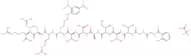
CAS:Please enquire for more information about Abz-Amyloid beta/A4 Protein Precursor770 (708-715)-Lys(Dnp)-D-Arg-D-Arg-D-Arg amide trifluoroacetate salt including the price, delivery time and more detailed product information at the technical inquiry form on this pageFormula:C69H114N26O18Purity:Min. 95%Molecular weight:1,595.81 g/molL(+)-2,3-Diaminopropionic acid HCl
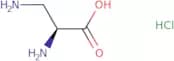
CAS:L(+)-2,3-Diaminopropionic acid HCl is a chiral modifier that is used in the separation of organic compounds. It has been shown to selectively interact with borate, sulfate, and hydroxyapatite. This interaction changes the physical properties of these substances by modifying their surface charge or adsorption capacity. L(+)-2,3-Diaminopropionic acid HCl has also been shown to be useful in diastereoselective reactions. The technique of elution can be used to isolate specific compounds from mixtures using this compound as a modifier. Hydrogen bonding groups and moieties on the functional group are important factors in the specificity of this interaction.END>>Formula:C3H8N2O2·HClPurity:Min. 95%Color and Shape:White PowderMolecular weight:140.57 g/molThymosin α1 acetate
CAS:<p>Thymalfasin is a peptide that belongs to the thymosin family. It is a biocompatible polymer with a number of biomedical applications, including as a component in wound dressings and anti-adhesive agents. Thymalfasin has been shown to be effective at inhibiting the replication of influenza A virus, which may be due to its ability to bind to toll-like receptor 4 (TLR4). This drug also has antitumor properties and has been shown to stimulate the production of IL-2 receptor in human monocytes. Thymalfasin also inhibits the growth of cancer cells, such as HL60 cells, by blocking DNA synthesis. The molecular weight of this compound is approximately 20-30 kDa.</p>Formula:C129H215N33O55•(C2H4O2)xPurity:Min. 95%Molecular weight:3,108.28 g/mol4-Fluoro-2-(trifluoromethyl)phenylboronic acid
CAS:<p>The process development of 4-fluoro-2-(trifluoromethyl)phenylboronic acid (4FTFPBA) is a simplified procedure that can be scaled up and used for medicinal chemistry. This compound was synthesized by a boronic acid process using the Suzuki-Miyaura cross coupling reaction. The major factor to consider in this synthesis is the placement of the fluorine atom, which determines the relative reactivity and stability of the compound. In order to mimic these factors, an environment with low water content and a sequence that minimizes exposure to air are required.</p>Formula:C7H5BF4O2Purity:Min. 95%Color and Shape:PowderMolecular weight:207.92 g/molO-Hippuryl-L-b-phenyllactic acid sodium salt
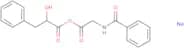
CAS:Please enquire for more information about O-Hippuryl-L-b-phenyllactic acid sodium salt including the price, delivery time and more detailed product information at the technical inquiry form on this pageFormula:C18H16NNaO5Purity:Min. 95%Molecular weight:349.31 g/molAnnexin A1 (1-11) (dephosphorylated) (human, bovine, chicken, porcine) trifluoroacetate salt
CAS:<p>Annexin A1 (1-11) is a peptide that is part of the annexin family. It is involved in the degranulation of cells and inhibits inflammation by inhibiting the production of pro-inflammatory cytokines. Annexin A1 (1-11) has been shown to be an anti-inflammatory compound as it binds to phospholipids on the surface of neutrophils, leading to inhibition of their chemotaxis and phagocytosis. This peptide also interacts with other annexins and prevents apoptosis by blocking caspase activity. Finally, it has been found that annexin A1 (1-11) can promote the healing of wounds in mice by accelerating reepithelialization and reducing scar formation. The concentration required for these effects are nanomolar concentrations.</p>Formula:C63H94N14O17SPurity:Min. 95%Molecular weight:1,351.57 g/mol





![3-[(2-Aminoethyl)dithio]propionic acid](/_next/image/?url=https%3A%2Fstatic.cymitquimica.com%2Fproducts%2F3D%2Fthumb-webp%2FFA17745.webp&w=3840&q=75)

![tert-Butyl 4,7-diazaspiro[2.5]octane-4-carboxylate](/_next/image/?url=https%3A%2Fstatic.cymitquimica.com%2Fproducts%2F3D%2Fthumb-webp%2FFB141899.webp&w=3840&q=75)