Carboxylic Acids
Carboxylic acids are organic molecules characterized by having a carboxyl-type functional group (-COOH). These acids are fundamental in various chemical reactions, including esterification, amidation, and decarboxylation. Carboxylic acids are widely used in the production of pharmaceuticals, polymers, and agrochemicals. In this section, you can find a large number of carboxylic acids ready to be used. At CymitQuimica, we provide a broad range of high-quality carboxylic acids to support your research and industrial applications.
Found 12453 products of "Carboxylic Acids"
Sort by
Purity (%)
0
100
|
0
|
50
|
90
|
95
|
100
N-Me-Abz-Lys-Pro-Leu-Gly-Leu-Dap (Dnp)-Ala-Arg-NH2 trifluoroacetate salt
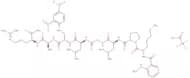
CAS:<p>Please enquire for more information about N-Me-Abz-Lys-Pro-Leu-Gly-Leu-Dap (Dnp)-Ala-Arg-NH2 trifluoroacetate salt including the price, delivery time and more detailed product information at the technical inquiry form on this page</p>Formula:C51H79N17O13Purity:Min. 95%Molecular weight:1,138.28 g/mol3-Bromophenyl boronic acid
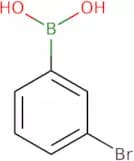
CAS:<p>3-Bromophenyl boronic acid is a group P2 molecule with functional groups of vibrational and cross-coupling. It has been shown to inhibit the activity of aryl boronic acids, which are commonly used in analytical methods. 3-Bromophenyl boronic acid is also capable of inhibiting the production of alizarin, which is a dye that is used for staining biological tissue. The molecular modeling study revealed that this molecule has an atomic orbital with electron density distribution around the central carbon atom. This distribution indicates that it is more stable than other molecules with similar structures.</p>Formula:C6H6BBrO2Purity:Min. 95%Color and Shape:PowderMolecular weight:200.83 g/mol(Arg17)-Amyloid b-Protein (1-42) trifluoroacetate salt
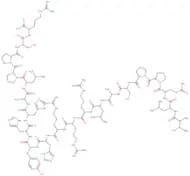
CAS:<p>Please enquire for more information about (Arg17)-Amyloid b-Protein (1-42) trifluoroacetate salt including the price, delivery time and more detailed product information at the technical inquiry form on this page</p>Formula:C203H312N58O60SPurity:Min. 95%Molecular weight:4,557.07 g/molDynorphin A (1-8) acetate salt
CAS:<p>Dynorphin A (1-8) acetate salt H-Tyr-Gly-Gly-Phe-Leu-Arg-Arg-Ile-OH acetate salt is a synthetic, nonpeptide opioid agonist. It binds to the delta receptor and inhibits nociception in the central nervous system. This compound has been shown to produce acute phase and subchronic toxicity in rats and has been shown to possess antinociceptive effects in mice. Dynorphin A (1-8) acetate salt H-Tyr-Gly-Gly-Phe-Leu-Arg-Arg-Ile-OH acetate salt has also been shown to antagonize the enzyme inhibitors of phospholipase A2, cyclooxygenase, and lipoxygenase.<br>MECHANISM OF ACTION: Dynorphin A (1–8) is an endogenous peptide that modulates neurotransmission at the</p>Formula:C46H72N14O10Purity:Min. 95%Molecular weight:981.15 g/mol2,4-Dinitrophenylacetic acid
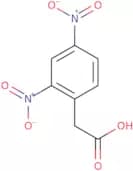
CAS:<p>2,4-Dinitrophenylacetic acid is a chemical substance with the potential to inhibit acetylation. It can be used as an antigen and has been detected in environmental chemistry. 2,4-Dinitrophenylacetic acid is produced by the reaction of chemicals that are found in the environment and it can be detected at low concentrations. This compound is able to react with proteins in cells, leading to high cytotoxicity. 2,4-Dinitrophenylacetic acid can also stabilize optical systems.</p>Formula:C8H6N2O6Purity:Min. 95%Color and Shape:PowderMolecular weight:226.14 g/mol3,4,5-Trimethoxybenzoic acid anhydride
CAS:<p>3,4,5-Trimethoxybenzoic acid anhydride is a synthetic chemical compound that is used as a pharmaceutical intermediate. It is mainly used to prepare potent anticancer agents and potent anticancer drugs. 3,4,5-Trimethoxybenzoic acid anhydride reacts with amines in the presence of a base to form substituted amides. This reaction has been shown by crystal x-ray diffraction to be sensitive to the solvent polarity and temperature of the reaction medium. The compound can also react with chloride ion to form 3,4,5-trichlorobenzoic acid anhydride (3TCBA).</p>Formula:C20H22O9Purity:(%) Min. 85%Color and Shape:PowderMolecular weight:406.38 g/mol2-(4-((aminothioxomethyl)amino)-3,5-thiazolyl)acetic acid
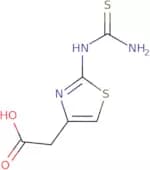
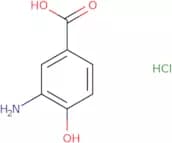
CAS:<p>Please enquire for more information about 2-(4-((aminothioxomethyl)amino)-3,5-thiazolyl)acetic acid including the price, delivery time and more detailed product information at the technical inquiry form on this page</p>Formula:C6H7N3O2S2Purity:Min. 95%Color and Shape:PowderMolecular weight:217.27 g/mol3-Amino-4-hydroxybenzoic acid hydrochloride
CAS:<p>3-Amino-4-hydroxybenzoic acid hydrochloride (3ABA) is a crystalline compound with a molecular formula of C6H5NO2. It is an acidic compound that is soluble in water and alcohol, but not in ether. 3ABA has been used as the starting material for the synthesis of many other organic compounds. It can be obtained by reacting phenol with chlorobenzoyl chloride to form the chlorobenzoate salt, which on hydrolysis yields 3ABA. This compound has also been used as a reagent for synthesizing carbon nanotubes. The crystal structure of 3ABA was determined using X-ray diffraction data from crystallographic studies, and it was found to have three independent molecules per unit cell. Diffraction indicated that each molecule is composed of two benzene rings joined by a single bond between carbon atoms 1 and 2 and another bond between carbon atoms 2 and 3.</p>Formula:C7H8ClNO3Purity:Min. 95%Molecular weight:189.6 g/molMethyl 2-bromo-2-(4-chlorophenyl)acetate
CAS:<p>2'-Bromo-4'-chlorophenylacetic acid methyl ester is a versatile building block for the preparation of complex compounds. It is a useful intermediate with speciality chemical properties and can be used to synthesize important reagents, such as 2-Aminobenzonitrile (CAS No. 2601-72-7) and many other fine chemicals. It has been widely used in the synthesis of pharmaceuticals, agrochemicals, and organic intermediates. 2'-Bromo-4'-chlorophenylacetic acid methyl ester is highly soluble in solvents such as DMSO and DMF and can be stored at -20°C for up to one year without changing its chemical properties.</p>Formula:C9H8BrClO2Purity:Min. 95%Color and Shape:PowderMolecular weight:263.52 g/molMet(O)14-Exenatide trifluoroacetate salt
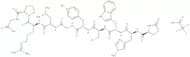
CAS:<p>Please enquire for more information about Met(O)14-Exenatide trifluoroacetate salt including the price, delivery time and more detailed product information at the technical inquiry form on this page</p>Formula:C184H282N50O61SPurity:Min. 95%Molecular weight:4,202.57 g/mol(His(3-Me)2)-LHRH trifluoroacetate salt
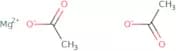
CAS:<p>Please enquire for more information about (His(3-Me)2)-LHRH trifluoroacetate salt including the price, delivery time and more detailed product information at the technical inquiry form on this page</p>Formula:C56H77N17O13·C2HF3O2Purity:Min. 95%Molecular weight:1,310.34 g/molMagnesium acetate anhydrous
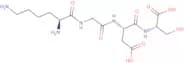
CAS:<p>Magnesium acetate anhydrous is the magnesium salt of acetic acid and has been used as a polymerase chain reaction (PCR) buffer for DNA amplification. This product is also used in wastewater treatment to remove organic acids and carbonates from water. Magnesium acetate anhydrous has been shown to have a Langmuir adsorption isotherm that can be described by a single-site binding model with a Kd value of 2.8x10⁻² M. The compound was found to bind to liver cells, which may be due to its hydroxyl group on the central atom of the molecule. Magnesium acetate anhydrous has been shown to have electrochemical impedance spectroscopy properties at Ω=1 MΩ-1, which are indicative of ionic conductivity and good chemical stability.</p>Formula:C4H6MgO4Purity:Min. 95%Color and Shape:White PowderMolecular weight:142.39 g/molH-Lys-Gly-Asp-Ser-OH trifluoroacetate salt
CAS:<p>Please enquire for more information about H-Lys-Gly-Asp-Ser-OH trifluoroacetate salt including the price, delivery time and more detailed product information at the technical inquiry form on this page</p>Formula:C15H27N5O8Purity:Min. 95%Molecular weight:405.4 g/molN-[(RS)-1-Carboxy-3-phenyl-propyl]-Ala-Ala-Phe-4-Abz-OH trifluoroacetate salt
CAS:<p>The N-[(RS)-1-carboxy-3-phenyl-propyl]-Ala-Ala-Phe-4-Abz-OH trifluoroacetate salt is a synthetic substrate for the study of metalloendopeptidase. This compound was used to develop a model system to study the function of human liver, and has been shown to inhibit the growth of PC12 cells. The N-[(RS)-1-Carboxy-3-phenyl-propyl]-Ala-Ala-Phe-4-Abz-OH trifluoroacetate salt is also an experimental model for congestive heart failure. This compound has been shown to increase glomerular filtration rate in experimental animals as well as basic fibroblast growth factor activity in cell culture by increasing intracellular calcium levels.</p>Formula:C32H36N4O7Purity:Min. 95%Molecular weight:588.65 g/molSpexin trifluoroacetate salt
CAS:<p>Please enquire for more information about Spexin trifluoroacetate salt including the price, delivery time and more detailed product information at the technical inquiry form on this page</p>Formula:C74H114N20O19SPurity:Min. 95%Molecular weight:1,619.89 g/molNeuromedin N trifluoroacetate salt
CAS:<p>Neuromedin N trifluoroacetate salt is a neurotrophin that regulates the growth and differentiation of nerve cells. It has been shown to increase locomotor activity in rats and to activate the receptor for neurotrophins. Neuromedin N trifluoroacetate salt also binds to response elements in DNA and can also modulate camp levels, cytosolic calcium, and protein kinase C levels in cells. This molecule has been shown to have antinociceptive properties by inhibiting the pain-causing action of substance P on sensory neurons. It is possible that this drug may be used as a growth factor or as a messenger RNA (mRNA) in fatty acid synthesis.</p>Formula:C38H63N7O8Purity:Min. 95%Molecular weight:745.95 g/molDi-tert-butyl azodicarboxylate
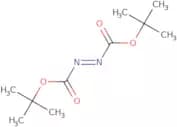
CAS:<p>Di-tert-butyl azodicarboxylate (DTBA) is an organic compound that is used in organic synthesis as a dienophile. DTBA reacts with various electrophiles to form dihydro derivatives through a transfer mechanism, which can be monitored by the change in magnetic resonance spectroscopy signals. The reaction of DTBA with trifluoroacetic acid and hydrogen chloride forms the desired product, 3-amino-2,4,6-trichloropyridine. DTBA is also used for the synthesis of 1,4-dihydropyridines from 2-aminobenzene derivatives and bromoacetaldehyde diethyl acetal. This process is catalyzed by palladium on carbon. DTBA is asymmetric at position C5 and C6 because it has two chiral centers: one at C3 and one at C5 or C6. The use of this reagent allows for the scalable</p>Formula:C10H18N2O4Purity:Min. 98%Color and Shape:PowderMolecular weight:230.26 g/molTLQP-21 (human) trifluoroacetate salt
CAS:<p>Please enquire for more information about TLQP-21 (human) trifluoroacetate salt including the price, delivery time and more detailed product information at the technical inquiry form on this page</p>Formula:C110H176N40O27Purity:Min. 95%Molecular weight:2,490.83 g/molUroguanylin Topoisomer B (human) trifluoroacetate salt
<p>Please enquire for more information about Uroguanylin Topoisomer B (human) trifluoroacetate salt including the price, delivery time and more detailed product information at the technical inquiry form on this page</p>Formula:C64H102N18O26S4Purity:Min. 95%Molecular weight:1,667.86 g/molH-D-Phe-Met-Arg-Phe-NH2 trifluoroacetate salt
CAS:<p>Please enquire for more information about H-D-Phe-Met-Arg-Phe-NH2 trifluoroacetate salt including the price, delivery time and more detailed product information at the technical inquiry form on this page</p>Formula:C29H42N8O4SPurity:Min. 95%Molecular weight:598.76 g/mol





![N-[(RS)-1-Carboxy-3-phenyl-propyl]-Ala-Ala-Phe-4-Abz-OH trifluoroacetate salt](/_next/image/?url=https%3A%2Fstatic.cymitquimica.com%2Fproducts%2F3D%2Fthumb-webp%2FFR111118.webp&w=3840&q=75)