Aldehydes
Aldehydes are organic compounds containing a carbonyl group (C=O) bonded to at least one hydrogen atom. These versatile compounds are fundamental in various chemical reactions, including oxidation, reduction, and nucleophilic addition. Aldehydes are essential building blocks in the synthesis of pharmaceuticals, fragrances, and polymers. At CymitQuimica, we provide a diverse selection of high-quality aldehydes to support your research and industrial applications.
Found 8551 products of "Aldehydes"
Sort by
Purity (%)
0
100
|
0
|
50
|
90
|
95
|
100
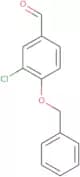
4-Benzyloxy-3-chlorobenzaldehyde
CAS:<p>4-Benzyloxy-3-chlorobenzaldehyde is a chemical intermediate that can be used for the production of a variety of compounds. It is an aromatic compound, with a benzene ring and two oxy groups at each end. The CAS number for 4-benzyloxy-3-chlorobenzaldehyde is 66422-84-2. It is also known as 1,4-dichloroacetophenone. This chemical is useful in the production of speciality chemicals and research chemicals, and it can act as a versatile building block in organic synthesis.</p>Formula:C14H11ClO2Purity:Min. 95%Molecular weight:246.69 g/mol6-Bromoveratraldehyde
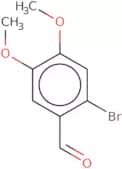
CAS:<p>6-Bromoveratraldehyde (6BrA) is a synthetic compound that has been shown to be an effective agent for inducing apoptosis in leukemia cells. It is an efficient method for synthesizing the compound and has been used as a model study for biphenyl and naphthalene. 6BrA induces cell death by topoisomerase-mediated DNA cleavage, which results in chromosomal fragmentation and high levels of reactive oxygen species in the cell.</p>Formula:C9H9BrO3Purity:Min. 95%Color and Shape:White PowderMolecular weight:245.07 g/mol4-Hydroxy-3-(trifluoromethoxy)benzaldehyde
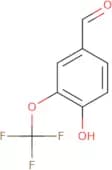
CAS:<p>4-Hydroxy-3-(trifluoromethoxy)benzaldehyde is a chemical that modulates the toxicity of cells. It has been shown to reduce amyloid plaques in animals and humans with Alzheimer's disease, and to inhibit the formation of plaques in transgenic mice. In addition, 4-hydroxy-3-(trifluoromethoxy)benzaldehyde has been found to be a pyrimidine compound, which can be used as a potential treatment for alzheimer's disease. This substance also has an insoluble nature and is not soluble in water. Curcumin is one of the substances that may be used to dissolve this substance.</p>Formula:C8H5F3O3Purity:Min. 95%Molecular weight:206.12 g/mol2-(3-Chlorophenyl)thiazole-4-carbaldehyde
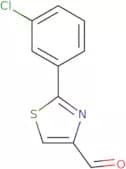
CAS:<p>Please enquire for more information about 2-(3-Chlorophenyl)thiazole-4-carbaldehyde including the price, delivery time and more detailed product information at the technical inquiry form on this page</p>Formula:C10H6ClNOSPurity:Min. 95%Color and Shape:PowderMolecular weight:223.68 g/mol4-N-Octylbenzaldehyde
CAS:<p>4-N-Octylbenzaldehyde is a nitro compound which is used as an immunosuppressive agent. It has been shown to inhibit the activity of diphenolase, which plays an important role in the metabolism of fatty acids. 4-N-Octylbenzaldehyde also has an oil extractant that can be used to extract and separate different types of organic compounds from oils, fats, or greases. In addition, 4-N-octylbenzaldehyde inhibits the synthesis of prostaglandin E2 and thromboxane A2 by inhibiting cyclooxygenase enzymes. It has been shown to possess anti-inflammatory properties and has been found to be useful in treating rheumatoid arthritis.</p>Formula:C15H22OPurity:Min. 95%Color and Shape:Clear LiquidMolecular weight:218.33 g/mol3-Hydroxy-4-methoxy-2-nitrobenzaldehyde
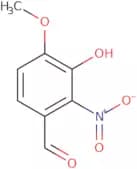
CAS:<p>3-Hydroxy-4-methoxy-2-nitrobenzaldehyde is a ternary complex that has been adsorbed onto the surface of an ion exchange resin. The adsorption process occurs through the formation of hydrogen bonds between the hydroxyl groups on the resin and the hydroxyl groups on the molecule. This complex is also soluble in chloroform, which may be due to its ability to form hydrogen bonds with itself and other molecules. The 3-hydroxy group on this molecule has been shown to react reductively with nitrophenol, forming a nitroso derivative. 3-Hydroxy-4-methoxy-2-nitrobenzaldehyde has been used as a template for the microbiological assay of azides and quinones.</p>Formula:C8H7NO5Purity:Min. 95%Molecular weight:197.14 g/molIsoprenaline HCl
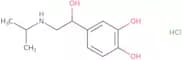
CAS:<p>Isoprenaline is a hormone that belongs to the category of catecholamines. It is a naturally occurring compound and has been used in medicine as an injectable medication for over 50 years. Isoprenaline is used primarily to treat bronchial asthma, but it also may be used to treat cardiac arrest and heart failure. The drug works by binding to the beta-adrenergic receptors in the lungs, heart, and fat cells. This binding stimulates the production of cyclic adenosine monophosphate (cAMP) in these tissues, which relaxes smooth muscle cells and increases their rate of metabolism. As a result, airways open up due to decreased constriction and increased bronchial secretions are cleared away. The drug also has been shown to have beneficial effects on adipose tissue and structural heart disease.</p>Formula:C11H17NO3·HClPurity:Min. 95%Color and Shape:White PowderMolecular weight:247.72 g/mol2-Bromobenzaldehyde
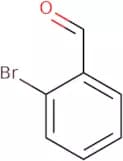
CAS:<p>2-Bromobenzaldehyde is an important aryl aldehyde that can be synthesized through the copper-catalyzed coupling of 2-bromobenzyl bromide and phenylacetone. The synthesis of 2-bromobenzaldehyde has been used to study the effects of physiological activities on the coordination geometry. It is also used as a fluorescent probe for amines and esters, which are commonly found in bioinorganic chemistry. The compound is characterized by intermolecular hydrogen bonding and hydrogen bonding between the hydroxy group and chloride, which are associated with its acidity.<br>2-Bromobenzaldehyde has been shown to have antiinflammatory properties, which may be due to its ability to inhibit prostaglandin synthesis.</p>Formula:C7H5BrOPurity:Min. 95%Color and Shape:Off-White PowderMolecular weight:185.02 g/mol4-(Trifluoromethoxy)benzaldehyde
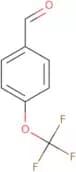
CAS:<p>4-(Trifluoromethoxy)benzaldehyde is a chemical compound that is a substrate for tyrosinase and an inhibitor of the enzyme. It is also an anticancer compound that can be used to inhibit tumor growth by inhibiting protein synthesis. 4-(Trifluoromethoxy)benzaldehyde has been shown to have potent tyrosinase inhibition activity in vitro and in vivo, as well as binding activities with the CB2 receptor. This chemical has also been shown to inhibit virus replication, including HIV-1, and tuberculosis. 4-(Trifluoromethoxy)benzaldehyde can be used in assays to measure the potency of other compounds that are involved in tyrosinase activity or have anti-cancer properties. 4-(Trifluoromethoxy)benzaldehyde specifically binds to residues in the kinase domain of the enzyme tyrosinase, which is responsible for catalysis and regulation of this enzyme.</p>Formula:C8H5F3O2Purity:Min. 95%Color and Shape:Colorless Clear LiquidMolecular weight:190.12 g/mol4-Benzyloxyindole-3-carboxaldehyde
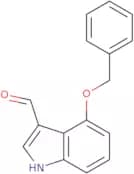
CAS:<p>4-Benzyloxyindole-3-carboxaldehyde is an analog of psilocin that is synthesized by the condensation of formylbenzene with indole-3-carboxaldehyde. It has been shown to act as a formylating agent, which can be used in the synthesis of other compounds. 4-Benzyloxyindole-3-carboxaldehyde may also be converted to n-dimethyltryptamine (DMT) by oxidation and decarboxylation.</p>Formula:C16H13NO2Purity:Min. 95%Color and Shape:PowderMolecular weight:251.28 g/mol4-Hydroxy-2-methoxybenzaldehyde
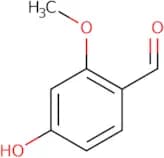
CAS:<p>Echinatin is a benzaldehyde derivative that is found in the roots of Echinacea purpurea. It is a phenolic compound with a carbonyl group and two benzyl groups. 4-Hydroxy-2-methoxybenzaldehyde has been shown to have photophysical, cell culture, and functional group properties. This compound is used as a precursor for the production of echinatin and other plant polyphenols such as malonic acid. The biosynthesis of 4-hydroxy-2-methoxybenzaldehyde begins with the oxidation of cinnamic acid by cytochrome P450 monooxygenase to form cinnamoyl CoA. The enzyme cinnamate decarboxylase then converts this intermediate to p-hydroxybenzoic acid, which is then hydroxylated to form 4-hydroxy-2-methoxybenzaldehyde.</p>Formula:C8H8O3Purity:Min. 95%Color and Shape:PowderMolecular weight:152.15 g/mol1H-Pyrrole-2-carbaldehyde
CAS:<p>1H-Pyrrole-2-carbaldehyde is a compound that belongs to the class of ferrocenecarboxylic acids. It is a coordination complex with a pyrrole system and an intramolecular hydrogen bond. The proton on the carbonyl carbon atom forms hydrogen bonds with nitrogen atoms, which are located in the immediate vicinity of the carbonyl group. The structure was determined by x-ray diffraction studies and the reactivity was studied by means of X-ray crystal structures. This compound has been used for biological studies as well as for structural analysis.</p>Formula:C5H5NOPurity:Min. 95%Color and Shape:PowderMolecular weight:95.1 g/mol2-Hydroxy-6-methoxybenzaldehyde
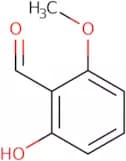
CAS:<p>2-Hydroxy-6-methoxybenzaldehyde is a molecule that can form hydrogen bonds with other molecules. FT-IR spectroscopy has shown that this compound has a copper complex and an acidic proton, which may be due to intramolecular hydrogen bonding interactions. The compound also has been shown to have potent inhibitory activity against cellular growth and cancer cells in vitro. 2-Hydroxy-6-methoxybenzaldehyde is a metal chelator and can therefore bind to metals such as iron and copper. It is genotoxic, which means it damages DNA by causing DNA strand breaks or crosslinks, leading to cell death. This chemical may also cause genetic mutations through the formation of tautomers that make DNA replication difficult. Gel chromatography shows that 2HMB has a low molecular weight (MW) and high solubility.</p>Formula:C8H8O3Purity:Min. 95%Color and Shape:PowderMolecular weight:152.15 g/molBenzo[b]thiophene-2-carboxaldehyde
CAS:<p>Benzo[b]thiophene-2-carboxaldehyde is a compound that has optical properties with a dihedral angle of 90°. This compound also has a functional group of imine, which can be found in the amino acid histidine. Benzo[b]thiophene-2-carboxaldehyde has been shown to have cancer inhibiting properties by targeting the protease activity of at1 receptors. It inhibits the synthesis of protein and RNA by binding to them and preventing their production. This compound also inhibits the activity of proteases, which are enzymes that break down proteins. Benzo[b]thiophene-2-carboxaldehyde is synthesized through metathesis reactions, which are reactions that involve the exchange of atoms between two compounds. The yield is isolated at about 95%.</p>Formula:C9H6OSPurity:Min. 95%Molecular weight:162.21 g/mol4-[(2,3,4Trimethoxyphenyl)methyl]piperazine-1-carbaldehyde
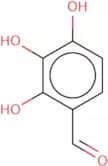
CAS:<p>Please enquire for more information about 4-[(2,3,4Trimethoxyphenyl)methyl]piperazine-1-carbaldehyde including the price, delivery time and more detailed product information at the technical inquiry form on this page</p>Formula:C15H22N2O4Purity:Min. 95%Color and Shape:PowderMolecular weight:294.35 g/mol2,3,4-Trihydroxybenzaldehyde
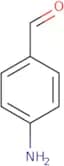
CAS:<p>2,3,4-Trihydroxybenzaldehyde is a chemical compound that has been shown to have anti-cancer properties. It is used in the detection of cancer cells and as an indicator for the presence of palladium complexes. 2,3,4-Trihydroxybenzaldehyde is also a skin allergen and can cause allergic reactions. This chemical reacts with potassium ions in solution to form a precipitate or sludge. 2,3,4-Trihydroxybenzaldehyde has been shown to be effective against colorectal carcinoma cells and Group P2 bacteria.</p>Formula:C7H6O4Purity:Min. 95%Color and Shape:PowderMolecular weight:154.12 g/mol4-Aminobenzaldehyde
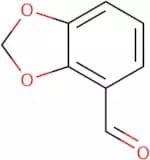
CAS:<p>4-Aminobenzaldehyde is a molecule that belongs to the class of aromatic compounds. It has a crystalline structure and reacts with acylating agents to form amides. 4-Aminobenzaldehyde has been used for the preparation of diazonium salts, which are reactive intermediates in organic synthesis that can be used as a nucleophile. This compound has been shown to react with sodium nitrate to form an electrochemical data, and it has also been used as a control experiment for nmr spectra.</p>Formula:C7H7NOPurity:Min. 98 Area-%Color and Shape:PowderMolecular weight:121.14 g/mol(3E)-4-(1,3-Benzodioxol-4-yl)-3-butenoic acid
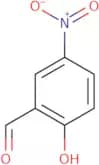
CAS:<p>2,3-Methylenedioxybenzaldehyde is an organic compound that has been used as a chemical ionization reagent in the development of chemosensors. The formyl group in this molecule reacts with chloride to produce the corresponding formate salt, which can be detected by gas chromatography. This compound has also been shown to inhibit bacterial growth in vitro and may have potential applications as a drug substance. 2,3-Methylenedioxybenzaldehyde is an isomer of 2,4-methylenedioxybenzaldehyde, which has been shown to inhibit bacterial growth via hydrogen bonding with amines and electron deficient molecules such as chlorides.<br>2,3-Methylenedioxybenzaldehyde can be used for chromatographic science and the detection of drugs in urine samples.</p>Formula:C11H10O4Purity:Min. 95%Color and Shape:PowderMolecular weight:206.19 g/mol5-Nitrosalicylaldehyde
CAS:<p>5-Nitrosalicylaldehyde is a powerful inhibitor of bacterial growth. It has been shown to inhibit the growth of gram-positive bacteria such as Staphylococcus aureus and Streptococcus pyogenes, but not gram-negative bacteria such as Escherichia coli. 5-Nitrosalicylaldehyde is an antimicrobial agent that has been shown to bind to the active site of some enzymes, including bacterial DNA gyrase and human liver microsomes. The binding prevents the enzyme from functioning and leads to cell death. 5-Nitrosalicylaldehyde coordinates with sodium ions in the active site, forming strong hydrogen bonding interactions. This interaction stabilizes the transition state for the reaction and prevents it from happening, thereby inhibiting its function.</p>Formula:C7H5NO4Purity:Min. 95%Color and Shape:Yellow PowderMolecular weight:167.12 g/molRetinylaldehyde
CAS:<p>Retinylaldehyde is a derivative of vitamin A that is important for visual health. It is an inhibitor of the chloride channel, which may be due to its ability to inhibit alcohol dehydrogenase and polymerase chain reaction (PCR). Retinylaldehyde has been shown to have a high affinity for nuclear DNA and can bind to guanine nucleotide-binding protein (G protein) in neural cells. This activity leads to chronic cough in mice. Retinylaldehyde also has been shown as having significant up-regulation in human monocytes when exposed to toll-like receptor ligands. The role of retinylaldehyde in the immune system is not fully understood, but it may play a role in modulating the response to bacterial infection by altering the production of cytokines such as interleukin-1β (IL-1β) and tumor necrosis factor alpha (TNFα).</p>Formula:C20H28OPurity:Min. 98 Area-%Color and Shape:PowderMolecular weight:284.44 g/mol



![Benzo[b]thiophene-2-carboxaldehyde](/_next/image/?url=https%3A%2Fstatic.cymitquimica.com%2Fproducts%2F3D%2Fthumb-webp%2FFB03118.webp&w=3840&q=75)
![4-[(2,3,4Trimethoxyphenyl)methyl]piperazine-1-carbaldehyde](/_next/image/?url=https%3A%2Fstatic.cymitquimica.com%2Fproducts%2F3D%2Fthumb-webp%2FFT46258.webp&w=3840&q=75)