Aldehydes
Aldehydes are organic compounds containing a carbonyl group (C=O) bonded to at least one hydrogen atom. These versatile compounds are fundamental in various chemical reactions, including oxidation, reduction, and nucleophilic addition. Aldehydes are essential building blocks in the synthesis of pharmaceuticals, fragrances, and polymers. At CymitQuimica, we provide a diverse selection of high-quality aldehydes to support your research and industrial applications.
Found 8540 products of "Aldehydes"
Sort by
Purity (%)
0
100
|
0
|
50
|
90
|
95
|
100
1,2,4,5-Tetramethyl-1H-pyrrole-3-carbaldehyde
CAS:<p>Please enquire for more information about 1,2,4,5-Tetramethyl-1H-pyrrole-3-carbaldehyde including the price, delivery time and more detailed product information at the technical inquiry form on this page</p>Formula:C9H13NOPurity:Min. 95%Molecular weight:151.21 g/mol3,5,3',5'-Tetraiodo thyroaldehyde
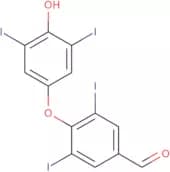
CAS:<p>Please enquire for more information about 3,5,3',5'-Tetraiodo thyroaldehyde including the price, delivery time and more detailed product information at the technical inquiry form on this page</p>Formula:C13H6I4O3Purity:Min. 95%Color and Shape:PowderMolecular weight:717.8 g/mol2-Cyanopyridine-4-carboxaldehyde
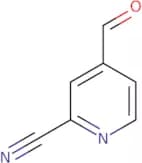
CAS:<p>Please enquire for more information about 2-Cyanopyridine-4-carboxaldehyde including the price, delivery time and more detailed product information at the technical inquiry form on this page</p>Formula:C7H4N2OPurity:Min. 95%Molecular weight:132.12 g/molPropargylaldehyde diethyl acetal
CAS:<p>Propargylaldehyde diethyl acetal is a chemical compound that is used as an intermediate in the synthesis of other compounds. It is a white crystal or crystalline powder that is soluble in organic solvents such as ether, alcohols, and benzene. Propargylaldehyde diethyl acetal has been shown to be potent inhibitors of HSV-1, HSV-2, and HCMV. Furthermore, it has been reported that propargylaldehyde diethyl acetal inhibits the growth of cancer cells in vitro. In addition, propargylaldehyde diethyl acetal has been shown to inhibit the production of autoimmune diseases such as rheumatoid arthritis and multiple sclerosis.</p>Formula:C7H12O2Purity:Min. 95%Color and Shape:Colorless Clear LiquidMolecular weight:128.17 g/mol2-Bromo-6-hydroxybenzaldehyde
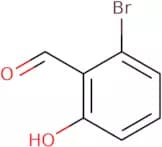
CAS:<p>2-Bromo-6-hydroxybenzaldehyde is a synthetic chemical that consists of a furan ring with an acetonitrile group. It has been shown to be a constant in cyclic electroreduction and is used as a biomolecular surfactant. 2-Bromo-6-hydroxybenzaldehyde has also been shown to react intramolecularly with the hydroxyl group on the benzene ring, which results in the formation of a dimer. This chemical can be produced by solvolysis or electroreduction.</p>Formula:C7H5BrO2Purity:Min. 95%Color and Shape:PowderMolecular weight:201.02 g/molFormaldehyde-2,4-dinitrophenylhydrazone
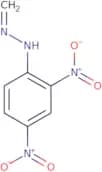
CAS:<p>Formaldehyde-2,4-dinitrophenylhydrazone (FDNH) is a chemical compound that inhibits the production of galacturonic acid. It is used as an analytical method to measure the concentration of galacturonic acid in biological samples. FDNH reacts with galacturonic acid to form a diazonium salt and a hydrazone derivative. The diazonium salt can be measured by liquid chromatography, while the hydrazone derivative can be measured by gas chromatography. This test has been used to measure the concentration of galacturonic acid in plants, pharmaceutical drugs, and reaction products.</p>Formula:C7H6N4O4Purity:Min. 95%Molecular weight:210.15 g/mol3-(Methylthio)propionaldehyde
CAS:<p>3-(Methylthio)propionaldehyde (MTPA) is a hydroxy methyl fatty acid that is used as an intermediate in the synthesis of ethyl decanoate. MTPA has been shown to be toxic at high doses, with death occurring in rats after a single oral dose of 30 mg/kg. The toxicity of MTPA may be due to its reactive nature and ability to form acrolein and malondialdehyde, which are known to have cytotoxic effects on cells. 3-(Methylthio)propionaldehyde can also inhibit microbial metabolism by inhibiting microbial growth and decreasing microbial activity. This inhibition is mediated by the inhibition of enzymes such as fatty acid synthase and acetyl-CoA carboxylase. 3-(Methylthio)propionaldehyde also inhibits the production of ATP in bacteria, leading to cell death.</p>Formula:C4H8OSPurity:Min. 95%Color and Shape:Clear LiquidMolecular weight:104.17 g/mol1-Naphthalenylsulfonyl-Ile-Trp-aldehyde
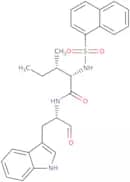
CAS:<p>1-Naphthalenylsulfonyl-Ile-Trp-aldehyde is a recombinant protein that has protease activity. It is a serine protease that cleaves proteins at the amino acid sequence Ser-Xaa-Gly or Ser-Xaa. The recombinant protein has been shown to have proteolytic activity and can be used in assays to measure the amount of β-catenin, collagen, and growth factor in cells. 1-Naphthalenylsulfonyl-Ile-Trp-aldehyde also binds to monoclonal antibodies and can be used as a neutralizing agent for these proteins. This recombinant protein also has been shown to inhibit the growth of lung fibroblasts.</p>Formula:C27H29N3O4SPurity:Min. 95%Color and Shape:PowderMolecular weight:491.6 g/mol4-(Pyrimidin-2-yl)benzaldehyde
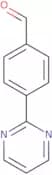
CAS:<p>Please enquire for more information about 4-(Pyrimidin-2-yl)benzaldehyde including the price, delivery time and more detailed product information at the technical inquiry form on this page</p>Formula:C11H8N2OPurity:Min. 95%Color and Shape:PowderMolecular weight:184.19 g/mol3-Chloro-1H-indole-2-carbaldehyde
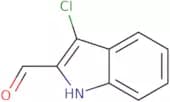
CAS:<p>3-Chloro-1H-indole-2-carbaldehyde is a bifunctional reagent that can be used to form amides. It reacts with primary and secondary amines, as well as dialkyl and methylene amines, to produce the corresponding chloro-, phenylhydrazine-, or nitrosoaminoureas. This reaction is intramolecular and yields the desired product in high yield. The reactant can also be used as a chloride source. 3-Chloro-1H-indole-2-carbaldehyde is manufactured by reacting phenylhydrazine with chloroacetic acid in an organic solvent at room temperature (25°C).</p>Formula:C9H6ClNOPurity:Min. 95%Molecular weight:179.6 g/mol4,4-difluorocyclohexane-1-carbaldehyde
CAS:<p>Please enquire for more information about 4,4-difluorocyclohexane-1-carbaldehyde including the price, delivery time and more detailed product information at the technical inquiry form on this page</p>Formula:C7H10F2OPurity:Min. 95%Color and Shape:Colorless PowderMolecular weight:148.15 g/mol3-(Trifluoromethyl)benzaldehyde
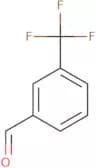
CAS:<p>3-(Trifluoromethyl)benzaldehyde is an organic compound that has the chemical formula C8H7FO. It is a trifunctional molecule with three phenolic hydroxyl groups, which makes it a good candidate for drug design. 3-(Trifluoromethyl)benzaldehyde can be synthesized by reacting an imine with a chiral acid chloride in the presence of a base and a catalytic amount of DMAP. The reaction yield is low, but this synthetic method is efficient. 3-(Trifluoromethyl)benzaldehyde has been shown to inhibit the growth of Mycobacterium avium, but not Mycobacterium tuberculosis or other bacteria such as Listeria monocytogenes and Escherichia coli. This might be due to its ability to inhibit protein synthesis by binding to ribosomes. This compound also possesses anti-inflammatory properties and inhibits leukemia Hl-</p>Formula:C8H5F3OPurity:Min. 95%Color and Shape:Clear LiquidMolecular weight:174.12 g/mol2-Methylvaleraldehyde
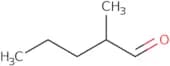
CAS:<p>2-Methylvaleraldehyde is a colorless liquid with a pleasant odor. It is soluble in water and has an acidity of about 8.2%. The chemical formula for 2-methylvaleraldehyde is C6H12O2, and it has a molecular weight of 108.18 g/mol. 2-Methylvaleraldehyde can be obtained by the oxidation of cinnamic acid or by reduction of acetone with sodium borohydride or lithium aluminum hydride. 2-Methylvaleraldehyde can react with sodium carbonate or calcium carbonate to form sodium methoxyethoxide or calcium methoxyethoxide, respectively. The reaction intermediates are methyl ethyl ketone (MEK) and dimethyl ether (DME). These compounds are used in the synthesis of various other chemicals, including pentane, butadiene, and chloroprene. Pentane is a colorless liquid that has an odor threshold at 1</p>Formula:C6H12OPurity:Min. 95%Molecular weight:100.16 g/mol10-Chloro-9-anthraldehyde
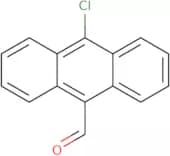
CAS:<p>10-Chloro-9-anthraldehyde is an antibacterial agent that exhibits activity against a wide variety of bacteria. It is the product of the photomodification of anthracene, which is activated by ultraviolet light to produce 10-chloro-9-anthraldehyde. The preliminary functional studies of this compound indicate that it may be used in coatings for polymers and textiles as well as in innovative applications such as fluorescence labeling and immunoassays. 10-Chloro-9-anthraldehyde also has a protonation site at the 9 position, making it useful for conjugation with biomolecules.</p>Formula:C15H9ClOPurity:Min. 95%Molecular weight:240.68 g/mol1,3-Dimethyl-1H-pyrazole-5-carbaldehyde
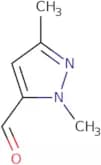
CAS:<p>Please enquire for more information about 1,3-Dimethyl-1H-pyrazole-5-carbaldehyde including the price, delivery time and more detailed product information at the technical inquiry form on this page</p>Formula:C6H8N2OPurity:Min. 95%Molecular weight:124.14 g/mol5-Bromo-2-furaldehyde
CAS:<p>5-Bromo-2-furaldehyde is a chemical compound that belongs to the class of heterocycles. It is used in industry as a precursor for the synthesis of other organic compounds. 5-Bromo-2-furaldehyde has been shown to have anti-inflammatory properties, which may be due to its ability to inhibit prostaglandin synthesis. The use of this chemical has been linked with autoimmune diseases and cancer development in animal models. 5-Bromo-2-furaldehyde is an environmental pollutant that can enter the body by ingestion or inhalation, and it can cause irritation of the skin, eyes, nose, throat, and lungs. This chemical is also known as amide or suzuki coupling reaction (SCR).</p>Formula:C5H3BrO2Purity:Min. 98%Color and Shape:Off-White To Yellow To Light Brown SolidMolecular weight:174.98 g/mol6-Chloro-1,3-dimethyl-1H-pyrazolo[3,4-b]pyridine-5-carboxaldehyde
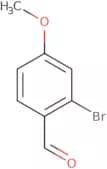
CAS:<p>Please enquire for more information about 6-Chloro-1,3-dimethyl-1H-pyrazolo[3,4-b]pyridine-5-carboxaldehyde including the price, delivery time and more detailed product information at the technical inquiry form on this page</p>Formula:C9H8ClN3OPurity:Min. 95%Molecular weight:209.63 g/mol2-Bromo-4-methoxybenzaldehyde
CAS:<p>2-Bromo-4-methoxybenzaldehyde is a cyclic, stereoselectively eliminable, acrylate that can be used in the asymmetric synthesis of sulfamidate and lactam. It can also be used to synthesize quinoline derivatives with aluminium chloride. This product has been shown to yield good yields when reacted with functional groups such as halides and nature. 2-Bromo-4-methoxybenzaldehyde is found in biomolecular reactions.</p>Formula:C8H7BrO2Color and Shape:PowderMolecular weight:215.04 g/mol4-Nitro lenalidomide
CAS:<p>4-Nitro lenalidomide is an organic compound that is a derivative of the drug lenalidomide. It is synthesized by reacting 2-nitrobenzaldehyde with amines, yielding 4-nitro-N-(2-chloroethyl)-N-(2,3-dihydroxypropyl)benzamide or 4-nitrolenalidomide. This reaction occurs in tetrahydrofuran (THF) as a solvent and in the presence of sodium borohydride (NaBH4). The four nitro groups are used to control the enantiomeric purity of the product. The chemical formula for 4-nitro lenalidomide is C12H14ClNO2.</p>Formula:C13H11N3O5Purity:Min. 95%Molecular weight:289.24 g/molBenalaxyl
CAS:<p>Benalaxyl is an insecticide that belongs to the group of organochlorine compounds. It is a chiral compound that has been used in analytical methods for wastewater treatment and as an anti-fouling agent. Benalaxyl has been shown to possess acute toxicity, based on the results of redox cycle experiments, cell nuclei studies, enzyme activities, and rat liver microsomes. Toxicological studies have also shown that benalaxyl can cause high levels of resistance in nutrient solutions, energy metabolism, and synthesis methods.</p>Formula:C20H23NO3Purity:Min. 95%Molecular weight:325.4 g/mol






![6-Chloro-1,3-dimethyl-1H-pyrazolo[3,4-b]pyridine-5-carboxaldehyde](/_next/image/?url=https%3A%2Fstatic.cymitquimica.com%2Fproducts%2F3D%2Fthumb-webp%2FFC30642.webp&w=3840&q=75)