Aldehydes
Aldehydes are organic compounds containing a carbonyl group (C=O) bonded to at least one hydrogen atom. These versatile compounds are fundamental in various chemical reactions, including oxidation, reduction, and nucleophilic addition. Aldehydes are essential building blocks in the synthesis of pharmaceuticals, fragrances, and polymers. At CymitQuimica, we provide a diverse selection of high-quality aldehydes to support your research and industrial applications.
Found 8540 products of "Aldehydes"
Sort by
Purity (%)
0
100
|
0
|
50
|
90
|
95
|
100
3-Hydroxyisonicotinaldehyde
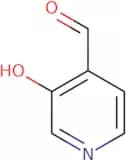
CAS:<p>3-Hydroxyisonicotinaldehyde is a disulfide bond that plays an important role in enzyme catalysis. The active site of the enzyme, which contains a nucleophilic attack on the electrophilic carbon atom, is composed of two cysteine residues with their sulfhydryl group (-SH) bonded to each other through a disulfide bond. This bond can be broken by either an acidic environment or protonation. In the absence of these conditions, the -SH groups are coordinated to metal ions and form a complex. The hydroxyl group (-OH) on one cysteine residue can coordinate to the nitrogen atom on the other cysteine residue and form tautomers. These tautomers correspond to two different configurations of the molecule: one where both sulfur atoms are in a trans configuration (tautomer A), and one where they are in a cis configuration (tautomer B). The biological properties of 3-hydroxyison</p>Formula:C6H5NO2Purity:Min. 95%Molecular weight:123.11 g/molBoc-Tyr(Bzl)-aldehyde
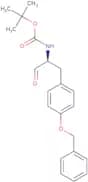
CAS:<p>Please enquire for more information about Boc-Tyr(Bzl)-aldehyde including the price, delivery time and more detailed product information at the technical inquiry form on this page</p>Formula:C21H25NO4Purity:Min. 95%Molecular weight:355.43 g/mol5-(2-Bromo-acetyl)-2-hydroxy-benzaldehyde
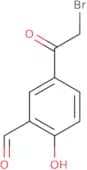
CAS:<p>5-Bromo-2-hydroxybenzaldehyde is an organic compound with a chemical formula of CHBrO. It is a white solid that is soluble in water, ethanol, and acetone. The synthesis of 5-bromo-2-hydroxybenzaldehyde has been achieved by the acylation reaction of benzaldehyde with bromide ion. The selectivity for this reaction can be increased by using sodium borohydride as a reducing agent instead of lithium aluminum hydride. This method can be applied to the synthesis of salmeterol, which is used as a medicine in the treatment of asthma.</p>Formula:C9H7BrO3Purity:Min. 95%Molecular weight:243.05 g/molN-Boc-4-piperidineacetaldehyde
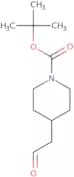
CAS:<p>N-Boc-4-piperidineacetaldehyde is a chiral, stable, and readily available aldehyde. It has been used in the synthesis of various biologically active molecules including imidazolidinones, which are important for their use as catalysts in organic chemistry. The synthesis of this molecule by the condensation of 4-piperidineacetic acid with acetaldehyde followed by reduction with sodium borohydride is an example of this type of reaction. N-Boc-4-piperidineacetaldehyde can be used to synthesize imines and linkers that are covalently bonded to the protein backbone. This molecule also has conformational stability and is not susceptible to oxidation or radiation damage.</p>Formula:C12H21NO3Purity:Min. 95%Molecular weight:227.3 g/molZ-Pro-Pro-aldehyde-dimethyl acetal
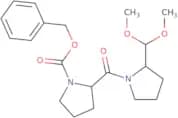
CAS:<p>Z-Pro-Pro-aldehyde-dimethyl acetal is a neurotoxin that can be used to label lysosomal enzymes in cells. The labeling is stable and does not interfere with the enzymatic activity of the enzyme. It has been shown to exacerbate neurological disease in mice, including Alzheimer's disease, Parkinson's disease, and amyotrophic lateral sclerosis. Z-Pro-pro-aldehyde-dimethyl acetal binds to microglia cells and induces reactive oxygen species production, which may contribute to cell damage. This toxin also diffracts light at a wavelength of 630 nm when exposed to X-rays, making it useful for labeling lysosomal enzymes in tissue sections or cell supernatants.</p>Formula:C20H28N2O5Purity:Min. 95%Molecular weight:376.45 g/molAc-Leu-Val-Lys-aldehyde
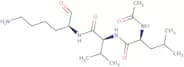
CAS:<p>Please enquire for more information about Ac-Leu-Val-Lys-aldehyde including the price, delivery time and more detailed product information at the technical inquiry form on this page</p>Formula:C19H36N4O4Purity:Min. 95%Molecular weight:384.51 g/mol2-Amino-4-fluorobenzaldehyde
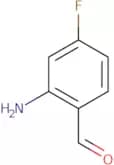
CAS:<p>2-Amino-4-fluorobenzaldehyde is a plant growth regulator that has been shown to be effective at increasing the yield of flowers and fruit crops. It is used as an intermediate in the synthesis of agrochemicals, such as 2-aminobenzaldehyde and anthranilic acid. The biosynthesis of 2-amino-4-fluorobenzaldehyde starts from methanol and intermediates such as anthranilic acid, aminoaldehydes, or alcohols. It can also be produced by oxidative coupling of 2-aminobenzaldehyde with phenylacetone in the presence of sodium hydroxide. 2-Amino-4-fluorobenzaldehyde has been shown to be more efficient than other plant growth regulators such as robinia or aminocyclopentane carboxylic acid (ACC).</p>Formula:C7H6FNOPurity:Min. 95%Color and Shape:SolidMolecular weight:139.13 g/mol2,4-Dichlorobenzaldehyde
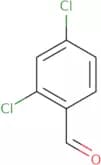
CAS:<p>2,4-Dichlorobenzaldehyde is a compound that is a member of the class of phenylpropanoids. It has been shown to react with curcumin analogues to form 1,3-dichloro-2,4-bis(chloromethyl)benzene and 1,3-dichloro-2,4-(1′,2′-dichloroethoxy)benzene. These products have been found to have high values for fluorescence analysis. This molecule also has physiological effects as a growth regulator and antimicrobial agent. 2,4-Dichlorobenzaldehyde has been used in analytical methods such as dihedral angle determination and synthetic processes like the synthesis of benzaldehydes.</p>Formula:C7H4Cl2OPurity:Min. 95%Color and Shape:PowderMolecular weight:175.01 g/molAc-Ile-Glu-Thr-Asp-aldehyde (pseudo acid)
CAS:<p>Ac-Ile-Glu-Thr-Asp-aldehyde (pseudo acid) is a neurotrophic factor that plays an important role in the development and function of the nervous system. It stimulates the production of other neurotrophic factors such as NGF, BDNF, and GDNF. This protein has been shown to be involved in a number of autoimmune diseases, including multiple sclerosis and rheumatoid arthritis. Ac-Ile-Glu-Thr-Asp-aldehyde (pseudo acid) is also known to reduce neuronal death by binding to toll receptors on neurons and activating mitogen activated protein kinases. Acetylcholine esterase activity can also be inhibited by this protein. Acetylcholine esterase is responsible for breaking down acetylcholine, which is a neurotransmitter that transmits nerve impulses across the synapses between neurons. The inhibition of this enzyme leads to an increase in acetylcholine levels and increased transmission of</p>Formula:C21H34N4O10Purity:Min. 95%Molecular weight:502.52 g/mol4-Nitrobenzaldehyde
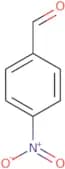
CAS:<p>4-Nitrobenzaldehyde is a reactive compound that has been shown to have antimicrobial activity. It is used in the synthesis of antibiotics and other pharmaceuticals. 4-Nitrobenzaldehyde binds to the mitochondrial membrane potential, which leads to the disruption of aerobic respiration. This compound has also been shown to bind to human serum proteins, such as albumin. The mechanism of this binding is through hydrogen bonding interactions with the amine groups on the protein surface. The reaction of 4-nitrobenzaldehyde with sodium carbonate results in an equilibrium between nitrobenzene and 4-nitrophenol. The equilibrium constant for this reaction can be determined experimentally by measuring the solubility of these compounds at different concentrations. <br>4-Nitrobenzaldehyde can be used as a model system for studying electron transfer reactions in electrochemistry through its interaction with methyl ethyl ketone (MEK) and pyridine (PYR). MEK</p>Formula:C7H5NO3Purity:Min. 92%Color and Shape:Slightly Yellow PowderMolecular weight:151.12 g/mol5-Bromo-2-hydroxybenzaldehyde
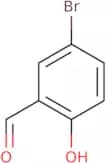
CAS:<p>5-Bromo-2-hydroxybenzaldehyde (5BHB) is an organic compound that has been shown to have a coordination geometry of group p2. This compound binds to DNA and RNA, inhibiting the transcription process. 5BHB also has the ability to form a copper complex with malonic acid. This redox potential is reduced by one electron when copper is added in order to form the copper complex, which allows for the reactivity of 5BHB to be increased. 5BHB binds to nucleic acids through hydrogen bonding interactions with nitrogen atoms and lone pairs on oxygen atoms. The reaction mechanism for 5BHB involves intramolecular hydrogen transfer from one molecule of 5BHB to another, forming an intermediate that then reacts with nucleic acid.</p>Formula:C7H5BrO2Purity:Min. 95%Color and Shape:White PowderMolecular weight:201.02 g/mol3,5-Dibenzyloxybenzaldehyde
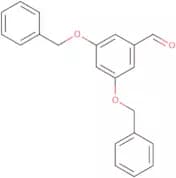
CAS:<p>3,5-Dibenzyloxybenzaldehyde is a molecule that has been shown to induce apoptosis in prostate cancer cells. It binds to the survivin protein and prevents its function. 3,5-Dibenzyloxybenzaldehyde also has anti-cancer properties due to its ability to inhibit the growth of cultured prostate cancer cells in vitro. This compound can be used as a photophysical probe for radiation studies or as a fatty acid monomer for metathesis reactions. The molecule is also active against cox-2 inhibitory activity and has been shown to have clinical efficacy in diazepine synthesis.</p>Formula:C21H18O3Purity:Min. 95%Molecular weight:318.37 g/mol2-Bromo-5-hydroxy-4-methoxybenzaldehyde
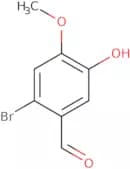
CAS:<p>2-Bromo-5-hydroxy-4-methoxybenzaldehyde is a death pathway inhibitor that has been shown to have radiosensitizing effects in vitro. It has also been found to inhibit the expression of matrix metalloproteinase (MMP) in human glioma cells and in a rat model of cerebral ischemia. This compound may be used as a potential chemotherapeutic agent for the treatment of cancer. 2-Bromo-5-hydroxy-4-methoxybenzaldehyde inhibits cell proliferation by inducing apoptosis, or programmed cell death, which may be due to its ability to suppress MMP activity.</p>Formula:C8H7BrO3Purity:Min. 95%Color and Shape:PowderMolecular weight:231.04 g/mol1-H-Pyrazole-3-carboxaldehyde
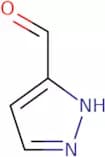
CAS:<p>1-H-Pyrazole-3-carboxaldehyde (1HP) is a β-unsaturated ketone that has been shown to inhibit the growth of chronic pulmonary fungal infections, such as histoplasmosis, coccidioidomycosis, and blastomycosis. It has also been shown to have anticancer activity in vitro and in vivo. 1HP inhibits cellular proliferation by inducing cell cycle arrest at the G(2)/M checkpoint. The molecular mechanism of this inhibition is due to an increase in the expression of p21 protein and p27 protein, which are tumor suppressor proteins that regulate progression through the cell cycle. 1HP also inhibits HIV infection by inhibiting reverse transcriptase and proteases, which are enzymes involved in viral replication. This compound binds to active methylene groups on the enzyme's surface, blocking its ability to perform chemical reactions with other molecules. 1HP also has strong inhibitory effects on cancer cells because it causes structural</p>Formula:C4H4N2OPurity:Min. 95%Molecular weight:96.09 g/molAc-Val-Asp-Val-Ala-Asp-aldehyde (pseudo acid)
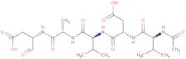
CAS:<p>Ac-Val-Asp-Val-Ala-Asp-aldehyde is a pseudo acid that is used in molecular modeling and kinetic studies. Ac-Val-Asp-Val-Ala-Asp-aldehyde has been shown to be a potent inhibitor of caspase activity and has been shown to inhibit the activity of various other enzymes as well, including cyclohexane ring hydroxylases and nitroreductases. Ac-Val-Asp-Val-Ala-Asp--aldehyde analogs are being studied for their ability to bind to specific proteins or inhibit enzyme activities. Ac-- Val-- Asp-- Val-- Ala-- Asp-- aldehyde binds to the active site of caspase 3 and prevents it from cleaving its target protein, which leads to cell death.</p>Formula:C23H37N5O10Purity:Min. 95%Molecular weight:543.57 g/mol3-Bromobenzaldehyde
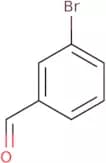
CAS:<p>3-Bromobenzaldehyde is an organic compound with the formula CHBrCHO. It is a colorless liquid that is soluble in many organic solvents. 3-Bromobenzaldehyde can be synthesized by the reaction of ethyl acetoacetate and anhydrous sodium in methanol, and can be purified by distillation or recrystallization from ethanol. This compound has been used as a solvent for analytical methods, such as GC-MS analysis, due to its high boiling point and low volatility. 3-Bromobenzaldehyde also reacts with hydrogen chloride to form benzoyl chloride, which can then be reacted with alcohols to produce esters. 3-Bromobenzaldehyde has been shown to react with chalcones to form optical active compounds, such as curcumin analogues. These reactions are typically carried out in solution using acetic acid or sulfuric acid as a catalyst.br>br></p>Formula:C7H5BrOPurity:Min. 95%Molecular weight:185.02 g/molPoly[(phenyl glycidyl ether)-co-formaldehyde] - Average MW 570
CAS:<p>Please enquire for more information about Poly[(phenyl glycidyl ether)-co-formaldehyde] - Average MW 570 including the price, delivery time and more detailed product information at the technical inquiry form on this page</p>Formula:(C6H6O•CH2O)xPurity:Min. 95%Color and Shape:Clear Liquid2,3,5-Trichlorobenzaldehyde
CAS:<p>2,3,5-Trichlorobenzaldehyde is a chemical compound that has been shown to have anticancer and apoptotic effects. It inhibits the growth of bacteria by chelating iron ions and inhibiting bacterial dna synthesis. 2,3,5-Trichlorobenzaldehyde has also been shown to inhibit the growth of cancer cells in culture in an experimental study. This chemical has been used as a substrate for nmr spectroscopy to study its functional groups and radical scavenging activities. 2,3,5-Trichlorobenzaldehyde can be synthesized from phenacyl chloride and benzaldehyde in the presence of hydrogen chloride gas. The carbonyl group in 2,3,5-trichlorobenzaldehyde may cause metabolic disorders such as diabetes mellitus or hyperglycemia.</p>Formula:C7H3Cl3OPurity:Min. 95%Color and Shape:PowderMolecular weight:209.46 g/moltrans,cis-2,6-Nonadienal
CAS:<p>Trans,cis-2,6-Nonadienal is a fatty acid derivative with an unsaturated 2,6-nonadiene structure. It is an inhibitor of the enzyme fatty acid synthase, which catalyzes the formation of long-chain polyunsaturated fatty acids. Trans,cis-2,6-Nonadienal has been shown to inhibit v79 cells and ester compounds that are used in analytical methods for measuring fatty acids. It is also able to inhibit lysine residues and it can be used as a reactive antioxidant system in mammalian cells. Trans,cis-2,6-Nonadienal has shown a profile of activities that includes inhibition at multiple endpoints involving noncompetitive inhibition as well as antioxidant activity.</p>Formula:C9H14OPurity:Min. 95%Color and Shape:Clear LiquidMolecular weight:138.21 g/mol(+/-)-Perillaldehyde
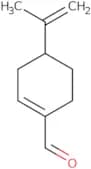
CAS:<p>Perillaldehyde is a natural compound that has been used in food and medicine for centuries. It is an antimicrobial agent with dextran sulfate, which is a sugar polymer that inhibits the growth of fungi and bacteria. Perillaldehyde also has been shown to inhibit the energy metabolism of microorganisms by decreasing ATP production. Perillaldehyde has also been shown to have genotoxic activity, as it can cause DNA strand breaks. This compound also causes oxidative stress in cells by reducing mitochondrial membrane potential and inducing reactive oxygen species (ROS). Perillaldehyde has acute toxicities, as it causes electrochemical impedance spectroscopy changes that indicate cell death.</p>Formula:C10H14OPurity:Min. 95%Color and Shape:PowderMolecular weight:150.22 g/mol

![Poly[(phenyl glycidyl ether)-co-formaldehyde] - Average MW 570](/_next/image/?url=https%3A%2Fstatic.cymitquimica.com%2Fproducts%2F3D%2Fthumb-webp%2FFP158268.webp&w=3840&q=75)