Aldehydes
Aldehydes are organic compounds containing a carbonyl group (C=O) bonded to at least one hydrogen atom. These versatile compounds are fundamental in various chemical reactions, including oxidation, reduction, and nucleophilic addition. Aldehydes are essential building blocks in the synthesis of pharmaceuticals, fragrances, and polymers. At CymitQuimica, we provide a diverse selection of high-quality aldehydes to support your research and industrial applications.
Found 8540 products of "Aldehydes"
Sort by
Purity (%)
0
100
|
0
|
50
|
90
|
95
|
100
(9H-fluoren-9-yl)methyl decyl(2-oxoethyl)carbamate
CAS:Purity:98+%Molecular weight:421.58099365234375(3R,7aR)-3-(tert-Butyl)-1,5-dioxohexahydropyrrolo[1,2-c]oxazole-7a-carbaldehyde
CAS:Purity:97.0%Molecular weight:225.244003295898442-(4-Fluoro-phenyl)-imidazo[1,2-a]pyridine-3-carboxaldehyde
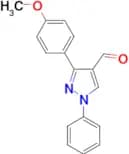
CAS:Purity:95.0%Molecular weight:240.236999511718753-(4-Methoxy-phenyl)-1-phenyl-1 H -pyrazole-4-carbaldehyde
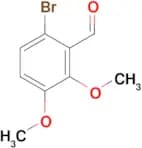
CAS:Purity:95.0%Molecular weight:278.31100463867196-Bromo-2,3-dimethoxy-benzaldehyde
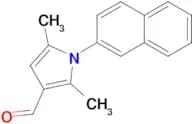
CAS:Formula:C9H9BrO3Purity:97%Color and Shape:SolidMolecular weight:245.0722,5-dimethyl-1-(2-naphthyl)-1H-pyrrole-3-carbaldehyde
CAS:Purity:95.0%Molecular weight:249.313003540039065-(3-Chloro-2-methyl-phenoxymethyl)-furan-2-carbaldehyde
CAS:Formula:C13H11ClO3Color and Shape:SolidMolecular weight:250.68Tert-Butyl 4-(2-oxoethyl)bicyclo[2.2.1]heptane-1-carboxylate
CAS:Purity:98%Molecular weight:238.326995849609381-Boc-6-benzyloxy-3-formylindole
CAS:Purity:95.0%Color and Shape:SolidMolecular weight:351.4020080566406(E)-3-[3-(4-Fluorophenyl)-1-isopropyl-1H-indol-2-yl]-propenal
CAS:Purity:97.0%Color and Shape:SolidMolecular weight:307.36801147460942-Fluoro-4-pyrrolidin-1-yl-benzaldehyde
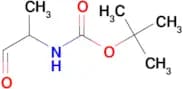
CAS:Formula:C11H12FNOPurity:98%Color and Shape:SolidMolecular weight:193.221(1-Methyl-2-oxoethyl)carbamic acid tert-butyl ester
CAS:Purity:90.0%Color and Shape:SolidMolecular weight:173.212005615234382-chloro-7,8-dihydro-6H-cyclopenta[g]quinoline-3-carbaldehyde
CAS:Purity:95.0%Molecular weight:231.679992675781251-BOC-4-(3-FORMYL-4-HYDROXYPHENYL)PIPERAZINE
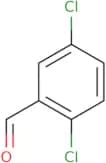
CAS:Formula:C16H22N2O4Purity:97.0%Color and Shape:Liquid, No data available.Molecular weight:306.3622,5-Dichlorobenzaldehyde
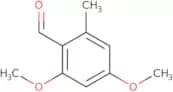
CAS:<p>2,5-Dichlorobenzaldehyde is a molecule that is used as a building block for the synthesis of etoposide. Etoposide is an anticancer drug that has been shown to be effective against many types of cancer cells. 2,5-Dichlorobenzaldehyde has been proposed as an optical probe for detecting methyltransferase activity in vivo and in vitro. It has also been shown to inhibit the proliferation of cancer cells by binding to survivin, which plays a role in regulating apoptosis. 2,5-Dichlorobenzaldehyde can be synthesized from commercially available chemicals with asymmetric synthesis methods. The molecule can also be used for functional studies on metal ions and dipole interactions.</p>Formula:C7H4Cl2OPurity:Min. 95%Molecular weight:175.01 g/mol2,4-Dimethoxy-6-methylbenzaldehyde
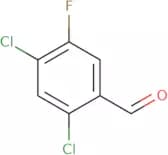
CAS:<p>2,4-Dimethoxy-6-methylbenzaldehyde is a biomolecular that belongs to the class of depsidones. It is a tetracyclic compound that has been isolated from the fungus Antrodia camphorata and the lichen Xanthoria polycarpa. 2,4-Dimethoxy-6-methylbenzaldehyde has been shown to inhibit the growth of fungi by preventing oxidative phosphorylation in mitochondria. This compound also shows regioselectivity for phenanthrenes, which are aromatic hydrocarbons with two benzene rings and one or more methyl groups on each ring. The synthesis of 2,4-dimethoxy-6-methylbenzaldehyde is achieved through a Witting reaction between olefinic compounds and diethyl malonate in the presence of base. 2,4-Dimethoxy-6-methylbenzaldehyde can also be synthesized by oxidizing dib</p>Formula:C10H12O3Purity:Min. 95%Color and Shape:PowderMolecular weight:180.2 g/mol2,4-Dichloro-5-fluorobenzaldehyde
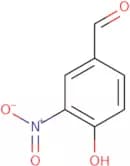
CAS:<p>2,4-Dichloro-5-fluorobenzaldehyde (2,4-DFCA) is a functional group that can be found in inorganic, fatty acids, and fatty acid. 2,4-DFCA has been shown to increase insulin-like growth factor I (IGF-I) levels in vitro and in vivo. 2,4-DFCA also increases the expression of IGF-I gene polymorphisms. This compound is used to induce insulin resistance by increasing serum level of IGF-I. 2,4-DFCA also inhibits the activity of a protein called impeller that is required for cardiac contractility. This compound can be found on the surface of untreated control cells.</p>Formula:C7H3Cl2FOPurity:Min. 95%Color and Shape:PowderMolecular weight:193 g/mol4-Hydroxy-3-nitrobenzaldehyde
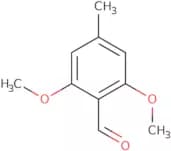
CAS:<p>4-Hydroxy-3-nitrobenzaldehyde (4NBA) is a chemical compound that belongs to the class of aromatic compounds. It is an intermediate in the synthesis of various pharmaceuticals, including benzocaine and nitroglycerin, and has been researched for its potential use in cancer diagnosis. 4NBA has shown optical properties that allow it to be used as a model system for studying the interactions between water and benzyl groups. It also possesses anti-inflammatory properties due to its ability to inhibit the production of inflammatory cytokines such as IL-1β, IL-6, and TNFα.</p>Formula:C7H5NO4Purity:Min. 95%Color and Shape:PowderMolecular weight:167.12 g/mol2,6-Dimethoxy-4-methylbenzaldehyde
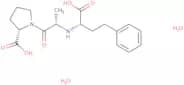
CAS:<p>2,6-Dimethoxy-4-methylbenzaldehyde (DMMB) is a useful chemical that is used as a building block in the synthesis of complex compounds. It has been shown to be an effective chemical intermediate and can be used in the synthesis of various products, such as pharmaceuticals and pesticides. DMMB can also be used to produce high quality research chemicals.</p>Formula:C10H12O3Purity:Min. 95%Color and Shape:PowderMolecular weight:180.2 g/molEnalaprilat dihydrate
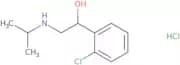
CAS:<p>Enalaprilat is an angiotensin-converting enzyme (ACE) inhibitor that prevents the formation of angiotensin II, a potent vasoconstrictor. It is used to treat high blood pressure and congestive heart failure. Enalaprilat is metabolized to enalapril, which has been found to act as an active inhibitor of DNA polymerase. This drug is also capable of inhibiting the synthesis of other proteins, such as those involved in protein transport and cell wall biogenesis.</p>Formula:C18H28N2O7Purity:Min. 98 Area-%Color and Shape:PowderMolecular weight:384.42 g/molClorprenaline HCl
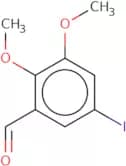
CAS:<p>β2-adrenergic receptor agonist</p>Formula:C11H17Cl2NOPurity:Min. 95%Color and Shape:PowderMolecular weight:250.16 g/mol5-Iodo-2,3-dimethoxybenzaldehyde
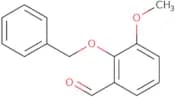
CAS:<p>5-Iodo-2,3-dimethoxybenzaldehyde is a fine chemical that is useful as a scaffold for the synthesis of other compounds. It can be used as an intermediate for research chemicals or as a reaction component in the synthesis of complex compounds. 5-Iodo-2,3-dimethoxybenzaldehyde is used for the manufacture of high quality reagents and building blocks.</p>Formula:C9H9IO3Purity:Min. 95%Color and Shape:PowderMolecular weight:292.07 g/mol2-Benzyloxy-3-methoxybenzaldehyde
CAS:<p>2-Benzyloxy-3-methoxybenzaldehyde is an enantiopure compound that has been shown to have antiproliferative effects on cancer cells. It was also found to have a strong binding affinity for DNA and protein. The antiproliferative effects of 2-Benzyloxy-3-methoxybenzaldehyde were found to be due to its ability to bind to dna and inhibit the enzyme activity of pyrazine-2-carboxylic acid, leading to a decrease in the production of proteins vital for cell division. 2-Benzyloxy-3-methoxybenzaldehyde has been shown to have anticancer activity against colorectal cancer cells and may serve as a lead compound for future drug development.</p>Formula:C15H14O3Purity:Min. 95%Molecular weight:242.27 g/mol4-Chloro-2-methylbenzaldehyde
CAS:<p>4-Chloro-2-methylbenzaldehyde is a nucleophilic and electrophilic compound that has a carbonyl group. The vivo model of 4-Chloro-2-methylbenzaldehyde suggests that the methyl groups on the molecule are important for its anti-cancer activities. This compound also has anti-inflammatory properties, which may be due to its ability to inhibit prostaglandin synthesis. It is used in anti-cancer agents as well as in other applications such as catalysis and synthetic chemistry. 4-Chloro-2-methylbenzaldehyde is synthesized by first reacting benzaldehyde with sodium nitrite, followed by chlorination with phosphorus pentachloride and sodium hydroxide. The mechanistic details of this reaction have not been elucidated yet, but it is believed that the selectivity of this reaction may be due to the presence of aldehydes in the reactants. Further optimization of this reaction would involve changing the</p>Formula:C8H7ClOPurity:Min. 95%Color and Shape:Clear LiquidMolecular weight:154.59 g/mol4-Methoxy-2-methylbenzaldehyde
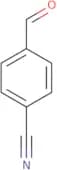
CAS:<p>4-Methoxy-2-methylbenzaldehyde (4MMBA) is a synthetic chemical that is used as an antifungal agent. It interacts with the cellular membranes of fungi and disrupts their ability to maintain homeostasis. 4MMBA inhibits the growth of invasive aspergillosis by inhibiting protein synthesis, which leads to cell death. The mechanism of action for 4MMBA is not well understood, but it has been shown to inhibit the growth of fungi in a model system. It also inhibits the production of pyrylium, which may be responsible for its activity against fungi.</p>Formula:C9H10O2Purity:90%Molecular weight:150.17 g/mol4-Cyanobenzaldehyde
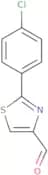
CAS:<p>4-Cyanobenzaldehyde is an acid that inhibits tyrosinase, an enzyme involved in the production of melanin. It has been shown to have a strong inhibitory effect on the activity of this enzyme in a variety of biological studies. 4-Cyanobenzaldehyde is chemically stable and does not react with hydrochloric acid or water at room temperature, making it suitable for use in experiments involving these substances. This chemical also has antiinflammatory properties and can be used as a substitute for phenols in some chemical reactions. 4-Cyanobenzaldehyde is soluble in methanol and reacts with diphenolase, an enzyme involved in the synthesis of lignin, to produce benzophenone and benzoic acid. This reaction may be important for the formation of lignin during wood decomposition.</p>Formula:C8H5NOPurity:80%Color and Shape:PowderMolecular weight:131.13 g/mol2-(4-Chlorophenyl)thiazole-4-carbaldehyde
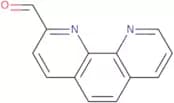
CAS:<p>Please enquire for more information about 2-(4-Chlorophenyl)thiazole-4-carbaldehyde including the price, delivery time and more detailed product information at the technical inquiry form on this page</p>Formula:C10H6ClNOSPurity:Min. 95%Color and Shape:PowderMolecular weight:223.68 g/mol1,10-Phenanthroline-2-carbaldehyde
CAS:<p>1,10-Phenanthroline-2-carbaldehyde is a phenylhydrazone compound that has been shown to have anticancer activity. It is also a supramolecular complex, which means it can form hydrogen bonds and coordinate bonds with other molecules. The anticancer activity of 1,10-phenanthroline-2-carbaldehyde may be due to its ability to inhibit the growth of prostate carcinoma cells. This compound also inhibits the growth of human cervical carcinoma cells by binding to their DNA and inhibiting the synthesis of RNA and protein. 1,10-Phenanthroline-2-carbaldehyde is being studied for its potential as an inhibitor of tumor angiogenesis.<br>1,10-Phenanthroline-2-carbaldehyde has been shown to have antiplatelet aggregation effects in platelets from healthy humans as well as those with type 2 diabetes mellitus or chronic kidney disease.</p>Formula:C13H8N2OPurity:Min. 90 Area-%Color and Shape:Off-White PowderMolecular weight:208.22 g/mol3,5-Dibromobenzaldehyde
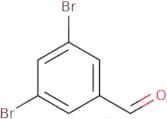
CAS:<p>3,5-Dibromobenzaldehyde is an analytical reagent that has been used as a chemosensor. The compound was synthesized by the reaction of benzaldehyde with bromine and potassium hydroxide (KOH). 3,5-Dibromobenzaldehyde has a skeleton consisting of three phenyl groups and two aldehyde groups. The compound also contains two active methylene groups and two vinylene groups. 3,5-Dibromobenzaldehyde can be detected by fluorescence probe or low energy electron diffraction. This chemical is an effective antibacterial agent with an LD50 value of 1.6 milligrams per kilogram in rats.</p>Formula:C7H4Br2OPurity:Min. 95%Color and Shape:White PowderMolecular weight:263.91 g/mol4-Methoxycinnamylidene acetaldehyde
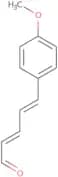
CAS:<p>4-Methoxycinnamylidene acetaldehyde is a versatile building block with a CAS number of 27394-81-6. It is used in the research and production of fine chemicals, pharmaceuticals, and high quality reagents. 4-Methoxycinnamylidene acetaldehyde can be used as a useful scaffold for the synthesis of complex compounds. This building block is also a useful intermediate in organic chemistry reactions.</p>Formula:C12H12O2Purity:Min. 95%Color and Shape:PowderMolecular weight:188.22 g/mol2,6-Dichloro-3-nitrobenzaldehyde
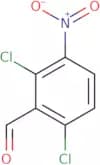
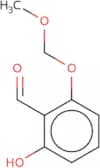
CAS:<p>2,6-Dichloro-3-nitrobenzaldehyde (DCNB) is an electrophilic bidentate ligand that reacts with chlorine to form chloroform. It is also a good ligand for many metal ions, such as copper and nickel. DCNB can catalyze the epoxidation of alkenes to form epoxides. DCNB has been used in the industrial production of chlorinated solvents and hydrocarbons. It is a very efficient reagent for formylation, which can be used to convert alcohols and amines into formyl groups or carboxylic acids. The DCN group is also an excellent leaving group, which makes it useful as a solvent in organic syntheses. Finally, DCNB reacts with chlorine atoms to produce chloride ions that are soluble in water and organic solvents.</p>Formula:C7H3Cl2NO3Purity:Min. 95%Molecular weight:220.01 g/mol2-Hydroxy-6-(methoxymethoxy)benzaldehyde
CAS:<p>2-Hydroxy-6-(methoxymethoxy)benzaldehyde is a chemical intermediate that can be used in the synthesis of a wide range of compounds. It is an aromatic compound which has two hydroxyl groups on the benzene ring. This product is a versatile building block, and is useful in the synthesis of complex compounds with high purity. 2-Hydroxy-6-(methoxymethoxy)benzaldehyde can be obtained as a white solid with a melting point of 57°C.</p>Formula:C9H10O4Purity:Min. 95%Color and Shape:Clear LiquidMolecular weight:182.17 g/mol2-Nitroterephthalaldehyde
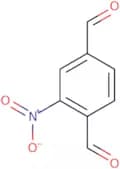
CAS:<p>2-Nitroterephthalaldehyde is a chiral molecule that can be used in the supramolecular synthesis of macrocycles. This molecule has been shown to catalyze the formation of imines, which are important for the synthesis of macrocycles. The kinetic and thermodynamic properties of 2-Nitroterephthalaldehyde have been studied and found to be favorable for this type of reaction.</p>Formula:C8H5NO4Purity:Min. 95%Color and Shape:PowderMolecular weight:179.13 g/mol4-Hydroxy-2-methylbenzaldehyde
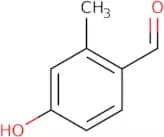
CAS:<p>4-Hydroxy-2-methylbenzaldehyde is an organic compound that is a colourless to yellow liquid with a characteristic odor. It has antibacterial activity and can be used as a natural product. The yield of this compound from staphylococcus is about 50%. When 4-hydroxy-2-methylbenzaldehyde reacts with chalcone, it forms the hydroxychalcones. This process can be used to identify the presence of 4-hydoxy-2-methylbenzaldehyde in many different organisms. The phenolic ring in this compound can undergo formylation, which means it can be oxidized to form formic acid. This process also occurs in soil bacteria and may account for some of its antibacterial properties.</p>Formula:C8H8O2Purity:Min. 95%Color and Shape:PowderMolecular weight:136.15 g/mol3-Fluoro-2-methoxybenzaldehyde
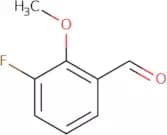
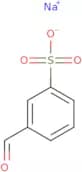
CAS:<p>3-Fluoro-2-methoxybenzaldehyde is a synthetic chemical that has been used as a precursor in the synthesis of pharmaceuticals and other organic compounds. 3-Fluoro-2-methoxybenzaldehyde can be prepared through the lithiation, chloromethylation, or trimethylation of 3-fluoroacetophenone. The compound can be oxidized to 3,4-dihydrobenzofuran with peroxide at low temperature. This conversion can be achieved using a variety of reagents, such as boron tribromide or boron trichloride.</p>Formula:C8H7FO2Purity:Min. 95%Color and Shape:Colorless PowderMolecular weight:154.14 g/mol3-Sulfobenzaldehyde sodium salt
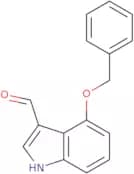
CAS:<p>3-Sulfobenzaldehyde sodium salt is a novel anticancer agent that inhibits the activity of HDACs. It has shown a strong inhibitory effect on cancer cells in vivo, and can be used for the treatment of tumors. 3-Sulfobenzaldehyde sodium salt has an anti-proliferative effect on cancer cells, which may be due to its ability to inhibit the activity of HDACs and acetylation mediated by these enzymes. This drug also has an anti-proliferative effect in tumor growth, which may be due to its ability to inhibit the HDAC cycle and acetylation, leading to cell death.</p>Formula:C7H5NaO4SPurity:85%MinColor and Shape:PowderMolecular weight:208.17 g/mol4-Benzyloxyindole-3-carboxaldehyde
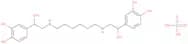
CAS:<p>4-Benzyloxyindole-3-carboxaldehyde is an analog of psilocin that is synthesized by the condensation of formylbenzene with indole-3-carboxaldehyde. It has been shown to act as a formylating agent, which can be used in the synthesis of other compounds. 4-Benzyloxyindole-3-carboxaldehyde may also be converted to n-dimethyltryptamine (DMT) by oxidation and decarboxylation.</p>Formula:C16H13NO2Purity:Min. 95%Color and Shape:PowderMolecular weight:251.28 g/molHexoprenaline sulphate
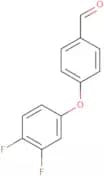
CAS:<p>β-adrenoreceptor agonist; betamimetic agent</p>Formula:C22H34N2O10SPurity:Min. 95%Color and Shape:White PowderMolecular weight:518.58 g/mol4'-(3,4-Difluorophenoxy)benzaldehyde
CAS:<p>4'-(3,4-Difluorophenoxy)benzaldehyde is an organic compound that yields a bright yellow color. It is used in the replication of DNA and RNA in the laboratory. This compound has been shown to interact with environmental conditions and significant effects have been observed for cultivars of wheat.</p>Formula:C13H8F2O2Purity:Min. 95%Molecular weight:234.2 g/mol


![(3R,7aR)-3-(tert-Butyl)-1,5-dioxohexahydropyrrolo[1,2-c]oxazole-7a-carbaldehyde](/_next/image/?url=https%3A%2Fstatic.cymitquimica.com%2Fproducts%2F10%2Fthumb-webp%2FF519658.webp&w=3840&q=75)

![2-(4-Fluoro-phenyl)-imidazo[1,2-a]pyridine-3-carboxaldehyde](/_next/image/?url=https%3A%2Fstatic.cymitquimica.com%2Fproducts%2F10%2Fthumb-webp%2FF015659.webp&w=3840&q=75)

![6-Bromo-2-p-tolyl-imidazo[1,2-a]pyridine-3-carboxaldehyde](/_next/image/?url=https%3A%2Fstatic.cymitquimica.com%2Fproducts%2F10%2Fthumb-webp%2FF015735.webp&w=3840&q=75)
![Tert-Butyl 4-(2-oxoethyl)bicyclo[2.2.1]heptane-1-carboxylate](/_next/image/?url=https%3A%2Fstatic.cymitquimica.com%2Fproducts%2F10%2Fthumb-webp%2FF786388.webp&w=3840&q=75)

![(E)-3-[3-(4-Fluorophenyl)-1-isopropyl-1H-indol-2-yl]-propenal](/_next/image/?url=https%3A%2Fstatic.cymitquimica.com%2Fproducts%2F10%2Fthumb-webp%2FF036562.webp&w=3840&q=75)

![2-chloro-7,8-dihydro-6H-cyclopenta[g]quinoline-3-carbaldehyde](/_next/image/?url=https%3A%2Fstatic.cymitquimica.com%2Fproducts%2F10%2Fthumb-webp%2FF313229.webp&w=3840&q=75)


![5-methyl-10,11-dihydro-5H-dibenzo[b,f]azepine-2-carbaldehyde](/_next/image/?url=https%3A%2Fstatic.cymitquimica.com%2Fproducts%2F10%2Fthumb-webp%2FF368096.webp&w=3840&q=75)
![[2,2'-Bi(1,3-dithiolylidene)]-4-carbaldehyde](/_next/image/?url=https%3A%2Fstatic.cymitquimica.com%2Fproducts%2F10%2Fthumb-webp%2FF759975.webp&w=3840&q=75)