Aldehydes
Aldehydes are organic compounds containing a carbonyl group (C=O) bonded to at least one hydrogen atom. These versatile compounds are fundamental in various chemical reactions, including oxidation, reduction, and nucleophilic addition. Aldehydes are essential building blocks in the synthesis of pharmaceuticals, fragrances, and polymers. At CymitQuimica, we provide a diverse selection of high-quality aldehydes to support your research and industrial applications.
Found 8540 products of "Aldehydes"
Sort by
Purity (%)
0
100
|
0
|
50
|
90
|
95
|
100
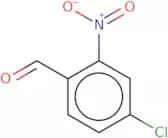
4-Chloro-2-nitrobenzaldehyde
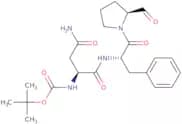
CAS:<p>4-Chloro-2-nitrobenzaldehyde is a reactive intermediate that has been used to investigate the reaction mechanism of protonation. It is an n-oxide and has been shown to react with calcium carbonate under acidic conditions, forming a stable product. 4-Chloro-2-nitrobenzaldehyde has also been used in the synthesis of amides and nitro compounds. This compound possesses two functional groups, which are a nitro group and a chloro group on the aromatic ring.</p>Formula:C7H4ClNO3Purity:Min. 95%Color and Shape:PowderMolecular weight:185.56 g/molBoc-Asn-Phe-Pro-aldehyde
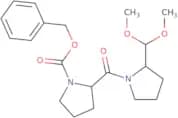
CAS:<p>Boc-Asn-Phe-Pro-aldehyde is a cytosolic proteolytic target enzyme that hydrolyzes peptides with an aliphatic amino acid residue at the carboxy terminus. It is localized in the cytoplasm, where it is activated by serine proteases. Boc-Asn-Phe-Pro-aldehyde has been shown to be effective in cell culture and supernatant. This enzyme can also be used to demonstrate the presence of a particular peptide by releasing a reactive chloride, which can be detected using tetrazolium chloride. This protease has been shown to exacerbate inflammation when administered in vivo.</p>Formula:C23H32N4O6Purity:Min. 95%Molecular weight:460.52 g/molZ-Pro-Pro-aldehyde-dimethyl acetal
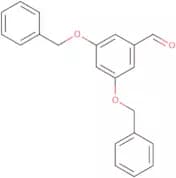
CAS:<p>Z-Pro-Pro-aldehyde-dimethyl acetal is a neurotoxin that can be used to label lysosomal enzymes in cells. The labeling is stable and does not interfere with the enzymatic activity of the enzyme. It has been shown to exacerbate neurological disease in mice, including Alzheimer's disease, Parkinson's disease, and amyotrophic lateral sclerosis. Z-Pro-pro-aldehyde-dimethyl acetal binds to microglia cells and induces reactive oxygen species production, which may contribute to cell damage. This toxin also diffracts light at a wavelength of 630 nm when exposed to X-rays, making it useful for labeling lysosomal enzymes in tissue sections or cell supernatants.</p>Formula:C20H28N2O5Purity:Min. 95%Molecular weight:376.45 g/mol3,5-Dibenzyloxybenzaldehyde
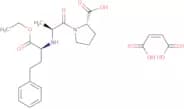
CAS:<p>3,5-Dibenzyloxybenzaldehyde is a molecule that has been shown to induce apoptosis in prostate cancer cells. It binds to the survivin protein and prevents its function. 3,5-Dibenzyloxybenzaldehyde also has anti-cancer properties due to its ability to inhibit the growth of cultured prostate cancer cells in vitro. This compound can be used as a photophysical probe for radiation studies or as a fatty acid monomer for metathesis reactions. The molecule is also active against cox-2 inhibitory activity and has been shown to have clinical efficacy in diazepine synthesis.</p>Formula:C21H18O3Purity:Min. 95%Molecular weight:318.37 g/mol(S,S,S)-Enalapril maleate
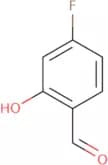
CAS:<p>Prodrug of ACE inhibitor MK-422</p>Formula:C24H32N2O9Purity:Min. 95%Color and Shape:White PowderMolecular weight:492.52 g/mol2-Hydroxy-4-fluorobenzaldehyde
CAS:<p>2-Hydroxy-4-fluorobenzaldehyde is a chemical used as a diagnosis agent to detect radiation exposure. It reacts with magnesium and water molecules to form an amination reaction that produces hydrogen fluoride gas. 2-Hydoxy-4-fluorobenzaldehyde has been shown to have the ability to penetrate into mitochondria, which may be related to its use in the treatment of hepatitis. The chemical structure of this compound is similar to salicylaldehyde, which is used as a reagent for formylation reactions and optical properties. It has also been shown that 2-hydroxy-4-fluorobenzaldehyde can act as a fluorescence probe for the detection of hydrophobic regions on proteins.</p>Formula:C7H5FO2Purity:Min. 95%Color and Shape:PowderMolecular weight:140.11 g/mol2-Chloro-3-methoxybenzaldehyde
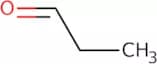
CAS:<p>Please enquire for more information about 2-Chloro-3-methoxybenzaldehyde including the price, delivery time and more detailed product information at the technical inquiry form on this page</p>Formula:C8H7ClO2Purity:Min. 95%Molecular weight:170.59 g/molPropionaldehyde
CAS:<p>Propionaldehyde is a simple aliphatic aldehyde that is used in the synthesis of other compounds. It can be synthesized by oxidizing propylene with an oxidation catalyst such as manganese dioxide or platinum metal under pressure. Propionaldehyde can also be formed by the direct oxidation of propanol using ferric chloride, but this reaction has been shown to produce a mixture of products. Propionaldehyde can be produced by the oxidation of acetaldehyde with hydrogen peroxide, which produces formaldehyde and acetone. In addition to its use as a chemical reagent, propionaldehyde has been used as an additive in nutrient solutions for experiments in plant physiology and microbiology.<br>The kinetic data for reactions involving propionaldehyde have been determined using methyl ethyl ketone (MEK) as the solvent and copper(II) sulfate pentahydrate as the catalyst. The redox potential for this molecule is -0.034 volts at pH 7,</p>Formula:C3H6OPurity:Min. 95%Color and Shape:Colorless Clear LiquidMolecular weight:58.08 g/molAc-Tyr-Val-Ala-Asp-aldehyde (pseudo acid)
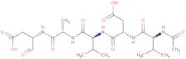
CAS:<p>Ac-Tyr-Val-Ala-Asp-aldehyde is a sesquiterpene lactone that has been shown to have anti-inflammatory properties. It inhibits the inflammatory response by inhibiting the production of pro-inflammatory cytokines and chemokines, such as IL1β, IL6, and TNFα. Ac-Tyr-Val-Ala-Asp-aldehyde also inhibits the activity of cyclooxygenase 2 (COX2) and lipoxygenase (LOX), which are enzymes that produce prostaglandins from arachidonic acid. Acetylsalicylic acid is an example of a drug with similar properties. Acetylsalicylic acid has been shown to inhibit the growth of cancer cells in tissue culture studies and in animal models. This compound may also be used to treat bowel disease, congestive heart failure, or other diseases that are characterized by increased apoptosis.</p>Formula:C23H32N4O8Purity:Min. 95%Molecular weight:492.52 g/molAc-Val-Asp-Val-Ala-Asp-aldehyde (pseudo acid)
CAS:<p>Ac-Val-Asp-Val-Ala-Asp-aldehyde is a pseudo acid that is used in molecular modeling and kinetic studies. Ac-Val-Asp-Val-Ala-Asp-aldehyde has been shown to be a potent inhibitor of caspase activity and has been shown to inhibit the activity of various other enzymes as well, including cyclohexane ring hydroxylases and nitroreductases. Ac-Val-Asp-Val-Ala-Asp--aldehyde analogs are being studied for their ability to bind to specific proteins or inhibit enzyme activities. Ac-- Val-- Asp-- Val-- Ala-- Asp-- aldehyde binds to the active site of caspase 3 and prevents it from cleaving its target protein, which leads to cell death.</p>Formula:C23H37N5O10Purity:Min. 95%Molecular weight:543.57 g/molZ-Ile-Glu(OtBu)-Ala-Leu-aldehyde
CAS:<p>Z-Ile-Glu(OtBu)-Ala-Leu-aldehyde, also known as ZILEAL, is a potent immunosuppressant that binds to the Toll-like receptor (TLR) and inhibits NF-κB binding activity. It has been shown to reduce the activation of macrophages by inhibiting the production of proinflammatory cytokines such as tumor necrosis factor alpha (TNFα), IL-1β, and IL-6. This drug has been shown to inhibit HIV replication in vitro and was also found to have an antiviral effect against herpes simplex virus type 1 in vivo. ZILEAL also inhibits dsDNA binding activity, which may have potential applications in cancer treatment.</p>Formula:C32H50N4O8Purity:Min. 95%Molecular weight:618.76 g/mol3-Acetoxybenzaldehyde
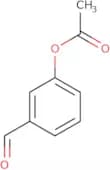
CAS:<p>3-Acetoxybenzaldehyde is a chemical compound that has been used as a photosensitiser for the production of hydrogen peroxide. When irradiated with light, it undergoes a series of reactions, including the removal of an electron from the molecule and the formation of a reactive oxygen species (ROS). This ROS then reacts with chloride ions to form chlorine radicals. These chlorine radicals can react with acetyl groups to form 3-acetoxybenzoic acid. 3-Acetoxybenzaldehyde is also used in organic synthesis to produce ketones and aldehydes. The functional groups on this compound are an acetyl group and a carbonyl group. 3-Acetoxybenzaldehyde is produced by the dehydrogenation of trimethyl acetate, which is catalyzed by palladium on charcoal or platinum oxide.</p>Formula:C9H8O3Purity:Min. 95%Color and Shape:Clear LiquidMolecular weight:164.16 g/molMethoxyacetaldehyde diethyl acetal
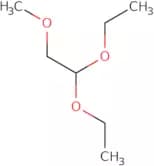
CAS:<p>Methoxyacetaldehyde diethyl acetal is a viscous liquid with a low vapor pressure. This substance is stable at high temperatures and has a high resistance to chemical interactions. It is also hydrophobic in nature. Methoxyacetaldehyde diethyl acetal has been shown to interact with the aminoglycoside antibiotics, erythromycin, streptomycin, and neomycin. The interaction of this substance with these antibiotics may be due to the fact that it has proton resonances similar to those of amino acids, as well as its ability to form hydrogen bonds with the antibiotic molecules. Methoxyacetaldehyde diethyl acetal also interacts with triethyl orthoformate, which can lead to the formation of an ester bond between them.</p>Formula:C7H16O3Purity:Min. 95%Color and Shape:Colorless Clear LiquidMolecular weight:148.2 g/moltrans-2-Hexenal
CAS:<p>Trans-2-hexenal is a natural compound that has been used as a model system for studying the toxicity of sodium salts. It is also used in studies on the enzyme activities of leaves and its carcinogenic potential. Trans-2-hexenal exhibits genotoxic effects, which may be due to its reaction with DNA or by inhibiting the polymerase chain reaction. In addition, this compound can inhibit enzymes involved in the synthesis of fatty acids, leading to cell death. Trans-2-hexenal is also found in plants and fruits such as apples, bananas, and pineapples.</p>Formula:C6H10OPurity:Min. 97 Area-%Color and Shape:Clear LiquidMolecular weight:98.14 g/mol4,6-Dimethoxysalicylaldehyde
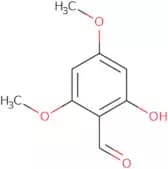
CAS:<p>4,6-Dimethoxysalicylaldehyde is a protonated molecule with a cyclohexane ring and 4 hydroxyl groups. Its chemical formula is C6H8O3. The compound has low bioavailability due to the presence of an intramolecular hydrogen bond that causes high redox potential. There are two amines on the aromatic ring which can coordinate with metal ions to form a complex. This compound's structural analysis has been conducted using X-ray crystallography, NMR spectroscopy, and IR spectroscopy. The structure of 4,6-dimethoxysalicylaldehyde is unsymmetrical due to the presence of two asymmetric carbon atoms in the molecule. It forms hydrogen bonds with other molecules due to its hydroxyl group and intramolecular hydrogen bond. Hydrogen bonding interactions occur between this compound and other molecules including water, alcohols, ammonia, amines, and carboxylic acids.</p>Formula:C9H10O4Purity:Min. 95%Color and Shape:Off-White PowderMolecular weight:182.17 g/molCell-permeable Caspase-3 Inhibitor I trifluoroacetate salt
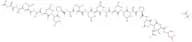
CAS:<p>Please enquire for more information about Cell-permeable Caspase-3 Inhibitor I trifluoroacetate salt including the price, delivery time and more detailed product information at the technical inquiry form on this page</p>Formula:C94H158N20O27Purity:Min. 95%Molecular weight:2,000.38 g/mol3-Thien-2-yl-1H-pyrazole-4-carbaldehyde
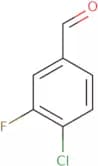
CAS:<p>3-Thien-2-yl-1H-pyrazole-4-carbaldehyde is a ligand that can be used to inhibit the activity of nicotine in the human liver. It has been shown to reduce chemical inhibitor activity globally and systematically, and it may have therapeutic potential for preventing death from tobacco use. 3-Thien-2-yl-1H-pyrazole-4-carbaldehyde binds to nicotine receptors by forming hydrogen bonds with the receptor's nicotinic acetylcholine binding sites. This prevents nicotine from binding to those sites, resulting in a reduction of the addictive properties of tobacco. 3TPCA is being developed as a drug candidate for treating tobacco use disorders.</p>Formula:C8H6N2OSPurity:Min. 95%Color and Shape:PowderMolecular weight:178.21 g/mol4-Chloro-3-fluorobenzaldehyde
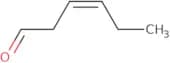
CAS:<p>4-Chloro-3-fluorobenzaldehyde is an atypical molecule that has a deuterium atom. It is classified as a group p2 functional theory reuptake inhibitor, which blocks the reuptake of noradrenaline at the synapse. The vibrational and spectroscopic properties of this molecule are similar to those of other molecules in its class. 4-Chloro-3-fluorobenzaldehyde was shown to inhibit the production of noradrenaline in rat brain tissue and is used as a model for studying genetic polymorphism. Techniques such as nuclear magnetic resonance spectroscopy, infrared spectroscopy, and X-ray crystallography have been used to investigate the structure and reactivity of 4-chloro-3-fluorobenzaldehyde.</p>Formula:C7H4ClFOPurity:Min. 95%Molecular weight:158.56 g/molcis-3-Hexenal - stabilised: 50% in triacetin
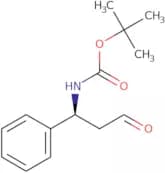
CAS:<p>Cis-3-hexenal is a fatty acid that is found in various foods, including soybean and corn oils. It can be used as a chemical substrate to measure the activity of lipoxygenases, enzymes that catalyze the formation of hydroperoxides from polyunsaturated fatty acids. Cis-3-hexenal is also an insect attractant and has been shown to have antifungal properties against plant pathogens such as Phytophthora infestans. This chemical compound has also been shown to inhibit protein synthesis in cells and to be able to react with DNA. Cis-3-hexenal - stabilised: 50% in triacetin</p>Formula:C6H10OPurity:Min. 95%Color and Shape:PowderMolecular weight:98.14 g/molN-Boc-(3S)-3-phenyl-3-aminopropionaldehyde
CAS:<p>N-Boc-(3S)-3-phenyl-3-aminopropionaldehyde is a synthetic chiral ligand that can be used as a building block in the synthesis of other compounds. It has been used to optimize the synthetic process, and it can be used in buffers, ammonium formate, metal chelate, and other additives to synthesize new compounds. N-Boc-(3S)-3-phenyl-3-aminopropionaldehyde is an optical isomer that can be used for supercritical fluid chromatography (SCFC) or liquid chromatography (LC). This compound has been shown to have a high affinity for ligands with a phenol group.</p>Formula:C14H19NO3Purity:Min. 95%Molecular weight:249.31 g/mol