Aldehydes
Found 8576 products of "Aldehydes"
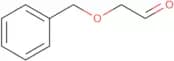
2-(Benzyloxy)acetaldehyde
CAS:2-(Benzyloxy)acetaldehyde (BA) is an aldol that is used as an oxidation catalyst for chemical stability. It can be synthesized with the use of asymmetric synthesis and coordination geometry. 2-(Benzyloxy)acetaldehyde has been shown to bind to the enzyme aldehyde dehydrogenase and inhibit its activity, which may lead to the treatment of infectious diseases. This compound also has receptor activity in coli K-12 cells, which can be used to detect BA in urine samples. The reaction mechanism of BA is similar to that of benzimidazole compounds, hydroxyl group, and trifluoroacetic acid.
Formula:C9H10O2Purity:Min. 95%Color and Shape:Slightly Yellow Clear LiquidMolecular weight:150.17 g/molRef: 3D-FB11544
Discontinued product3-Methoxy-2-nitrobenzaldehyde
CAS:3-Methoxy-2-nitrobenzaldehyde is a synthetic compound that has been used in the industrial process of synthesizing other compounds. It is a nucleophilic compound, which means it can react with electrophiles to form new bonds. 3-Methoxy-2-nitrobenzaldehyde is also an oriented molecule, meaning that when it reacts with an electrophile, the resulting product can be determined by the orientation of the molecules. The rate of this reaction depends on how many functional groups are present and the presence of catalysts. 3-Methoxy-2-nitrobenzaldehyde is fluorescent, so it will emit light in a spectroscopic experiment. It has six functional groups which are all nucleophilic and capable of participating in reactions with other molecules. Catalytic rates for this reaction depend on concentration and temperature, as well as the number of chlorine atoms and polydentate ligands present in solution.
Formula:C8H7NO4Purity:Min. 95%Color and Shape:Slightly Yellow PowderMolecular weight:181.15 g/molRef: 3D-FM70322
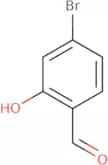
Discontinued product4-Bromo-2-hydroxybenzaldehyde
CAS:4-Bromo-2-hydroxybenzaldehyde is a chemical compound that is used in the synthesis of azides. It has a molecular formula of C6H5BrO, a diameter of 197.037 pm, and a structural formula of CHBrO. 4-Bromo-2-hydroxybenzaldehyde can be prepared by reacting bromine with hydroxybenzaldehyde in the presence of an amine catalyst. This product has been shown to have synergistic effects when used in combination with other anticancer agents such as aminopyrimidines, coumarin derivatives, or 2-(4'-hydroxyphenyl) benzoxazole. The photophysical properties of 4-bromo-2-hydroxybenzaldehyde are characterized by its fluorescence emission at 272 nm and its absorption at 270 nm. This product also shows low detection levels in human liver tissue samples, which may be due to its high water sol
Formula:C7H5BrO2Purity:Min. 95%Color and Shape:White PowderMolecular weight:201.02 g/molRef: 3D-FB11113
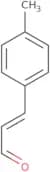
Discontinued product(E)-3-(p-Tolyl)acrylaldehyde
CAS:(E)-3-(p-Tolyl)acrylaldehyde is a reactive compound that has been shown to have antibacterial activity. It also inhibits the growth of Coxsackievirus A21 by binding to cardiomyocytes and inducing apoptosis. (E)-3-(p-Tolyl)acrylaldehyde binds to the amine group of proteins, which prevents it from being hydrolysed. This inhibition leads to an accumulation of the reactive amine in the organism, causing cell death. The reaction between (E)-3-(p-Tolyl)acrylaldehyde and nitro groups in DNA can cause mutagenesis or carcinogenesis.
Formula:C10H10OPurity:Min. 98 Area-%Color and Shape:PowderMolecular weight:146.19 g/molRef: 3D-FT140039
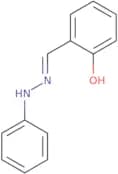
Discontinued productSalicylaldehyde phenylhydrazone
CAS:Salicylaldehyde phenylhydrazone is a covid-19 pandemic, organometallic compound. It is a colorless solid that reacts with water to give hydrogen chloride and salicylaldehyde. Salicylaldehyde phenylhydrazone has been shown to react with amines, which may be due to its chelate ring system. The analytical method for this compound is gravimetric analysis, which involves the use of lanthanum as an indicator. This compound has good transport properties and can be activated by hydrogen gas.
Formula:C13H12N2OPurity:Min. 97 Area-%Color and Shape:PowderMolecular weight:212.25 g/molRef: 3D-FS30260
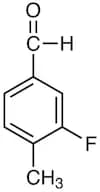
Discontinued product3-Fluoro-4-methylbenzaldehyde
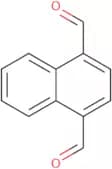
CAS:Formula:C8H7FOPurity:>95.0%(GC)Color and Shape:Light yellow to Yellow to Orange clear liquidMolecular weight:138.14Naphthalene 1,4-dicarboxaldehyde
CAS:Naphthalene 1,4-dicarboxaldehyde is a low energy focusing molecule that is used in macrocyclic compounds. It can be oxidized to form naphthalene 1,4-diacid and naphthalene 1,4-diketone. This compound has been used to synthesize the triarylmethane dye viologen by Wittig reaction. Naphthalene 1,4-dicarboxaldehyde has also been shown to have fluorescence properties and can be useful for chemiluminescence. Naphthalene 1,4-dicarboxaldehyde reacts with sulfide or amine groups to form sulfides or amines respectively.
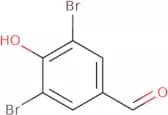
Formula:C12H8O2Purity:Min. 95%Color and Shape:PowderMolecular weight:184.19 g/mol3,5-Dibromo-4-hydroxybenzaldehyde
CAS:3,5-Dibromo-4-hydroxybenzaldehyde is an aldehyde that is used as a precursor to other organic compounds. It can be produced using the efficient method of reacting 3,5-dibromo-4-hydroxybenzoic acid with sodium borohydride in methanol. The molecule has three hydroxymethyl groups and two functional groups. 3,5-Dibromo-4-hydroxybenzaldehyde is soluble in water and organic solvents such as ethanol and acetone. This compound has shown antibacterial activity against some strains of bacteria, including group P2 bacteria. The reaction yield for the synthesis of this compound is approximately 93%. The inhibitory activities of 3,5-dibromo-4-hydroxybenzaldehyde have been demonstrated against both Gram positive and Gram negative bacteria.
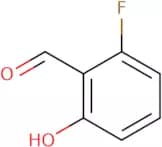
Formula:C7H4Br2O2Purity:Min. 95%Color and Shape:PowderMolecular weight:279.91 g/mol6-Fluorosalicylaldehyde
CAS:6-Fluorosalicylaldehyde is a sulfate that has been used in the synthesis of 6-fluorosalicylic acid, which is an intermediate for the production of aspirin. It also can be used to synthesize phenols and formylation products. The reaction with hydroxylamine leads to salicylaldehydes, while the reaction with methoxide leads to salicylaldehyde.
6-Fluorosalicylaldehyde reacts with magnesium salts in acidic conditions to produce paraformaldehyde. Deprotonation of 6-fluorosalicylaldehyde yields methoxide.Formula:C7H5FO2Purity:Min. 95%Color and Shape:PowderMolecular weight:140.11 g/molRef: 3D-FF23491
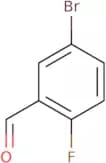
Discontinued product5-Bromo-2-fluorobenzaldehyde
CAS:Intermediate in the synthesis of ipragliflozin
Formula:C7H4BrFOPurity:Min. 95%Color and Shape:PowderMolecular weight:203.01 g/molRef: 3D-FB10566
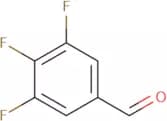
Discontinued product3,4,5-Trifluorobenzaldehyde
CAS:3,4,5-Trifluorobenzaldehyde is an aldehyde that can be synthesized in the laboratory. It reacts with ammonium nitrate and fatty alcohols to form 3,4,5-trifluoro-1-(alkyloxy)benzene. This reaction proceeds via a dipole mechanism and produces an intermediate called 2-amino-2-nitroethanol. This intermediate then undergoes dehydrogenation to produce 3,4,5-trifluoroethanol and ammonia. The reaction time for this process varies depending on the immobilization of the reactants and the temperature of the reaction.
Formula:C7H3F3OPurity:Min. 95%Color and Shape:Clear LiquidMolecular weight:160.09 g/molRef: 3D-FT64093
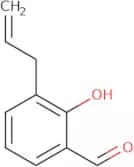
Discontinued product3-Allyl salicylaldehyde
CAS:3-Allyl salicylaldehyde is a fluorescent probe that is used to measure the mitochondrial membrane potential. It can be used as an amine-reactive fluorescence probe for the detection of amines such as histamine and serotonin. 3-Allyl salicylaldehyde has been shown to bind to metal complexes, such as palladium complexes, immobilized on silica gel. The cavity of the immobilized metal complex acts as an adsorption site for 3-allyl salicylaldehyde, which binds to the cavity by means of a metal chelate mechanism. This binding results in an alteration in the absorption spectra and x-ray absorption properties of 3-allyl salicylaldehyde. The hydroxyl group of 3-allyl salicylaldehyde is not involved in this binding process with the immobilized metal complex, while its carbonyl group is important for this interaction.
Formula:C10H10O2Purity:Min. 95%Molecular weight:162.19 g/molRef: 3D-FA17302
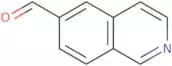
Discontinued productIsoquinoline-6-carbaldehyde
CAS:Isoquinoline-6-carbaldehyde is a fine chemical that belongs to the group of research chemicals. It can be used as a reagent for organic synthesis, a speciality chemical, or a building block in complex organic molecules. Isoquinoline-6-carbaldehyde is also an intermediate for the synthesis of many pharmaceuticals and other useful compounds. Isoquinoline-6-carbaldehyde has been shown to react with 2-aminoethanol to form (2E)-3-(4-(1,1'-biphenyl)-2-yl)butanal, which is an important reaction component in the synthesis of nitroaromatics. Isoquinoline-6-carbaldehyde is also a versatile scaffold for the synthesis of other fine chemicals.
Formula:C10H7NOPurity:Min. 95%Color and Shape:SolidMolecular weight:157.17 g/molRef: 3D-FI53537
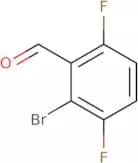
Discontinued product2-Bromo-3,6-difluorobenzaldehyde
CAS:2-Bromo-3,6-difluorobenzaldehyde is a versatile building block that is used in the synthesis of many complex compounds. It has been shown to be a useful intermediate and reaction component in organic synthesis. 2-Bromo-3,6-difluorobenzaldehyde can be used as a reagent or speciality chemical for research purposes. This compound has high quality and is a useful scaffold for the preparation of fine chemicals.
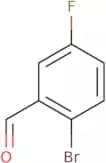
Formula:C7H3BrF2OPurity:Min. 95%Color and Shape:Off-White PowderMolecular weight:221 g/mol2-Bromo-5-fluorobenzaldehyde
CAS:2-Bromo-5-fluorobenzaldehyde is a chemical compound that has been shown to inhibit the activity of ns3 protease, an enzyme responsible for the cleavage of peptides in HIV. 2-Bromo-5-fluorobenzaldehyde binds to the active site of ns3 protease and prevents it from carrying out its function. This drug has also been shown to bind to the active site of ns5b polymerase and inhibit its activity, which is necessary for viral DNA synthesis. 2-Bromo-5-fluorobenzaldehyde has been used as a fungicide and has shown high potency against Candida albicans, Cryptococcus neoformans, Saccharomyces cerevisiae, and Aspergillus fumigatus.
Formula:C7H4BrFOPurity:Min. 95%Color and Shape:PowderMolecular weight:203.01 g/molRef: 3D-FB63995
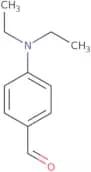
Discontinued product4-Diethylaminobenzaldehyde
CAS:4-Diethylaminobenzaldehyde is an organic compound that contains a hydroxyl group. It is a fluorescent probe and can be used to measure the transcriptional regulation of genes. This molecule has been shown to be an effective fluorescence probe for the detection of cb2 receptors in Langmuir adsorption isotherms and LC-MS/MS methods. 4-Diethylaminobenzaldehyde has also been shown to have chemopreventive properties against carcinoma cells.
Formula:C11H15NOPurity:Min. 98%Color and Shape:PowderMolecular weight:177.24 g/molRef: 3D-FD54843
Discontinued product8-Nonenal
CAS:Controlled ProductApplications 8-Nonenal is used as a reactant in the preparation of macrocyclic Z-enoates and (E,Z)- or (Z,E)-dienoates through catalytic stereoselective ring-closing metathesis.
References Zhang, H., et al.: JACS., 136, 16493 (2014)Formula:C9H16OColor and Shape:NeatMolecular weight:140.224-Bromobenzaldehyde
CAS:Please enquire for more information about 4-Bromobenzaldehyde including the price, delivery time and more detailed product information at the technical inquiry form on this page
Formula:C7H5BrOMolecular weight:185.03 g/molRef: 3D-B-5782
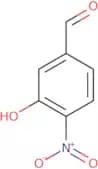
Discontinued product3-Hydroxy-4-nitrobenzaldehyde
CAS:3-Hydroxy-4-nitrobenzaldehyde is a ternary complex, which consists of three molecules that are bound to each other in a specific way. It has been observed in the nmr spectra and it has been proposed as a fluorescence probe for the detection of hydrogen bonds. 3-Hydroxy-4-nitrobenzaldehyde catalyzes the reaction by forming a covalent bond with the pbr322 dna, which is an important DNA molecule in bacteria. The enzyme mechanism is not fully understood, but it has been shown that it can bind to Toll-like receptor 4 (TLR4), which is an innate immune system protein. This binding event activates TLR4, leading to the inflammatory response. 3-Hydroxy-4-nitrobenzaldehyde has shown efficacy against microglia cells and animal experiments have shown that this compound may be useful for reducing pain after surgery or injury.
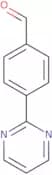
Formula:C7H5NO4Purity:Min. 95%Color and Shape:PowderMolecular weight:167.12 g/mol4-(Pyrimidin-2-yl)benzaldehyde
CAS:Please enquire for more information about 4-(Pyrimidin-2-yl)benzaldehyde including the price, delivery time and more detailed product information at the technical inquiry form on this page
Formula:C11H8N2OPurity:Min. 95%Color and Shape:PowderMolecular weight:184.19 g/mol