Mixed Heterocycles
Subcategories of "Mixed Heterocycles"
- 7H-Purine(1 products)
- Azaindoles(25 products)
- Benzofurans(924 products)
- Benzothiophenes(700 products)
- Benzotriazoles(438 products)
- Benzoxazine(30 products)
- Benzoxazole(39 products)
- Carbolines(37 products)
- Indazoles(2,037 products)
- Isoquinoline(1,064 products)
- Morpholine(2,220 products)
- Oxadiazoles(1,174 products)
- Oxaziridines(4 products)
- Oxazole(152 products)
- Pyrazolo[1,5-a]pyridine(233 products)
- Pyrido[2,3-b]pyrazine(35 products)
- Pyrrolo[1,2-a]pyrazine(11 products)
- Pyrrolo[1,2-b]pyridazine(10 products)
- Pyrrolo[2,3-b]pyridine(284 products)
- Pyrrolo[2,3-c]pyridine(196 products)
- Quinazoline(1,010 products)
- Quinolines(5,408 products)
- Quinoxaline(439 products)
- Thiadiazoles(479 products)
- Thiazines(124 products)
- Thiazoles(4,511 products)
- Thiomorpholine(371 products)
- [1,2,3]Triazolo[4,5-b]pyridine(20 products)
- [1,2,4]Triazolo[4,3-a]pyridine(162 products)
Found 4869 products of "Mixed Heterocycles"
2,6-Di-tert-butyl-4-(morpholinomethyl)phenol
CAS:Please enquire for more information about 2,6-Di-tert-butyl-4-(morpholinomethyl)phenol including the price, delivery time and more detailed product information at the technical inquiry form on this page
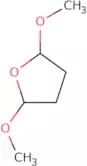
Formula:C19H31NO2Purity:Min. 95%Molecular weight:305.46 g/mol2,5-Dimethoxytetrahydrofuran
CAS:2,5-Dimethoxytetrahydrofuran is an organic compound that can be synthesized from 2,5-dimethoxybenzaldehyde and tetrahydrofuran. The asymmetric synthesis of this compound was first reported in 1968. The nmr spectrum of 2,5-dimethoxytetrahydrofuran shows two signals at δ 5.89 and δ 7.03 ppm. This compound is soluble in water and organic solvents such as dichloromethane, benzene, toluene, chloroform, and methanol. 2,5-Dimethoxytetrahydrofuran has been shown to have pain-relieving effects using the formalin test in mice and rats. It also has antineoplastic properties when used with other quinoline derivatives.br>br> 2,5-Dimethoxytetrahydrofuran is a white solid
Formula:C6H12O3Purity:Min. 95%Color and Shape:PowderMolecular weight:132.16 g/moltert-Butyl 5-((2-(3-Hydroxyphenyl)quinazolin-4-yl)amino)-1H-Indazole-1-Carboxylate
Formula:C26H23N5O3Molecular weight:453.50Ref: 4Z-I-126004
Discontinued product1-methyl-octahydro-1H-pyrrolo[2,3-c]pyridine dihydrochloride
CAS:Purity:97.00Molecular weight:213.14999389648438Ref: 10-F519853
Discontinued product4H-Cyclopenta[2,1-b:3,4-b']dithiophene
CAS:4H-Cyclopenta[2,1-b:3,4-b']dithiophene is a molecule that has been shown to be photovoltaic. It has an optical absorption spectrum that peaks in the UV region and is able to absorb light from 300 to 400 nm. 4H-Cyclopenta[2,1-b:3,4-b']dithiophene can be fabricated into devices by means of cyclic voltammetry or other techniques. As a result of its high electron mobility and its ability to absorb visible light, this molecule may lead to high efficiency solar cells. Photovoltaic devices made with 4H-Cyclopenta[2,1-b:3,4-b']dithiophene have been shown to have efficiencies as high as 2%.
Formula:C9H6S2Purity:Min. 95%Color and Shape:PowderMolecular weight:178.28 g/molRef: 3D-FC13994
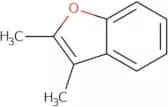
Discontinued product2,3-Dimethylbenzofuran
CAS:2,3-Dimethylbenzofuran (2,3-DBF) is a specific interaction that is an inorganic chemical. It has shown genotoxic effects, such as DNA damage and chromosomal aberrations, in hl-60 cells. 2,3-DBF can be acetylated by the activity of acetyltransferases to form 2,3-dimethylbenzoic acid (DMBA). DMBA is oxidized by cytochrome P450 enzymes to form DMBA quinone. DMBA quinone reacts with deuterium isotope to form an ionizable compound which can then be hydrolyzed into benzoic acid and methyl alcohol. The oxidation products of 2,3-DBF have been studied using analytical methods such as gas chromatography and mass spectrometry. These analyses showed the presence of acidic hydrolysis products and ionizable compounds.
Formula:C10H10OPurity:Min. 98 Area-%Color and Shape:Clear LiquidMolecular weight:146.19 g/mol2-Thiophenemethanol
CAS:2-Thiophenemethanol is a colorless liquid that has a strong, disagreeable odor and is soluble in water. It can be prepared by the reaction of 2-methylpropanal with trifluoroacetic acid. This compound reacts with methapyrilene to form polymers, which have a cationic character. The chemical structure of the molecule was determined by a combination of experimental techniques such as proton nuclear magnetic resonance spectroscopy, infrared spectroscopy, and mass spectrometry. Hydrogen bonding plays an important role in the structure of 2-thiophenemethanol as it forms intermolecular hydrogen bonds with neighboring molecules. The chemical formula for this compound is CH3C6H4SO2H. Hydrochloric acid can be used to break down this compound into methylmercaptan and sulfur dioxide.
Formula:C5H6OSPurity:Min. 98%Color and Shape:Clear LiquidMolecular weight:114.17 g/molRef: 3D-FT00670
Discontinued product




![1-methyl-octahydro-1H-pyrrolo[2,3-c]pyridine dihydrochloride](/_next/image/?url=https%3A%2Fstatic.cymitquimica.com%2Fproducts%2F10%2Fthumb-webp%2FF519853.webp&w=3840&q=75)
![3-[5-(1,3-oxazol-5-yl)-2-furyl]thiophene-2-carboxylic acid](/_next/image/?url=https%3A%2Fstatic.cymitquimica.com%2Fproducts%2F10%2Fthumb-webp%2FF518070.webp&w=3840&q=75)
![2-Butyl-5-nitrobenzo[d]oxazole](/_next/image/?url=https%3A%2Fstatic.cymitquimica.com%2Fproducts%2F10%2Fthumb-webp%2FF441170.webp&w=3840&q=75)
![3-Cyclobutyl-[1,2,4]triazolo[4,3-a]pyridin-6-amine](/_next/image/?url=https%3A%2Fstatic.cymitquimica.com%2Fproducts%2F10%2Fthumb-webp%2FF214483.webp&w=3840&q=75)
![2-Butyl-6-nitrobenzo[d]oxazole](/_next/image/?url=https%3A%2Fstatic.cymitquimica.com%2Fproducts%2F10%2Fthumb-webp%2FF441169.webp&w=3840&q=75)
![5-Chloro-6-nitrobenzo[d]oxazole](/_next/image/?url=https%3A%2Fstatic.cymitquimica.com%2Fproducts%2F10%2Fthumb-webp%2FF441268.webp&w=3840&q=75)
![4H-Cyclopenta[2,1-b:3,4-b']dithiophene](/_next/image/?url=https%3A%2Fstatic.cymitquimica.com%2Fproducts%2F3D%2Fthumb-webp%2FFC13994.webp&w=3840&q=75)