Quinones
Found 251 products of "Quinones"
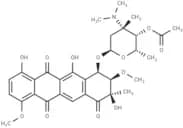
Nocardicyclin B
CAS:Nocardicyclin B exhibits resistance against Gram-positive bacteria, mycobacteria, and nocardia.Formula:C32H37NO12Color and Shape:SolidMolecular weight:627.64Rubiginone D2
CAS:Rubiginone D2 is an antibiotic with inhibitory effects against Bacillus subtilis, Staphylococcus aureus, and Escherichia coli. It exhibits anticancer properties by suppressing the proliferation of cancer cells such as HM02, Kato III, HepG2, and MCF7, with GI50 values of 0.1, 0.7, <0.1, and 7.5 μM, respectively.
Formula:C20H16O6Molecular weight:352.34Sakyomicin C
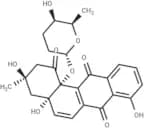
CAS:Sakyomicin C is a benzoquinone antibiotic. It exhibits activity against Gram-positive bacteria and mycobacteria.Formula:C25H26O9Color and Shape:SolidMolecular weight:470.469Aranciamycin A
CAS:Aranciamycin A, an anthraquinone antibiotic, can be isolated from Streptomyces. It exhibits antibacterial activity against Mycobacterium bovis and Bacillus subtilis, with MIC values of 30 µM and 7.5 µM, respectively.Formula:C26H28O10Molecular weight:500.49Sakyomicin D
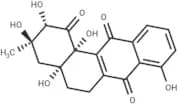
CAS:Sakyomicin D is a benzoquinone antibiotic with activity against Gram-positive bacteria.Formula:C19H18O8Color and Shape:SolidMolecular weight:374.341Ref: 4Z-B-126007
Discontinued productRef: 4Z-B-126003
Discontinued productChrysophanic acid
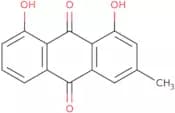
CAS:Chrysophanic acid is a naturally occurring anthraquinone compound, which is typically extracted from plants such as rhubarb and senna. It is commonly found in species within the Polygonaceae family. This compound functions primarily through mechanisms that involve modulating cellular pathways, possessing anti-inflammatory, antimicrobial, and potential anticancer properties.
Formula:C15H10O4Purity:Min. 95 Area-%Color and Shape:PowderMolecular weight:254.24 g/molRef: 3D-FC20424
Discontinued productProtohypericin
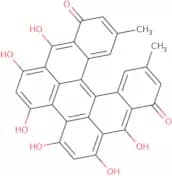
CAS:Protohypericin is a photosensitizer, which is a compound known for its ability to absorb light and induce a photodynamic response. This compound is derived from the plant Hypericum perforatum, commonly known as St. John's Wort. The primary mode of action of protohypericin involves the absorption of specific wavelengths of light, leading to the generation of reactive oxygen species (ROS). These ROS are capable of inducing cell death, primarily through mechanisms such as apoptosis and necrosis.
Formula:C30H18O8Purity:Min. 95%Color and Shape:PowderMolecular weight:506.46 g/molRef: 3D-FP157330
Discontinued productFerruginin A
CAS:Ferruginin A is a marine-derived compound, classified as a natural iron chelator. It is isolated from various marine organisms, particularly sponges and seaweeds, known for their complex secondary metabolites. As an iron chelator, Ferruginin A functions by binding to free iron ions in biological systems, thereby reducing oxidative stress and preventing metal-catalyzed radical formation. This action is crucial, particularly in cellular environments where excess free iron can lead to detrimental oxidative damage.
Formula:C30H36O4Purity:Min. 95%Molecular weight:460.6 g/molSennidine B
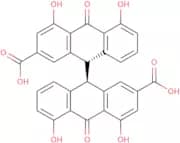
CAS:Sennidine B is a natural anthraquinone compound, which is derived from the plant species of the genus Senna. This compound functions primarily by promoting peristalsis in the colon, thus facilitating bowel movements. Sennidine B achieves this by modulating ion transport in the intestinal epithelium, enhancing water and electrolyte secretion, and stimulating the colonic muscles.
Purity:Min. 95%Molecular weight:538.46 g/mol